
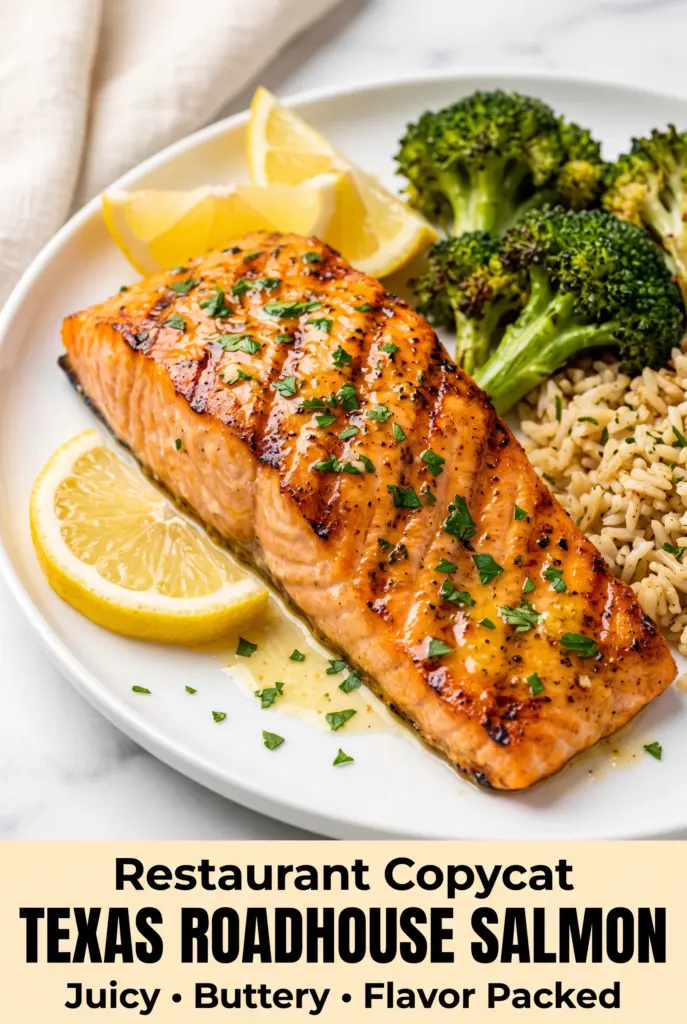
Texas Roadhouse Salmon
Texas Roadhouse-style salmon lands on the plate with crisp, seasoned edges, a tender flaky center, and that glossy garlic lemon butter that soaks into every bite. It’s the kind of…
Tip: save now, cook later.Texas Roadhouse-style salmon lands on the plate with crisp, seasoned edges, a tender flaky center, and that glossy garlic lemon butter that soaks into every bite. It’s the kind of dinner that tastes like it came off a restaurant grill, but it comes together fast enough for a weeknight and feels a little special without asking much from you.
The key is dry salmon and a hot pan. If the fish goes into the skillet wet, it steams instead of searing, and you lose the deep seasoning crust that makes this copycat version taste right. The spice mix also does more than add flavor; it gives the salmon a savory outer layer that stands up to the butter instead of disappearing under it.
Below, I’ll walk through the sear that keeps the fish from sticking, the butter glaze that stays bright instead of greasy, and the small swap that helps this recipe work whether you’re grilling or cooking indoors.
The seasoning crust got beautifully crisp in the skillet, and the garlic lemon butter stayed bright instead of overpowering the salmon. My husband said it tasted just like the restaurant and asked me to put it on our dinner rotation.
Texas Roadhouse Salmon with garlic lemon butter is the kind of copycat dinner worth saving for fast, flaky weeknights.
The Seared Skin and Flaky Center Depend on One Small Prep Step
Salmon rewards patience for about 30 seconds: enough time to dry it well before it hits the pan. Moisture is the enemy of browning, and if the fillets go in damp, the spices turn pasty and the exterior never gets that savory crust. Patting the fish dry also helps it release from the pan instead of clinging to the metal.
The other mistake is moving it too soon. Salmon will stick while it’s still developing a crust, then release naturally when it’s ready to flip. If you try to pry it up early, you tear the surface and lose the color that makes the dish look and taste cooked in a hot restaurant skillet.
- Salmon fillets — Use fillets that are similar in thickness so they finish at the same time. Skin-on works beautifully because the skin protects the flesh and makes it easier to move the fish in the pan.
- Smoked paprika — This is one of the ingredients that gives the recipe its Texas Roadhouse-style edge. Regular paprika will work in a pinch, but you’ll lose some of that subtle grillhouse depth.
- Olive oil — You only need enough to coat the fish lightly. Too much oil softens the seasoning layer and makes the pan splatter without helping the sear.
- Fresh lemon juice and zest — Bottled juice tastes flat here. The zest carries the bright aroma that keeps the butter glaze from feeling heavy.
- Butter — Use unsalted butter so you can control the seasoning. Melt it gently; if it gets too hot, the garlic can taste harsh and the sauce will lose its clean finish.
The Heat, Timing, and Butter Move That Keep This Salmon Tender
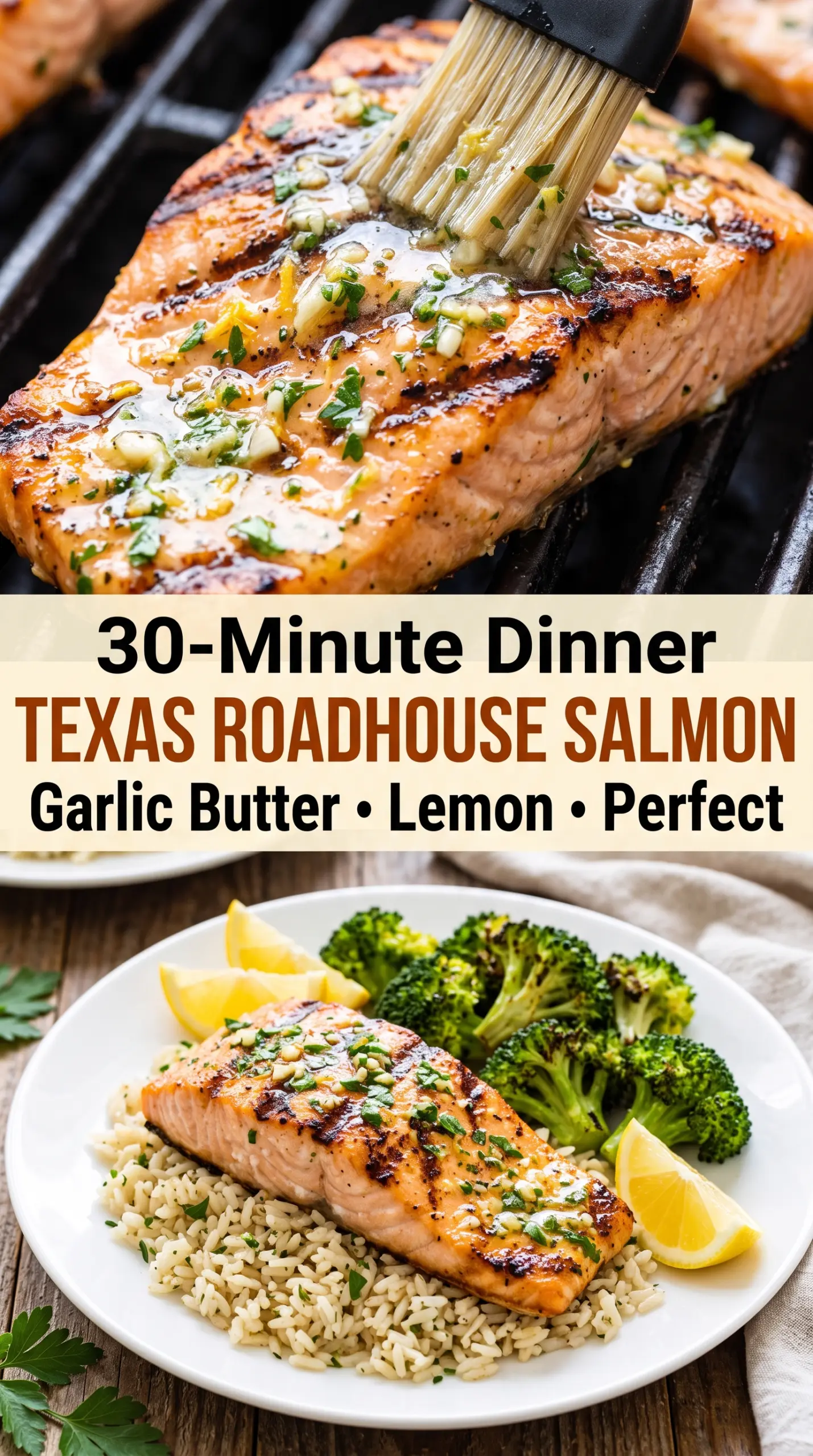
The seasoning blend should go on evenly, but not so heavily that it forms a thick paste. A light, even coat gives you a savory crust without burying the salmon’s natural flavor. After that, the real work happens in the pan: hot enough to sear, not so hot that the spices burn before the center cooks through.
The garlic lemon butter belongs at the end, after the salmon comes off the heat. If you add butter too early, the milk solids can brown too much or the lemon can lose its brightness. Brushing it on the finished fish lets it melt into the crust and stay glossy.
Season the Fish, Then Let It Sit for a Minute
Rub the salmon with olive oil first so the seasoning clings evenly, then coat both sides with the spice mix. A quick rest gives the salt a head start and helps the exterior dry slightly, which improves browning. If you can see clumps of seasoning, spread them out now; once the fish hits the pan, those clumps can scorch.
Sear Until It Releases on Its Own
Heat a cast-iron skillet or grill pan over medium-high heat until it’s hot but not smoking hard. Lay the salmon down and leave it alone for 4 to 5 minutes, until the bottom looks deeply golden and the edges turn opaque. If it clings when you lift a corner, give it another 30 to 60 seconds; that resistance usually means the crust isn’t ready yet.
Finish Gently So the Center Stays Moist
Flip the fillets and cook just until they flake easily and reach 145°F in the thickest part. The carryover heat after you pull them from the pan finishes the job, so don’t wait for them to look dry in the middle. Brush on the garlic lemon butter while the salmon is still hot so it melts into the surface instead of sitting in puddles around the plate.
How to Adapt This for Grilling, Dairy-Free, or a Lighter Dinner
Grill-Style Salmon
Cook the seasoned salmon on a well-oiled grill or grill pan over medium-high heat, skin-side down first if you’re using skin-on fillets. You’ll get more smoke and char, which pushes this even closer to the restaurant version. Just keep the butter glaze off the flames until the fish is finished so it doesn’t burn.
Dairy-Free Version
Swap the butter for a good dairy-free butter or use olive oil with the garlic, lemon, and herbs. The sauce won’t have quite the same round richness, but it still gives you a shiny finish and clean citrus-garlic flavor. Keep the heat low when you mix it so the garlic stays sweet instead of harsh.
Lower-Carb Plate
Serve the salmon with roasted broccoli, asparagus, or a crisp salad instead of rice or mashed potatoes. The fish is already rich, so the cleaner sides keep the meal balanced without adding extra heaviness. This is the easiest way to turn it into a high-protein dinner that still feels satisfying.
Storage and Reheating
- Refrigerator: Store leftovers in an airtight container for up to 3 days. The crust softens a bit, but the flavor holds up well.
- Freezer: Cooked salmon freezes, but the texture gets a little less silky after thawing. Wrap individual fillets tightly and freeze for up to 2 months if you need to; thaw overnight in the fridge.
- Reheating: Warm it gently in a 300°F oven for 8 to 10 minutes or just until heated through. High heat dries the fish fast, and the biggest mistake is blasting it in the microwave until the edges turn tough.
Answers to the Questions Worth Asking
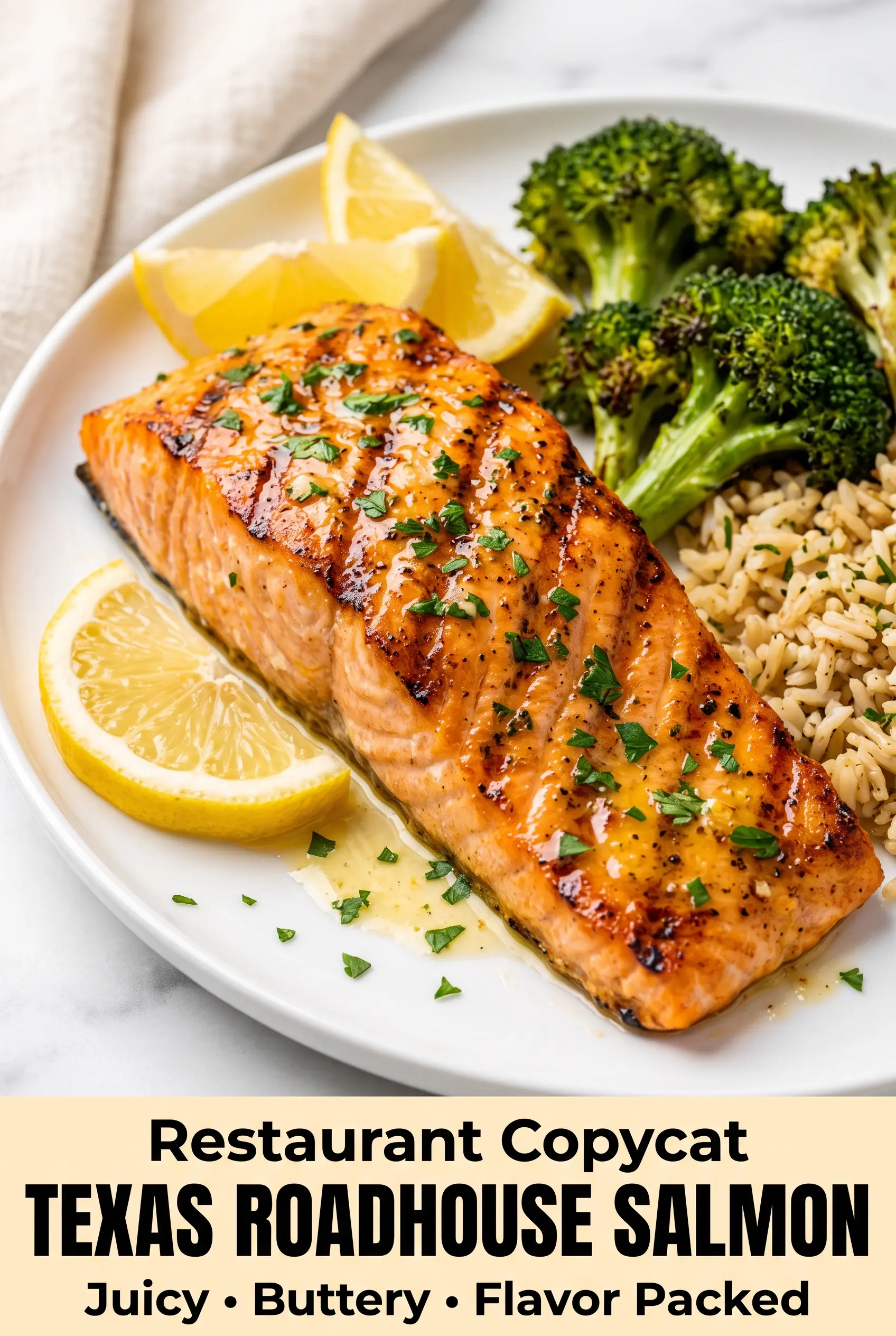
Texas Roadhouse Salmon
Ingredients
Equipment
Method
- Pat the salmon fillets dry with paper towels.
- In a small bowl, combine the kosher salt, black pepper, garlic powder, onion powder, smoked paprika, dried parsley, and dried thyme.
- Rub both sides of the salmon with olive oil, then coat evenly with the seasoning mixture.
- Heat a large cast-iron skillet over medium-high heat until hot.
- Cook the salmon for 4–5 minutes on the first side until golden and lightly charred.
- Carefully flip and cook another 3–5 minutes, depending on thickness, until the salmon flakes easily and reaches an internal temperature of 145°F (63°C).
- Whisk together the melted unsalted butter, minced garlic, fresh lemon juice, lemon zest, honey, and chopped fresh parsley.
- Brush the hot salmon generously with the garlic lemon butter.
- Garnish with fresh parsley and lemon wedges, then add fresh cracked black pepper to taste.
- Serve immediately with seasoned rice, mashed potatoes, roasted broccoli, green beans, or a fresh side salad.
