
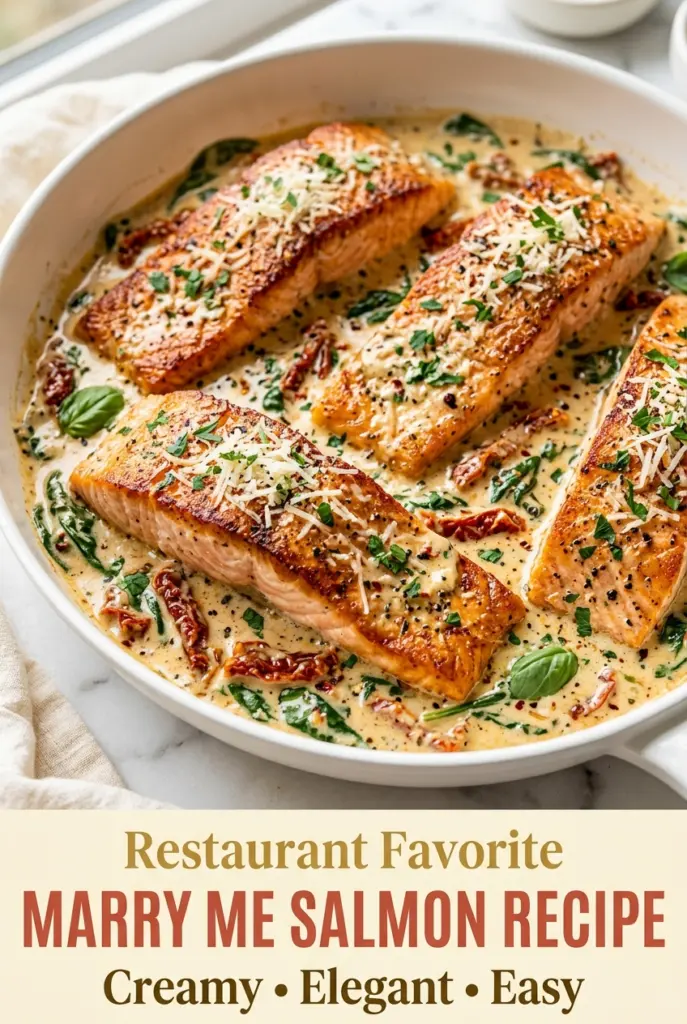
Marry Me Salmon Recipe
Pan-seared salmon in a Parmesan cream sauce has a way of disappearing fast, and this version earns that reaction every time. The salmon stays tender and flaky, the sauce turns…
Tip: save now, cook later.Pan-seared salmon in a Parmesan cream sauce has a way of disappearing fast, and this version earns that reaction every time. The salmon stays tender and flaky, the sauce turns silky without feeling heavy, and the sun-dried tomatoes bring just enough sweetness and tang to keep each bite interesting. It tastes like something you’d order out, but it comes together in one skillet with no fancy tricks.
What makes this recipe work is the order. The salmon gets a deep sear first, then the sauce builds in the same pan so those browned bits become part of the flavor instead of getting washed away. The cream stays stable because it simmers gently, and the Parmesan goes in off the heat of the boil, which keeps it smooth instead of grainy. Spinach and herbs go in at the end so they stay bright instead of turning dull and overcooked.
Below, you’ll find the small details that matter most, from how to keep the sauce from breaking to the easiest swaps if you need to work with what you have. If you’ve made creamy skillet dinners before and had them turn thin, clumpy, or flat, this version gives you a cleaner path.
The salmon stayed perfectly flaky, and the sauce thickened right up without curdling. My husband kept scooping up the extra sauce with bread and asked if we could have it again next week.
Save this Marry Me Salmon for the nights when you want creamy skillet comfort with a polished, restaurant-style finish.
The Sear Comes First, Because Salmon Goes Dry When You Overcook It
Salmon doesn’t need a long simmer in the sauce. It needs a fast, confident sear and just enough time in the skillet to finish gently. If you cook it all the way through before the sauce is ready, the second round of heat will push it into dry, chalky territory. The goal is a golden exterior and a center that still has a little translucence when it comes off the first side.
The other common mistake is crowding the pan. When the fillets sit too close together, they steam instead of browning, and you lose the crust that gives this dish its best texture. Leave space, let the fish release on its own, and turn it only when it lifts easily from the pan.
What Each Ingredient Is Actually Doing in This Dish
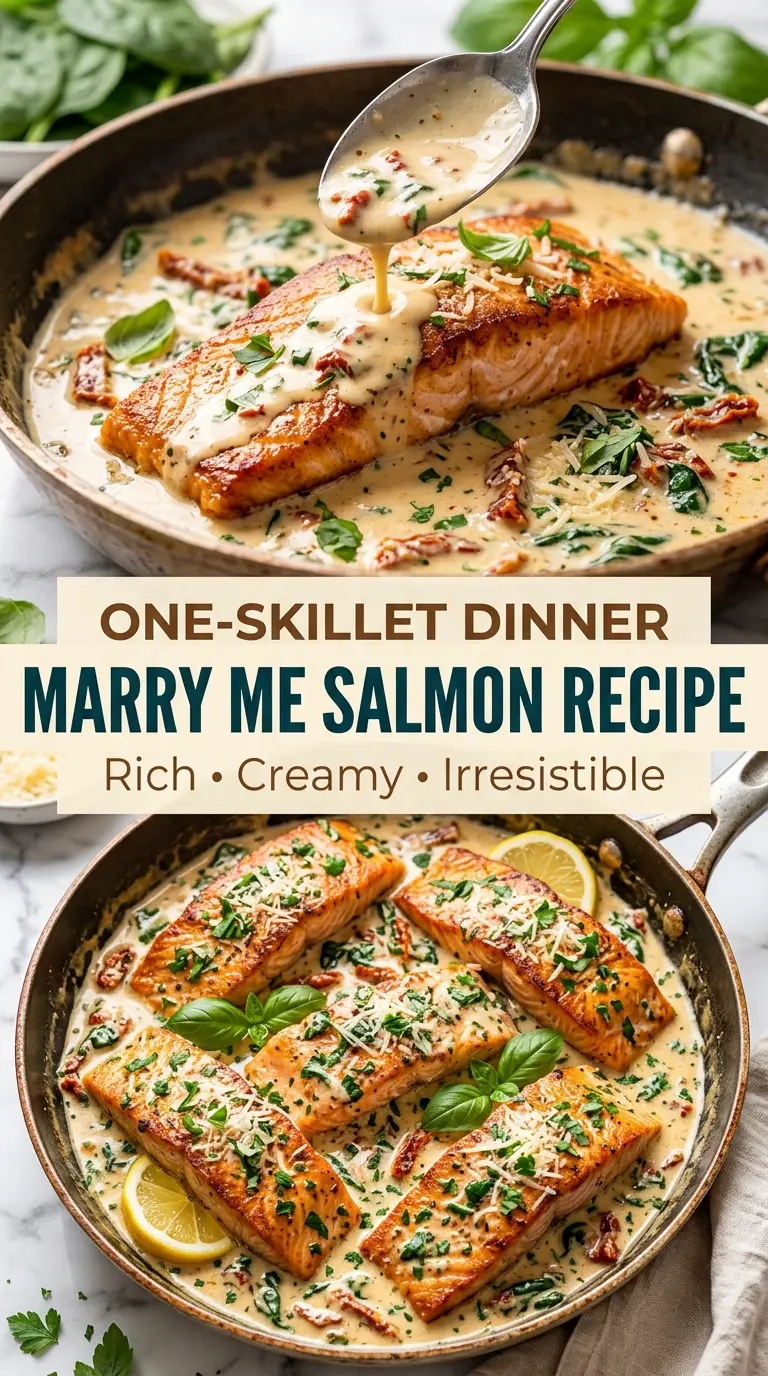
- Salmon fillets — Thick, even fillets hold up best here because they can sear without falling apart and still finish gently in the sauce. Skin-on works fine if you like it; just start skin-side down for extra insurance against sticking. If your fillets are thinner than 1 inch, shorten the final simmer so they don’t overcook.
- Sun-dried tomatoes — These are the sharp, sweet note that makes the sauce taste layered instead of flat. Oil-packed tomatoes bring the softest texture and easiest chop, but dry-packed tomatoes also work if you soak them briefly in hot water. Skip the jarred marinara-style versions; they push the sauce in the wrong direction.
- Heavy cream — This is what gives the sauce its body and keeps it from splitting when Parmesan goes in. Half-and-half can work in a pinch, but the sauce will be thinner and less stable. If you use it, keep the heat lower and let the sauce reduce a little longer.
- Freshly grated Parmesan — Grating it yourself matters here. Pre-shredded cheese often has anti-caking starches that make the sauce grainy instead of smooth. Add it off a hard boil and stir until melted before returning the salmon to the pan.
- Spinach and fresh herbs — Spinach softens into the sauce and adds color without taking over. Basil and parsley should go in at the end so they stay bright and clean-tasting. Dried herbs won’t give you the same lift in the finish.
How to Build the Sauce Without Breaking It
Season and Sear the Salmon
Pat the salmon dry before it hits the pan. Moisture is what gets in the way of browning, and browning is what gives this dish its first layer of flavor. Heat the oil until it shimmers, then lay the fillets in and leave them alone until they release cleanly. If they stick hard, they aren’t ready to turn yet.
Use the Same Pan for the Sauce
Once the salmon comes out, keep every bit of browned fond in the skillet. Add the butter, garlic, and tomatoes to that same pan and let the garlic turn fragrant, not browned. Then pour in the broth and scrape the bottom well; that pulls the flavor into the sauce instead of leaving it stuck to the pan.
Keep the Cream at a Gentle Simmer
Add the cream and let it bubble softly, not violently. High heat can cause the fat to separate or make the Parmesan seize into tiny bits. When the sauce starts to thicken enough to coat a spoon, stir in the cheese and watch it turn glossy. If it looks grainy, the pan was too hot, so pull it off the burner for a minute and stir until it smooths out.
Finish the Fish in the Sauce
Return the salmon only after the sauce has already thickened. Spoon sauce over the top and let the fish finish for a few minutes until it flakes at the edges but still looks moist in the center. The salmon will carry over a little after it leaves the heat, so don’t wait until it looks completely opaque all the way through in the pan.
Three Ways to Make This Recipe Your Own
Dairy-Free Version
Use full-fat coconut cream instead of heavy cream and swap the Parmesan for a dairy-free hard cheese or nutritional yeast. The sauce will be a little less sharp and a little richer in texture, but it still clings nicely to the salmon if you keep the simmer gentle.
Lower-Carb Serving
Serve it over sautéed zucchini, cauliflower mash, or steamed asparagus instead of pasta or rice. The sauce is rich enough to carry simple vegetables, and the lighter base lets the salmon stay the star.
No Sun-Dried Tomatoes
Chopped roasted red peppers give a softer, sweeter result, while a few halved cherry tomatoes will add freshness and a little juice. You lose some of the concentrated tang that makes the original version stand out, but the sauce still tastes balanced and bright.
Storage and Reheating
- Refrigerator: Store leftovers in an airtight container for up to 2 days. The salmon stays tasty, but the sauce will thicken as it chills.
- Freezer: I don’t recommend freezing this dish. Cream sauces can separate when thawed, and the salmon turns softer than you’d want.
- Reheating: Warm gently in a covered skillet over low heat with a splash of broth or cream. High heat dries out the fish and can break the sauce, so keep the temperature low and stop as soon as the salmon is heated through.
Answers to the Questions Worth Asking
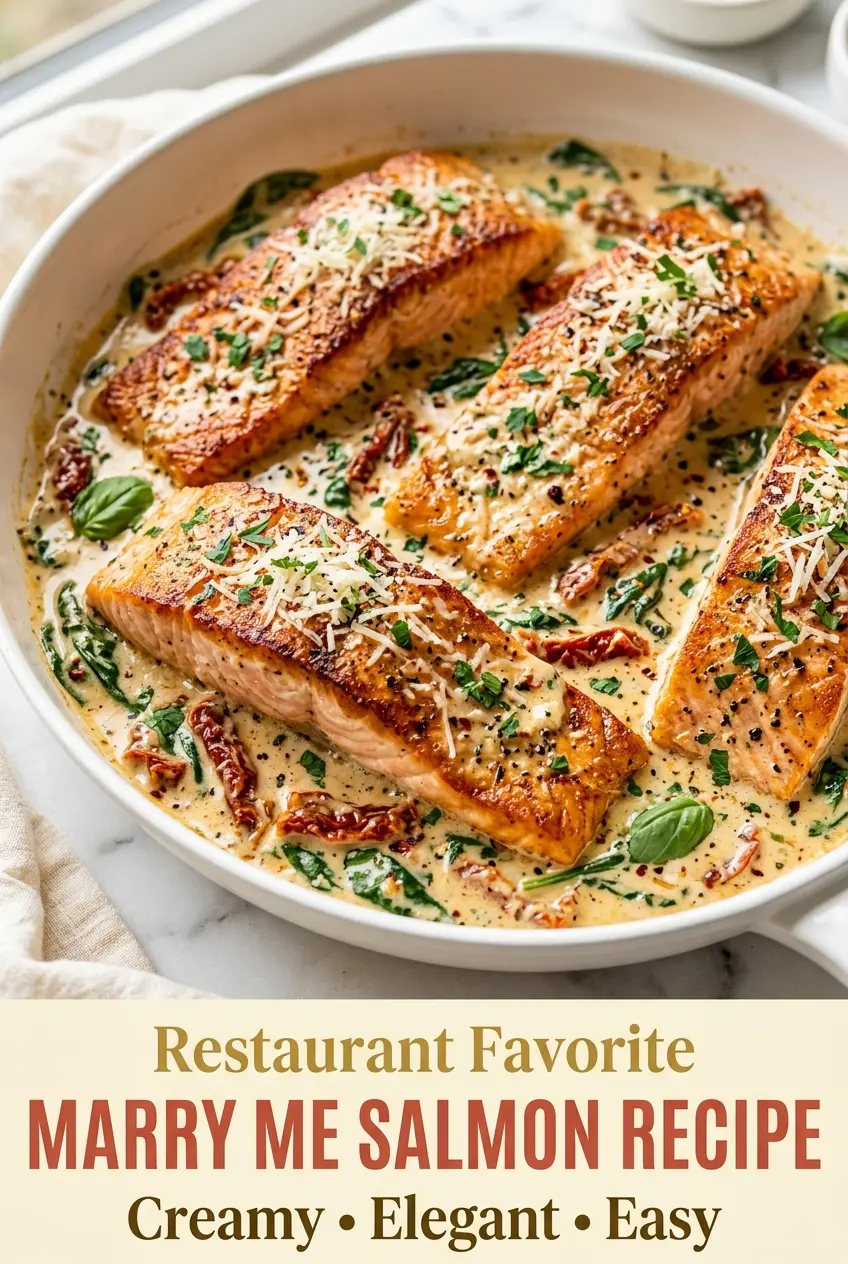
Marry Me Salmon Recipe
Ingredients
Equipment
Method
- Pat the salmon fillets dry with paper towels, then season both sides with kosher salt, black pepper, garlic powder, and smoked paprika.
- Heat olive oil in a large skillet over medium-high heat until shimmering.
- Sear the salmon for 4–5 minutes per side until golden and nearly cooked through, then transfer to a plate.
- Reduce the heat to medium and melt unsalted butter in the same skillet.
- Add the minced garlic and cook for 30 seconds until fragrant.
- Stir in the chopped sun-dried tomatoes and cook for 1 minute.
- Pour in the chicken broth and scrape up any browned bits from the pan.
- Add the heavy cream, Italian seasoning, and crushed red pepper flakes, then simmer for 3–4 minutes.
- Stir in the Parmesan cheese until the sauce is smooth and creamy.
- Add the baby spinach and cook until just wilted.
- Return the salmon to the skillet, spoon the creamy sauce over each fillet, and simmer for 3–4 minutes until the salmon reaches 145°F (63°C).
- Sprinkle with fresh basil and fresh parsley, along with extra Parmesan, then serve with lemon wedges.
