
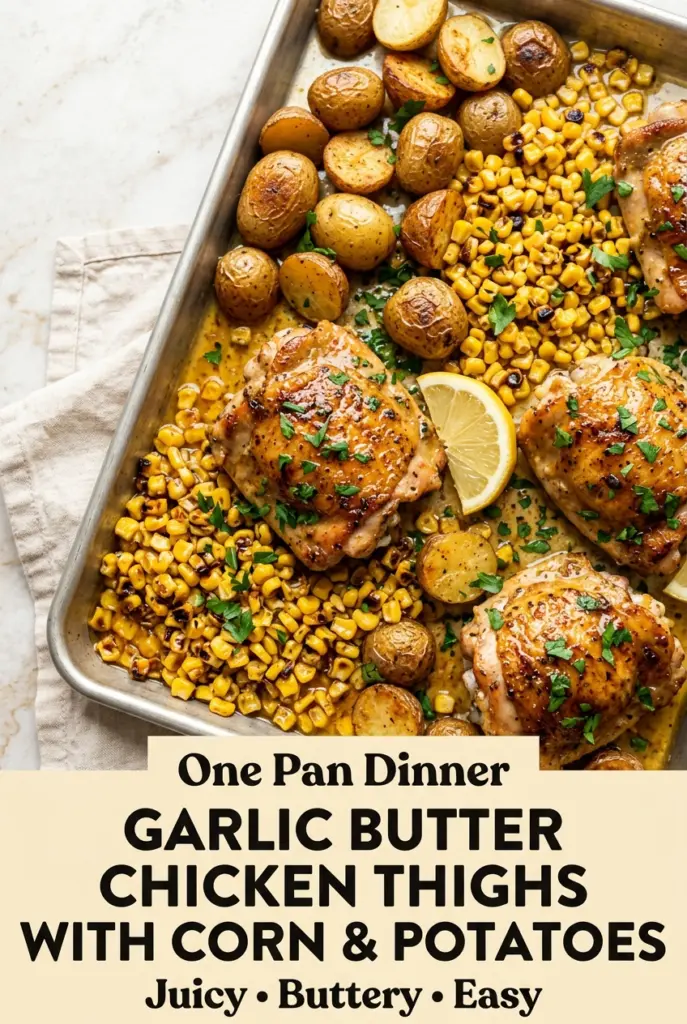
Garlic Butter Chicken Thighs with Corn and Potatoes (Sheet Pan)
Garlic butter chicken thighs with corn and potatoes come out the way a sheet pan dinner should: crispy-skinned chicken, potatoes with browned edges, and sweet corn that picks up every…
Tip: save now, cook later.Garlic butter chicken thighs with corn and potatoes come out the way a sheet pan dinner should: crispy-skinned chicken, potatoes with browned edges, and sweet corn that picks up every bit of seasoning from the pan. The butter coats everything without turning greasy, and the lemon at the end keeps the whole tray from tasting heavy. It’s the kind of dinner that disappears fast because every bite has a little crunch, a little richness, and a lot of comfort.
What makes this version work is the order of things. The chicken thighs roast skin-side up so the fat renders and the skin can actually crisp instead of steaming. The potatoes go cut-side down enough of the time to pick up color, and the garlic butter gets mixed with oil so it doesn’t scorch before the chicken is done. I also like using bone-in, skin-on thighs here because they stay juicy through a long roast while the vegetables finish cooking around them.
Below, I’ve broken down the one detail that keeps sheet pan chicken from going soggy, plus a few smart swaps if you want to change up the vegetables or make the dish fit what’s already in your kitchen.
The skin got beautifully crisp and the potatoes soaked up the garlic butter without turning mushy. I broiled it for the last 2 minutes and my husband kept picking at the corn straight from the pan.
Save these garlic butter chicken thighs with corn and potatoes for a crispy-skinned sheet pan dinner that roasts everything on one pan.
The Reason Sheet Pan Chicken Stays Crispy Instead of Turning Steamy
The biggest mistake with sheet pan chicken is crowding the pan. When the thighs, potatoes, and corn are packed too tightly, the vegetables release moisture and the chicken skin softens before it has a chance to brown. Give everything room and use a hot oven. Heat and space are what turn this from a pile of cooked ingredients into a dinner with real texture.
Another thing that matters here is the butter mixture. Garlic in butter tastes great, but butter alone can brown too quickly at 425°F. Olive oil helps carry the seasoning and keeps the pan from tasting flat, while smoked paprika and onion powder bring depth without needing a long marinade. The lemon zest goes in early so it perfumes the whole tray, and the fresh lemon wedges at the end wake everything back up after roasting.
What Each Ingredient Is Doing in This Dish

- Bone-in, skin-on chicken thighs — These give you the best payoff for a sheet pan roast. The bone protects the meat from drying out, and the skin renders into a crisp layer if the pan stays hot and the pieces aren’t buried under vegetables.
- Baby Yukon Gold potatoes — Yukon Golds hold their shape and turn creamy inside while the cut edges brown. If you swap in russets, they’ll soften faster and lose that buttery texture; red potatoes work in a pinch but won’t get quite as rich.
- Corn on the cob — Corn sweetens as it roasts and catches the garlic butter in all the ridges. If you only have frozen corn, use a hot cast-iron skillet or roast it on a separate tray, because frozen kernels will release too much water on the sheet pan.
- Melted butter plus olive oil — Butter brings the garlic flavor, and oil keeps the mixture from browning too fast in the oven. That combination is what lets the chicken roast long enough for the potatoes to finish without burning the seasoning.
- Smoked paprika, onion powder, and Italian seasoning — This trio gives the dish a deeper roasted taste without extra steps. Smoked paprika is the one ingredient here that really changes the flavor, so don’t skip it unless you want the whole tray to taste flatter.
- Lemon zest and parsley — The zest goes in before roasting for a light citrus note, while parsley gets added at the end for freshness. Together they cut through the richness so the final dish tastes balanced instead of heavy.
The 45 Minutes That Matter Most
Coating Everything Without Drowning It
Whisk the melted butter, oil, garlic, and seasonings until the mixture looks emulsified, then toss the potatoes and corn just enough to coat. If the butter pools in one corner of the pan, that spot will brown too hard while the rest of the tray stays pale. A thin, even coating gives you roasted edges instead of greasy patches.
Arranging the Chicken for Real Crispy Skin
Set the thighs skin-side up and leave space around each one. If a thigh sits directly against a pile of potatoes, the steam from the vegetables keeps the skin soft. The skin should look glossy from the butter but still exposed to the dry heat of the oven.
Roasting Until the Potatoes Are Fork-Tender
Bake at 425°F until the chicken reaches 165°F and the potatoes slide cleanly off a fork. Stir the potatoes and corn halfway through so they brown on more than one side, but leave the chicken alone. If you keep flipping the thighs, the skin won’t get the same crisp finish.
The Quick Broil at the End
If the skin still looks a little pale, broil for 2 to 3 minutes and watch it closely. The difference between crisp and burnt is about a minute under the broiler. Pull the pan as soon as the skin looks deeply golden and the corn has a few caramelized spots.
How to Adapt This for Bigger, Smaller, or Lower-Carb Dinners
Dairy-Free Swap That Keeps the Flavor
Use all olive oil instead of butter and add an extra pinch of salt plus a little more lemon zest. You’ll lose some of the round, buttery finish, but the chicken still roasts well and the garlic-spice coating stays bold.
Low-Carb Version With the Same Pan Roast
Swap the potatoes for cauliflower florets and add them during the last 20 to 25 minutes so they don’t collapse. They’ll pick up the seasoning nicely, though they won’t give you the same creamy center that Yukon Golds do.
Using Chicken Breasts Instead of Thighs
Chicken breasts can work, but they need a shorter roast and usually finish before the potatoes are fully tender. If you go this route, cut the potatoes smaller and start them first, then add the breasts partway through so the meat doesn’t dry out.
Storage and Reheating
- Refrigerator: Store leftovers in an airtight container for up to 4 days. The chicken skin will soften, but the flavor holds up well.
- Freezer: The chicken freezes well, but the potatoes and corn get softer after thawing. Freeze in a sealed container for up to 2 months if you don’t mind a less crisp vegetable texture.
- Reheating: Reheat on a sheet pan at 375°F until warmed through, or use an air fryer for the chicken if you want the skin to perk back up. The biggest mistake is microwaving everything together, which turns the skin rubbery and the potatoes dense.
Answers to the Questions Worth Asking
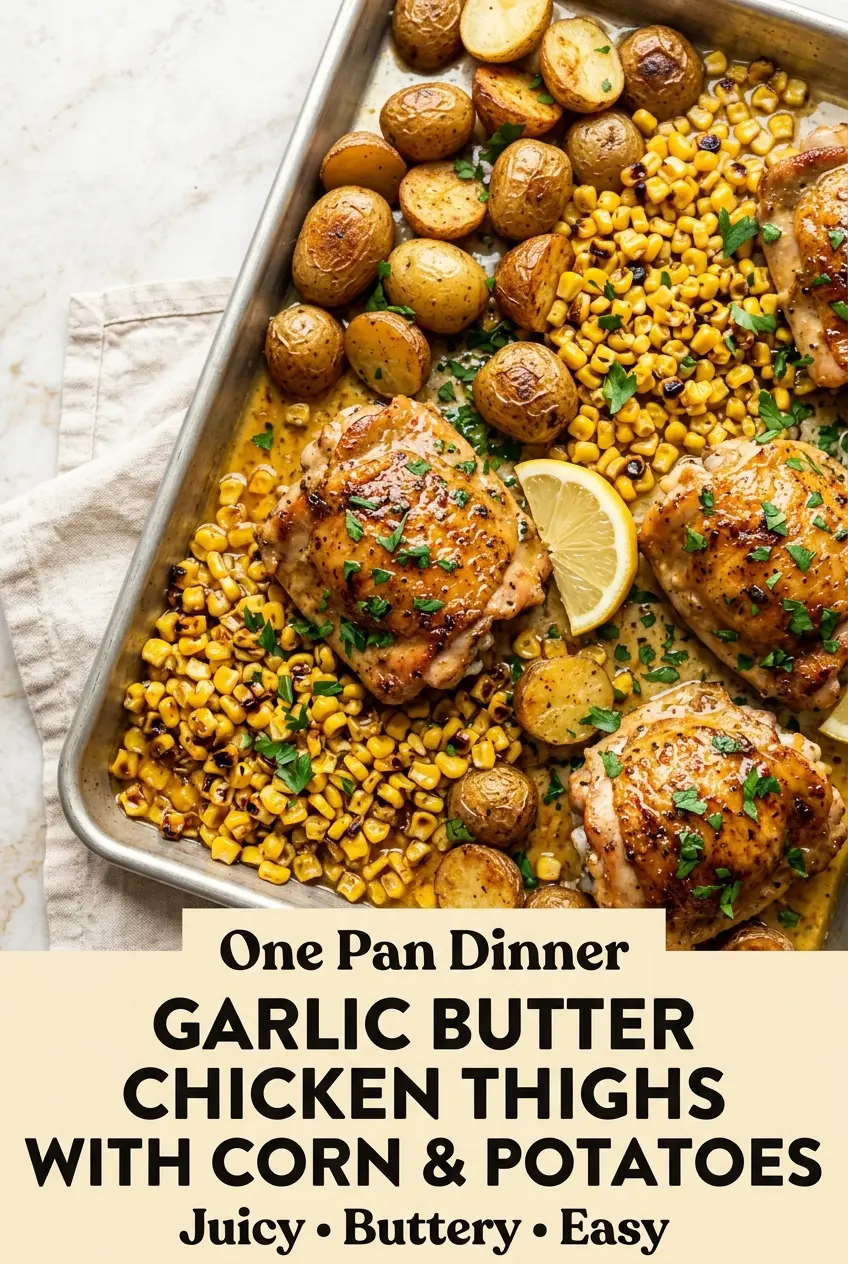
Garlic Butter Chicken Thighs with Corn and Potatoes (Sheet Pan)
Ingredients
Equipment
Method
- Preheat the oven to 425°F and line a large sheet pan with parchment paper or lightly grease it.
- Whisk together the melted butter, garlic, olive oil, smoked paprika, onion powder, Italian seasoning, salt, black pepper, and lemon zest.
- Place the chicken thighs, baby potatoes, and corn on the prepared sheet pan.
- Brush and toss everything with the garlic butter mixture until evenly coated.
- Arrange the chicken skin-side up, leaving space around each piece so the vegetables roast evenly.
- Bake at 425°F for 40–45 minutes, stirring the potatoes and corn halfway through.
- Continue baking until the chicken reaches 165°F, the skin is golden and crisp, and the potatoes are fork-tender.
- Broil for 2–3 minutes, if desired, to crisp the chicken skin further and lightly caramelize the vegetables.
- Sprinkle with fresh parsley and serve immediately with lemon wedges.
