
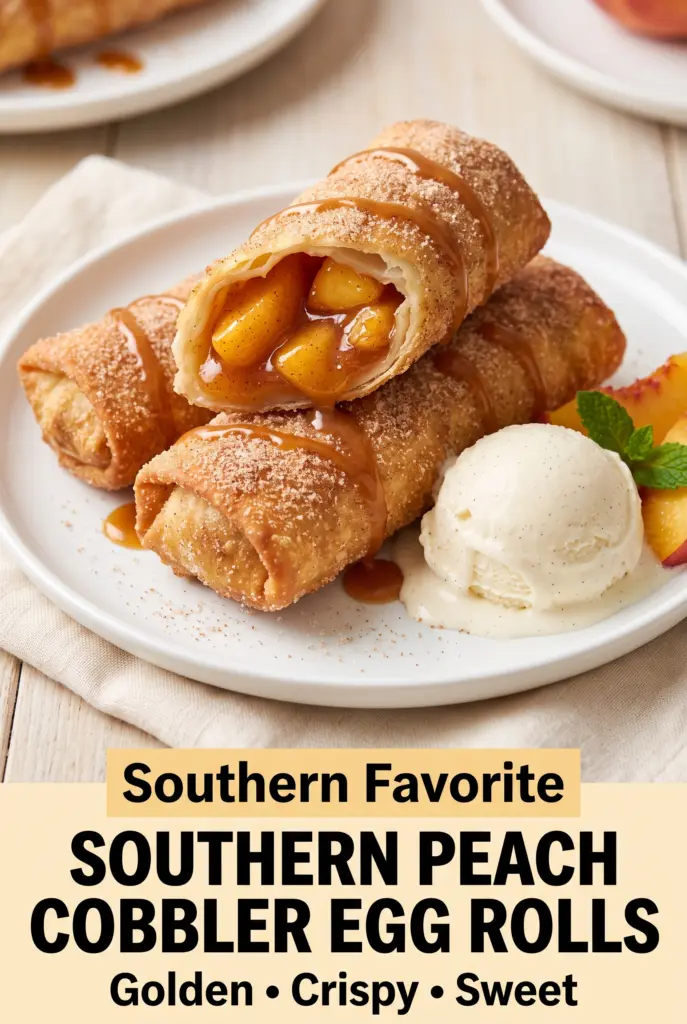
Southern Peach Cobbler Egg Rolls
Warm cinnamon peaches tucked into a shattering crisp wrapper is the kind of dessert that disappears fast. These Southern Peach Cobbler Egg Rolls keep the soul of peach cobbler —…
Tip: save now, cook later.Warm cinnamon peaches tucked into a shattering crisp wrapper is the kind of dessert that disappears fast. These Southern Peach Cobbler Egg Rolls keep the soul of peach cobbler — buttery fruit, brown sugar, cinnamon, and a little vanilla — but package it in a handheld bite that fries up golden and finishes with a sweet sugar coating. You still get that soft, jammy center, but with enough crunch to make every bite feel fresh and special.
The filling matters here. Peaches need a short cook so they soften and release juice, then a quick cornstarch slurry pulls everything into a glossy filling that stays put inside the wrapper instead of leaking into the oil. Cooling it completely before rolling is the difference between neat egg rolls and a mess on the counter. Fresh peaches bring the brightest flavor, but well-drained canned peaches work when the fruit is out of season and you still want that cobbler taste.
Below, I’ve included the little details that keep the wrappers sealed, the oil at the right temperature, and the coating clinging while the egg rolls are still warm. Those small steps are what make the texture work from the first batch to the last.
The filling thickened up perfectly and stayed inside the wrappers. I used canned peaches and they still came out crisp on the outside with that warm cobbler taste inside.
These peach cobbler egg rolls are the crunchy, cinnamon-sugared dessert you’ll want to save for when you need a fast twist on classic cobbler.
The Filling Has to Be Thick Before It Ever Hits the Wrapper
If the peach mixture is too loose, it will steam the wrappers from the inside and leak into the oil. The cornstarch slurry needs that brief cook after it goes in, just long enough to turn the juices glossy and spoonable. If you stop too early, the filling looks fine in the pan but turns watery once it cools.
Cooling is just as important as thickening. Hot filling softens the wrappers before they can seal, and that’s when splits happen during frying. Let the peaches come all the way to room temperature, then roll them only when the filling holds its shape on a spoon.
What the Ingredients Are Doing in These Peach Cobbler Egg Rolls
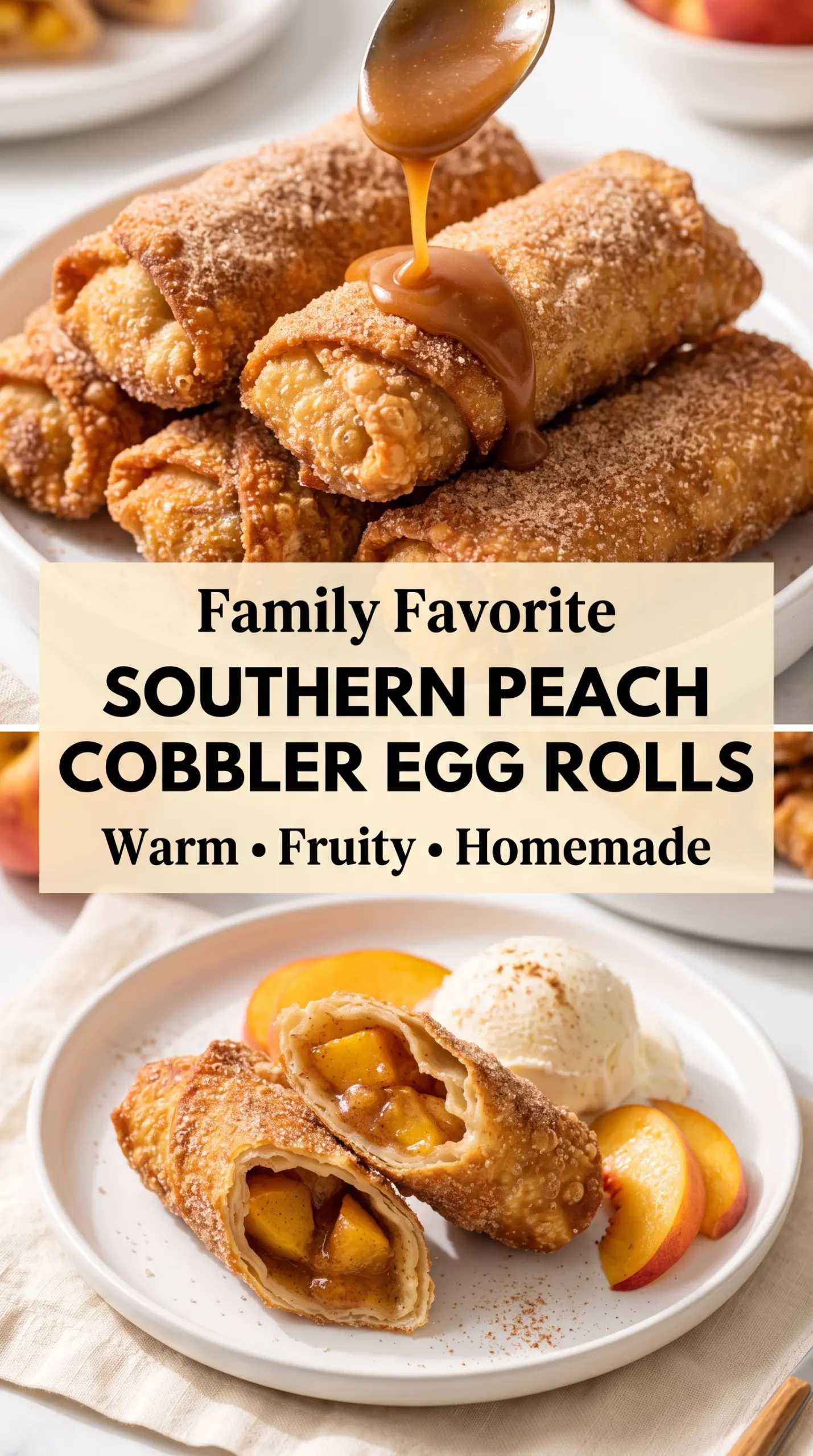
- Peaches — Fresh peaches give the cleanest, brightest flavor, but canned peaches work when they’re drained well and patted dry first. Too much extra juice will thin the filling and make the wrappers harder to seal.
- Brown sugar — This adds the caramel note that makes the filling taste like cobbler instead of just sweet fruit. Light brown sugar is enough here; dark brown sugar will push the flavor deeper and a little more molasses-heavy.
- Cinnamon and nutmeg — Cinnamon does most of the work, while nutmeg gives the filling that old-fashioned baked-dessert finish. Don’t overdo the nutmeg or it takes over the peach flavor.
- Cornstarch — This is what turns the juices into a thick, glossy filling that stays inside the wrapper. Flour won’t thicken as cleanly here and can leave the filling cloudy.
- Egg roll wrappers — These fry up sturdier and crispier than spring roll wrappers, which is exactly what you want for a fruit filling. Keep them covered with a barely damp towel while you work so they don’t dry out and crack.
- Egg wash — The beaten egg seals the edges so the rolls stay closed in the oil. If the wrapper edge won’t stick, brush on a little more egg and press firmly before frying.
- Vegetable oil — A neutral frying oil lets the peach filling stay front and center. You need enough depth for the rolls to float and brown evenly, not sit flat and absorb extra oil.
How to Build the Filling, Seal the Rolls, and Fry Them Crisp
Cooking the Peach Filling Until It Holds
Melt the butter first, then add the peaches, sugars, cinnamon, and nutmeg. Cook until the fruit softens and the juices start to look syrupy around the edges of the pan. When the cornstarch slurry goes in, the filling should thicken within a minute or two and take on a glossy look. If it still looks thin and soupy, it will burst out later, so keep it on the heat until it coats the spoon.
Rolling Without Trapping Steam
Spoon a small amount of cooled filling near the bottom corner of each wrapper. Too much filling is the fastest way to split one open in hot oil, so keep the mound compact and leave clean edges for sealing. Fold the bottom corner over the filling, tuck in the sides, and roll it up tight enough that there are no air pockets. Air expands during frying and can push the seam open.
Frying at the Right Temperature
Heat the oil to 350°F before the first roll goes in. If the oil is cooler, the wrappers soak up grease before they crisp. If it’s too hot, the outside browns before the center heats through and the sugar coating can scorch. Fry in small batches and give each roll room to move so every side turns an even deep gold.
Coating While They’re Still Warm
Drain the egg rolls briefly on paper towels, then roll them in the cinnamon sugar while they’re still hot enough for the coating to cling. Wait too long and the sugar falls off instead of melting into the crust. Serve them warm with ice cream or caramel sauce, because that contrast between hot filling and cold cream is half the reason people go back for a second one.
How to Adapt These Peach Cobbler Egg Rolls for Different Kitchens
Using Canned Peaches When Fresh Aren’t Great
Drain the peaches well and pat them dry before cooking so the filling doesn’t start out watery. Canned peaches soften faster than fresh, so they usually need a little less time in the skillet before the slurry goes in.
Baking Instead of Frying
Brush the rolls with melted butter or a little neutral oil and bake them until deeply golden, turning once for even color. They won’t have the same crackly blistered crust as fried rolls, but the filling still comes through and the cleanup is easier.
Gluten-Free and Dairy-Free Adjustments
Use gluten-free wrappers if you can find a brand that seals and fries well, and swap the butter for a neutral oil or plant-based butter. The flavor stays close, though the filling will be a little less rich without the dairy butter base.
Making Them Ahead for a Party
Roll the egg rolls ahead of time and keep them covered in the refrigerator until you’re ready to fry. Don’t coat them in cinnamon sugar until after frying, or the sugar will melt into the wrapper and lose that crisp finish.
Storage and Reheating
- Refrigerator: Store leftovers in an airtight container for up to 3 days. The wrapper will soften a little, but the filling stays good.
- Freezer: Freeze the fried, cooled egg rolls on a tray, then move them to a freezer bag for up to 2 months. They reheat better from frozen than from thawed because they keep more of their crispness.
- Reheating: Warm them in a 375°F oven or air fryer until the crust turns crisp again. Skip the microwave, which turns the wrapper rubbery and makes the sugar coating damp.
Answers to the Questions Worth Asking
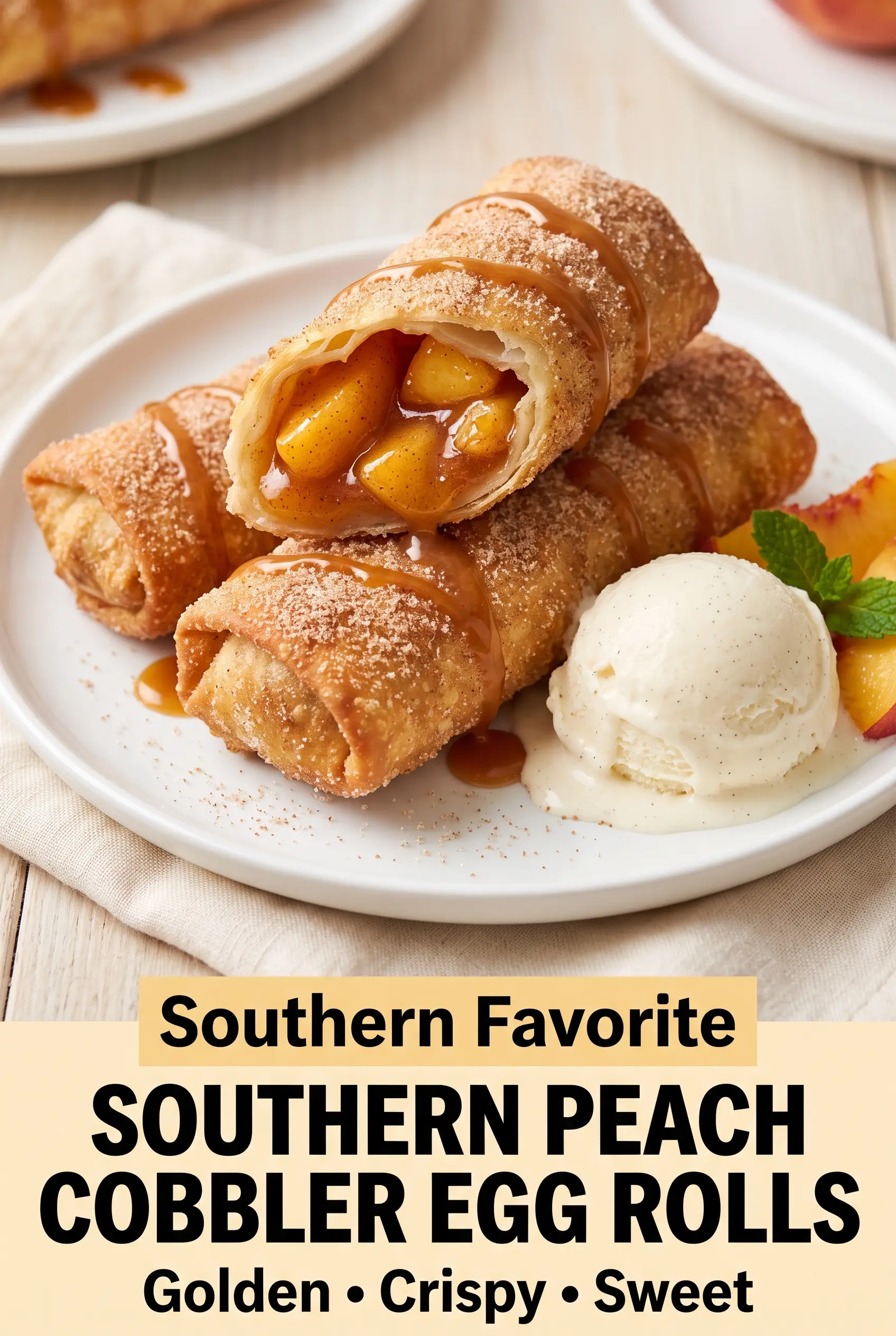
Southern Peach Cobbler Egg Rolls
Ingredients
Equipment
Method
- Melt the butter in a skillet over medium heat. Add the diced peaches, light brown sugar, granulated sugar, ground cinnamon, and ground nutmeg.
- Cook for 4–5 minutes, stirring occasionally, until the peaches begin to soften. The mixture should look glossy and slightly syrupy.
- Stir in the vanilla extract and lemon juice. You should smell fragrant warm fruit as the liquid loosens.
- Whisk together the cornstarch and water, then pour it into the skillet. Cook for 1–2 minutes until the filling becomes thick and glossy.
- Remove the skillet from the heat and let the filling cool completely. The filling should be thick enough to hold its shape when spooned.
- Lay an egg roll wrapper on a clean surface with one corner facing you. Spoon about 2–3 tbsp of peach filling near the bottom corner.
- Brush the edges with beaten egg. Fold the bottom corner over the filling, fold in both sides, and roll tightly to seal.
- Heat 2 inches of vegetable oil to 350°F in a deep skillet or Dutch oven. Keep the oil at a steady temperature before frying.
- Fry the egg rolls in batches for 2–3 minutes per side until evenly golden brown and crisp. Avoid overcrowding the pan so the wrappers stay crisp.
- Transfer the egg rolls to a paper towel-lined plate to drain for 1–2 minutes. They should look crisp and lightly blistered.
- Mix the cinnamon and granulated sugar in a shallow bowl. Roll the warm egg rolls in the mixture until evenly coated.
- Serve the egg rolls warm. Top with vanilla ice cream, caramel sauce, or whipped cream if desired.
