
Hawaiian Chicken Sheet Pan
Sticky, caramelized Hawaiian chicken earns its place in the dinner rotation because it gives you that sweet-savory takeout-style finish without a wok, without standing over the stove, and without a…
Tip: save now, cook later.Sticky, caramelized Hawaiian chicken earns its place in the dinner rotation because it gives you that sweet-savory takeout-style finish without a wok, without standing over the stove, and without a sink full of pans. The chicken roasts until the edges pick up color, the pineapple softens into jammy pockets, and the peppers stay just crisp enough to keep the whole tray from tasting flat.
What makes this version work is the balance between the roast and the glaze. The chicken gets coated with part of the sauce before it hits the oven, which lets it brown instead of steaming, and the remaining sauce is thickened separately so it can cling to everything at the end instead of disappearing into the pan. Fresh pineapple matters here because it caramelizes better and brings enough acidity to keep the sauce from feeling one-note. The sesame seeds and green onions aren’t just garnish, either; they cut through the sweetness and give the final dish a little bite.
Below, I’ll walk through the part that keeps the chicken juicy, the easiest way to get a glossy glaze, and a few swaps that still keep the dish bright and balanced.
The chicken stayed juicy, the pineapple got those caramelized edges, and the glaze thickened up perfectly. I served it over rice and my husband went back for seconds before I even sat down.
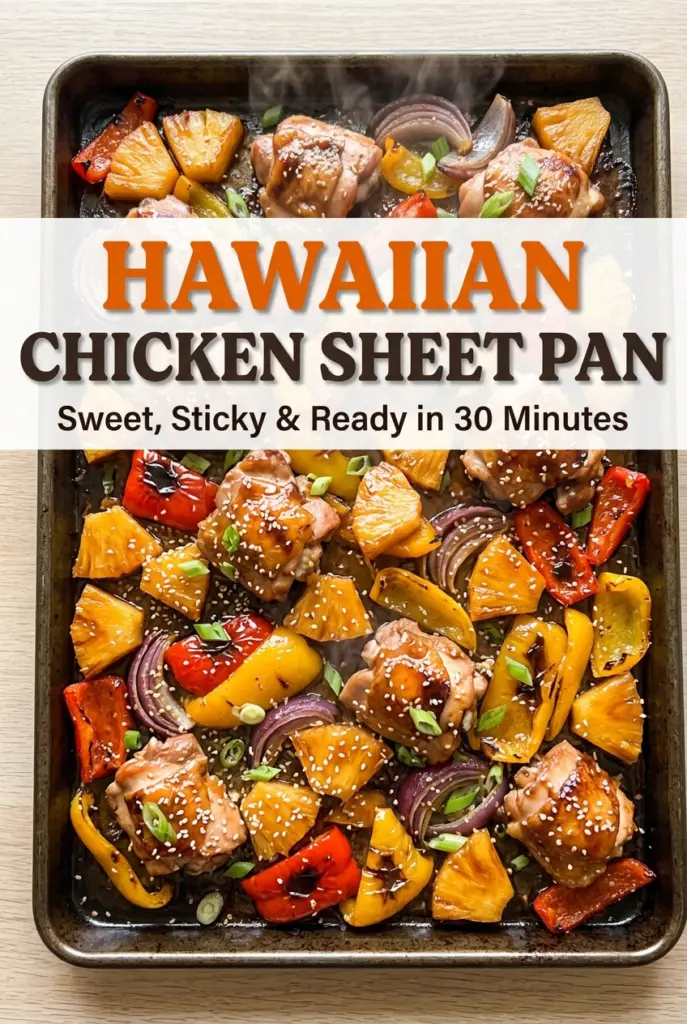
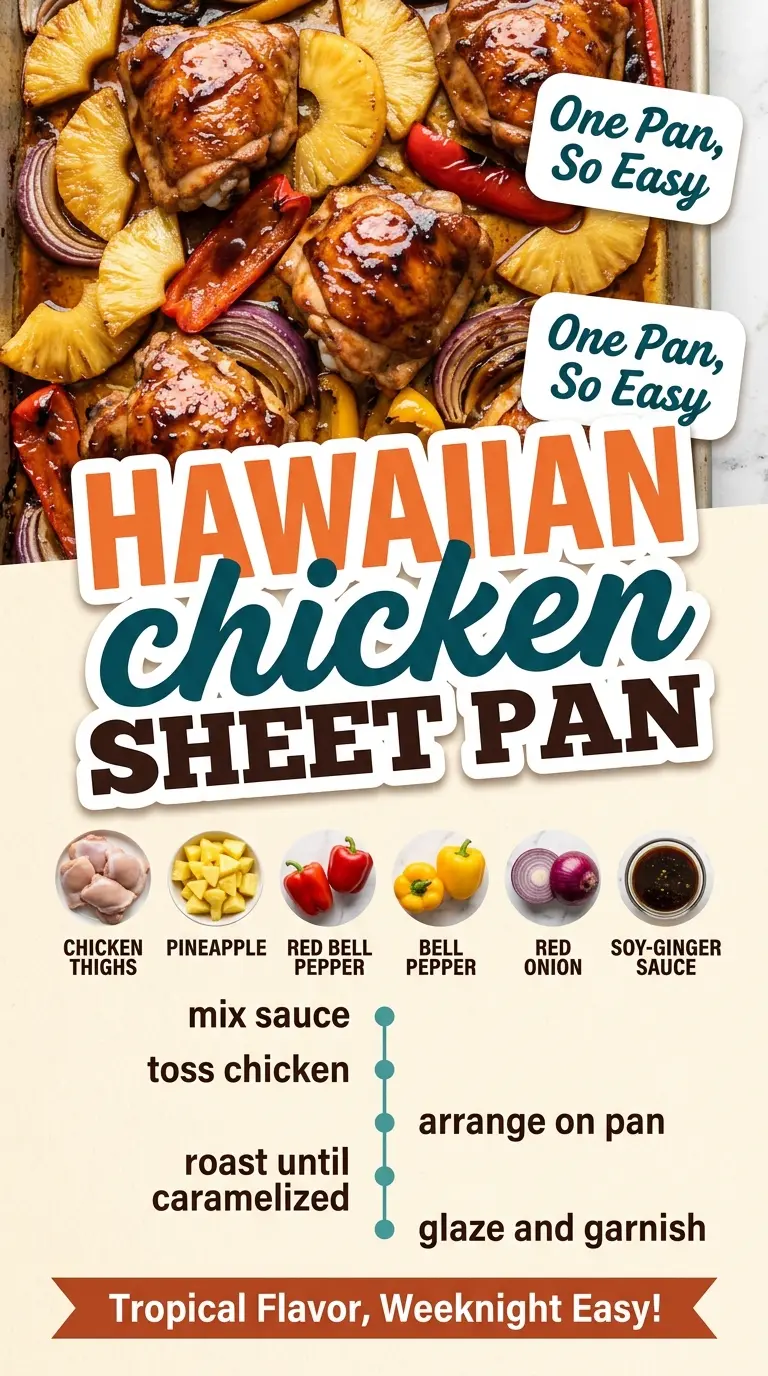
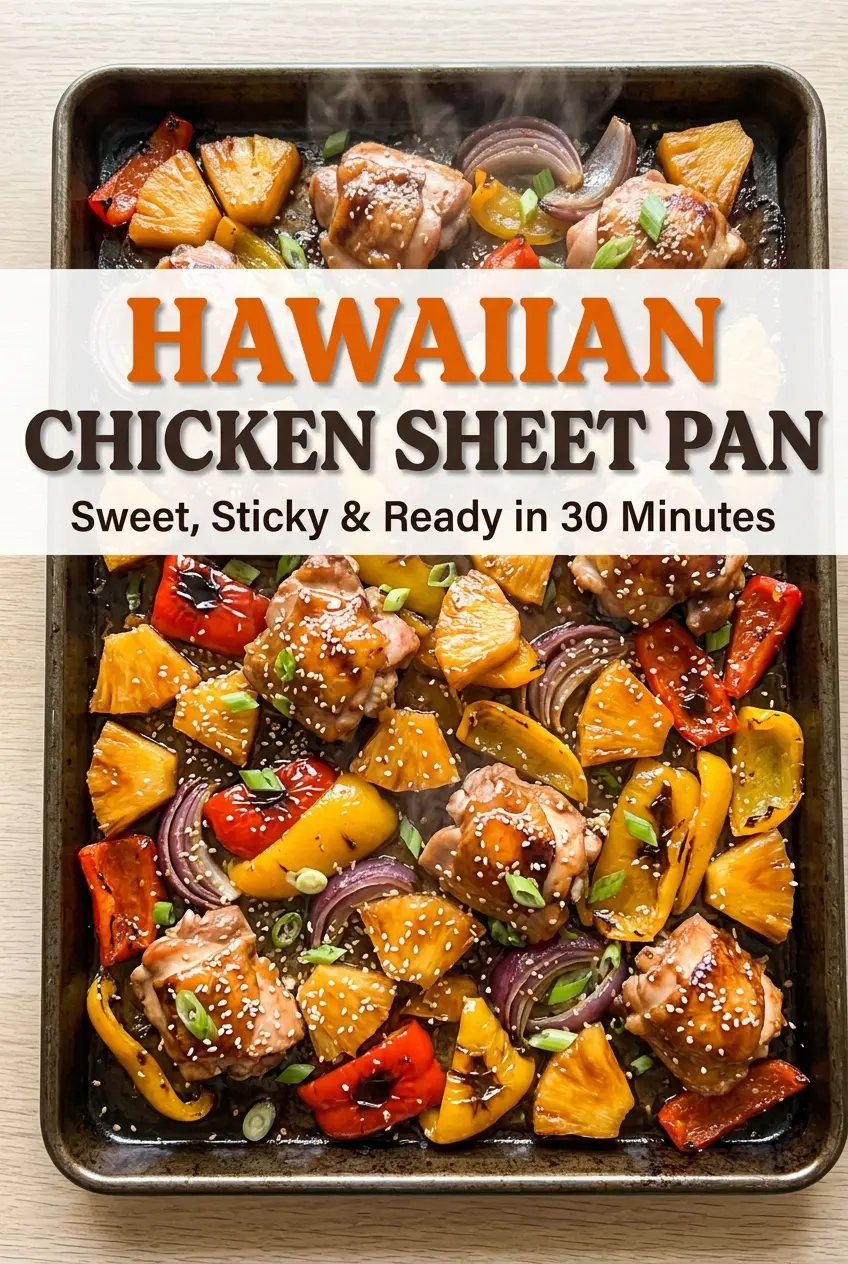
Sticky Hawaiian chicken sheet pan dinner with caramelized pineapple and a glossy soy-ginger glaze
The Secret to Roasting Everything Together Without Steaming the Chicken
The biggest mistake with sheet pan chicken is crowding the pan until everything sits in a wet little puddle. That’s how you end up with pale chicken and soft peppers instead of the roasted edges this dish needs. A large sheet pan and a single layer are doing real work here. The heat can move around the food, the pineapple can caramelize, and the onion can pick up those browned edges that make the sauce taste deeper.
The other thing that matters is splitting the sauce. If all of it goes on at the start, the sugars and pineapple juice spend more time burning than glazing. A little goes on before roasting for flavor, then the rest gets cooked down and added at the end for shine and body. That two-part approach keeps the chicken from drying out and keeps the final dish looking glossy instead of sticky in a dull way.
- Boneless, skinless chicken thighs — Thighs stay tender in the oven and hold up better than chicken breast in a saucy sheet pan dinner. If you use breast, cut it into larger pieces and shorten the roast a bit, or it can turn dry before the vegetables finish.
- Fresh pineapple — Fresh pineapple caramelizes better than canned and gives you those golden edges that make the dish taste brighter. Canned pineapple works in a pinch, but drain it well and expect a softer result.
- Pineapple juice — This adds sweetness and a little tang to the glaze, but it should be balanced with soy sauce and ginger or it gets syrupy. If you don’t have it, a splash of orange juice gives a similar sweetness with a slightly different finish.
- Cornstarch — This is what turns the reserved sauce into a glaze that coats the chicken instead of pooling at the bottom of the tray. Arrowroot can sub in, but add it at the end of simmering and don’t boil it hard.
Building the Glaze So It Clings Instead of Running Off
Mixing the Sauce Base
Whisk the soy sauce, pineapple juice, brown sugar, garlic, and ginger until the sugar dissolves and the mixture looks smooth, not grainy. This is the flavor base for the whole pan, so take a second to get the balance right before anything touches the oven. If the sauce tastes sharp at this point, it will soften in the oven, but it should still taste boldly savory and sweet.
Coating the Chicken for Browning
Toss the chicken with olive oil and half of the sauce, just enough to coat every piece without drowning it. That thin coating helps the meat brown and keeps the chicken from steaming under a heavy layer of liquid. The reserved sauce stays clean for the glaze, so don’t pour it all over the tray.
Roasting Until the Edges Turn Jammy
Spread the chicken, pineapple, bell peppers, and onion across the pan in one layer and roast at 425°F until the chicken is cooked through and the pineapple starts to brown around the edges. You’re looking for caramelized spots on the fruit and a little color on the chicken, not pale, wet pieces. If the pan looks crowded, use two pans; that’s the difference between roasted and soggy.
Thickening and Finishing
Stir the cornstarch and water into the reserved sauce, then simmer it until it turns glossy and lightly thickened. The glaze should coat the back of a spoon and leave a clean line when you drag your finger through it. Drizzle it over the roasted chicken and vegetables while it’s still warm so it spreads and clings instead of sitting in a separate layer.
How to Adapt This for Different Diets and Different Kitchens
Gluten-Free Version
Use tamari or a certified gluten-free soy sauce in place of regular soy sauce. The flavor stays close to the original, and the glaze still thickens the same way because the cornstarch is doing that work, not the soy sauce.
Lower-Sugar Swap
Cut the brown sugar down by a tablespoon if you want a less sweet glaze. The pineapple still brings plenty of sweetness, and the final dish will lean more savory and a little less sticky.
Vegetable-Heavy Version
Add broccoli florets, snap peas, or zucchini if you want more vegetables on the pan. Broccoli and snap peas handle the roast well; zucchini softens faster and should be cut larger so it doesn’t collapse before the chicken is done.
Make-Ahead and Leftovers
Store leftovers in an airtight container in the refrigerator for up to 4 days. The pineapple will soften more after chilling, but the flavor holds up well. Reheat gently in a skillet over medium-low heat or in the microwave in short bursts; high heat dries out the chicken and makes the glaze separate.
Questions I Get Asked About This Recipe
Hawaiian Chicken Sheet Pan
Ingredients
Equipment
Method
- Preheat oven to 425°F and line a large sheet pan with parchment paper.
- In a bowl, whisk together the soy sauce, pineapple juice, brown sugar, garlic, and ginger.
- Toss the chicken chunks with the olive oil and half of the sauce mixture; set the remaining sauce aside.
- Spread the chicken, pineapple, bell peppers, and red onion in a single layer across the sheet pan.
- Roast 20–25 minutes, until the chicken is cooked through and the pineapple edges are caramelized.
- Meanwhile, whisk the cornstarch and water into the reserved sauce, then simmer in a small saucepan over medium heat 3–4 minutes until thickened into a glaze.
- Drizzle the warm glaze over the sheet pan and toss gently to coat.
- Garnish with green onions and sesame seeds, then serve hot over rice.
