
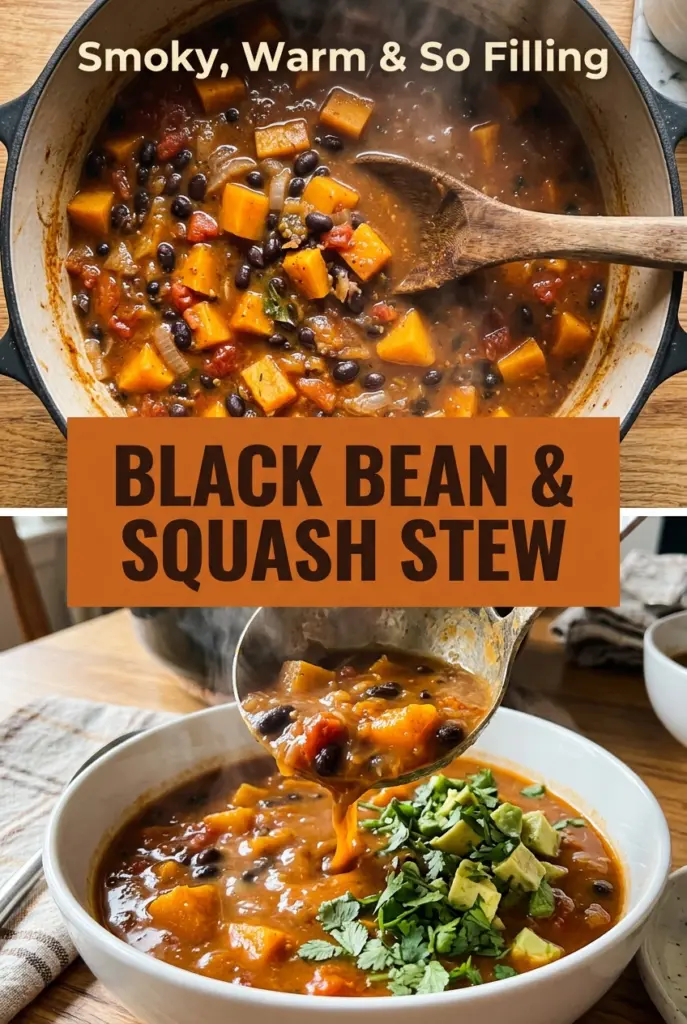
Black Bean Butternut Squash Stew
Sweet butternut squash, smoky spices, and black beans turn into a stew that lands somewhere between hearty and comforting without ever feeling heavy. The squash softens just enough to thicken…
Tip: save now, cook later.Sweet butternut squash, smoky spices, and black beans turn into a stew that lands somewhere between hearty and comforting without ever feeling heavy. The squash softens just enough to thicken the broth a little, the beans hold their shape, and the tomatoes give everything a bright base that keeps each spoonful balanced. It’s the kind of pot that tastes like it took all afternoon, even though it comes together fast enough for a weeknight.
The trick is building flavor in stages instead of dumping everything in at once. Let the onion soften first so it turns sweet, toast the spices in the oil so they bloom, then simmer the squash until it’s fork-tender before the beans go in. That order matters because black beans can get mushy if they cook too long, while squash needs enough time to lose its raw edge and melt into the broth.
Below you’ll find the small details that make this stew work: how to keep the squash from turning to cubes of mush, why lime juice at the end matters more than it seems, and a few easy ways to adjust the heat or make the pot stretch a little farther.
The squash held its shape but still made the broth thick and silky, and the lime at the end pulled everything together. I served it with avocado and my husband went back for seconds before I’d even sat down.
Save this black bean butternut squash stew for the nights when you want a one-pot vegetarian dinner that tastes rich, smoky, and filling.
The Trick to Keeping the Squash Tender, Not Mushy
Butternut squash can go from perfect to falling apart in a hurry, especially in a stew where it’s simmering in liquid. The goal here isn’t for every cube to hold a sharp edge forever; it’s for the squash to soften enough to thicken the broth while still giving you distinct pieces in the spoonful. That happens when you simmer it just until a fork slides in with little resistance, then stop the cooking with the beans and final seasoning instead of letting it boil away for another twenty minutes.
Another thing that matters is cutting the squash into even cubes. If you’ve got a mix of tiny pieces and oversized chunks, the small ones will disappear before the larger ones are ready. I like pieces that are about 3/4-inch wide so they cook through at the same pace and still give the stew some body.
What Each Ingredient Is Doing in This Stew
- Butternut squash — This is what gives the stew its creamy, almost velvety body without adding dairy. Fresh squash is worth it here because frozen cubes tend to break down faster and can make the texture looser. If you need a shortcut, use pre-cut squash from the produce section and keep the pieces large.
- Black beans — They add heft and make the stew feel like a full meal. Canned beans are exactly right for this recipe since they’re already tender and only need enough time to warm through. Rinse them well so the broth stays clean instead of muddy.
- Smoked paprika and cumin — These are the backbone of the flavor. The cumin brings warmth, while the smoked paprika gives the stew that quietly smoky depth that makes it taste cooked longer than it actually is. Fresh spices matter here more than you might expect; stale paprika will leave the whole pot flat.
- Lime juice — Don’t skip it. The acid wakes up the tomatoes, sharpens the spices, and keeps the squash from tasting one-note. Add it at the end, off the heat, so the brightness stays fresh.
- Vegetable broth — Use a broth you’d actually sip on its own, because it carries the whole pot. If yours is salty, hold back a little on the added salt until the stew has simmered and you can taste it properly.
Building the Base Before the Stew Simmers
Softening the Onion
Warm the olive oil over medium heat and cook the onion until it turns translucent and starts to smell sweet, about 4 to 5 minutes. If the onion starts browning too fast, the heat is too high and the garlic will go bitter later. You want gentle softening here, not caramelization. That first layer is what keeps the stew savory instead of just spicy.
Blooming the Spices
Stir in the garlic for only 30 seconds, then add the cumin, chili powder, smoked paprika, and cayenne. Let them hit the hot oil for about a minute until they smell deep and toasty. If the pot looks dry, the spices can scorch, so keep everything moving and move on as soon as the aroma opens up. This step is where the stew starts tasting like more than canned tomatoes and broth.
Simmering the Squash
Add the tomatoes, broth, squash, and red bell pepper, then bring the pot to a boil before lowering it to a steady simmer and covering it. The squash should become fork-tender in 20 to 25 minutes, but don’t chase a rolling boil or the cubes will break down on the outside before the centers are soft. You’re looking for small bubbles, a lid slightly ajar or fully on depending on your burner, and squash that holds together when stirred.
Finishing with Beans and Lime
Stir in the beans near the end and simmer uncovered until the stew thickens a little, about 10 minutes. This is where the broth tightens up and the beans warm through without turning chalky or split. Take the pot off the heat before adding lime juice so the acidity stays bright. Taste after that and only then decide if you need more salt.
How to Adapt This for a Different Pantry or Diet
Make it vegan and gluten-free without changing a thing
This stew already fits both diets as written, as long as your vegetable broth is gluten-free. That’s one reason it works so well for mixed crowds: nobody feels like they got the fallback meal, and the texture stays hearty enough to stand on its own.
Turn up the heat without losing balance
The cayenne is optional for a reason. Add it for a little heat, or use a pinch of chipotle powder if you want the smoke to feel deeper and the finish a little sharper. If you go heavier on spice, keep the lime at the end so the stew still tastes rounded instead of harsh.
Stretch it into a bigger meal
A handful of baby spinach stirred in at the end, or a cup of cooked quinoa added with the beans, turns this into an even more filling bowl. Spinach melts into the broth almost instantly, while quinoa soaks up flavor and makes the stew thicker without changing the taste much.
Use sweet potato if that’s what you have
Sweet potato works in place of butternut squash and brings a slightly softer, sweeter result. Cut it into the same size pieces and check it a little early, since some sweet potatoes cook faster and can go mushy if you let them ride too long.
Storage and Reheating
- Refrigerator: Keeps well for 4 days. The stew thickens as it sits, and the squash softens a bit more overnight.
- Freezer: Freezes well for up to 3 months in airtight containers. Leave a little room at the top because the broth will expand.
- Reheating: Warm it slowly on the stovetop over medium-low heat with a splash of broth or water if needed. The biggest mistake is blasting it hard in the microwave or on high heat, which can break down the squash and make the beans split.
Answers to the Questions Worth Asking
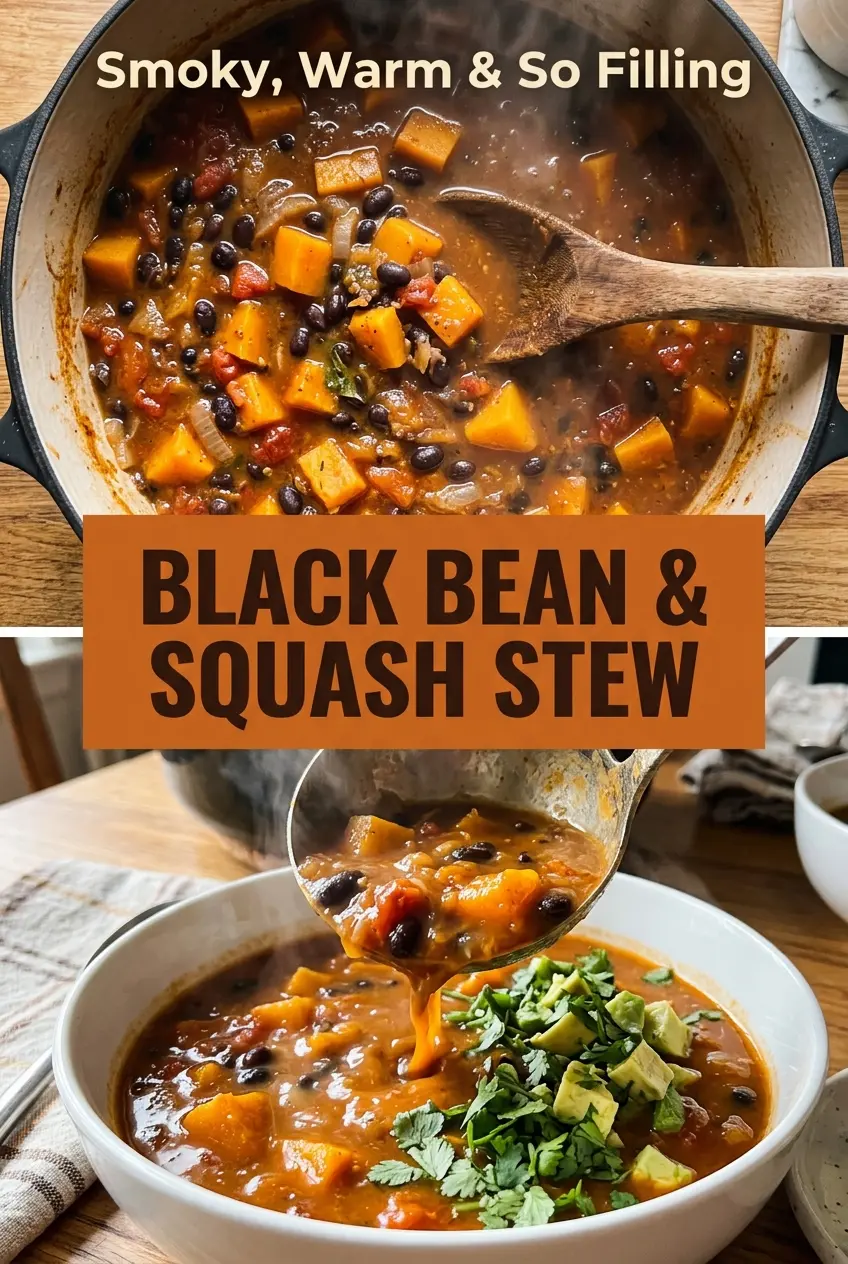
Black Bean Butternut Squash Stew
Ingredients
Equipment
Method
- Heat 2 tbsp olive oil in a large pot over medium heat. Let it warm until it shimmers, about 1 minute.
- Add the diced yellow onion and cook 4–5 minutes until softened. Stir occasionally so the onion cooks evenly.
- Stir in the minced garlic and cook 30 seconds until fragrant. Keep the heat at medium so it doesn’t brown.
- Add the butternut squash and diced red bell pepper; cook 5 minutes, stirring occasionally. This begins softening the squash before simmering.
- Stir in the ground cumin, chili powder, smoked paprika, and cayenne (optional); cook 1 minute until fragrant. Stir continuously for even blooming.
- Pour in the diced tomatoes and vegetable broth. Bring to a boil, then reduce heat to a gentle simmer.
- Simmer, covered, 20–25 minutes until the squash is fork-tender. Check once near the end by piercing with a fork.
- Stir in the black beans, salt, and black pepper. Simmer uncovered 10 more minutes until slightly thickened.
- Remove from heat and stir in the lime juice. Taste and adjust seasoning if needed.
- Ladle into bowls and top with chopped fresh cilantro and sliced avocado if desired. Serve hot while the stew is thick and steamy.
