
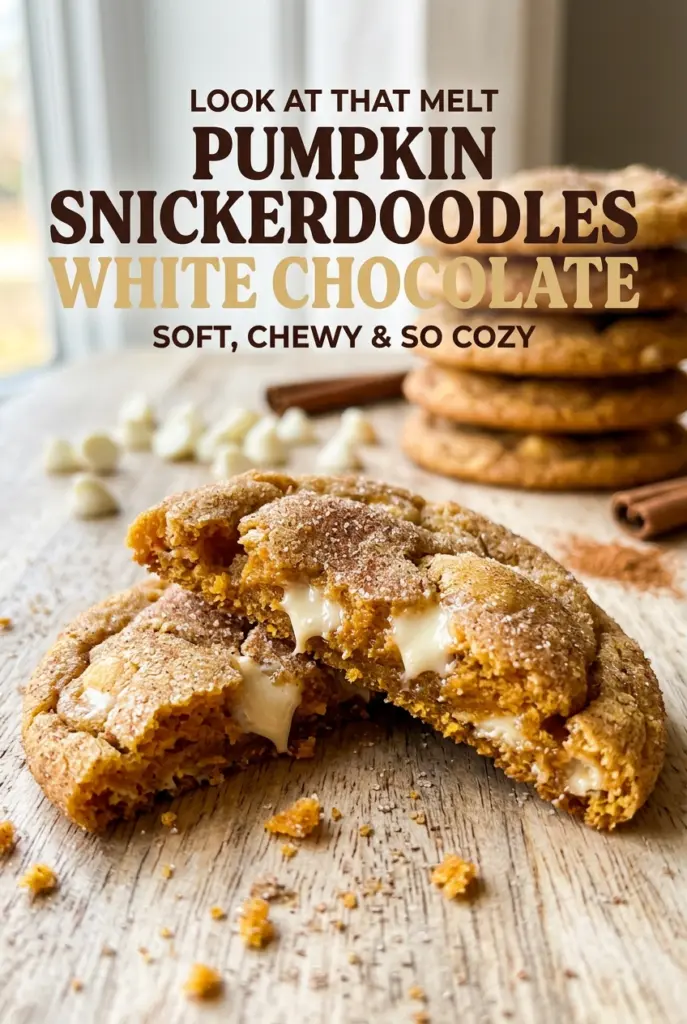
White Chocolate Pumpkin Snickerdoodles
Soft, pillowy centers with lightly crisp edges are what make these White Chocolate Pumpkin Snickerdoodles worth baking on repeat. They land right in that sweet spot between a classic snickerdoodle…
Tip: save now, cook later.Soft, pillowy centers with lightly crisp edges are what make these White Chocolate Pumpkin Snickerdoodles worth baking on repeat. They land right in that sweet spot between a classic snickerdoodle and a pumpkin cookie, with warm spice in the dough, a thick cinnamon-sugar coating, and little pockets of white chocolate that melt into each bite. The result is rich without feeling heavy, and the texture stays tender instead of turning cakey.
The trick is keeping the pumpkin flavor without adding too much moisture. Pumpkin puree brings color and flavor, but too much of it makes cookies puff up like little muffins. Using just an egg yolk instead of a whole egg helps keep the dough richer and denser, which is what gives these cookies that chewy middle. Cream of tartar matters here too, because it gives the snickerdoodle tang and helps the tops crack in that classic way.
Below, I’m walking through the small details that make these cookies bake up properly every time, plus a couple of smart swaps if you need them. The cinnamon-sugar coating is worth the extra bowl, and there’s a reason the dough only gets mixed until it comes together.
The cookies stayed soft for days, and the white chocolate melted into little creamy pockets without making them greasy. I also loved that the cinnamon sugar on the outside actually cracked a little in the oven.
Save these White Chocolate Pumpkin Snickerdoodles for the days when you want chewy pumpkin cookies with a cinnamon-sugar crust and melted white chocolate in every bite.
The Dough Mistake That Turns Pumpkin Cookies Cakey
Most pumpkin cookies get too soft because the dough carries too much moisture and too much mixing. Pumpkin puree is the culprit more often than people think. It brings flavor and tenderness, but if you beat it in aggressively or add extra puree, the cookies lose their chew and bake up like little sponge cakes instead of snickerdoodles.
That’s why this dough uses only one egg yolk and a measured amount of pumpkin. The yolk adds richness without the extra water that comes from a whole egg. Cream of tartar also earns its place here. It gives the cookie that classic snickerdoodle tang and helps the dough spread and crack in the oven instead of baking up flat and greasy.
- Pumpkin puree — Use plain canned pumpkin, not pumpkin pie filling. Pie filling has sugar and spices already added, which throws off both the texture and the flavor balance.
- Cream of tartar — This is what makes the cookie taste like a snickerdoodle instead of a generic spice cookie. If you don’t have it, the cookies will still bake, but they’ll lose that signature tang and slightly puffy texture.
- White chocolate chips — Chips hold their shape better than chopped white chocolate. If you want bigger molten pockets, chop a bar, but expect a softer melt and a little more sweetness.
What Each Ingredient Is Actually Doing in This Dough

- All-purpose flour — This gives the cookies enough structure to hold the pumpkin and chocolate without collapsing. Spoon and level it if you can; packing the cup too tightly makes the dough dry and the cookies turn crumbly.
- Butter — Softened butter creams with the sugar and traps air, which helps the cookies bake up light instead of dense. If the butter is melted, the dough spreads too fast.
- Granulated sugar — Sugar sweetens the dough and helps the edges brown. Some of it also stays outside the cookie in the coating, which is what gives you that crisp, sparkly finish.
- Cinnamon and nutmeg — These warm the dough itself, so the cookie tastes finished even before the coating goes on. Nutmeg is subtle here, but it adds a roundness that keeps the spice from tasting one-note.
- Egg yolk — The yolk binds the dough and adds richness without extra water. That’s a big part of why the centers stay chewy.
The 20 Minutes That Decide the Texture
Cream the butter and sugar properly
Beat the softened butter and sugar until the mixture looks pale and fluffy, about 2 minutes. That step builds the cookie’s lift and gives the centers a softer bite. If the butter is too cold, the mixture stays grainy; if it’s too warm, the cookies spread too much in the oven.
Mix in the pumpkin without overworking the dough
Add the pumpkin puree, egg yolk, and vanilla and mix until smooth, then stop. Once the dry ingredients go in, stir only until the flour disappears. If you keep mixing after that, the dough tightens up and the cookies bake up tough instead of tender.
Roll generously in cinnamon sugar
The coating is more than decoration. It helps the tops crack, adds a light crunch, and keeps the finished cookies tasting like a true snickerdoodle. Roll each ball heavily so the surface is fully covered; patchy coating bakes into patchy flavor.
Bake until the edges set and the centers still look soft
Pull the cookies when the edges are set and the tops look slightly cracked. The centers should still look a little underdone when they come out, because they finish setting on the baking sheet. If you wait until the middle looks completely baked, they’ll cool into dry cookies.
How to Adapt These Cookies Without Losing the Good Part
Dairy-Free Version
Use a good dairy-free butter stick in place of the unsalted butter and choose dairy-free white chips. The texture stays close to the original as long as you use a firm margarine-style substitute, not a tub spread, which tends to make the dough too soft.
Gluten-Free Swap
A 1:1 gluten-free baking flour blend usually works here, especially one with xanthan gum already added. The cookies may spread a touch less and bake a little more tender, but the cinnamon sugar coating and white chocolate still carry the recipe.
Extra-Spiced Version
Add a pinch of ground cloves or ginger if you want the spice to lean warmer and deeper. Keep it light, though — too much extra spice can crowd out the pumpkin and make the white chocolate taste flat.
Storage and Reheating
- Refrigerator: Store in an airtight container for up to 5 days. The cookies stay soft, though the cinnamon-sugar coating will lose a little of its crunch after day one.
- Freezer: These freeze well both baked and unbaked. Freeze dough balls after rolling in cinnamon sugar, then bake straight from frozen with 1 to 2 extra minutes.
- Reheating: Warm baked cookies in a 300°F oven for 3 to 4 minutes or microwave one cookie for 8 to 10 seconds. Don’t overheat them or the white chocolate will turn oily and the centers will dry out fast.
