
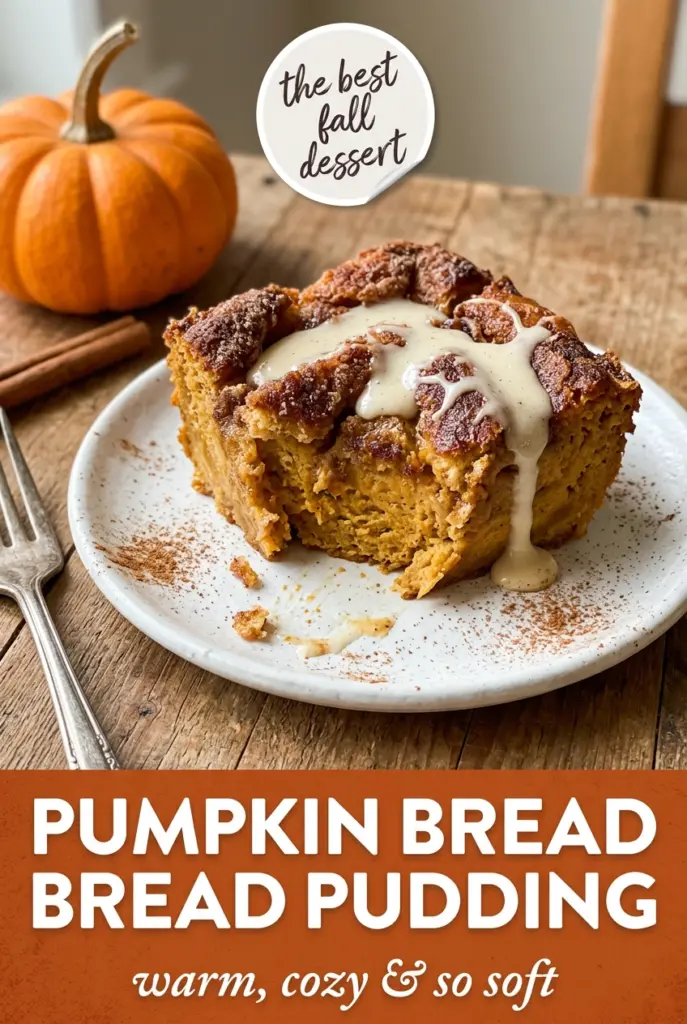
Pumpkin Bread Pudding
Cubes of bread soaking up pumpkin custard and baking into a soft, spoonable center is one of those desserts that disappears fast. The top turns golden and a little crisp,…
Tip: save now, cook later.Cubes of bread soaking up pumpkin custard and baking into a soft, spoonable center is one of those desserts that disappears fast. The top turns golden and a little crisp, the middle stays creamy, and every bite tastes like warm spice and browned buttered edges. This version has the kind of texture that makes leftover bread feel like the best ingredient in the kitchen.
What makes it work is the balance: enough custard to fully saturate the bread, but not so much that it turns heavy or eggy. Brioche or challah gives you a tender structure that holds together after baking, and the pumpkin puree brings body without needing extra flour or starch. The cinnamon-sugar topping adds a thin crackly layer on top, which keeps the whole dish from tasting one-note.
Below, I walk through the part that matters most: how long to let the bread soak so the center turns custardy instead of dry in the middle. I also included the glaze, storage notes, and a few smart swaps if you need to work with what you already have.
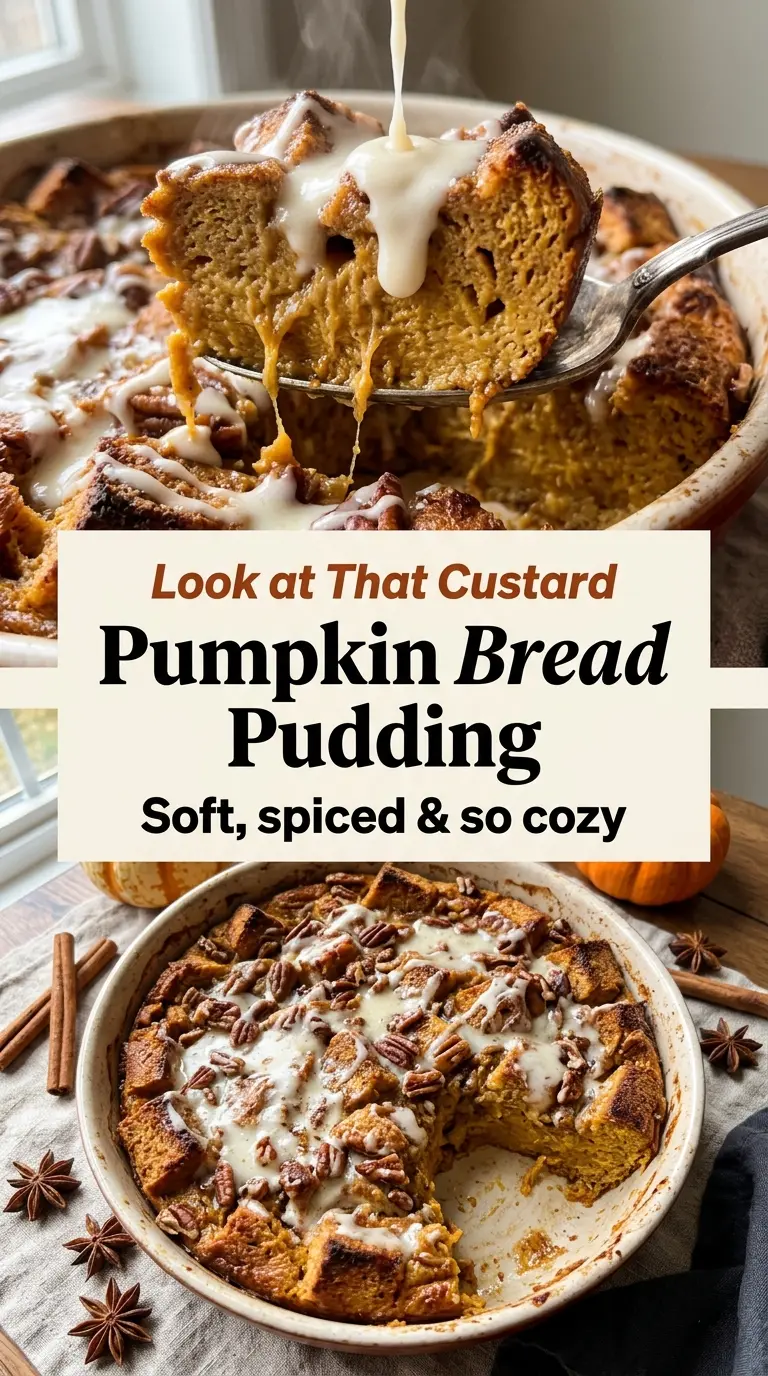
The custard soaked in perfectly and the edges baked up golden without getting dry. I used challah and the center came out soft and creamy, then that cream cheese glaze on top took it over the edge.
Pumpkin bread pudding with cream cheese glaze is the kind of dessert that bakes up custardy, golden, and perfect for using up day-old bread.
The Secret to Custardy Pumpkin Bread Pudding, Not a Wet Casserole
The biggest mistake with bread pudding is rushing the soak or using bread that is too fresh. Fresh bread collapses into mush before it can hold any shape, and bread that only gets a quick dunk leaves dry pockets in the middle. Day-old brioche or challah gives you the sweet, eggy structure you want, and the 15-minute rest lets the custard move all the way through the cubes instead of pooling around them.
The other thing that matters is bake time. Pull it when the center is just set and still has a slight wobble. If you wait for the middle to look firm in the pan, it usually ends up dense after it cools. The pudding keeps cooking as it rests, and that short cooling time is what gives you a creamy slice instead of a gummy one.
What Each Ingredient Is Actually Doing in This Dish
- Day-old brioche or challah — These breads soak up the pumpkin custard without dissolving. Brioche gives a richer result, while challah stays a little lighter and slices cleanly. If you only have sandwich bread, toast the cubes first so they can stand up to the liquid.
- Pumpkin puree — This is what gives the pudding its body and that deep pumpkin flavor. Use plain pumpkin puree, not pie filling, or the spices and sugar will throw off the balance.
- Whole milk and heavy cream — The milk keeps the custard pourable, while the cream adds richness and that soft, almost cheesecake-like texture in the center. You can swap in half-and-half for both if needed, but the finished pudding will be a little lighter and less plush.
- Brown sugar — This sweetens the custard and adds a caramel note that works better here than plain white sugar. Packed brown sugar also helps the custard taste rounded instead of sharp.
- Eggs — They set the custard as it bakes. Four large eggs is the sweet spot here; fewer eggs and the pudding can stay loose, more eggs and it turns bouncy instead of creamy.
- Butter and cinnamon-sugar topping — The melted butter helps the top bake into a crisp, lightly glazed crust. The cinnamon-sugar mixture gives you a little crunch and keeps the top from tasting flat.
- Cream cheese glaze — This adds tang and a soft finish that cuts through the sweetness. If you want a cleaner, less rich dessert, drizzle it lightly instead of covering the whole pan.
Building the Custard and Baking It Until the Center Just Sets
Whisk the custard until completely smooth
Start by whisking the eggs, pumpkin puree, milk, cream, sugar, spices, vanilla, and salt until the mixture looks uniform and no streaks of egg remain. If the pumpkin is stubborn, smash it against the side of the bowl with the whisk before you stop mixing. A smooth custard bakes more evenly and won’t leave pockets of eggy texture in the finished dish.
Give the bread time to drink it in
Pour the custard over the bread cubes and press gently so every piece gets coated. The bread should look thoroughly soaked, but the pan shouldn’t have a deep layer of liquid sitting on top. If the bread floats away from the custard, let it sit and press it again after a few minutes; this is what keeps the center from baking up dry.
Bake until the edges are set and the middle still moves
Drizzle on the melted butter, add the cinnamon sugar, and bake until the top is golden and the center gives a slight wobble when you nudge the pan. The edges should look set and a little darker, while the middle stays soft. If the top browns too quickly, lay a loose piece of foil over it for the last 10 minutes so the custard can finish without overbaking.
Finish with the glaze while it is still warm
Whisk the cream cheese glaze until smooth and pourable, then drizzle it over the warm pudding after a short rest. If the glaze looks thick, a teaspoon or two of extra milk loosens it right up. Warm bread pudding helps the glaze settle into the cracks instead of sitting on top in a heavy layer.
Three Ways to Make This Pumpkin Bread Pudding Fit Your Kitchen
Dairy-Free Version
Use full-fat coconut milk in place of the cream and whole milk, and swap the butter for melted coconut oil or a plant-based butter. The pudding will still bake up custardy, but the flavor shifts slightly toward coconut and the glaze will need a dairy-free cream cheese alternative.
Gluten-Free Swap
Use a sturdy gluten-free brioche-style loaf or challah-style bread if you can find it, and toast the cubes before soaking so they hold together better. Gluten-free bread tends to soften faster, so keep an eye on the soak and bake it until the center is just set, not loose.
Make It a Little Less Sweet
Cut the brown sugar to 1/2 cup and drizzle only half the glaze over the top. You still get the pumpkin spice flavor and creamy texture, but the result tastes more like a breakfast-style bread pudding than a full dessert.
Storage and Reheating
- Refrigerator: Store covered for up to 4 days. The texture firms up a bit in the fridge, but the custard stays pleasant.
- Freezer: It freezes well in individual portions. Wrap tightly, freeze for up to 2 months, and thaw overnight in the refrigerator before reheating.
- Reheating: Warm portions in a 300°F oven, covered loosely with foil, until heated through. The microwave works for a single serving, but use short bursts so the custard doesn’t turn rubbery.
