
Snickerdoodle Pumpkin Bread
Soft pumpkin bread gets a crackly snickerdoodle finish in this loaf, and that contrast is what makes it hard to stop at one slice. The crumb stays tender and moist…
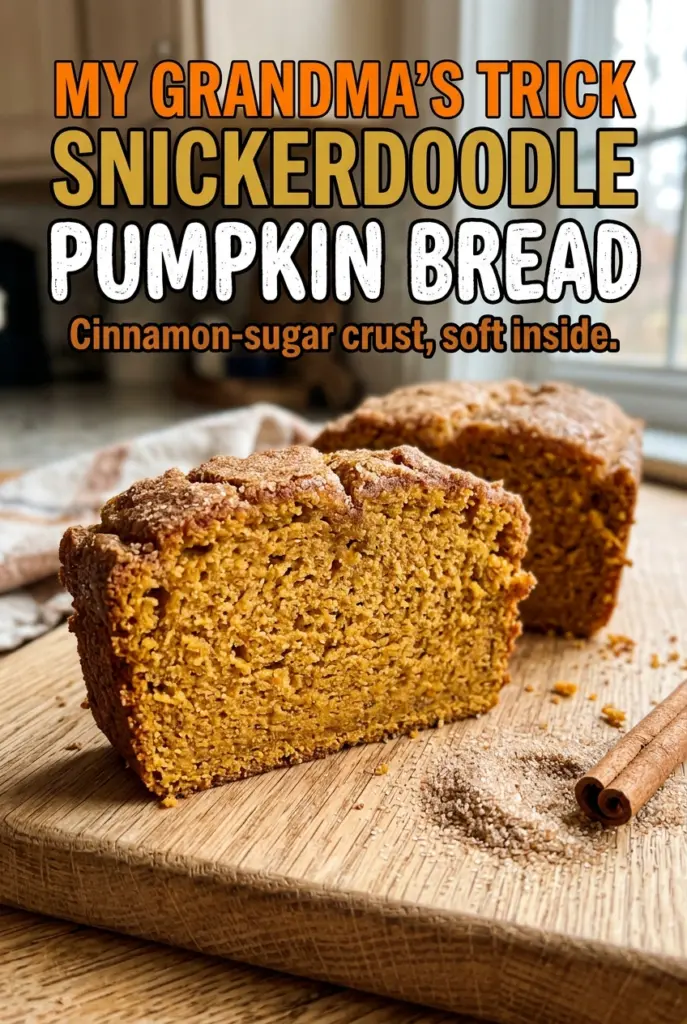
Tip: save now, cook later.Soft pumpkin bread gets a crackly snickerdoodle finish in this loaf, and that contrast is what makes it hard to stop at one slice. The crumb stays tender and moist from the pumpkin and sour cream, while the cinnamon-sugar coating adds a thin, crisp shell that tastes like the top of a perfect cookie. It’s the kind of bake that feels familiar the first bite and a little addictive by the second.
The trick is keeping the batter simple and not overworking it. Pumpkin puree brings moisture and body, sour cream keeps the loaf plush, and the mix of cinnamon, nutmeg, and cloves gives the bread enough backbone to stand up to the sweet coating. The butter on the warm loaf matters too — it gives the sugar something to cling to, so the finish stays crunchy instead of sliding off in patches.
The cinnamon-sugar crust baked up with that little crunch on the outside, and the loaf stayed so moist the next day. I followed the cooling time exactly and the coating stuck perfectly instead of melting off.
This snickerdoodle pumpkin bread keeps the crackly cinnamon-sugar top and tender crumb worth saving for whenever you want a cozy loaf with a cookie-like finish.
The Secret to Keeping the Cinnamon-Sugar Top Crisp
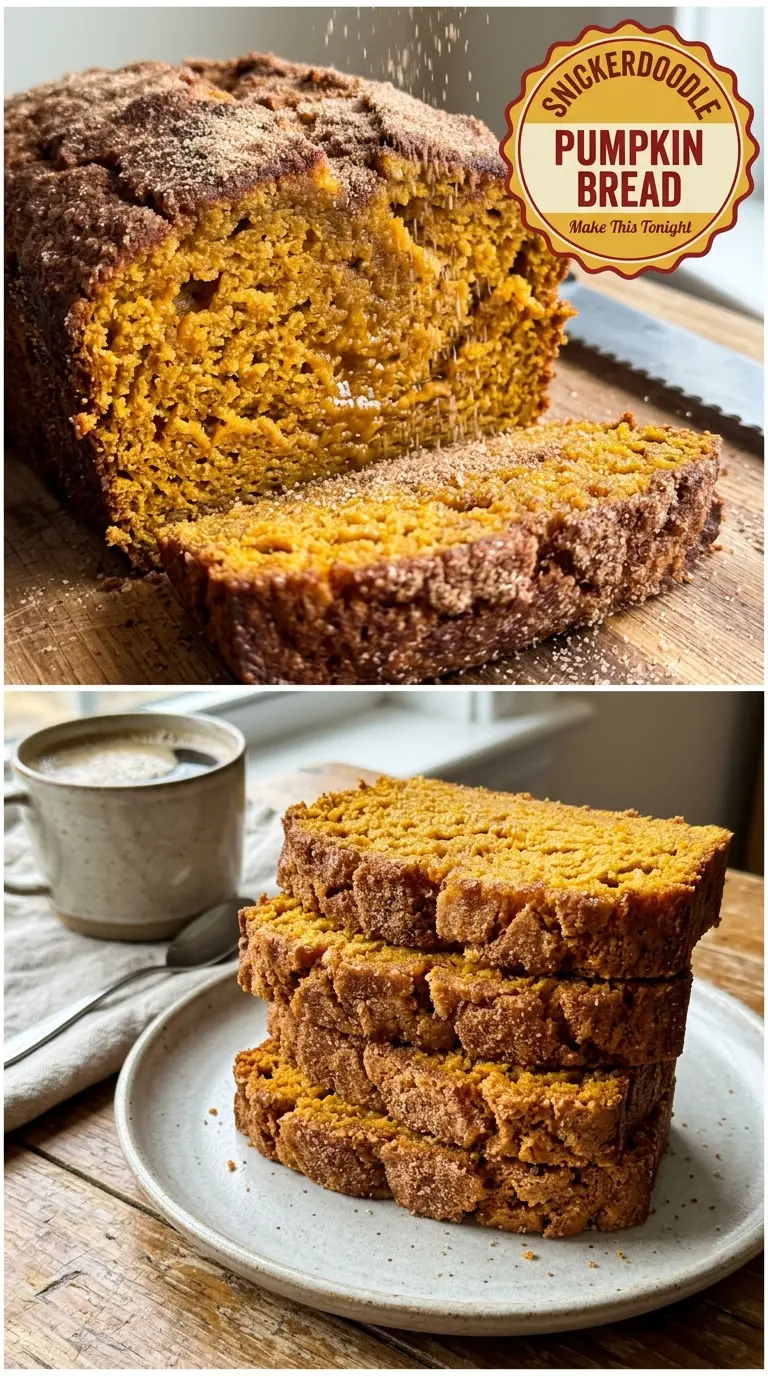
Most pumpkin breads go soft on top because the sugar coating gets added too early or without enough butter to hold it in place. Here, the loaf gets brushed while it’s still warm, not hot, so the butter soaks into the surface just enough to grab the sugar without dissolving it into a wet glaze. That’s what gives you the sandy, crackly finish instead of a sticky one.
The other thing that matters is cooling discipline. If you coat the bread and cut it too soon, the crumb can still be fragile and the sugar shell may slide off in clumps. Letting it cool fully gives the loaf time to set, which is what keeps the slices neat and the crust intact.
What Each Ingredient Is Doing in This Loaf
- All-purpose flour — The structure here is built around a standard loaf crumb, so plain flour is exactly what you want. A stronger flour would make the bread tougher.
- Baking soda and baking powder — Pumpkin batter needs lift without getting cakey. The soda reacts with the sour cream and pumpkin, while the baking powder gives the loaf a little extra rise in the oven.
- Pumpkin puree — Use pure pumpkin, not pumpkin pie filling. Pie filling is already sweetened and spiced, which throws off both the flavor and the texture.
- Sour cream — This is what keeps the loaf plush and soft for days. Full-fat plain yogurt works in a pinch, but the crumb won’t be quite as rich.
- Vegetable oil — Oil gives you a moist loaf that stays tender after cooling. Melted butter can work, but the texture will be a little firmer and less soft the next day.
- Cinnamon, nutmeg, and cloves — These spices need to be present in the batter, not just on top, or the loaf tastes flat under the sugar coating. Fresh spices matter most here because there aren’t a lot of competing flavors.
Getting the Batter Mixed Without Making It Dense
Whisk the dry ingredients first
Start by whisking the flour, leaveners, salt, and spices together until the color looks even. That keeps the baking soda from streaking through the loaf and gives the spices a head start on distributing through the batter. If the cinnamon clumps, the bread bakes with pockets of spice instead of an even crumb.
Build the wet mixture until it looks smooth
Whisk the sugar, oil, and eggs until the mixture looks glossy and slightly thickened, then stir in the pumpkin, sour cream, and vanilla. The batter should look smooth and a little loose at this stage. If it looks separated, keep whisking for a few more seconds before adding the dry ingredients.
Stop stirring as soon as the flour disappears
Once the dry ingredients go in, fold just until you stop seeing streaks of flour. Overmixing makes the loaf tight and chewy instead of soft, and pumpkin batter will look done sooner than it really is. A few small lumps are better than a heavy loaf.
Coat the loaf while it’s warm, not steaming
Let the baked bread sit in the pan for about 10 minutes, then brush the top and sides with melted butter. Roll or pat on the cinnamon-sugar mix while the surface is still warm enough to melt a little of the butter into the crust. If the loaf is too hot, the coating melts; if it’s cold, the sugar won’t stick evenly.
How to Adapt This for Different Kitchens and Preferences
Dairy-Free Version
Swap the sour cream for an equal amount of plain dairy-free yogurt or thick coconut yogurt, and use a dairy-free butter for the finish. The loaf still bakes up moist, but the crust will be a touch less rich and slightly more delicate.
Lower-Sugar Finish
You can reduce the coating a little, but don’t skip it entirely unless you want a plain pumpkin loaf instead of a snickerdoodle-style one. The sugar on the outside is what gives the recipe its signature crackly top and cookie-like edge.
Mini Loaves or Muffins
Divide the batter into smaller pans or muffin cups and start checking early. The texture stays soft, but the cinnamon-sugar coating works best on the loaf version because there’s more surface area to hold it.
Storage and Reheating
- Refrigerator: Store covered for up to 4 days. The crumb stays moist, though the sugar crust softens a little by day two.
- Freezer: Freeze slices or the whole loaf tightly wrapped for up to 2 months. The coating softens after thawing, so expect a less crisp top.
- Reheating: Warm slices in a low oven or toaster oven for a few minutes. A microwave will melt the sugar coating and turn the top sticky, which is the one thing that ruins the texture.
