
Moist Pumpkin Bread
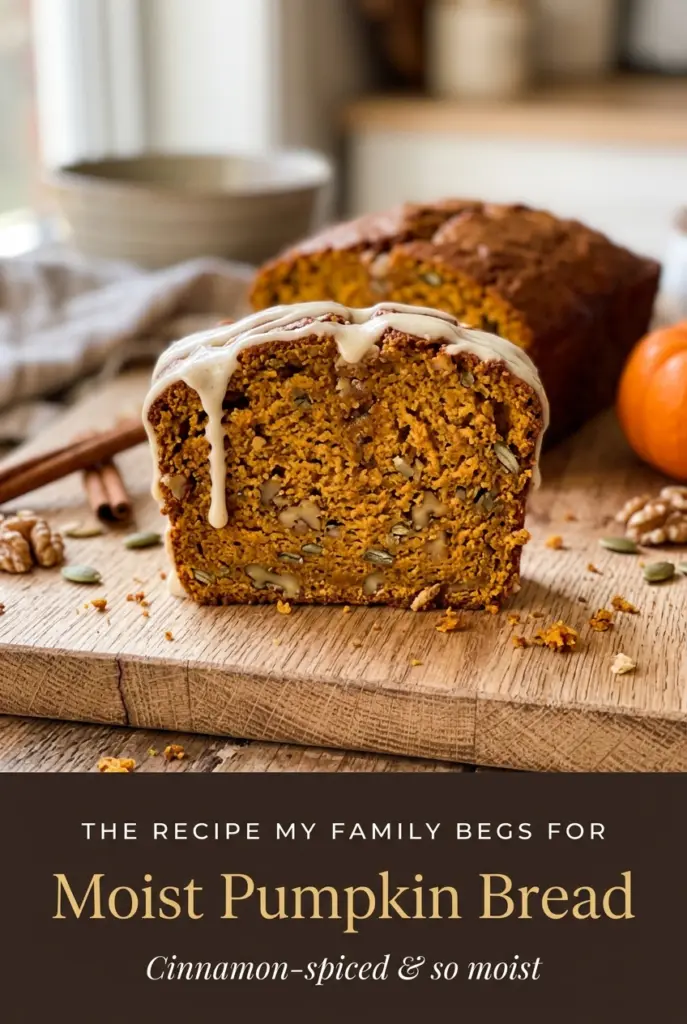
Moist pumpkin bread should slice with a tender crumb, hold together cleanly, and stay soft for days without turning gummy. The best loaves taste warmly spiced without being heavy, and…
Tip: save now, cook later.Moist pumpkin bread should slice with a tender crumb, hold together cleanly, and stay soft for days without turning gummy. The best loaves taste warmly spiced without being heavy, and they have enough pumpkin flavor to stand on their own instead of just reading like sweet quick bread with orange color.
This version gets there by leaning on oil instead of butter, which keeps the crumb soft even after a day or two on the counter. Pumpkin puree brings moisture, but it also needs structure, so the flour is balanced with just enough baking soda and baking powder to lift the loaf without making it coarse. The spice blend matters here too. Cinnamon leads, while nutmeg, cloves, and ginger round out the flavor so the bread tastes deep and bakery-style instead of flat.
Below, I’ve included the small details that keep the loaf from sinking in the middle, plus the easiest way to change it up if you want walnuts, pecans, or a cream cheese glaze on top.
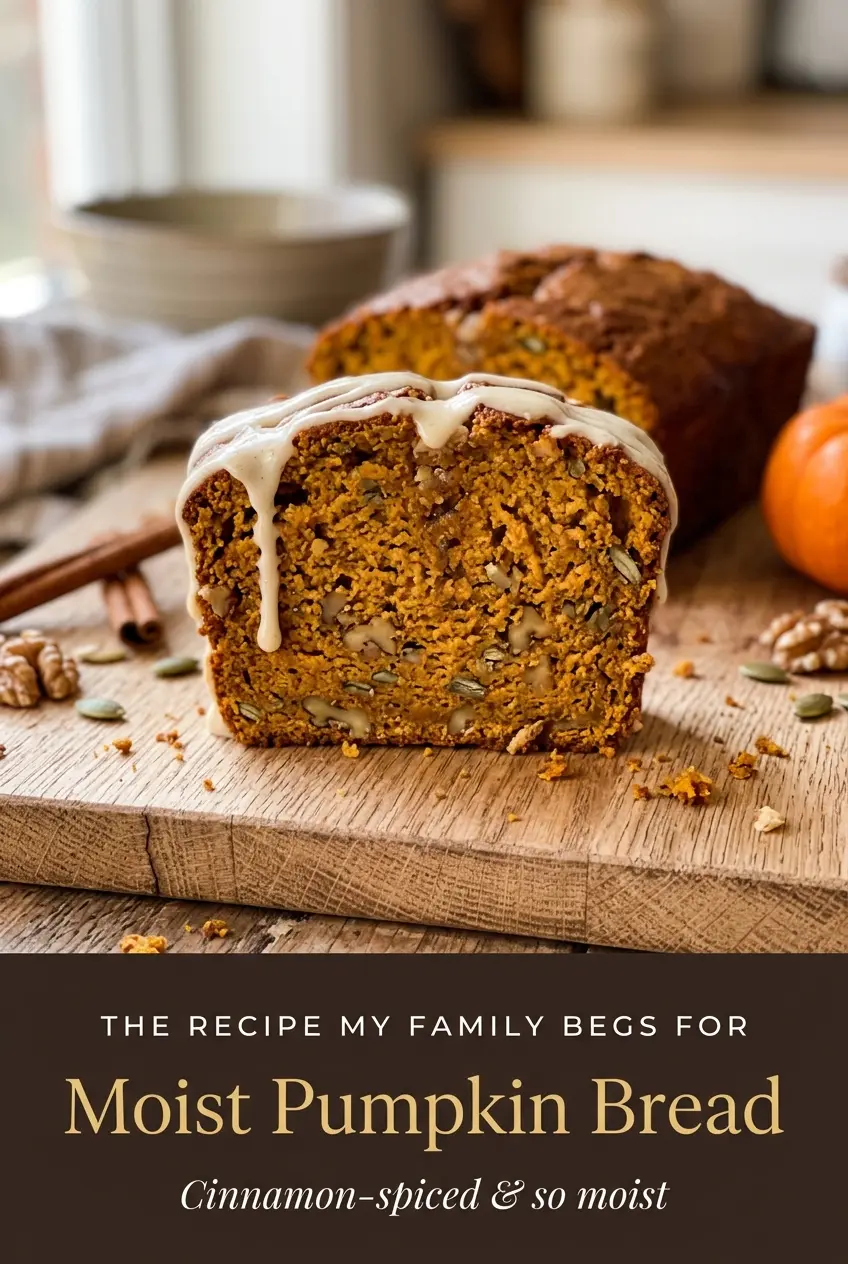
The loaf stayed incredibly moist for three days, and the cream cheese glaze set up just enough that it didn’t slide off when I sliced it. My kids kept sneaking pieces before it even cooled completely.
Save this moist pumpkin bread for the days when you want a soft, spiced loaf with a cream cheese glaze and a slice that stays tender all week.
The Loaf That Stays Soft Instead of Turning Dense
Pumpkin bread goes wrong in a predictable way: the outside bakes before the center sets, or the loaf turns tight and heavy because the batter was mixed too long. Pumpkin puree adds a lot of moisture, and that can work against you if the batter gets overworked or the pan is underbaked. This loaf avoids both problems by using a gentle mix and a bake time long enough to set the middle without drying out the edges.
The other thing that matters is balance. Too much spice and the bread tastes muddy. Too little and the pumpkin gets lost. The amounts here are measured to give the loaf warmth and depth without covering up the pumpkin, and the oil keeps the texture tender even after the loaf cools completely.
What Each Ingredient Is Doing in This Loaf
- All-purpose flour — This gives the loaf its structure. Spoon it into the measuring cup and level it off; packing in too much flour is one of the fastest ways to end up with a dry, squat loaf.
- Vegetable oil — Oil is what keeps the crumb soft for days. Butter brings flavor, but it also firms up as it cools, which means the loaf won’t stay as plush.
- Pumpkin puree — Use plain pumpkin puree, not pumpkin pie filling. Pie filling is already sweetened and spiced, which throws off both the texture and the flavor balance.
- Eggs — They hold the batter together and help the loaf rise with a finer crumb. Room temperature eggs blend more smoothly, but cold ones still work here.
- Spices — Cinnamon leads, while nutmeg, cloves, and ginger build the background flavor. Fresh spices matter if yours have been sitting in the cabinet for years; stale spices make pumpkin bread taste dull.
- Walnuts or pecans — These are optional, but they add a nice little crunch against the soft crumb. Toasted nuts bring more flavor, though raw ones work if that’s what you have.
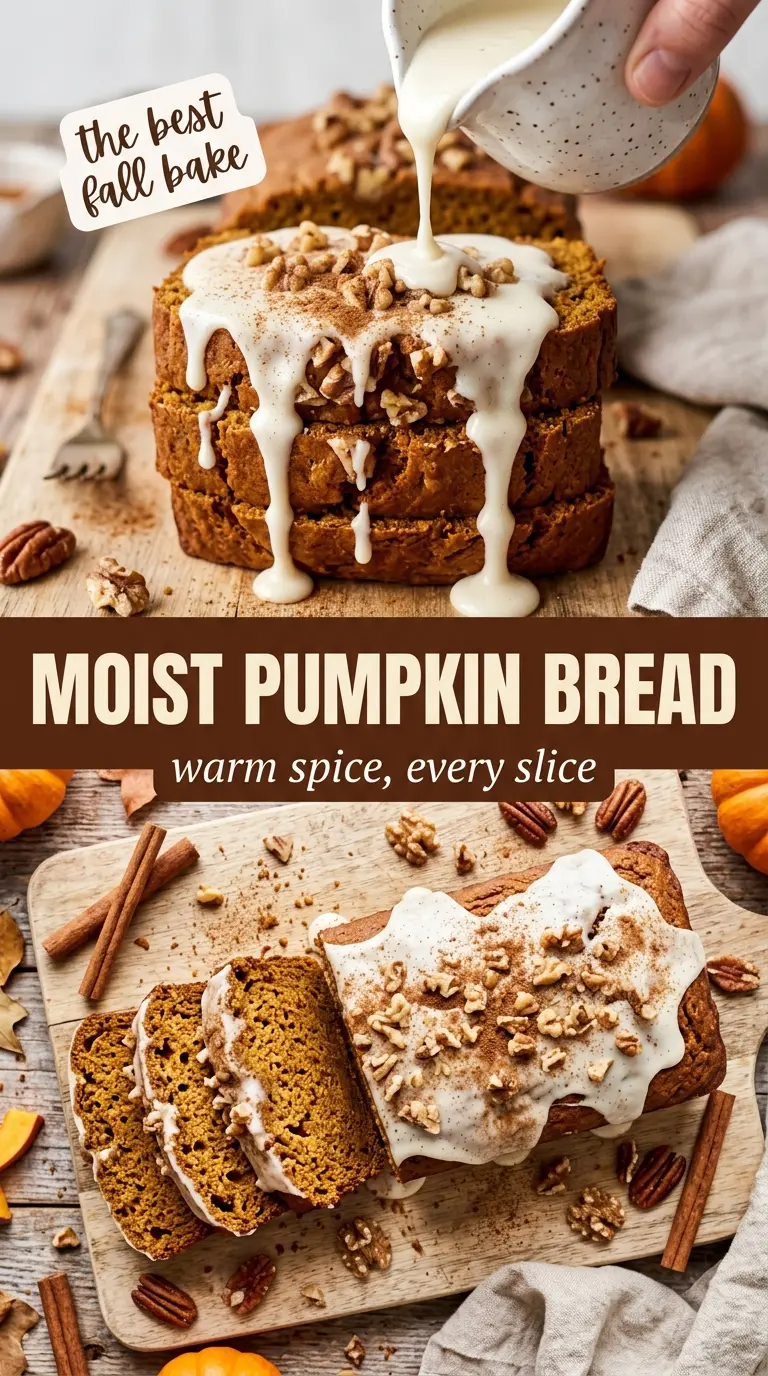
- Cream cheese glaze — This is for when you want a sweeter finish and a bakery-style look. If you skip it, the loaf still stands on its own.
The Mixing Stage That Keeps the Crumb Tender
Whisk the dry ingredients first
Start by whisking the flour, leaveners, salt, and spices together until the color looks even. That keeps the baking soda and baking powder from clumping in one spot, which is how you end up with uneven lifting or bitter pockets of spice. A quick whisk does the job; you don’t need to beat air into anything here.
Blend the wet ingredients until smooth
In a separate bowl, whisk the sugar, oil, and eggs until they look glossy and combined, then stir in the pumpkin puree, water, and vanilla. The batter should look thick and smooth, not fluffy. If the eggs streak through the mixture, keep whisking for another few seconds before moving on.
Stop mixing as soon as the flour disappears
Pour the wet ingredients into the dry and stir just until no dry pockets remain. The batter should be thick, with a few small lumps still visible. If you keep stirring until it looks perfectly smooth, the loaf will bake up tighter and less tender than it should.
Bake until the center springs back
Scrape the batter into the pan, smooth the top, and bake until a toothpick comes out clean and the center bounces back lightly when pressed. If the top is browning too fast before the middle is done, lay a piece of foil loosely over the pan for the last stretch of baking. Let the loaf cool in the pan for 10 minutes before moving it to a rack so it finishes setting without getting soggy on the bottom.
Three Ways to Change the Loaf Without Breaking It
Skip the glaze for a less-sweet breakfast loaf
Leave off the cream cheese glaze and the bread becomes a cleaner, less sugary slice that works well toasted with butter. You still get the soft crumb and warm spice, just without the dessert-like finish.
Make it dairy-free
The bread itself is already dairy-free as written. If you want the glaze, swap in a dairy-free cream cheese and use plant milk; the glaze will still thicken and set, though it may be a little softer than the original.
Swap the nuts for a smoother crumb
Leave out the walnuts or pecans if you want every slice to be uniformly tender. The loaf still bakes up well without them, and skipping the nuts also makes it easier to slice cleanly for lunchboxes or freezer portions.
Turn it into muffins
Portion the batter into lined muffin cups and bake until the tops spring back and a tester comes out clean. The bake time drops a lot, and you’ll get more crust around the edges, which makes the muffins feel a little more breakfast-ready than a loaf.
Storage and Reheating
- Refrigerator: Store covered for up to 5 days. The crumb stays moist, though the glaze will firm up in the fridge.
- Freezer: Freeze slices or the whole loaf, tightly wrapped, for up to 3 months. If possible, freeze without the glaze and add it after thawing for the best texture.
- Reheating: Warm slices in the microwave for 10 to 15 seconds or in a low oven until just heated through. Long reheating dries out the edges and makes the glaze melt away.
Answers to the Questions Worth Asking
Moist Pumpkin Bread
Ingredients
Equipment
Method
- Preheat the oven to 350°F and grease a 9x5-inch loaf pan with nonstick coating or light grease. Set the pan aside so it’s ready to receive the batter.
- In a large bowl, whisk together all-purpose flour, baking soda, baking powder, salt, ground cinnamon, ground nutmeg, ground cloves, and ground ginger until evenly combined. This dries and disperses the spices for consistent flavor.
- In a separate bowl, whisk granulated sugar, vegetable oil, and eggs until smooth. Stir in pumpkin puree, water, and vanilla extract until the mixture looks uniform.
- Pour the wet ingredients into the dry ingredients and stir just until combined. Do not overmix, then fold in chopped walnuts or pecans if using.
- Pour the batter into the prepared loaf pan and smooth the top with a spatula or the back of a spoon. Tap the pan lightly to release any large air pockets.
- Bake at 350°F for 55–65 minutes, until a toothpick inserted in the center comes out clean and the top springs back lightly. Keep an eye on the last 10 minutes to prevent over-browning.
- Cool in the pan for 10 minutes, then transfer the loaf to a wire rack to cool completely. Cooling before glazing helps the glaze set without melting off.
- Whisk cream cheese, powdered sugar, milk, and vanilla extract until smooth. If it looks too thick, add 1 teaspoon more milk at a time to reach a drizzleable consistency.
- Drizzle the glaze over the cooled loaf before slicing. Serve once the glaze has set slightly for clean, sliceable pieces.
