
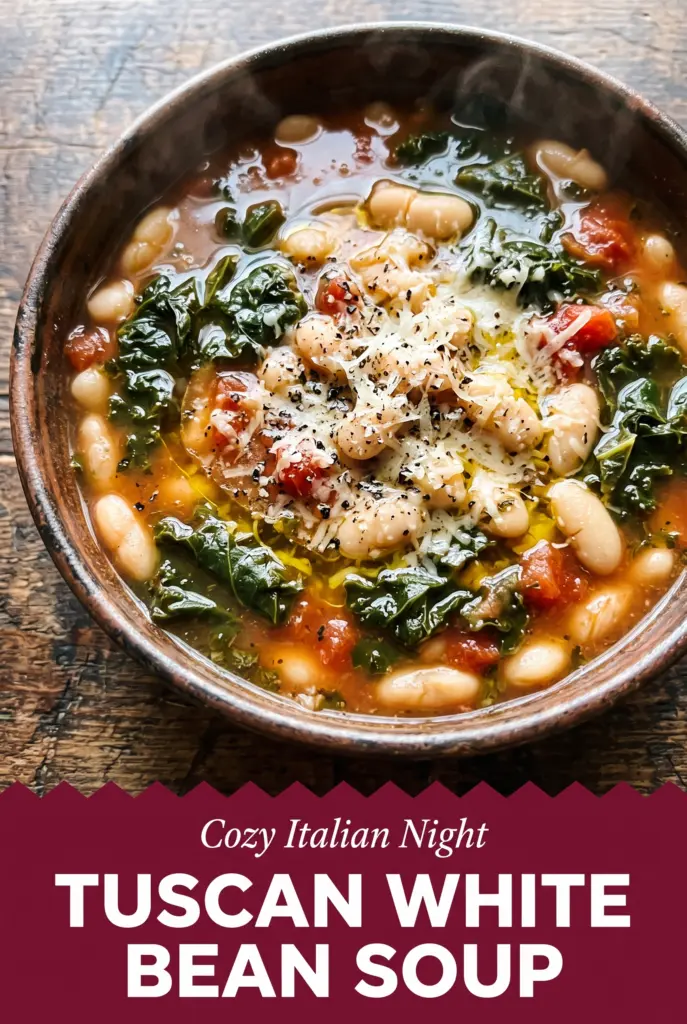
Tuscan White Bean Soup
Creamy cannellini beans, tender kale, and a tomato-herb broth give this Tuscan white bean soup the kind of comfort that doesn’t weigh you down. The beans break down just enough…
Tip: save now, cook later.Creamy cannellini beans, tender kale, and a tomato-herb broth give this Tuscan white bean soup the kind of comfort that doesn’t weigh you down. The beans break down just enough to thicken the pot naturally, while the Parmesan rind and olive oil add a roundness that makes the broth taste like it simmered all afternoon, even when it didn’t.
What separates a good white bean soup from a flat one is building flavor in layers. Sautéing the onion, carrots, and celery until they’re soft gives the base a little sweetness, then the garlic, thyme, oregano, and Parmesan rind do the deeper work. The kale goes in at the end so it stays green and slightly sturdy instead of turning dull and limp.
Below, I’ve included the little details that matter most here: how to get the broth to taste rich without cream, what the Parmesan rind actually adds, and the best way to adjust the soup if you want it thicker, meatier, or fully vegetarian.
The beans broke down just enough to make the broth creamy, and the Parmesan rind gave it that deep savory taste I usually only get from soup that’s been simmering for hours. My husband went back for seconds before I even sat down.
Tuscan White Bean Soup with creamy cannellini beans, kale, and Parmesan is the kind of bowl worth keeping close for busy nights.
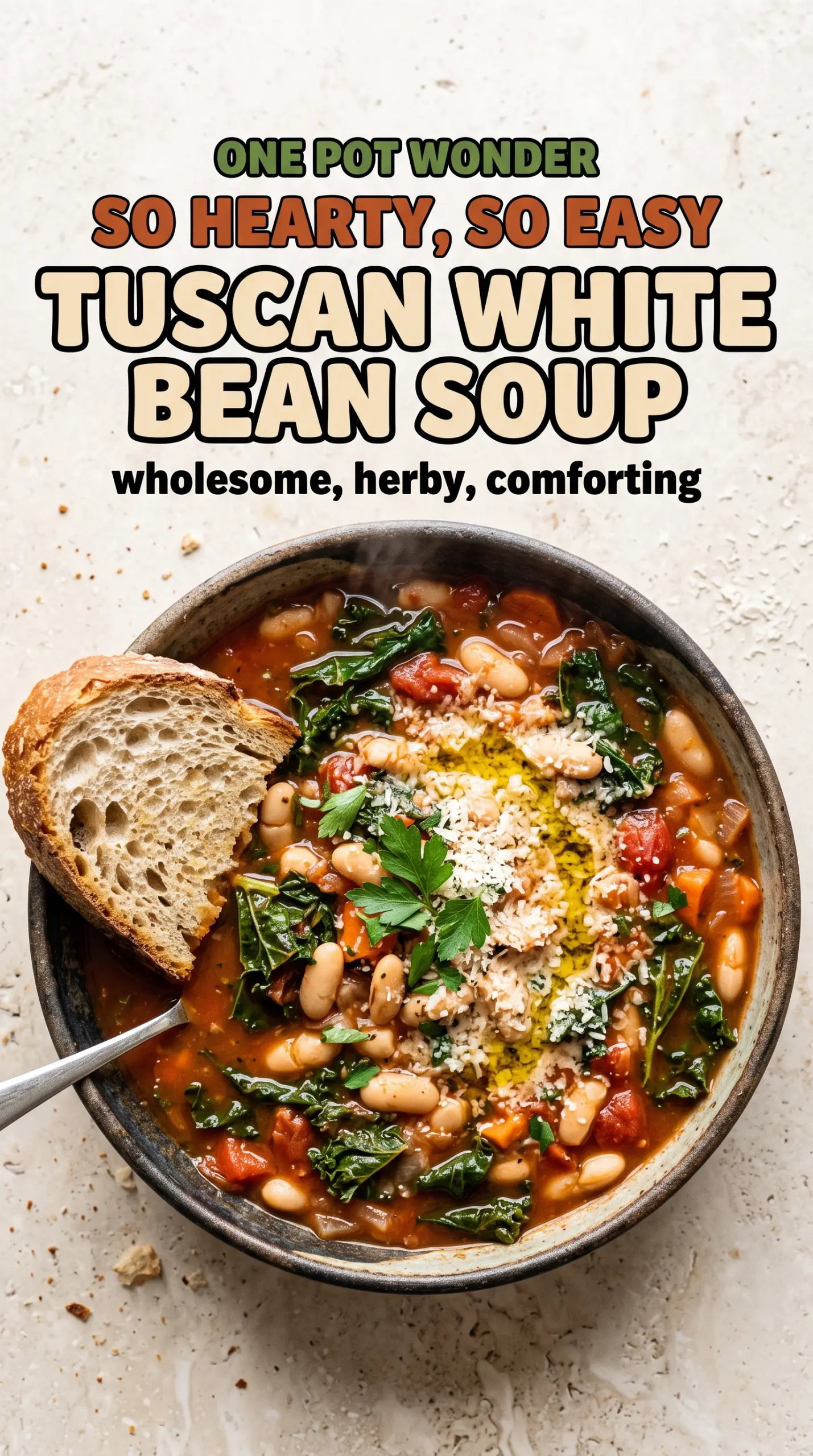
The Trick to a Broth That Tastes Slow-Simmered Without Cream
The biggest mistake in white bean soup is treating everything like a dump-and-simmer pot. If the onion, carrot, and celery never soften properly, the broth stays thin and the soup tastes like the ingredients are just sharing space. Give the base a full five minutes over medium heat until the onions look translucent and the carrots have started to soften at the edges.
The other thing that changes this soup is the way the beans thicken it. Cannellini beans are naturally creamy, and if you let them simmer uncovered, a few of them will start to break down and give the broth body without needing flour or dairy. That’s why this soup tastes rich even though it stays brothy enough to spoon straight from the bowl.
- Cannellini beans — These are the backbone of the soup. Their soft, buttery texture is what makes the broth feel creamy without cream, and they hold up better than firmer beans that stay too distinct.
- Parmesan rind — Optional, but worth using if you have one. It adds a savory depth that salt alone can’t replicate. If you don’t have a rind, stir in extra grated Parmesan at the end, but the broth won’t develop quite the same background richness.
- Kale — Add it at the end so it stays bright and a little chewy. Spinach works if that’s what you have, but it softens much faster and gives the soup a looser finish.
- Broth — Use vegetable broth for a vegetarian version or chicken broth for a deeper, meatier base. A lower-sodium broth gives you more control, especially once the Parmesan goes in.
Building the Soup in the Right Order
Softening the Aromatics
Warm the olive oil in a large pot, then cook the onion, carrots, and celery until the onions look glossy and the carrots lose their raw crunch. This first stage sets the tone for the whole pot, so don’t rush it just because the vegetables look chopped small. If the pot starts to brown too quickly, lower the heat; you want softness and sweetness, not color.
Letting the Beans and Tomatoes Mingle
Stir in the garlic for just a minute, then add the beans, diced tomatoes, broth, thyme, oregano, and Parmesan rind. Bring the soup to a gentle simmer rather than a hard boil, which can make the beans split too aggressively and leave the broth cloudy in a way that tastes thin instead of rustic. Uncovered simmering is what concentrates the tomato and herb flavor.
Finishing With the Kale
Once the soup has simmered for about 20 minutes, remove the Parmesan rind and stir in the kale. It only needs about five minutes to soften and turn a deeper green. If you add it earlier, it loses its shape and the soup starts looking muddy instead of fresh.
Three Ways to Adjust the Pot to Fit What You Need
Make it vegetarian without losing depth
Use vegetable broth and keep the Parmesan rind if you eat dairy. If you want it fully vegetarian and need to skip the rind, add extra grated Parmesan at the end or a small splash of soy sauce for that savory backbone. The soup will still be satisfying, just a little less round at the finish.
Thicken it for a heartier bowl
Mash a cup of the beans against the side of the pot before adding the kale, or blend a small portion of the soup and stir it back in. That gives you a creamier body without turning the whole pot into purée. Too much blending makes the tomatoes disappear, which flattens the texture.
Add protein without changing the soup’s character
Stir in shredded rotisserie chicken near the end, or brown Italian sausage separately and add it after the soup has simmered. Both work, but adding meat too early can mute the clean bean-and-herb flavor that makes this soup taste balanced.
Storage and Reheating
- Refrigerator: Keeps well for 4 days. The soup thickens as it sits because the beans continue to soften.
- Freezer: Freezes well for up to 3 months. Cool it completely first, then freeze in portions. The kale softens a bit after thawing, but the flavor stays solid.
- Reheating: Warm it gently on the stove over medium-low heat with a splash of broth or water. High heat can make the beans break down too far and the broth can reduce into a paste-like consistency.
Answers to the Questions Worth Asking
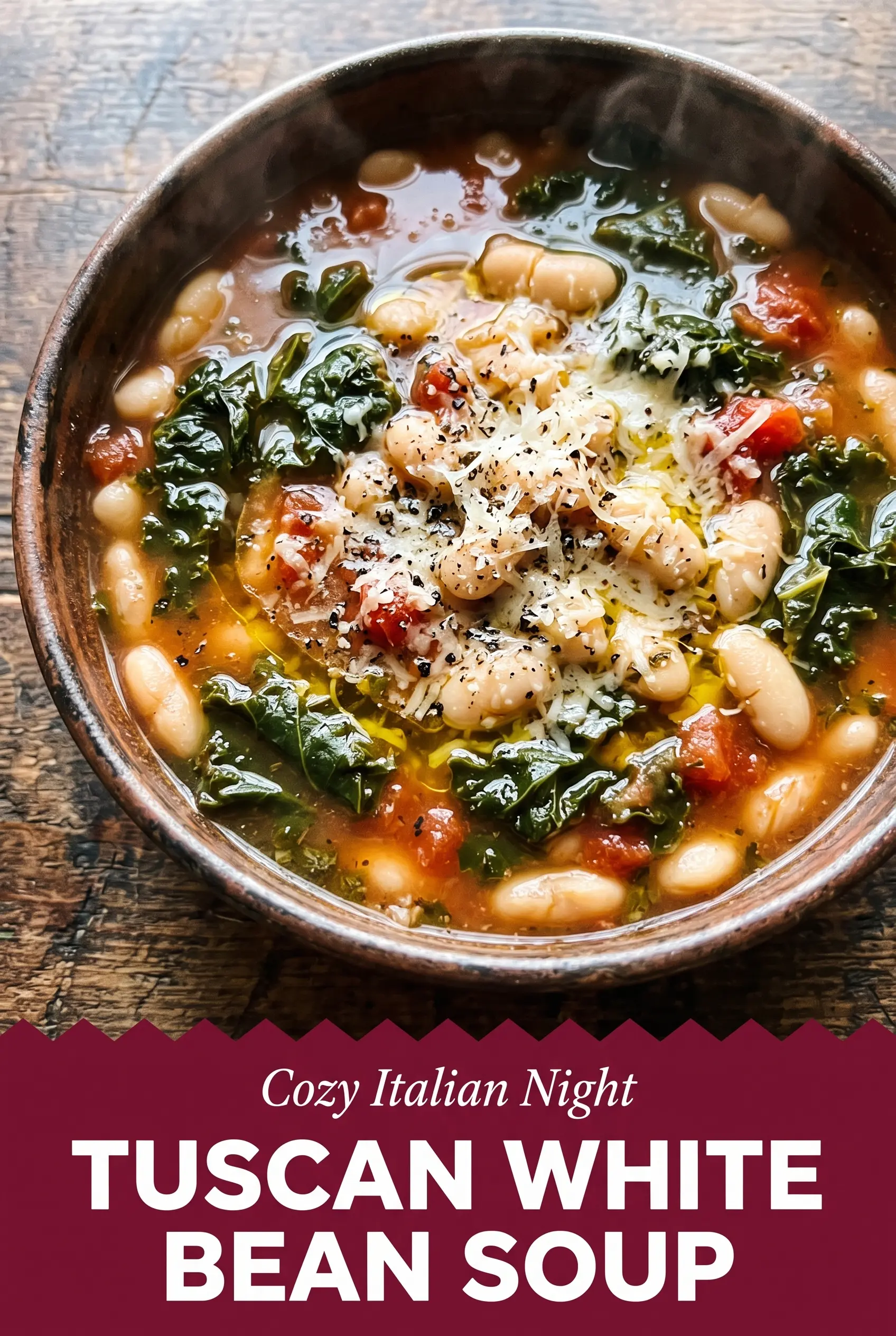
Tuscan White Bean Soup
Ingredients
Equipment
Method
- Heat 2 tbsp olive oil in a large Dutch oven over medium heat. Sauté onion, carrots, and celery until softened, about 5 minutes, and stir occasionally as they turn translucent.
- Add minced garlic and cook for 1 minute more. Keep stirring until fragrant, about 1 minute, without browning.
- Stir in cannellini beans, diced tomatoes, broth, Parmesan rind (if using), dried thyme, and dried oregano. Bring everything to a simmer and keep the surface bubbling lightly.
- Cook uncovered for 20 minutes to let the flavors meld. Maintain a steady simmer so the broth reduces slightly.
- Remove the Parmesan rind and discard it. Swirl the pot so the broth looks uniform and slightly thicker.
- Stir in chopped kale and simmer for 5 more minutes, until wilted. The kale should turn bright green and soften but still hold some shape.
- Season with salt and black pepper to taste. Ladle into bowls and drizzle with good olive oil.
- Top with grated Parmesan and serve. The cheese should melt slightly on the hot surface.
