
Pumpkin Pie Crisp
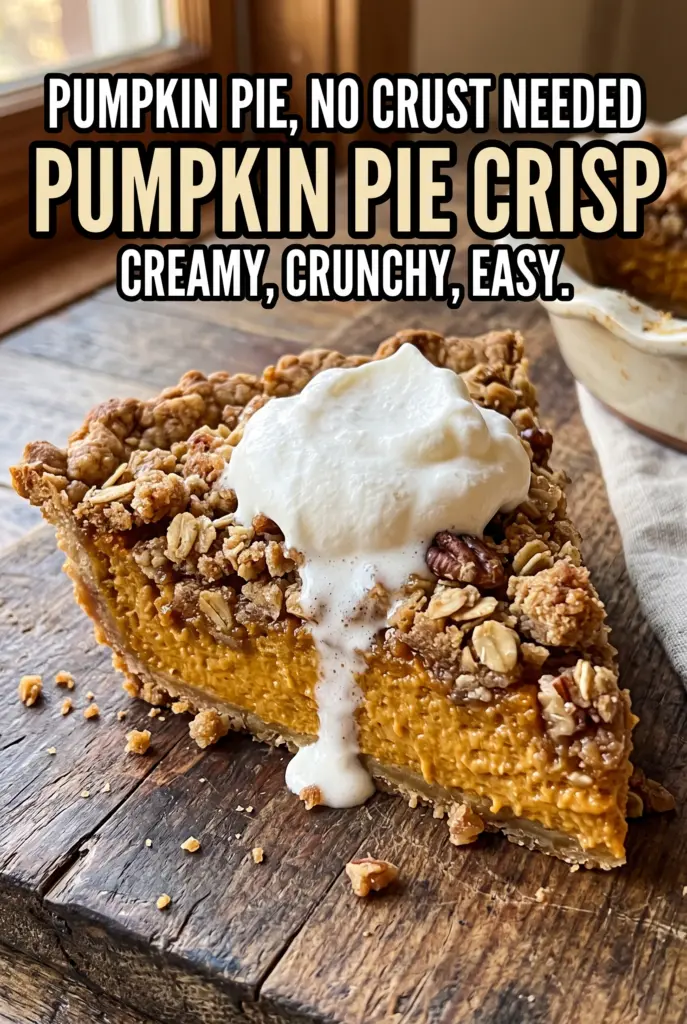
Pumpkin pie crisp gives you the part people fight over: a silky, warmly spiced pumpkin filling with a buttery crumble on top that bakes into crisp little nuggets instead of…
Tip: save now, cook later.Pumpkin pie crisp gives you the part people fight over: a silky, warmly spiced pumpkin filling with a buttery crumble on top that bakes into crisp little nuggets instead of a fussy crust that can go soggy or shrink at the edges. The contrast is what makes it work. Every spoonful lands somewhere between custard and dessert crumble, which is exactly why it disappears fast.
The filling leans on evaporated milk for that old-school pumpkin pie texture, but the crust-free setup means you don’t have to blind bake, roll, crimp, or worry about a cracked edge. The oat-pecan topping stays a little rustic and bakes best when the butter stays cold and the crumble is uneven; that’s how you get both sandy bits and bigger golden clumps. If the top is packed down too firmly, it loses the texture that makes this dessert worth making.
Below you’ll find the cue I watch for so the center sets without overbaking, plus a few smart swaps if you want to adjust the nuts, the spice, or make it a little more pantry-friendly.
The pumpkin layer set up beautifully and the crumble stayed crisp even after chilling. I loved that I could slice it cleanly after 30 minutes, and the pecans gave it just enough crunch.
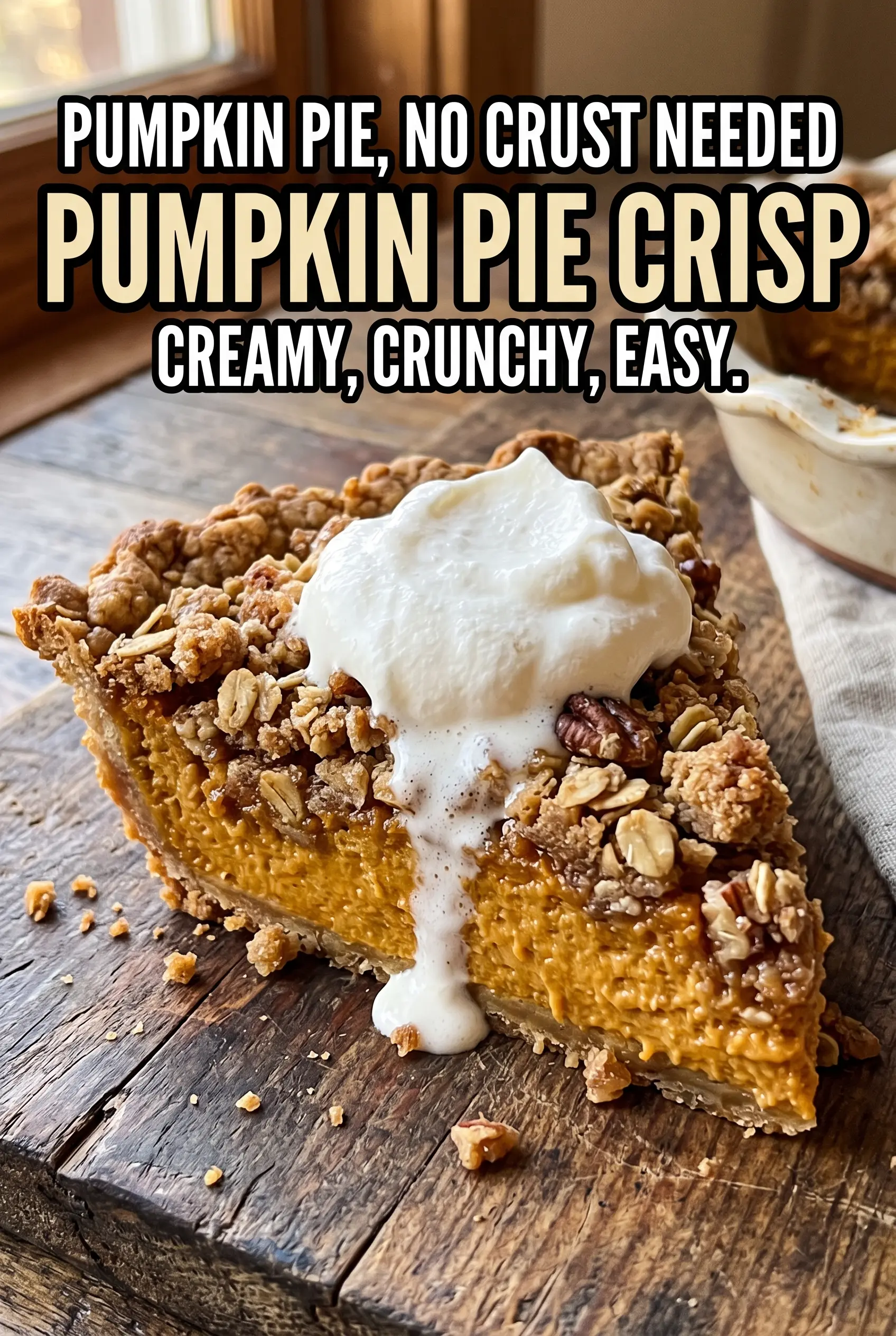
Pumpkin Pie Crisp brings all the creamy pumpkin pie flavor with a buttery oat-pecan topping you can scoop straight from the pan.
The Reason the Pumpkin Filling Sets Without Turning Grainy
The biggest mistake with pumpkin desserts is overbaking them until the edges look done and the center turns chalky. This crisp avoids that by leaning on a custard-style filling that only needs to set, not fully dry out. You want a slight jiggle in the center when it comes out of the oven; it finishes firming as it cools.
Another thing that matters here is the ratio of filling to topping. The pumpkin layer should be smooth and pourable, not thick like pie filling straight from the can, and the crumble should stay loose enough to bake into crisp clusters. If you compress the topping or overload it with butter, it turns greasy instead of crumbly.
- Pumpkin puree — Use plain pumpkin puree, not pumpkin pie filling. Pie filling already has sugar and spices added, which throws off the flavor and makes the dessert taste flat.
- Evaporated milk — This gives the filling its classic pie-like richness without making it heavy. Regular milk works in a pinch, but the result will be a little lighter and less silky.
- Old-fashioned oats — They keep their texture in the oven, so the topping bakes up with chew and crunch. Quick oats soften too much and give you a finer, sandier crumble.
- Pecans — Fresh pecans matter here because they toast as the crisp bakes and add a buttery finish. If you need to swap, walnuts are the closest match.
Building the Crumble So It Stays Buttery, Not Dense
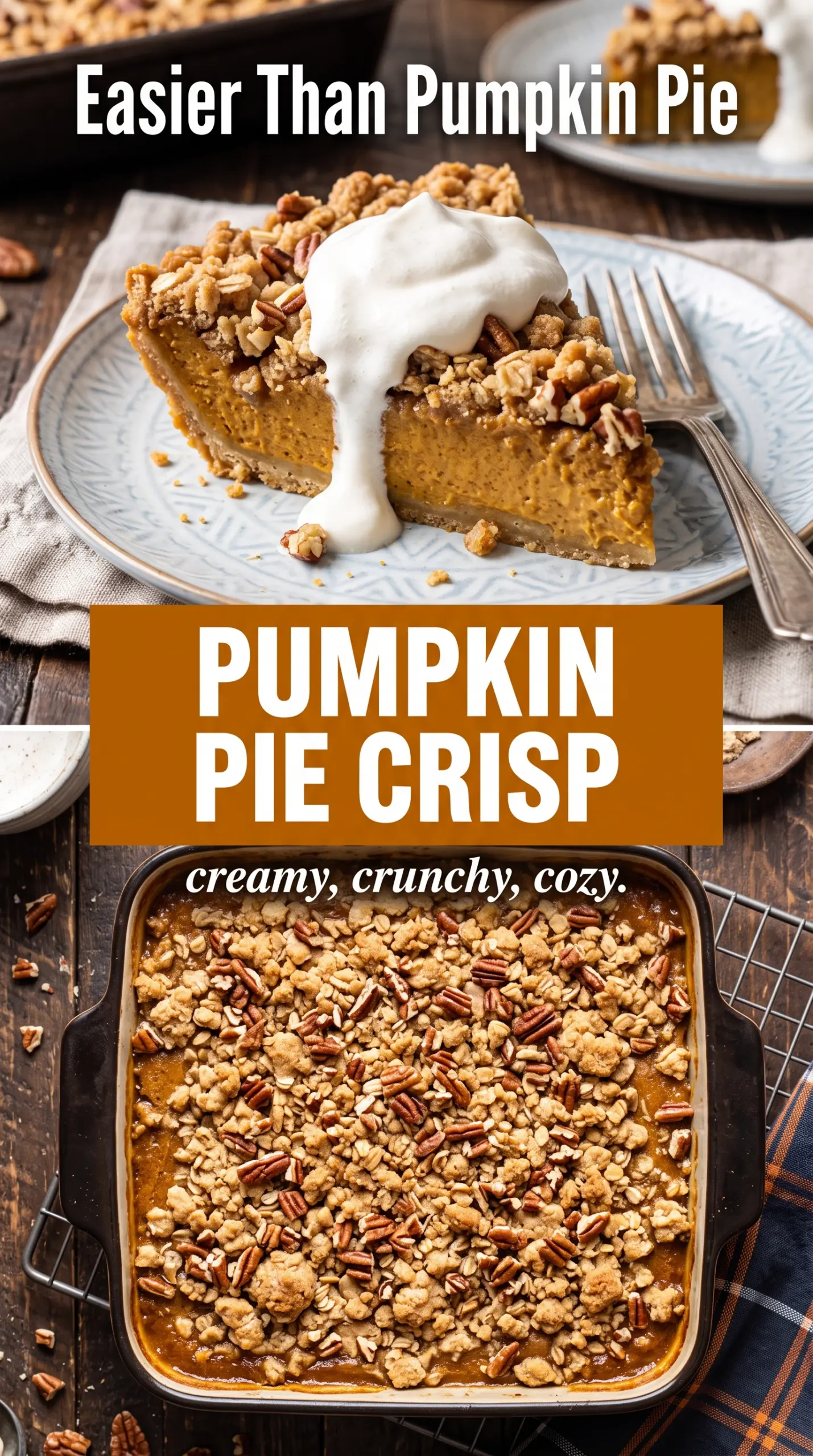
The topping is where this dessert earns its name. Cold butter cut into the dry ingredients creates little pockets that melt and brown in the oven, and those pockets are what give you a crisp top instead of a soft blanket. If the butter is too warm, the mixture turns pasty and bakes into a heavy layer.
The pumpkin layer underneath should be mixed until smooth, but don’t beat it so hard that you whip in a lot of air. A glossy, even mixture pours better and bakes more evenly. A few stubborn streaks of spice or sugar usually mean the bowl needed another minute of whisking before it went into the pan.
- Brown sugar — This adds a little molasses depth to the topping and helps it brown. Light brown sugar is fine; dark brown sugar will make the topping taste a little deeper and more caramel-like.
- All-purpose flour — It binds the crumble just enough to form clumps. A gluten-free 1:1 baking blend can work here if you need the whole dessert gluten-free, though the topping may be a touch more delicate.
- Cold butter — Cut it into cubes and keep it cold until the last second. If you use softened butter, the topping turns into a paste instead of a crumble.
- Ground spices — Cinnamon, ginger, and cloves do the heavy lifting, so use fresh spices if yours have been sitting in the cabinet for years. Stale spices make pumpkin desserts taste dusty instead of warm.
The 45 Minutes That Decide the Texture
Mixing the Pumpkin Base
Whisk the pumpkin, sugar, eggs, evaporated milk, spices, and salt until the mixture looks smooth and the sugar is no longer gritty. Pour it into a greased 9×13-inch dish and tap the pan once on the counter to pop any big bubbles. If the batter looks lumpy before baking, those lumps usually stay there.
Making the Oat-Pecan Crumble
Stir the oats, flour, brown sugar, pecans, and cinnamon together first, then cut in the cold butter until the mixture looks like damp gravel with some bigger chunks. Those bigger pieces bake into the best crunchy bits. If the mixture starts to look greasy or uniform, the butter has warmed up too much.
Baking Until the Center Barely Moves
Sprinkle the crumble evenly over the pumpkin layer and bake at 350°F until the top is golden and the center has just a slight wobble, about 45 to 50 minutes. The edge will look set first. Don’t wait for the whole pan to look firm in the oven, or the filling will overcook before the middle catches up.
Cooling for Clean Slices
Let the crisp rest at least 30 minutes before serving. That cooling time matters because the custard finishes setting and the topping stays crisp instead of steaming itself soft. If you cut it too soon, the center will run and the layers won’t hold together on the plate.
How to Adapt This for Different Tables and Pantries
Dairy-Free Pumpkin Pie Crisp
Swap the evaporated milk for full-fat coconut milk and use a dairy-free butter substitute in the topping. The filling will taste a little richer and more coconut-leaning, but it still sets well and keeps the same spoonable texture.
Gluten-Free Oat Crumble
Use a certified gluten-free oat and a 1:1 gluten-free flour blend in place of the all-purpose flour. The topping stays crisp, though it may break into a slightly looser crumble when you scoop it.
No Pecans, Same Crunch
Leave the pecans out and replace them with an extra 1/4 cup oats plus 2 tablespoons more brown sugar. You lose the nutty richness, but the topping still bakes up with enough texture to contrast the soft pumpkin layer.
Storage and Reheating
- Refrigerator: Store covered for up to 4 days. The topping softens a little in the fridge, but the flavor stays great.
- Freezer: Freeze individual portions tightly wrapped for up to 2 months. Thaw overnight in the refrigerator; the custard texture holds up better than trying to reheat it from frozen.
- Reheating: Warm slices in a 300°F oven until just heated through. Microwaving works, but it softens the crumble fast and can make the filling weep around the edges.
Questions I Get Asked About This Recipe
Pumpkin Pie Crisp
Ingredients
Equipment
Method
- Preheat the oven to 350°F (175°C) and grease a 9x13-inch baking dish.
- Whisk pumpkin puree, granulated sugar, eggs, evaporated milk, ground cinnamon, ground ginger, ground cloves, and salt until smooth, then pour into the baking dish.
- Mix old-fashioned oats, all-purpose flour, brown sugar, chopped pecans, and ground cinnamon, then cut in cold butter until crumbly.
- Sprinkle the crumble evenly over the pumpkin layer.
- Bake for 45–50 minutes, until the crumble is golden and the pumpkin layer is set with a slight jiggle in the center.
- Cool at least 30 minutes before slicing so the custard firms up.
- Serve warm or chilled, topping with whipped cream if desired.
