
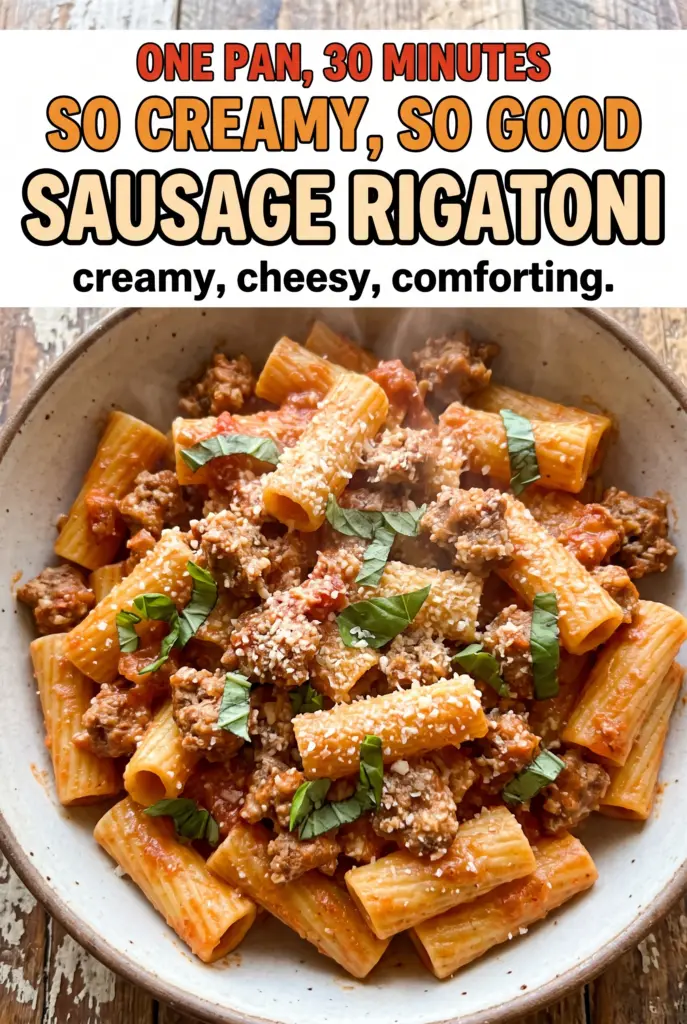
Creamy Sausage Rigatoni
Rigatoni and sausage are one of those pairings that never needs much convincing, but the creamy tomato version earns repeat status because it lands in that sweet spot between hearty…
Tip: save now, cook later.Rigatoni and sausage are one of those pairings that never needs much convincing, but the creamy tomato version earns repeat status because it lands in that sweet spot between hearty and silky. The sauce clings to every ridge of the pasta, the sausage brings salt and spice, and the Parmesan rounds everything out without turning the dish heavy or flat. It tastes like a proper dinner, not a shortcut.
The part that matters most here is the order. Browning the sausage first gives you the fond that becomes the backbone of the sauce, and the onion picks up all that flavor in the same pan. The cream goes in after the tomatoes have had a minute to settle, which keeps the sauce smooth instead of oily or split. A little pasta water at the end finishes the texture and helps the sauce grab onto the rigatoni instead of pooling underneath it.
Keep reading for the small timing details that keep the sauce glossy, plus a few swaps if you want to make it milder, richer, or lighter without losing what makes it work.
The sauce thickened up beautifully and coated the rigatoni instead of sinking to the bottom of the bowl. I used mild Italian sausage and the whole pan was gone fast.
Save this creamy sausage rigatoni for the night you want a one-pan pasta with a glossy Parmesan tomato sauce.
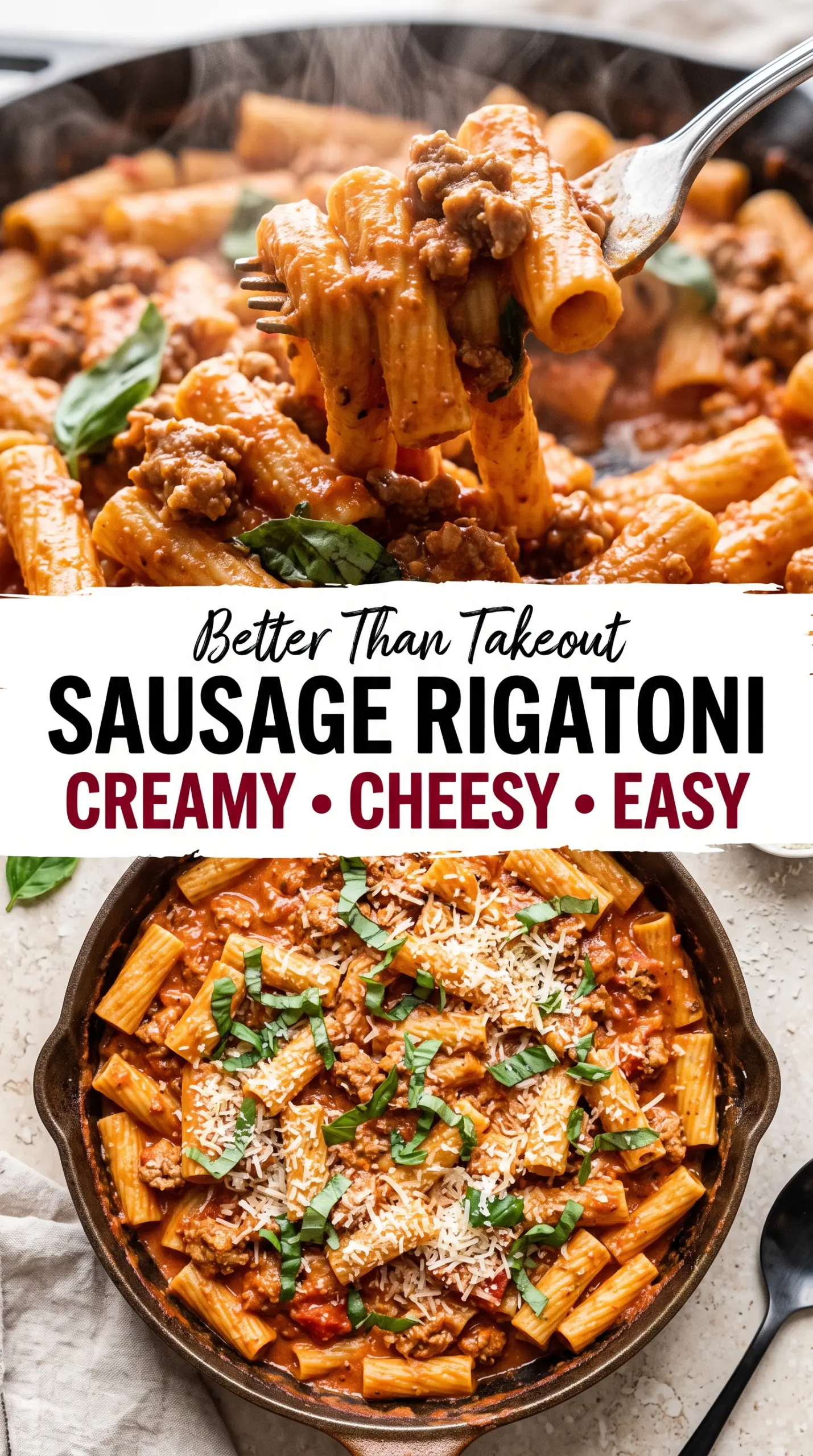
The Trick to Keeping Creamy Sausage Rigatoni Smooth Instead of Greasy
What ruins a dish like this is rushing the sauce into one heavy, separated layer. Sausage gives off fat, tomatoes bring acidity, and cream needs a little space to come together cleanly. When everything goes in at once over high heat, the sauce can look broken even if the flavor is there.
The fix is simple: cook the sausage until it browns, not just until it turns gray, then let the onion soften in the same pan so it absorbs the flavor left behind. Once the tomatoes and cream go in, keep the heat at a gentle simmer. That low simmer is what thickens the sauce without splitting it, and the Parmesan finishes the texture with a little body.
- Italian sausage — Use good sausage here because it seasons the whole pan. Mild or hot both work; hot sausage brings more bite, while mild lets the cream and Parmesan stay front and center.
- Crushed tomatoes — These give the sauce its body without turning it chunky. If all you have is diced tomatoes, blend them briefly or simmer a little longer so the sauce isn’t watery.
- Heavy cream — This is what makes the sauce lush instead of sharp. Half-and-half can work in a pinch, but it won’t thicken as well and is more likely to separate if the pan is too hot.
- Parmesan — Freshly grated Parmesan melts into the sauce more smoothly than the pre-shredded kind. The pre-grated stuff can work, but it won’t give you the same silky finish.
- Rigatoni — The tubes and ridges catch the sauce in a way smoother pasta can’t. Penne is the closest backup if that’s what you have.
Building the Sauce in the Same Pan You Brown the Sausage In
Brown the sausage first
Start with a hot skillet and break the sausage into small crumbles as it cooks. You’re looking for browned edges and little caramelized bits sticking to the pan, not just cooked-through meat. Those browned bits are the flavor base for the sauce, so don’t drain every trace of fat unless the pan is swimming in it.
Soften the onion in the drippings
Add the onion to the same pan and cook it until it turns translucent and sweet around the edges. If the pan looks dry, add a spoonful of olive oil; if it looks greasy, spoon off some excess first. The onion should pick up the sausage flavor as it softens, and if it browns too fast, the heat is higher than it needs to be.
Let the tomatoes and cream come together gently
Stir in the tomatoes, cream, Parmesan, and seasoning, then bring the sauce to a quiet simmer. If it boils hard, the cream can separate and the sauce can look grainy. A gentle simmer for a few minutes is enough to thicken it and smooth out the sharp edges of the tomatoes.
Toss the pasta with pasta water, not guesswork
Add the drained rigatoni and start with a splash of reserved pasta water. The starch in that water helps the sauce cling and gives you a glossy finish instead of a heavy pile at the bottom of the bowl. Stop adding water when the sauce coats the pasta and leaves a light sheen on the pan.
What to Change When You Want a Different Version of Creamy Sausage Rigatoni
Dairy-Free Version
Use an unsweetened oat or cashew cream and skip the Parmesan, then finish with a little nutritional yeast or dairy-free hard cheese if you like. The sauce will still be creamy, but it won’t have quite the same salty depth, so taste carefully before adding extra seasoning.
Spicier, Bolder Version
Swap in hot Italian sausage and don’t skip the red pepper flakes. This version keeps the same creamy base, but the heat cuts through the richness and gives the sauce more edge.
Lighter Sauce, Same Shape
Use half-and-half instead of heavy cream if you want something a little lighter, but keep the heat low and expect a thinner sauce. It still works, just not as luxuriously, and the pasta water becomes even more important for getting the right coating.
Storage and Reheating
- Refrigerator: Store leftovers in an airtight container for up to 4 days. The sauce will thicken as it chills, and the pasta will absorb some of the cream.
- Freezer: It freezes, but the cream sauce can lose a little smoothness after thawing. If you plan to freeze it, undercook the pasta slightly and reheat gently with a splash of cream or milk.
- Reheating: Warm it on the stove over low heat with a small splash of water, milk, or cream. High heat is the mistake that turns a silky sauce into a greasy one, so give it time and stir often until it loosens and heats through.
Questions I Get Asked About This Recipe
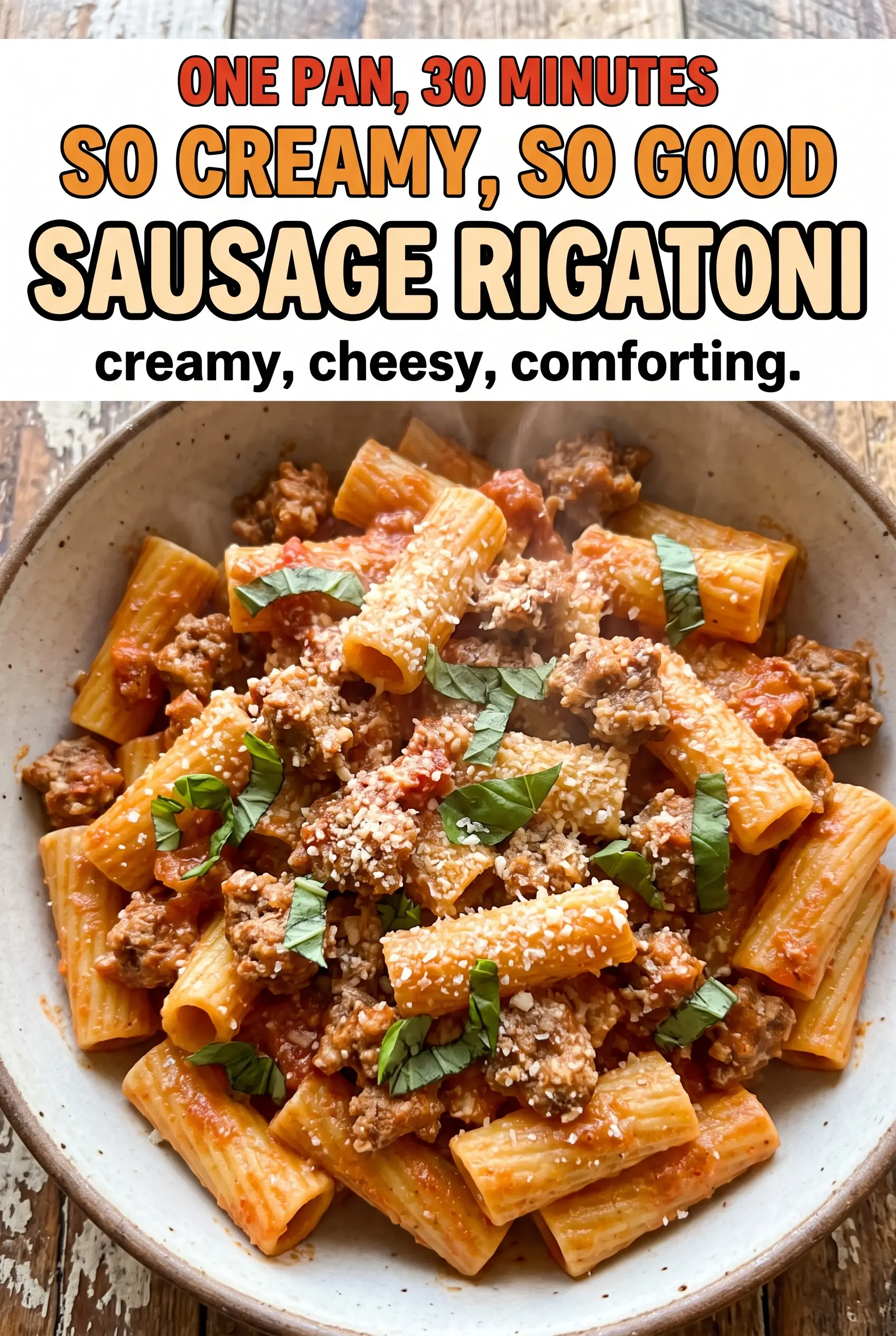
Creamy Sausage Rigatoni
Ingredients
Equipment
Method
- Cook rigatoni in salted boiling water until al dente, stirring occasionally so the pasta cooks evenly. When done, reserve 1 cup pasta water and then drain the rigatoni.
- Brown the Italian sausage in a large skillet over medium-high heat, breaking it into crumbles, until cooked through. If there is excess grease, remove it so the sauce stays rich but not oily.
- Add the diced onion to the skillet and cook until softened, about 4 minutes. Stir in the minced garlic and red pepper flakes and cook 1 minute more until fragrant.
- Stir in the crushed tomatoes, heavy cream, Parmesan, and Italian seasoning. Simmer for 5 minutes until slightly thickened and glossy.
- Toss the drained rigatoni into the skillet to coat in the creamy sauce. Add splashes of the reserved pasta water as needed to loosen the sauce so it clings to the pasta.
- Season with salt and black pepper to taste, stirring to combine. Serve immediately topped with extra Parmesan and torn basil.
