
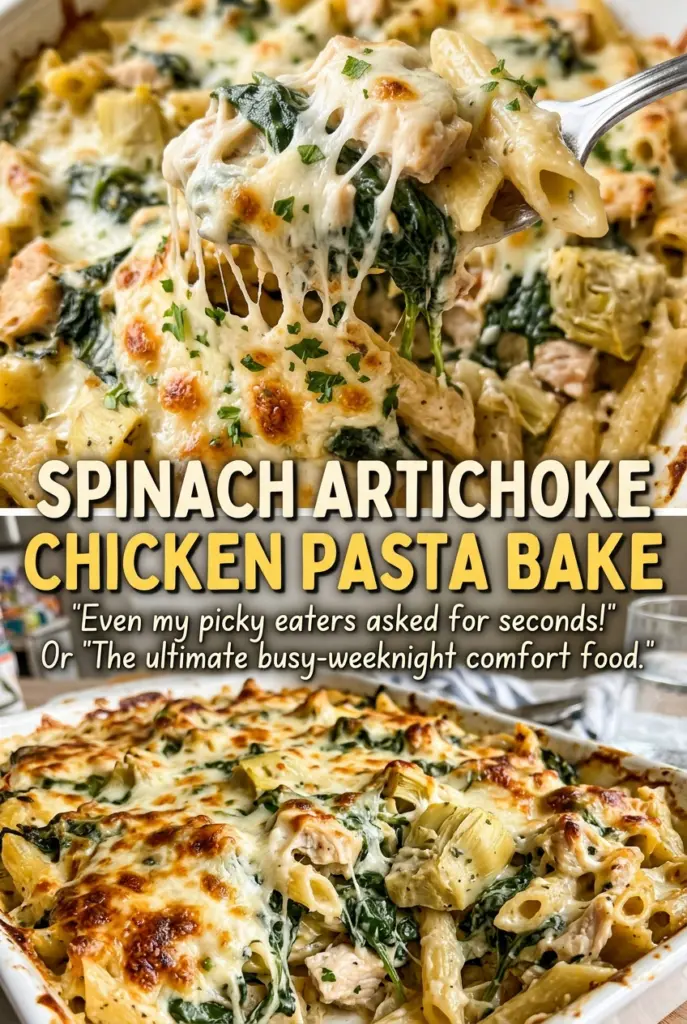
Spinach Artichoke Chicken Pasta Bake
The penne should look a little too firm when it comes out of the pot. That can feel like stopping early, but it’s exactly what keeps this spinach artichoke chicken…
Tip: save now, cook later.The penne should look a little too firm when it comes out of the pot. That can feel like stopping early, but it’s exactly what keeps this spinach artichoke chicken pasta bake from turning soft after its time in the oven. The pasta keeps cooking as it bakes, and there’s enough creamy sauce to coat every piece.
I cook the chicken in bite-size pieces, then fold it into a sauce made by whisking softened cream cheese with sour cream and milk. There’s no separate cheese sauce to babysit on the stove, and the mixture comes together right in a bowl. Artichoke hearts and chopped spinach get tucked through the pasta, while mozzarella melts over the top.
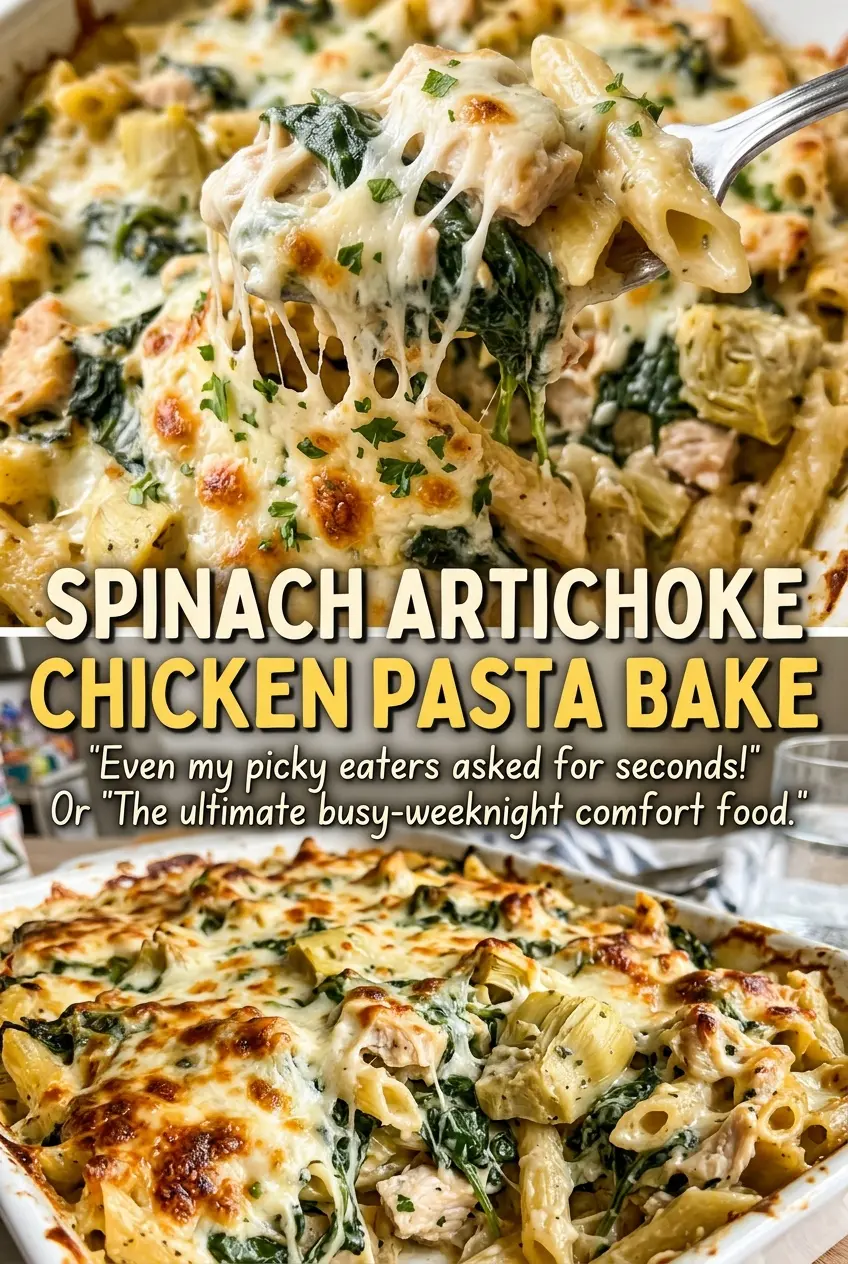
After baking, the edges bubble and the top turns lightly golden. Give the casserole its full rest before serving; the sauce settles around the pasta, chicken, and vegetables instead of running across the plate.
Kitchen Note
I squeeze the thawed spinach until it stops dripping before it goes into the bowl. Extra water can thin the creamy sauce, so take an extra minute here and press firmly.
Save this spinach artichoke chicken pasta bake for a cozy dinner with creamy sauce, tender chicken, and a golden mozzarella top.
Why the Penne Goes Into the Oven Slightly Underdone
A pasta bake has two cooking stages: the pot and the oven. Penne cooked all the way to al dente before it’s mixed with the sauce has little room left to soften, and another stretch in the oven can push it past tender. Cooking it two minutes shy of the package’s al dente time gives it a little breathing room.
The sauce also matters. The pasta sits coated in a creamy mixture while the casserole bakes, so it keeps absorbing moisture instead of drying out like plain pasta on a sheet pan. That’s why a slightly firm bite at draining is a better cue than waiting for each piece to feel completely tender.
This small adjustment makes the finished texture more dependable: the penne stays distinct, the sauce clings to it, and the casserole cuts cleanly after resting. Don’t worry if a piece feels a touch underdone when you taste it straight from the colander. The oven finishes the job.
What the Creamy Sauce, Two Cheeses, and Vegetables Bring
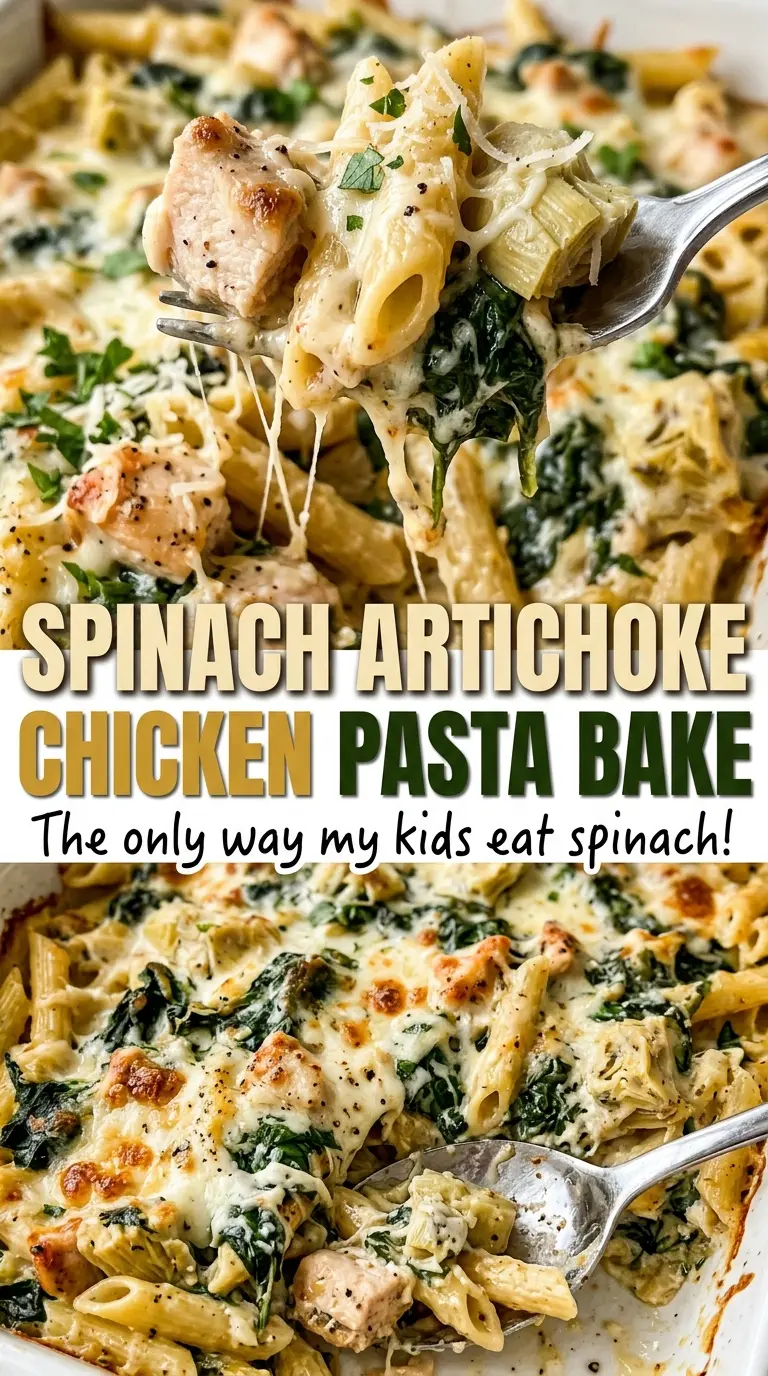
- Penne — Its hollow centers and ridged surface catch the sauce, so you get creamy pasta throughout rather than a layer of sauce only on top. Another similarly sized short pasta can work, but a different shape may change how the sauce gathers in each bite.
- Chicken breast — The lean pieces make the casserole hearty without adding much extra richness. Cut the chicken evenly so the pieces cook at a similar pace; the 3/4-inch size helps them stay tender once they go into the oven.
- Cream cheese, sour cream, and whole milk — Together they make a thick, tangy base that coats the pasta. Softened cream cheese blends much more smoothly than a cold block, and whole milk loosens the mixture without making it watery.
- Low-moisture mozzarella and Parmesan — Mozzarella melts into the sauce and gives the top its stretchy, browned finish. Parmesan brings a sharper, savory note, so the two cheeses do different jobs; low-moisture mozzarella is the better choice here than a wetter fresh mozzarella.
- Artichoke hearts packed in water — Their mild tang cuts through the creamy dairy and gives the bake its familiar artichoke flavor. Drain them well and chop them into bite-size pieces so they spread through the casserole instead of landing in a few large pockets.
- Frozen chopped spinach — Chopped spinach distributes easily through the pasta and chicken. Thaw it before mixing so it folds in evenly rather than cooling the sauce in frozen clumps.
- Garlic and Italian seasoning — These season the sauce from the inside, rather than leaving all the flavor on the surface. Mince the garlic finely so no large raw-tasting pieces stand out in a creamy bite.
From Al Dente Penne to a Bubbling, Golden Top
Get the pan ready and cook the penne
Heat the oven to 375°F and lightly grease a 9×13-inch baking dish with 1 teaspoon of the olive oil. Bring 4 quarts of water to a boil in an 8-quart pot, add 2 teaspoons of the kosher salt, and cook the penne until two minutes shy of the package directions for al dente. Drain it well so excess water doesn’t dilute the sauce.
Cook the chicken in a single layer
Heat the remaining 2 teaspoons of olive oil in a 12-inch skillet over medium-high heat. Add the chicken pieces with the remaining 1 teaspoon salt and the black pepper, stirring occasionally as they cook for 6 to 8 minutes. Check a piece in the center with an instant-read thermometer; the chicken should reach 165°F before it goes into the casserole.
Whisk the sauce and coat everything evenly
In a large bowl, whisk the softened cream cheese, sour cream, whole milk, minced garlic, and Italian seasoning until the mixture looks smooth. Stir in 1 cup of the mozzarella and the Parmesan. Fold in the drained penne, cooked chicken, chopped artichokes, and spinach until the sauce covers the ingredients without leaving dry patches.
Bake until the edges bubble, then let it settle
Transfer the mixture to the prepared dish and scatter the remaining mozzarella over the top. Bake uncovered for 20 to 25 minutes, until the edges are bubbling and the cheese is melted with light golden spots. If the top is melted but not deeply browned, that’s fine; the bubbling edges are the stronger cue. Let the bake rest for 10 minutes before serving so the sauce thickens around the pasta.
Two Easy Ways to Adapt This Pasta Bake
Make it vegetarian by leaving out the chicken
Skip the chicken and keep the pasta, sauce, artichokes, and spinach. The result is a softer, more vegetable-forward casserole with less protein and a little less heft; the creamy sauce still coats the penne.
Use gluten-free penne
Swap in the same amount of gluten-free penne and cook it two minutes shy of its package’s al dente timing. Gluten-free pasta can soften quickly in a bake, so keep an eye on the texture as it boils; the finished casserole may be a little more delicate when served.
Storage and Reheating
- Refrigerator: Store covered in the refrigerator for 3 to 4 days. The pasta will continue to absorb some sauce, so leftovers will be a little firmer.
- Freezer: Freeze cooled portions in airtight containers for up to 2 months. Thaw overnight in the refrigerator; the creamy sauce may look slightly less smooth after thawing.
- Reheating: Cover a portion loosely and microwave at medium power in short intervals until hot throughout. Avoid a long blast on high, which can dry the pasta at the edges before the center warms.
Questions That Come Up While Making This Pasta Bake
Spinach Artichoke Chicken Pasta Bake
Ingredients
Equipment
Method
- Preheat the oven to 375°F.
- Lightly grease a 9x13-inch baking dish with 1 teaspoon of the olive oil.
- Bring the water to a boil in an 8-quart pot.
- Add 2 teaspoons of the salt to the boiling water.
- Cook the penne until 2 minutes shy of the package directions for al dente, then drain.
- Heat the remaining 2 teaspoons olive oil in a 12-inch skillet over medium-high heat.
- Add the chicken, remaining 1 teaspoon salt, and black pepper; cook, stirring occasionally, for 6 to 8 minutes, until the chicken reaches 165°F in the center.
- In a large bowl, whisk the cream cheese, sour cream, milk, garlic, and Italian seasoning until smooth.
- Stir in 1 cup of the mozzarella and the Parmesan.
- Fold the drained pasta, cooked chicken, artichoke hearts, and spinach into the sauce until evenly coated.
- Transfer the mixture to the prepared baking dish.
- Sprinkle the remaining 1 cup mozzarella over the top.
- Bake uncovered for 20 to 25 minutes, until bubbling around the edges and the cheese on top is melted and lightly golden.
- Let the bake rest for 10 minutes before serving.
