
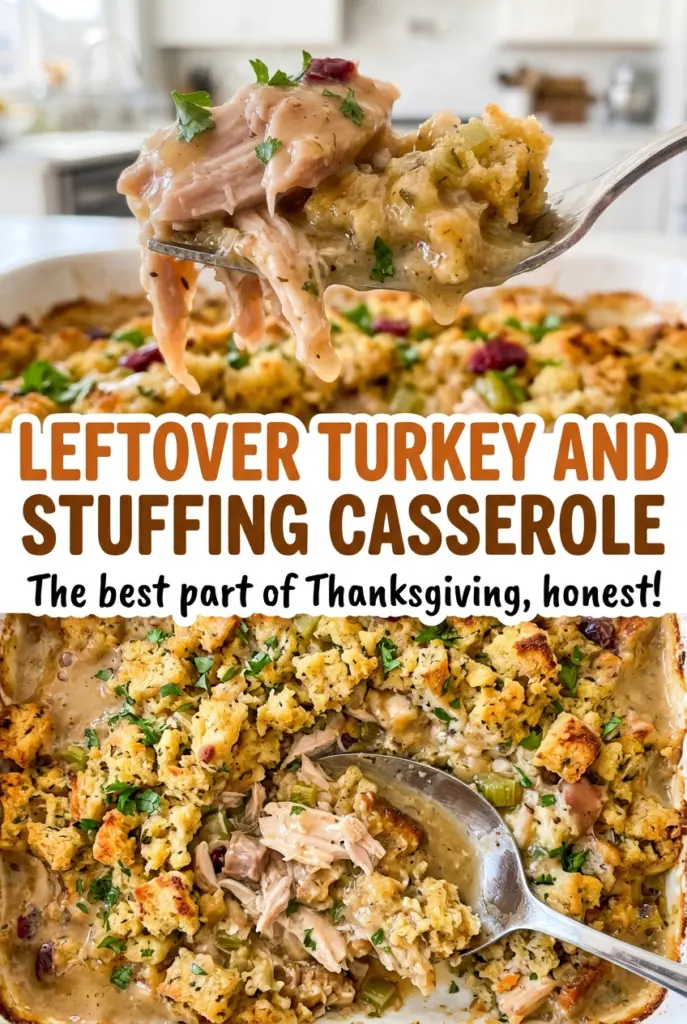
Leftover Turkey and Stuffing Casserole
Turkey leftovers have a short window where they still feel like a meal and not another container to clear out. In this casserole, bite-size turkey sits in a creamy filling…
Tip: save now, cook later.Turkey leftovers have a short window where they still feel like a meal and not another container to clear out. In this casserole, bite-size turkey sits in a creamy filling with peas and carrots, and leftover stuffing turns the top into a satisfying second layer. It’s a practical way to make eight portions from cooked turkey without starting a new main dish.
I stir the filling together in one bowl, spread it in a 9×13-inch dish, and let the oven do the rest. The covered bake warms everything gently; uncovering the dish gives the stuffing time to heat through with melted butter on top. There’s no need to turn the filling into a separate sauce or fuss with extra pans.
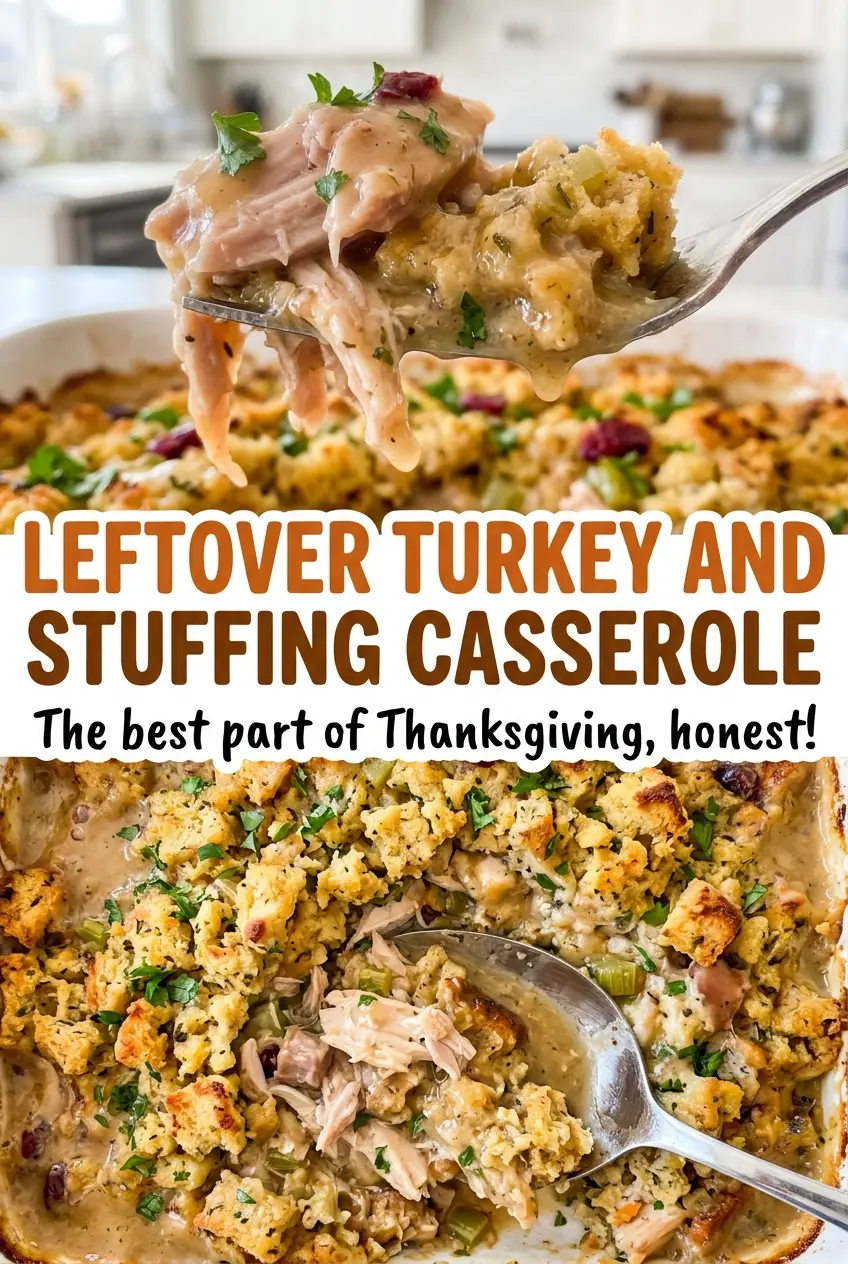
After a short rest, each serving has tender turkey, a creamy spoonful of vegetables, and a savory layer of stuffing. It’s hearty without being complicated, and it gives the leftovers a very different feel from reheating them one plate at a time.
Kitchen Note
Give the casserole the full 10-minute rest before scooping. The creamy filling settles as it sits, so portions hold together better instead of sliding across the plate.
Save this leftover turkey and stuffing casserole for a cozy second meal, with creamy turkey filling under a buttery stuffing top.
Why the Stuffing Works Better as a Separate Top Layer
Leftover stuffing is already cooked and seasoned, so it doesn’t need to be stirred into the filling to make the casserole feel complete. Keeping it on top gives each part a clear job: the turkey and vegetables sit in a creamy base, while the stuffing stays recognizable as stuffing. Mix it through and it soaks up the filling instead, losing that distinct contrast between the soft center and the topping.
The two-stage bake also suits leftovers. The foil protects the top while the casserole starts heating, then uncovering it gives the stuffing direct oven heat. The melted butter helps the topping warm through without relying on a new sauce or extra liquid. Spread the stuffing across the whole surface rather than leaving a thick mound in the middle; an even layer means the center and edges heat more evenly.
This is especially useful when the stuffing has been chilled and packed down in a container. Break up large clumps as you scatter it so the topping covers the filling instead of baking in a few dense patches. The finished casserole should give you a little of both layers in each scoop.
What Each Ingredient Contributes to This Leftover Casserole
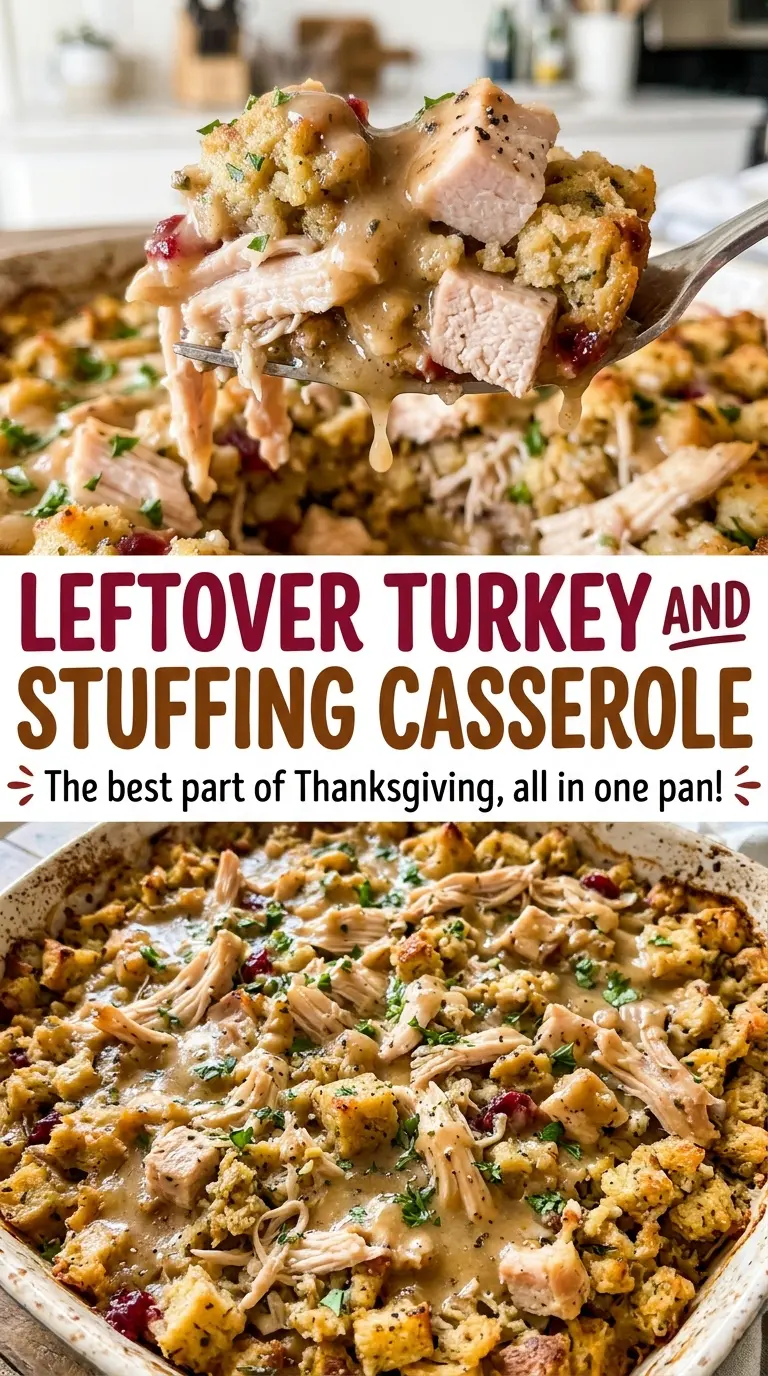
- Cooked turkey — Bite-size pieces are easier to serve and warm more evenly than large chunks. Breast meat keeps the filling mild; dark meat brings a richer, more tender bite. Either works, and the turkey should already be cooked before it goes into the dish.
- Peas and carrots — Thawing the frozen vegetables before mixing them in helps avoid adding a pocket of ice to the filling. Their mild sweetness balances the savory soup and stuffing. Frozen is convenient here; there’s no need to cook the vegetables separately.
- Cream of chicken soup, broth, and sour cream — The condensed soup gives the filling its body, while broth loosens it enough to spread around the turkey and vegetables. Sour cream adds a gentle tang and keeps the mixture creamy. They work as a group, so replacing the soup with a thin liquid would change how the casserole sets.
- Leftover cooked stuffing — The stuffing brings seasoning and texture that plain breadcrumbs wouldn’t provide. Its flavor depends on the stuffing you have, so a more boldly seasoned batch will make the top taste more savory. Use stuffing that’s already cooked, not dry mix straight from a package.
- Melted butter — A drizzle across the topping helps it heat through and adds richness. Unsalted butter keeps the seasoning from becoming harder to judge when the stuffing is already seasoned.
How to Layer and Bake the Casserole Without Drying the Top
Stir Together a Creamy, Even Filling
Heat the oven to 350°F and lightly coat a 9×13-inch baking dish with cooking spray. In a large bowl, stir together the turkey, thawed peas and carrots, condensed cream of chicken soup, chicken broth, sour cream, and black pepper. Keep stirring until the soup and sour cream are blended through rather than sitting in streaks. The mixture should look creamy and evenly coated, with turkey and vegetables distributed throughout.
Spread the Filling Before Adding Stuffing
Transfer the turkey mixture to the prepared baking dish and spread it into an even layer. If the filling is piled higher in the middle, the edges can heat sooner than the center. Scatter the cooked stuffing evenly over the surface, breaking up large clumps as you go. Drizzle the melted butter across the topping so it isn’t concentrated in just one spot.
Let the Covered Bake Warm the Center
Cover the dish with foil and bake for 20 minutes. The cover holds in heat while the filling warms, which helps keep the exposed stuffing from drying too quickly. Keep the foil on for this first part of baking rather than uncovering the dish early. At this stage, the middle may still need more time, so continue with the uncovered bake.
Uncover, Finish Baking, and Rest
Remove the foil and bake for another 20 to 25 minutes, until the center reaches 165°F and the topping is heated through. Check the middle of the casserole, not just the edges, since the center takes longest to warm. If the stuffing still feels cool in the thickest area, give it more time in the oven. Rest the casserole for 10 minutes before serving.
Three Simple Ways to Adapt the Turkey and Stuffing
Give it a cornbread-stuffing top
Use leftover cooked cornbread stuffing in place of a bread-based stuffing. It keeps the same layered structure but brings a slightly sweeter, more crumbly top, which pairs well with the savory turkey filling.
Make a gluten-free version
Choose gluten-free condensed cream of chicken soup, gluten-free chicken broth, and cooked gluten-free stuffing. Those are the ingredients that give this casserole its creamy base and top layer, so replacing all three keeps the format intact while making it suitable for a gluten-free table.
Use all white meat or all dark meat
Choose cooked turkey breast for a leaner, milder casserole, or use dark meat for a richer filling. Cut it into bite-size pieces either way. The amount and the rest of the ingredient balance stay the same.
Storage and Reheating
- Refrigerator: Keep leftovers covered in an airtight container for 3 to 4 days. The stuffing softens as it sits against the creamy filling.
- Freezer: Freeze cooled portions in airtight freezer-safe containers for up to 2 months for best quality. Thaw them in the refrigerator before reheating.
- Reheating: Warm portions covered in a 350°F oven until hot throughout. Leaving the casserole uncovered the whole time can dry out the stuffing before the filling is warm.
Questions That Come Up With Leftover Turkey Casserole
Leftover Turkey and Stuffing Casserole
Ingredients
Equipment
Method
- Heat the oven to 350°F.
- Lightly coat a 9x13-inch baking dish with cooking spray.
- In a large bowl, stir together the turkey, peas and carrots, cream of chicken soup, chicken broth, sour cream, and black pepper.
- Spread the turkey mixture evenly in the prepared baking dish.
- Scatter the stuffing evenly over the filling.
- Drizzle with the melted butter.
- Cover the dish with foil and bake for 20 minutes.
- Uncover and bake for 20 to 25 minutes, until the center reaches 165°F and the topping is heated through.
- Let the casserole rest for 10 minutes before serving.
