
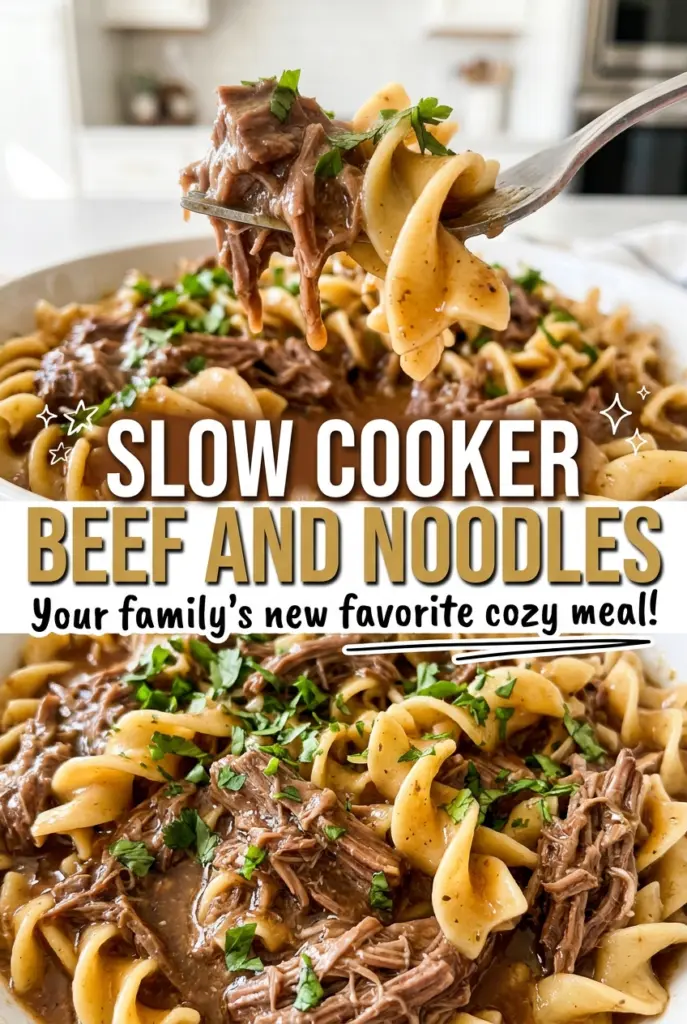
Slow Cooker Beef and Noodles
When the slow cooker lid comes off, the beef should give easily under a fork, while the cooking liquid still looks much thinner than gravy. That’s exactly the point where…
Tip: save now, cook later.When the slow cooker lid comes off, the beef should give easily under a fork, while the cooking liquid still looks much thinner than gravy. That’s exactly the point where this Slow Cooker Beef and Noodles comes together: the beef gets tender first, and the broth thickens at the end while the noodles cook separately on the stove.
I like this method because there’s no need to babysit a pot of beef or worry about noodles turning soft during a long cook. The chuck picks up savory flavor from onion, garlic, thyme, and Worcestershire as it cooks. Then a smooth cornstarch slurry gives the juices enough body to cling to the noodles instead of pooling at the bottom of the bowl. You get tender shreds, a rich spoonable gravy, and egg noodles that still have a little chew.
Kitchen Note
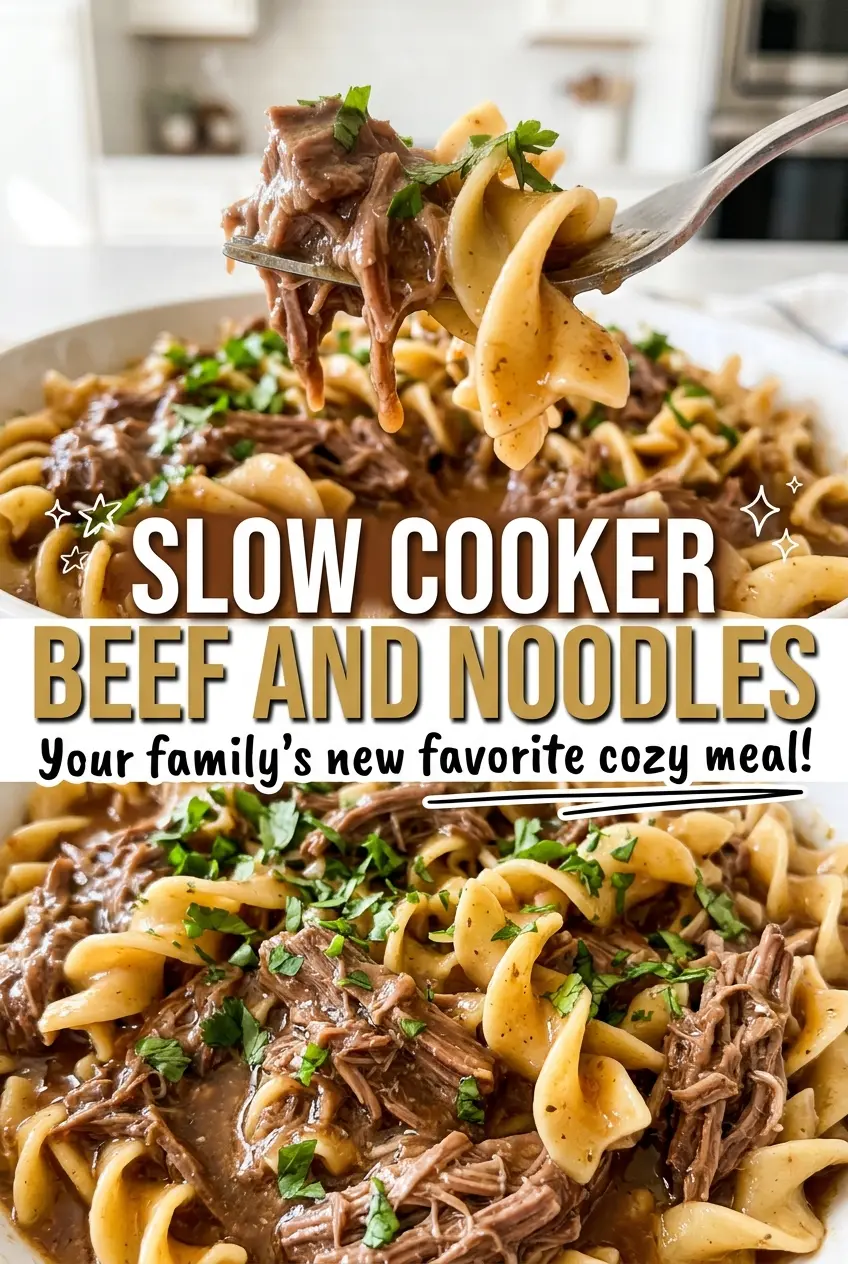
There’s no searing step here; put the raw cubed chuck straight into the slow cooker with the broth and aromatics. The long covered cook tenderizes the beef, and its cooking liquid becomes the base for the gravy.
Save Slow Cooker Beef and Noodles for a cozy dinner with fork-tender beef, thick gravy, and egg noodles that keep their chew.
Why the Gravy Thickens After the Beef, Not During the Long Cook
A slow cooker is excellent at making chuck tender, but it isn’t the best place to thicken gravy from the start. The beef releases moisture as it cooks, and a starch-thickened sauce left on heat for hours can lose some of its body. I let the beef finish first, then add cornstarch mixed with cold water. That timing gives the gravy a short final cook to thicken without asking the starch to hold up through the entire slow-cooker cycle.
Shredding the beef before thickening also helps the gravy reach all those tender strands. You can stir the slurry through the cooking liquid without trying to maneuver around a whole roast, and the finished sauce coats the meat rather than sitting underneath it. If the liquid looks loose when you uncover the cooker, don’t try to judge the final texture yet. It changes during that last stretch on HIGH, while the noodles cook separately and stay out of the slow cooker’s long heat.
What Each Ingredient Brings to the Beef and Noodles
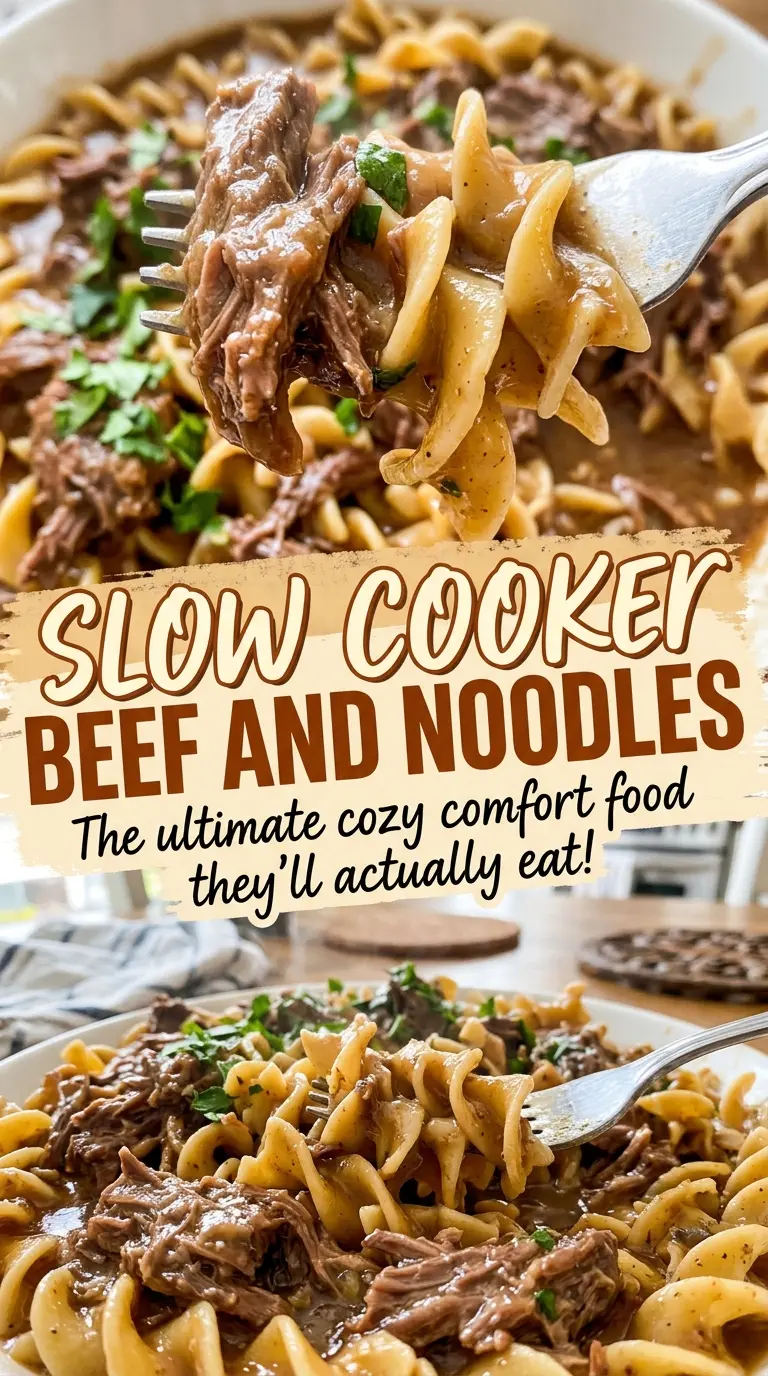
- Boneless chuck roast — Chuck has enough connective tissue and marbling to turn tender during a long, moist cook. A premium roast isn’t necessary; even chunks matter more than choosing an expensive cut. Lean roasts don’t give you the same yielding, shreddable texture.
- Low-sodium beef broth and Worcestershire — The broth supplies the savory base, while Worcestershire adds a tangy, fermented depth that keeps the gravy from tasting flat. Low-sodium broth gives you better control over seasoning. A basic grocery-store broth works well here.
- Yellow onion, garlic, thyme, and bay leaf — These aromatics season the cooking liquid as they soften, so their flavor carries through the beef and gravy. Dried thyme is convenient and holds its flavor through the long cook. Fresh garlic makes a noticeable difference, though jarred minced garlic works when that’s what you have.
- Cornstarch — It thickens the strained cooking juices quickly without making the gravy taste floury. Whisk it with cold water first; dry starch stirred directly into hot liquid is much more likely to leave small lumps.
- Wide egg noodles — Their broad, tender surface catches the gravy, and their egg-rich bite suits the shredded beef. A standard store-brand bag works just fine. Cook them in a separate pot so they don’t soften in the slow cooker.
Building Tender Beef and Gravy Without Overcooking the Noodles
Loading the Slow Cooker
Cut the chuck into even 1 1/2-inch cubes, then add the beef to a 6-quart slow cooker with the chopped onion and minced garlic. Pour in the beef broth and Worcestershire, then add the dried thyme, kosher salt, black pepper, and bay leaf. Spread the ingredients around so the beef is nestled in the liquid rather than piled high in one spot. Put the lid on before starting the cook.
Cooking Until the Chuck Gives Easily
Cook covered on LOW for 8 to 9 hours or on HIGH for 4 to 5 hours. The clock gives you a useful range, but tenderness is the cue to trust: a fork should slide into the beef and pull it apart without a tug-of-war. If the pieces still feel firm, keep cooking until they’re fork-tender rather than trying to shred them early. Once tender, discard the bay leaf and shred the beef right in the slow cooker with two forks.
Thickening the Cooking Liquid
Whisk the cornstarch and cold water in a small bowl until the mixture is completely smooth. Stir it into the slow cooker, mixing through the liquid around the shredded beef. Cover and cook on HIGH for 15 to 20 minutes, until the gravy thickens. Give it a gentle stir before serving so the sauce and beef are evenly combined.
Cooking the Noodles Separately
Bring the water to a boil in a large pot, then add the kosher salt and wide egg noodles. Cook according to the package directions until tender but still chewy; that usually takes 6 to 8 minutes. Drain the noodles once they reach that texture, rather than letting them sit in hot water. Divide them among bowls and spoon the beef and gravy over the top.
Easy Changes for Different Noodles and Dietary Needs
Make the bowl gluten-free
Replace the egg noodles with 12 ounces of gluten-free wide noodles and cook them according to their package directions. Their texture can be a little softer, so drain them promptly and add the beef and gravy just before eating. Choose gluten-free beef broth and Worcestershire sauce, too, since those products can contain gluten.
Use pappardelle for a wider ribbon
Swap the wide egg noodles for pappardelle and cook it separately according to the package directions. The broader, often thicker ribbons make each serving feel a bit more substantial, though the exact cooking time will depend on the pasta. Keep the beef and gravy method unchanged.
Use fresh thyme for a brighter finish
Replace the dried thyme with 1 tablespoon of chopped fresh thyme and add it with the other slow-cooker ingredients. Fresh thyme gives the gravy a cleaner herbal note, while dried thyme tastes a little more concentrated after the long cook.
Storage and Reheating
- Refrigerator: Store the beef and gravy separately from the noodles in airtight containers for 3 to 4 days. The noodles soften as they sit, so keeping them separate preserves their texture.
- Freezer: Freeze the beef and gravy in a freezer-safe container for up to 3 months. Cook a fresh batch of noodles after thawing; frozen cooked noodles tend to turn soft.
- Reheating: Warm the beef and gravy gently in a covered saucepan over low heat, stirring now and then, until it reaches 165°F. Reheat only the amount you need, and avoid boiling it hard, which can make the shredded beef stringy.
Questions That Come Up While Making Slow Cooker Beef and Noodles
Slow Cooker Beef and Noodles
Ingredients
Equipment
Method
- Add the beef, onion, garlic, beef broth, Worcestershire sauce, thyme, salt, pepper, and bay leaf to a 6-quart slow cooker.
- Cover and cook on LOW for 8 to 9 hours or HIGH for 4 to 5 hours, until the beef is fork-tender.
- Discard the bay leaf and shred the beef in the slow cooker with two forks.
- Whisk the cornstarch and cold water in a small bowl until smooth, then stir the mixture into the slow cooker.
- Cover and cook on HIGH for 15 to 20 minutes, until the gravy thickens.
- Bring the water to a boil in a large pot.
- Add the salt and noodles, and cook according to the package directions until tender but still chewy, usually 6 to 8 minutes.
- Drain the noodles, divide among bowls, and spoon the beef and gravy over them.
