
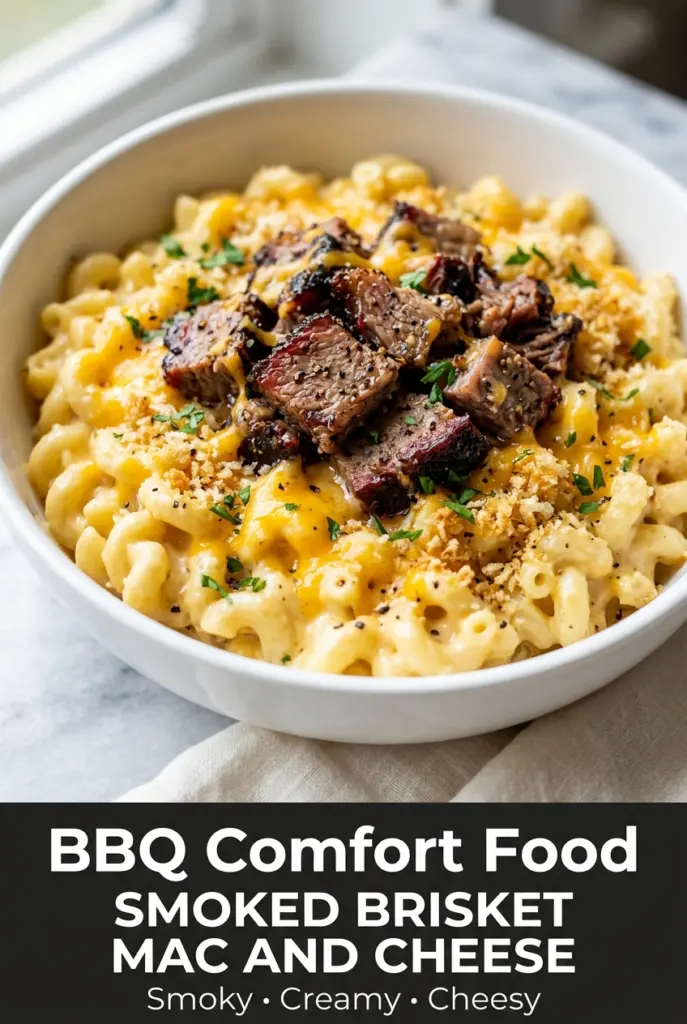
Smoked Brisket Mac and Cheese
Smoked brisket mac and cheese lands with the kind of rich, smoky comfort that makes a pan disappear fast. The pasta stays creamy under a blanket of sharp cheddar, smoked…
Tip: save now, cook later.Smoked brisket mac and cheese lands with the kind of rich, smoky comfort that makes a pan disappear fast. The pasta stays creamy under a blanket of sharp cheddar, smoked Gouda, and mozzarella, while the brisket brings deep barbecue flavor without turning the whole dish heavy or muddy. The panko topping gives it that crisp, buttery finish that keeps each bite from feeling one-note.
What makes this version work is balance. The sauce starts with a real roux, so it thickens evenly instead of turning grainy, and the milk-and-cream base gives you enough body to hold all that cheese without becoming paste-like. Smoked brisket is folded in at the end, which keeps it tender and lets the sauce do the work instead of overcooking the beef. A little Dijon and smoked paprika sharpen the flavor enough to cut through the richness.
Below, I’ll walk through the small details that keep the cheese sauce smooth, how to handle leftover brisket so it stays moist, and the best way to keep the topping crisp after baking.
The sauce stayed creamy even after baking, and the brisket kept its smoky flavor instead of drying out. My husband went back for a second helping before I’d even finished plating the first round.
Smoked brisket mac and cheese with that silky cheese sauce and buttery panko topping is the kind of comfort food worth keeping on hand for leftovers and game day.
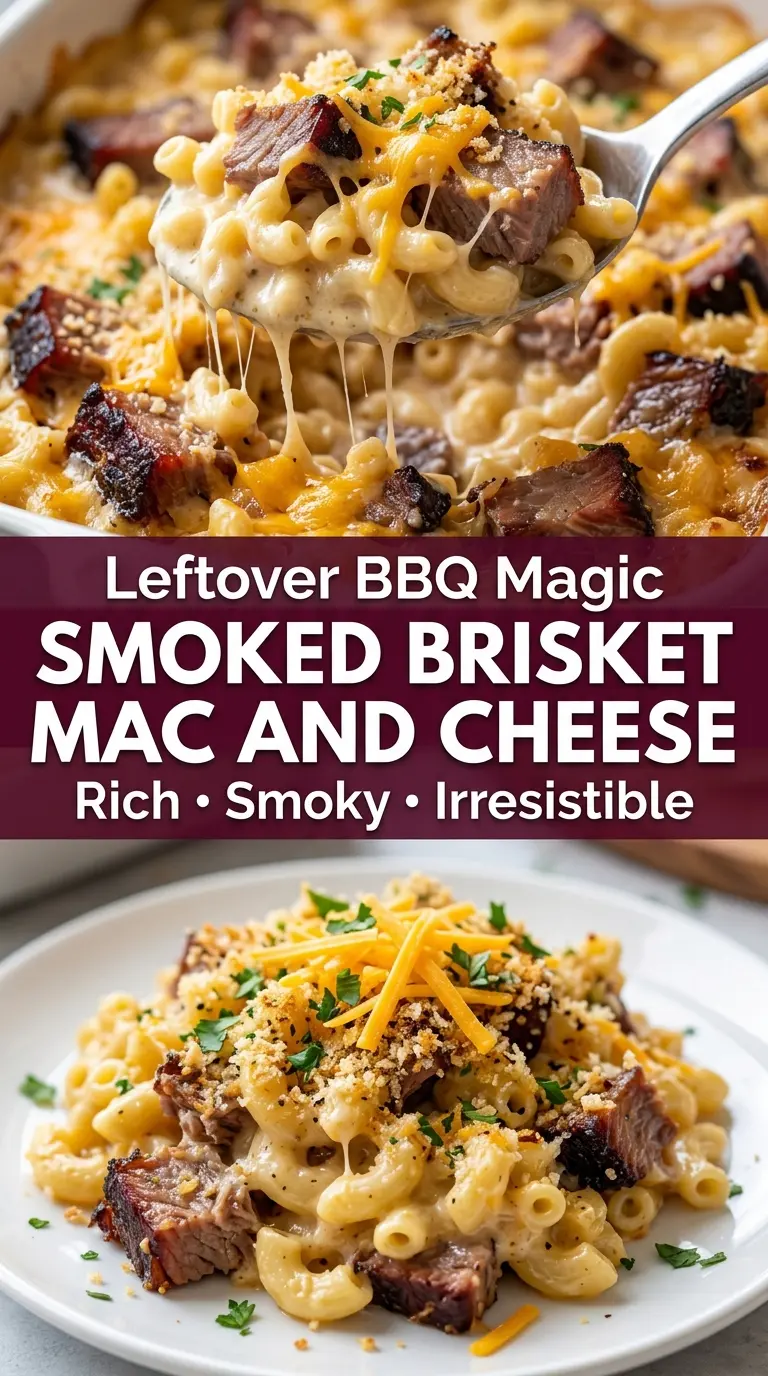
The Trick to Keeping the Cheese Sauce Smooth After Baking
The biggest failure point in smoked brisket mac and cheese is heat. Cheese sauce breaks when it gets rushed, and once that happens the baked casserole can turn greasy instead of creamy. The fix is simple: build the sauce over medium heat, then drop to low before the cheese goes in. That gives the dairy time to melt evenly without tightening up or splitting.
The other thing that matters here is pasta texture. Al dente macaroni is not a suggestion. It keeps its shape after the casserole bakes, and it has enough bite to stand up to the brisket and thick sauce. If you cook the pasta all the way through on the stove, it’ll go soft in the oven and the whole dish loses that clean, spoonable texture.
- Roux: Butter and flour are what keep the sauce stable. Cook them for a full minute so the raw flour taste disappears, but don’t let the mixture darken unless you want a deeper, nuttier base.
- Whole milk and heavy cream: This combo gives you body without making the sauce gluey. Lower-fat milk works in a pinch, but the sauce will be thinner and won’t cling to the pasta as well.
- Sharp cheddar: This is the backbone of the flavor. Pre-shredded cheese can work, but it melts less smoothly because of the anti-caking coating, so block cheese gives a cleaner sauce.
- Smoked brisket: Use brisket that’s already tender and chopped into bite-size pieces. Lean, dry pieces will stay dry; a little of the bark and rendered fat adds the best texture and flavor.
Building the Casserole Without Drying Out the Brisket
Cooking the Pasta Just Short of Done
Boil the macaroni in well-salted water until it’s just shy of tender. You want a firm center because the pasta keeps cooking once it hits the cheese sauce and then again in the oven. Drain it well so extra water doesn’t thin the sauce or leave the casserole loose.
Making the Sauce Base
Melt the butter, whisk in the flour, and let that paste cook until it smells faintly nutty and looks smooth. Slowly whisk in the milk and cream so the sauce stays lump-free. If you dump in the liquid all at once, the flour can clump on the bottom and you’ll spend the next few minutes chasing it around the pan.
Melting in the Cheese Over Low Heat
Pull the heat down before adding the cheese. Stir in the cheddar, smoked Gouda, and mozzarella a handful at a time until each addition disappears into the sauce before the next goes in. If the sauce looks grainy, the pan is too hot — take it off the burner for a minute and stir until it smooths back out.
Folding and Baking
Fold the macaroni and brisket into the sauce gently so the beef stays in chunks instead of shredding apart. Spread everything into the baking dish, then add the cheese and panko topping. Bake until the edges are bubbling and the top is deep golden brown; if the topping browns too fast, lay a loose sheet of foil over the dish for the last few minutes.
How to Adapt This for Different Brisket and Cheese Situations
Using leftover brisket from a smoked flat
Leftover brisket works best when it’s chopped small and warmed in the sauce instead of cooked separately. If it’s a little dry, stir in a spoonful of the brisket juices or a splash of broth before folding it into the pasta. That brings the meat back to life without watering down the casserole.
Making it gluten-free
Use a gluten-free elbow pasta and swap the all-purpose flour for a 1:1 gluten-free flour blend. The sauce will still thicken, but stir it a little longer after adding the milk so the starch fully hydrates. The panko topping needs a gluten-free breadcrumb substitute or crushed gluten-free crackers.
Going lighter on the dairy
You can replace the heavy cream with more whole milk, but the sauce will be a little less plush. If you go that route, don’t skip the roux and don’t rush the cheese melting stage, because the extra fat from the cream is part of what keeps the sauce stable.
Skipping the smoked Gouda
If smoked Gouda isn’t available, use Monterey Jack or extra cheddar and add a touch more smoked paprika. You’ll lose some of the mellow smoke and creaminess, but the casserole will still taste layered and rich instead of flat.
Storage and Reheating
- Refrigerator: Store covered for up to 4 days. The pasta will absorb some sauce, so the casserole gets thicker after chilling.
- Freezer: It freezes well if you cool it completely first and wrap it tightly. Freeze in portions for easier reheating, since a whole pan takes longer to heat evenly.
- Reheating: Reheat covered in a 325°F oven with a splash of milk over the top so the sauce loosens again. The common mistake is blasting it in the microwave until the cheese turns oily and the brisket dries out.
Answers to the Questions Worth Asking
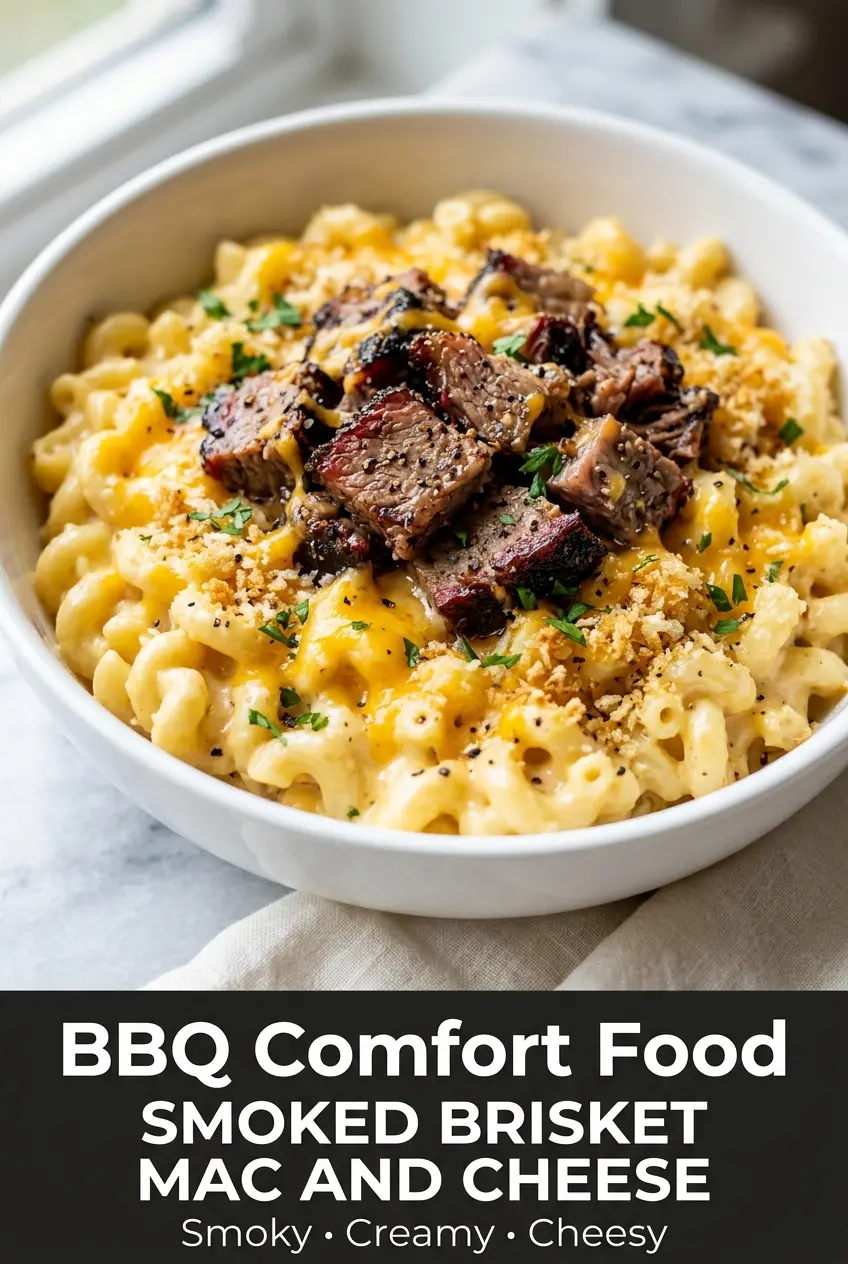
Smoked Brisket Mac and Cheese
Ingredients
Equipment
Method
- Preheat the oven to 375°F and lightly grease a 9×13-inch baking dish; set it aside for later use.
- Cook the elbow macaroni in salted boiling water until al dente, then drain and set aside.
- Melt the butter in a large saucepan over medium heat.
- Whisk in the flour and cook for 1 minute until smooth.
- Gradually whisk in the whole milk and heavy cream, then cook for 4–5 minutes, stirring constantly, until the sauce begins to thicken.
- Stir in the garlic powder, onion powder, smoked paprika, Dijon mustard, salt, and black pepper.
- Reduce the heat to low and add the shredded sharp cheddar cheese, smoked Gouda, and mozzarella; stir until the cheeses are completely melted and the sauce is smooth.
- Fold the cooked macaroni and chopped smoked brisket into the cheese sauce until evenly coated.
- Transfer the mixture to the prepared baking dish and sprinkle with the remaining shredded cheddar cheese and grated Parmesan cheese.
- Mix the panko breadcrumbs with the melted butter and scatter evenly over the casserole.
- Bake for 20–25 minutes at 375°F until bubbly and the topping is golden brown.
- Garnish with chopped fresh parsley and serve immediately.
