
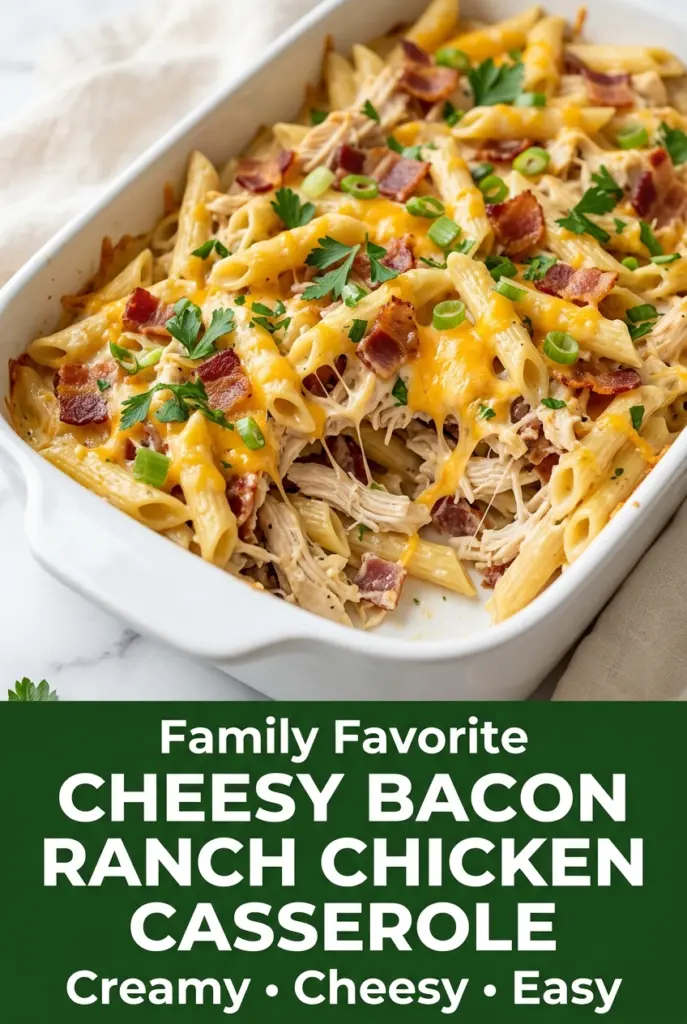
Cheesy Bacon Ranch Chicken Casserole
Cheesy Bacon Ranch Chicken Casserole lands in that sweet spot between comforting and practical: tender pasta, shredded chicken, smoky bacon, and a ranch-spiked cheese sauce that bakes into a bubbling,…
Tip: save now, cook later.Cheesy Bacon Ranch Chicken Casserole lands in that sweet spot between comforting and practical: tender pasta, shredded chicken, smoky bacon, and a ranch-spiked cheese sauce that bakes into a bubbling, scoopable dinner. The best part is that it doesn’t eat like a shortcut casserole. The sauce stays creamy, the pasta holds its shape, and every bite gets a little hit of sharp cheddar and salty bacon.
The trick is building the sauce on the stovetop until it thickens just enough to coat a spoon before the cheese goes in. That keeps the finished casserole creamy instead of loose or grainy. Using shredded cooked chicken and pre-cooked bacon also keeps the bake time short, which means the pasta doesn’t turn soft while the top gets golden.
Below you’ll find the exact point where the sauce should thicken, why I keep some of the bacon back for the top, and a few smart swaps if you want to adjust this casserole for what you already have in the kitchen.
The sauce came together smooth and thick, and the bacon stayed crisp on top instead of disappearing into the casserole. My family asked for this again the next night.
Cheesy Bacon Ranch Chicken Casserole with creamy ranch sauce and crispy bacon is perfect for a make-ahead dinner night.
The Secret to Keeping the Sauce Creamy Under the Oven Heat
The failure point in a casserole like this is almost always the sauce. If the milk and cream go in too fast, or if the pan is too hot when the cheese hits, the sauce can turn grainy before it ever reaches the oven. A smooth base starts with a quick roux, then gradual whisking, then low heat once the dairy is in. That order matters more than any fancy ingredient here.
Ranch seasoning brings salt, herbs, and a little tang, but it doesn’t replace careful heat control. The sauce should look glossy and slightly thickened before the cheese goes in. Once the cheddar, mozzarella, and Parmesan melt, it should coat the back of a spoon and still pour, not sit in clumps. If it feels too thick, a splash of milk fixes it. If it looks broken, the heat was too high and the cheese tightened too fast.
What Each Ingredient Is Doing in This Dish

- Penne pasta — The tube shape catches the sauce inside and out, which is what makes each bite taste rich instead of just coated. Cook it to al dente because it keeps cooking in the oven. If you swap pasta shapes, pick one with ridges or hollows so the sauce has somewhere to cling.
- Whole milk and heavy cream — This combination gives the sauce enough body to bake without turning watery. You can use all milk in a pinch, but the casserole will be looser and less plush. Don’t skip the cream if you want that silky, spoonable finish.
- Ranch seasoning mix — This is the flavor shortcut that makes the casserole taste like ranch without needing to build herbs from scratch. Different brands vary in saltiness, so taste before adding extra salt anywhere else. If you only have ranch dip seasoning, use a little less because it can run saltier and thicker.
- Sharp cheddar, mozzarella, and Parmesan — Cheddar brings the bold flavor, mozzarella gives stretch, and Parmesan adds a salty edge that keeps the sauce from tasting flat. Freshly shredded cheese melts better than pre-shredded because it doesn’t have the anti-caking starch that can make sauces a little chalky. If you need a swap, keep at least one sharp cheese in the mix so the casserole doesn’t go bland.
- Cooked shredded chicken — This is a great place for leftover roast chicken or rotisserie chicken. The important part is that it’s already cooked and well drained, so it doesn’t water down the sauce. Cut or shred it into bite-sized pieces so it tucks into the pasta evenly.
- Bacon — Bacon does more than add salt. It brings a smoky bite that cuts through the cream sauce and keeps the casserole from tasting one-note. Cook it until crisp, then save some for the top so you get texture instead of bacon that disappears into the filling.
Building the Casserole Without Losing the Texture
Cooking the Pasta Just Short of Done
Boil the penne until it’s al dente, then drain it right away. You want a little firmness in the center because the oven will finish the job. If the pasta starts soft before it goes into the sauce, the casserole turns heavy and pasty after baking.
Making the Sauce in the Pan, Not in a Hurry
Melt the butter, cook the garlic just until fragrant, then whisk in the flour for a minute so the raw flour taste cooks off. Add the milk and cream gradually, whisking until the mixture looks smooth before it thickens. Once the sauce starts to lightly coat the whisk, lower the heat and stir in the cheese off the hottest part of the burner.
Mixing and Baking for a Golden Top
Fold the pasta, chicken, and most of the bacon into the sauce until every piece is coated. Transfer it to the baking dish and spread it into an even layer so it bakes at the same rate from edge to center. The casserole is done when the edges are bubbling and the cheese on top has melted into golden patches, not when the whole pan looks dry. Let it rest for a few minutes before serving so the sauce settles back into the pasta.
Three Ways to Adjust the Casserole for Your Table
Make it gluten-free with a simple swap
Use your favorite gluten-free penne and replace the all-purpose flour with a 1:1 gluten-free flour blend. The sauce still thickens well, but stir a minute longer after the flour goes in so you don’t taste any raw starch. Keep an eye on the pasta, since gluten-free shapes can go from firm to soft fast.
Make it lighter without losing the creamy feel
Swap the heavy cream for more whole milk and use a little less cheese on top. The casserole will still be rich, but it won’t have quite the same plush texture. This works best if you keep the cheddar sharp so the flavor still reads clearly.
Use rotisserie chicken for the fastest version
Rotisserie chicken works beautifully here and saves a full cooking step. Pull the meat into medium shreds rather than tiny bits so it stays noticeable in the casserole. If the chicken skin is mixed in, trim most of it off because it can make the sauce greasy.
Storage and Reheating
- Refrigerator: Store covered for up to 4 days. The sauce will thicken as it chills, and the pasta will soften a bit, but the flavor holds up well.
- Freezer: It freezes better before baking. Assemble the casserole, wrap it tightly, and freeze for up to 2 months. Baked leftovers can be frozen, but the sauce may separate a little when thawed.
- Reheating: Reheat covered in a 350°F oven with a splash of milk over the top until warmed through. The biggest mistake is blasting it uncovered in the microwave, which dries the edges and makes the cheese seize.
Answers to the Questions Worth Asking
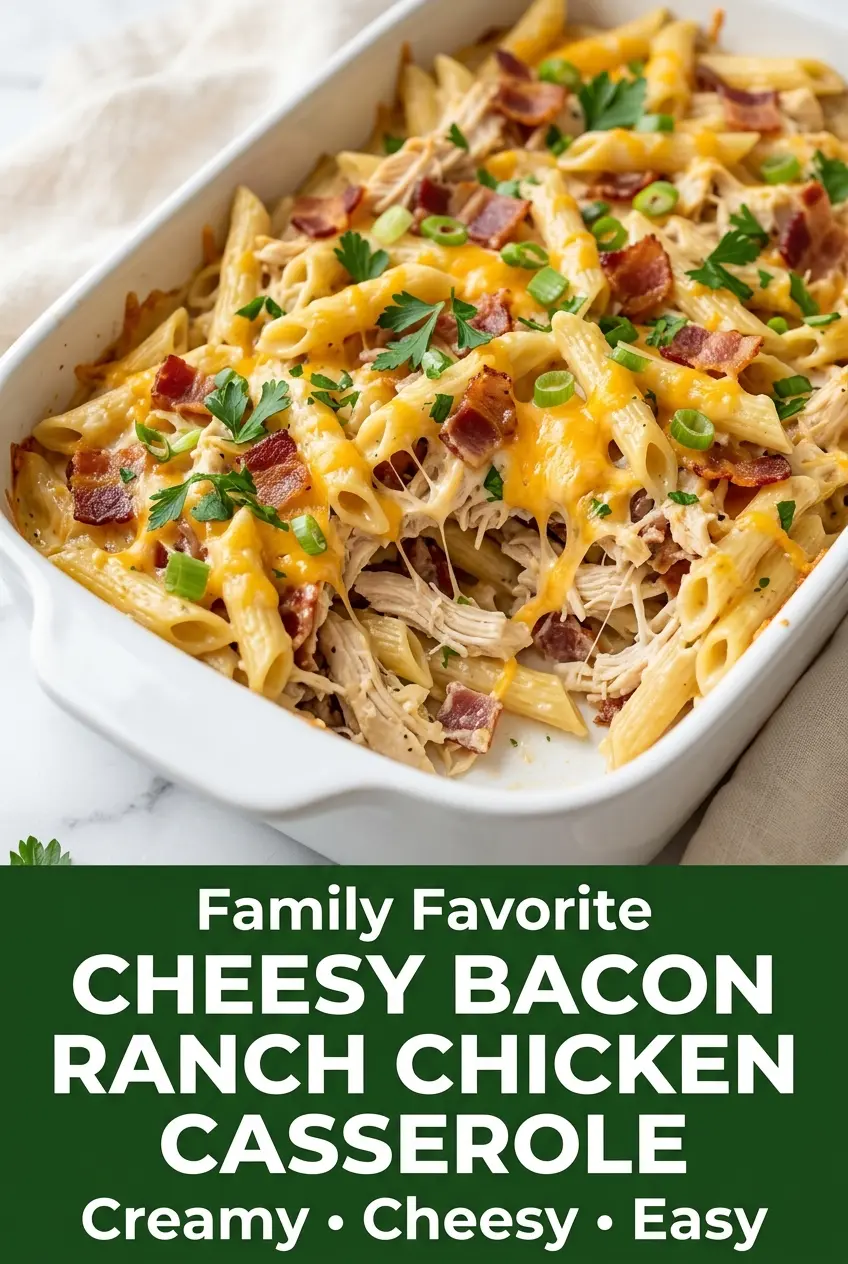
Cheesy Bacon Ranch Chicken Casserole
Ingredients
Equipment
Method
- Preheat the oven to 375°F. Lightly grease a 9×13-inch baking dish.
- Cook the penne in salted boiling water until al dente. Drain and set aside.
- Melt the butter in a large saucepan over medium heat. Add the garlic and cook for 30 seconds until fragrant.
- Whisk in the flour and cook for 1 minute. Gradually whisk in the whole milk and heavy cream until smooth.
- Stir in the ranch seasoning mix and black pepper. Simmer for 3–4 minutes until the sauce thickens slightly.
- Add 1½ cups of shredded sharp cheddar cheese, the shredded mozzarella cheese, and the grated Parmesan cheese. Stir until the cheeses melt into a smooth, creamy sauce.
- Fold in the cooked penne, cooked shredded chicken, and three-quarters of the crumbled bacon until evenly coated. Transfer the mixture to the prepared baking dish.
- Sprinkle the remaining cheddar cheese and the remaining bacon over the top. Bake for 20–25 minutes until the casserole is bubbly and the cheese is melted and lightly golden.
- Let the casserole rest for 5 minutes. Garnish with chopped fresh parsley and sliced green onions before serving.
