
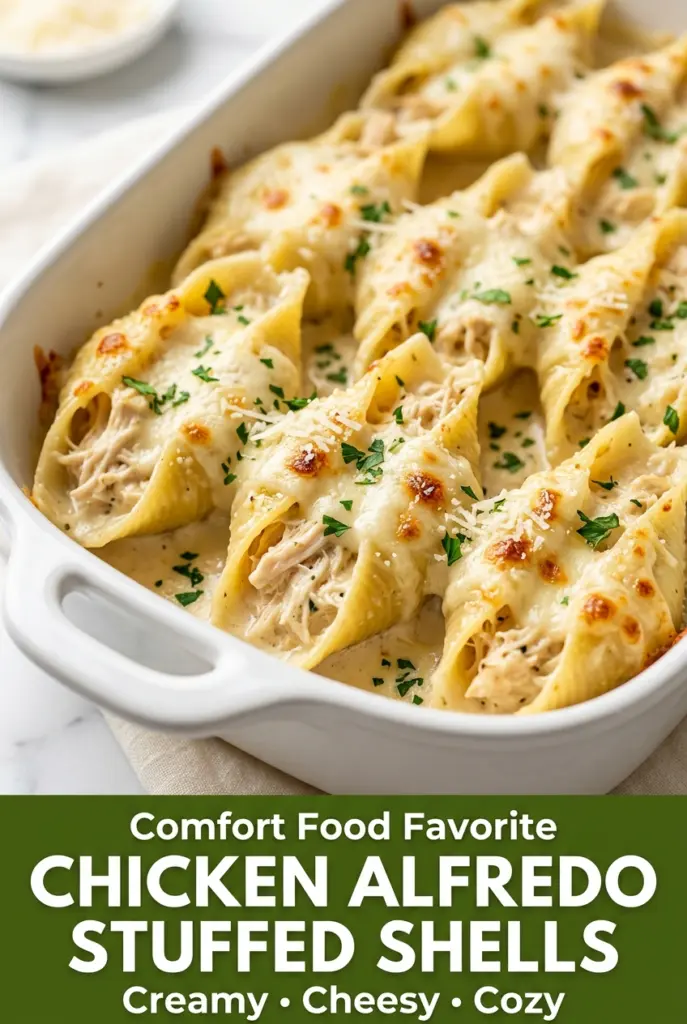
Chicken Alfredo Stuffed Shells
Chicken Alfredo Stuffed Shells land on the table with that rare combination of cozy and polished: tender pasta, a creamy chicken-ricotta filling, and a homemade Alfredo sauce that bakes into…
Tip: save now, cook later.Chicken Alfredo Stuffed Shells land on the table with that rare combination of cozy and polished: tender pasta, a creamy chicken-ricotta filling, and a homemade Alfredo sauce that bakes into a bubbling blanket instead of turning gluey. The shells hold their shape, the filling stays rich but not heavy, and the edges pick up a little golden color that makes the whole dish feel special without asking much from you.
What makes this version work is the balance. The filling uses ricotta for creaminess, mozzarella for stretch, Parmesan for salt and depth, and just enough egg to help everything hold together inside the shells. The sauce starts with butter and garlic, then gets finished with heavy cream and freshly grated Parmesan over gentle heat so it stays smooth instead of breaking or turning grainy. That low-and-slow approach matters here more than fancy ingredients do.
Below, I’ve included the one part people usually rush, the ingredient details that change the final texture, and a few variations if you want to adjust the filling or plan ahead for a busy night.
The Alfredo sauce stayed silky and the shells held together perfectly. I’ve made baked stuffed pasta before, but the chicken filling in these came out much creamier and didn’t dry out at all.
Save these creamy Chicken Alfredo Stuffed Shells for the nights when you want baked pasta comfort with a from-scratch sauce and a filling that stays tender.
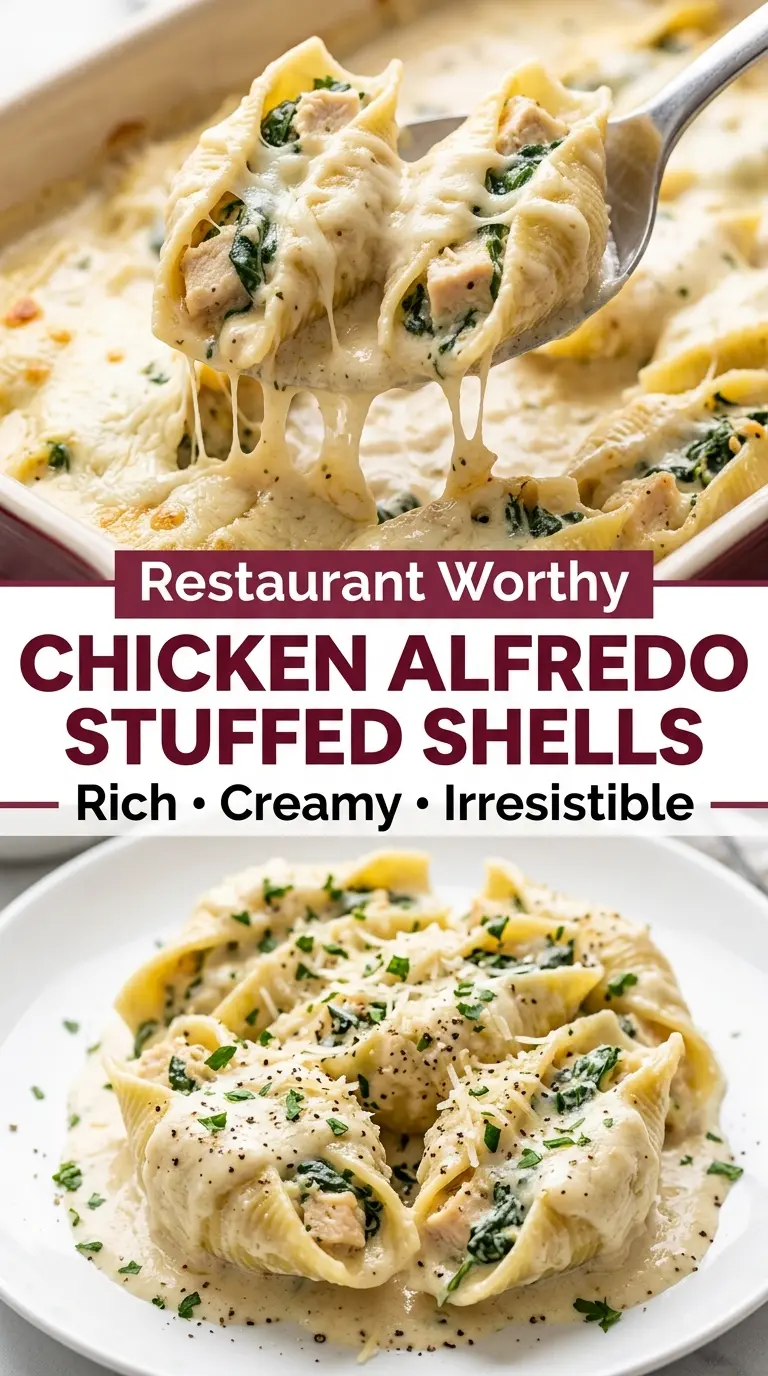
The Reason the Alfredo Stays Smooth Instead of Turning Grainy
The biggest mistake in homemade Alfredo is heating the cheese too aggressively. Parmesan doesn’t like a rolling simmer, and heavy cream doesn’t need hard boiling to thicken. If the pan is too hot when the cheese goes in, the sauce can separate and turn a little sandy instead of glossy.
This recipe works because the cream gets a few minutes to reduce before the Parmesan is whisked in, and the heat stays gentle the whole time. You’re looking for a sauce that coats the back of a spoon and pulls together when you drag a spatula through it. If it ever looks oily or broken, the heat was too high. Pull it off the burner and whisk in a splash more cream before it seizes up completely.
- Heavy cream — This is what gives the sauce body without needing a flour roux. Half-and-half can work in a pinch, but the sauce will be thinner and more likely to split.
- Freshly grated Parmesan — Pre-grated cheese often has anti-caking agents that keep it from melting smoothly. Grating it fresh makes a noticeable difference here.
- Ricotta — It keeps the filling creamy and soft. If yours is watery, drain it for 15 minutes first so the shells don’t leak moisture into the baking dish.
- Shredded chicken — Rotisserie chicken is fine and honestly the easiest route. Chop it or shred it finely so the filling packs into the shells instead of falling out in clumps.
- Jumbo pasta shells — Cook them just to al dente. If they go too far, they tear when you stuff them and can collapse during baking.
Building the Filling and Sauce in the Right Order
Cooking the Shells Without Splitting Them
Boil the shells until they’re just al dente, then drain and rinse them briefly with cool water. That stops the cooking and keeps them flexible enough to handle. If they sit in the colander too long without rinsing, they’ll stick together and tear when you try to separate them. Lay them out in a single layer if you can.
Mixing the Filling So It Stays Creamy
Combine the chicken, ricotta, mozzarella, Parmesan, egg, herbs, and seasonings until everything is evenly coated. The mixture should hold its shape when scooped, but it shouldn’t feel dry or stiff. If it seems loose, the ricotta may have been especially wet; a spoonful of extra Parmesan tightens it up without making it dense. Don’t overmix once the egg is in, or the filling starts to feel paste-like.
Making the Alfredo Over Gentle Heat
Melt the butter, add the garlic for just 30 seconds, then pour in the cream and let it simmer lightly. You want small bubbles around the edges, not a hard boil. Whisk in the Parmesan a handful at a time so it melts smoothly. If you dump it all in at once, the sauce can clump before it has a chance to emulsify.
Baking Until the Top Is Bubbling
Spoon a thin layer of sauce into the baking dish first, then fill and arrange the shells snugly on top. Cover them with the remaining Alfredo and the rest of the cheese, then bake until the center is hot and the top is bubbling with a few golden spots at the edges. Let it rest for 5 minutes before serving so the sauce settles and doesn’t run all over the plate.
How to Adapt These Stuffed Shells for Different Nights
Make It Meatless
Skip the chicken and add finely chopped sautéed spinach, mushrooms, or roasted broccoli. The shells still bake up rich and filling, but the texture shifts from hearty and chunky to more vegetable-forward. If you use spinach, squeeze it dry first so it doesn’t water down the filling.
Gluten-Free Version
Use gluten-free jumbo shells if you can find them, and check that your Parmesan and seasonings are certified gluten-free. The filling and sauce already work naturally without flour, so this is one of the easier pasta dishes to adapt. Cook the shells carefully because gluten-free pasta can turn fragile fast.
Lighten the Filling Slightly
If you want a less rich version, swap half the ricotta for well-drained cottage cheese. The filling won’t be quite as smooth, but it will still bake up creamy and hold together well. Don’t replace the heavy cream in the sauce if you want the Alfredo to stay stable.
Storage and Reheating
- Refrigerator: Store leftovers covered for up to 4 days. The shells will absorb some sauce as they sit, so the filling gets a little firmer by day two.
- Freezer: These freeze well after baking. Cool completely, wrap tightly, and freeze for up to 2 months. Thaw overnight in the fridge before reheating so the sauce warms evenly.
- Reheating: Cover and reheat in a 325°F oven until hot in the center. Add a spoonful of cream or milk to the dish before reheating if the sauce looks thick, and don’t blast it in the microwave or the cheese can turn oily.
Answers to the Questions Worth Asking
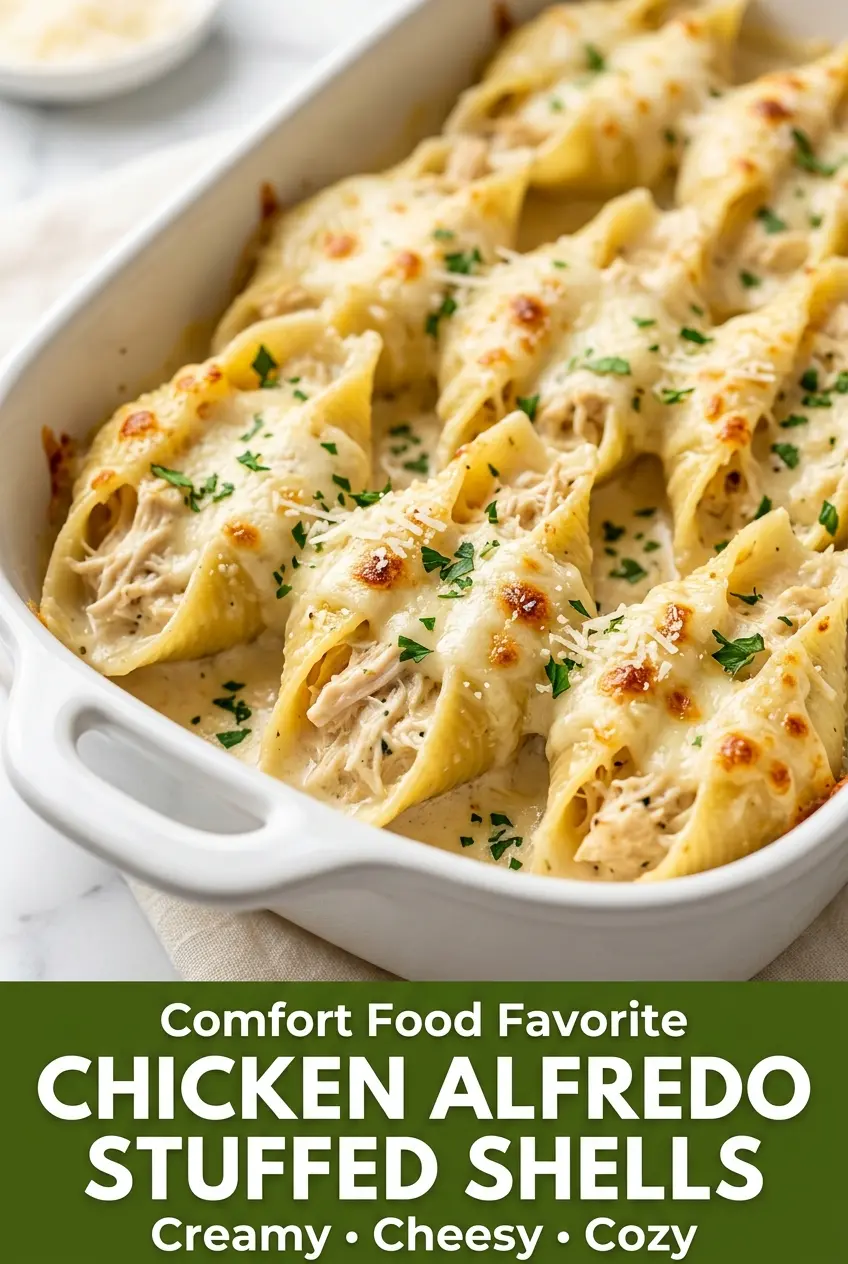
Chicken Alfredo Stuffed Shells
Ingredients
Equipment
Method
- Preheat the oven to 375°F and lightly grease a 9×13-inch baking dish.
- Cook the jumbo pasta shells according to package directions until al dente, then drain and rinse with cool water to prevent sticking.
- In a large bowl, combine the cooked shredded chicken, ricotta cheese, 1 cup mozzarella, 1/4 cup Parmesan, egg, parsley, garlic powder, Italian seasoning, salt, and black pepper.
- Mix until evenly combined, then set aside while you make the Alfredo sauce.
- Melt the butter in a saucepan over medium heat and add the minced garlic, cooking for 30 seconds until fragrant.
- Pour in the heavy cream and simmer for 3–4 minutes, stirring occasionally.
- Gradually whisk in the Parmesan cheese, salt, black pepper, and nutmeg (if using), then cook for 2–3 minutes until smooth and creamy.
- Spread 1 cup of Alfredo sauce over the bottom of the baking dish.
- Fill each cooked pasta shell generously with the chicken mixture, then arrange them in the baking dish.
- Pour the remaining Alfredo sauce evenly over the stuffed shells and sprinkle with the remaining mozzarella and Parmesan.
- Bake for 25–30 minutes at 375°F, until the cheese is melted, bubbly, and lightly golden around the edges.
- Let the casserole rest for 5 minutes before serving.
- Garnish with fresh parsley and extra grated Parmesan.
