
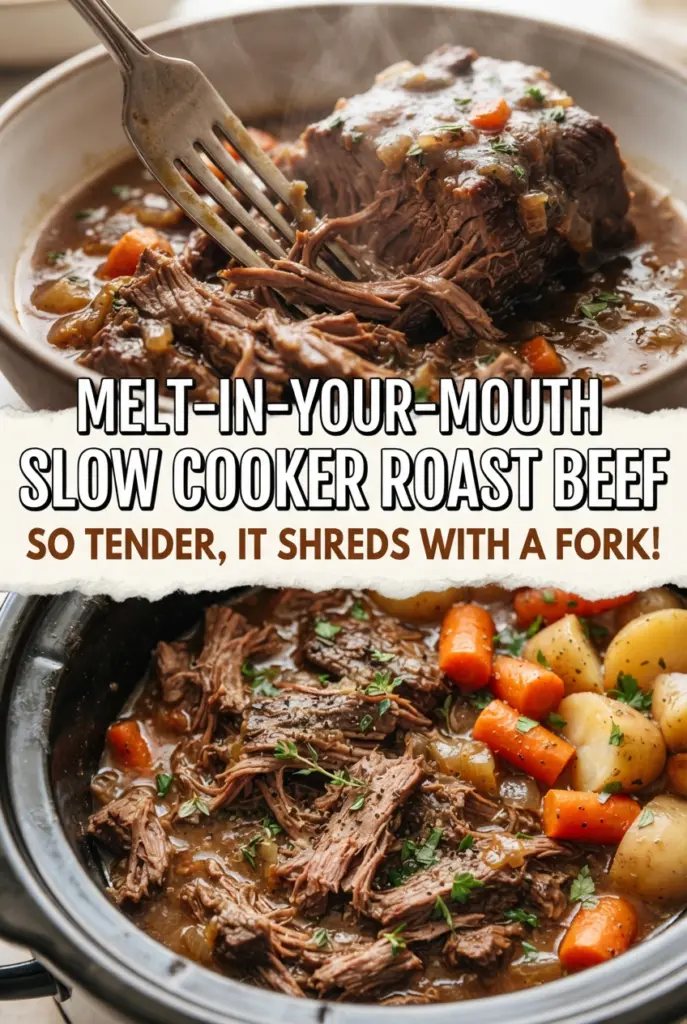
Slow Cooker Roast Beef with Potatoes, Carrots and Rich Gravy
Slow cooker roast beef turns into the kind of dinner people hover around the table for: fork-tender beef, potatoes that soak up the gravy, and carrots that keep just enough…
Tip: save now, cook later.Slow cooker roast beef turns into the kind of dinner people hover around the table for: fork-tender beef, potatoes that soak up the gravy, and carrots that keep just enough shape to taste like themselves. The best part is that the roast cooks with the vegetables in one pot, so the meal feels complete without any last-minute juggling at the stove.
What makes this version work is the sear. That deep brown crust brings actual beef flavor to the slow cooker, where there isn’t enough heat to build it later. The other thing that matters is keeping the vegetables under the roast and around the edges, where they can braise in the juices instead of turning to mush in direct heat.
Below, you’ll find the small details that keep the gravy glossy instead of thin, plus the timing cue I trust when I want the beef to shred cleanly without drying out.
The roast came out fall-apart tender and the gravy thickened up beautifully after just a couple minutes. My potatoes held their shape and soaked up all that beefy flavor.
Save this slow cooker roast beef for a hands-off dinner with tender chuck roast, carrots, potatoes, and rich homemade gravy.
The Sear Is What Gives the Slow Cooker Its Beef Flavor
If you skip the sear, the roast will still cook through, but the gravy will taste flatter and the beef itself can come off a little one-note. Browning the chuck roast in a hot skillet builds the deep, savory base that the slow cooker can’t create on its own. You’re looking for a dark crust on all sides, not just a bit of color around the edges.
The other quiet mistake is crowding the slow cooker with liquid. This roast releases its own juices as it cooks, so the broth and Worcestershire are there to season and deglaze, not to submerge everything. That balance is what keeps the gravy rich instead of watery at the end.
What Each Ingredient Is Doing in This Dish
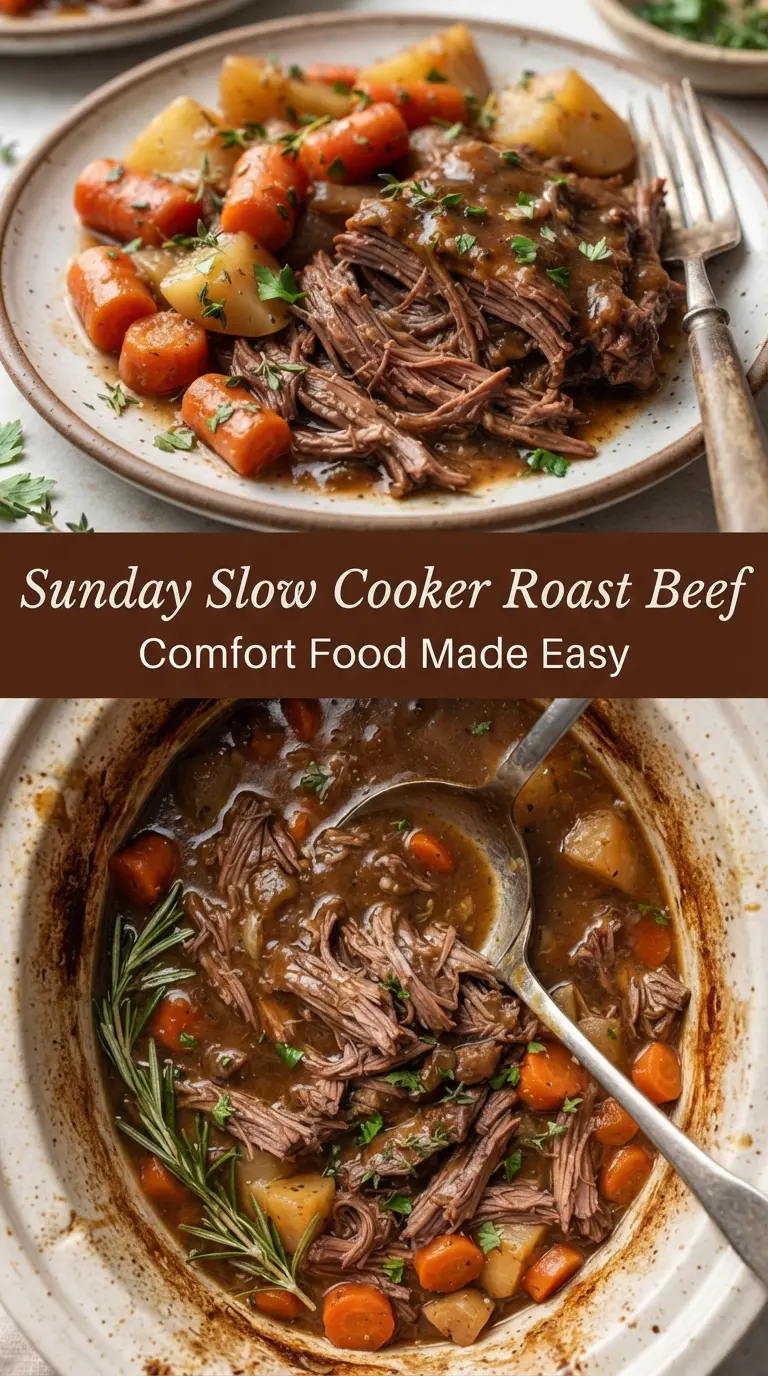
- Chuck roast — This is the cut that turns silky and shreddable after a long, gentle cook. It has enough connective tissue to melt into the gravy, which is why leaner roasts don’t give the same result.
- Baby potatoes — Waxy baby potatoes hold their shape better than russets, which can break down and cloud the gravy. If you only have larger potatoes, cut them into big chunks so they don’t disappear.
- Carrots — Cut them in 2-inch pieces so they stay pleasantly firm after hours in the cooker. Thin slices go soft fast and won’t give you that satisfying braised texture.
- Beef broth and Worcestershire sauce — These add the salty, savory backbone for the gravy. Worcestershire brings depth and a little tang that rounds out the beef without making the dish taste sharp.
- Fresh thyme and rosemary — These herbs stand up to long cooking better than most others. If you use dried, cut the amount down to about one-third and add them with the broth so they have time to soften.
- Cornstarch slurry — This is what turns the strained juices into a spoon-coating gravy. Cold water is important here; if you add cornstarch straight into hot liquid, it clumps before it can thicken evenly.
The 20 Minutes of Work That Set Up the Whole Meal
Seasoning and Searing the Roast
Pat the chuck roast dry before you season it. Surface moisture is the enemy of browning, and a dry roast takes on a much better crust in the skillet. Sear it in hot oil for about 4 minutes per side until the outside looks deeply browned and a little crusty at the edges. If the pan feels crowded or the meat starts steaming instead of sizzling, lower the heat a touch and give it time.
Building the Slow Cooker Base
Scatter the onion, garlic, potatoes, and carrots in the bottom of the slow cooker, then set the roast on top. That keeps the vegetables from sitting directly under the hottest part of the roast while still letting them catch all the drippings. Pour the broth and Worcestershire around the sides rather than directly over the crust, so you don’t wash off the seasoning you just built.
Cooking Until the Beef Gives Up Easily
Cook on LOW for 8 to 9 hours if you can. That gentler heat gives the chuck time to relax and turn tender without drying out the edges. You’re not looking for temperature here so much as behavior: the meat should pull apart with almost no resistance when you test it with a fork. If it still slices neatly, it needs more time.
Turning the Juices Into Gravy
Move the beef and vegetables to a platter, then strain the cooking liquid into a saucepan. Bring it to a simmer before adding the cornstarch slurry, because cornstarch needs active heat to thicken cleanly. Whisk for 2 to 3 minutes until the gravy looks glossy and lightly coats a spoon. If it tastes a little thin at first, keep simmering; it usually tightens just as the starch fully hydrates.
How to Adapt This for Different Tables and Schedules
Make It Dairy-Free Without Losing the Gravy
This recipe is naturally dairy-free as written, which is one reason it works so well for mixed diets. The gravy gets its body from reduced cooking liquid and cornstarch, not cream or butter, so you keep that rich finish without changing a thing.
Swap the Potatoes When You Want a Lower-Carb Plate
If you want to skip the potatoes, add extra carrots and serve the roast over mashed cauliflower or cauliflower mash on the side. You lose some of the built-in starch that helps soak up gravy, so keep the sauce a little thicker than usual.
Use a Different Roast When Chuck Isn’t Available
A bottom round or rump roast will work in a pinch, but the texture won’t be as lush as chuck because those cuts are leaner. Keep the cook time on the shorter side and check early, since they can go from firm to stringy once they overcook.
Storage and Reheating
- Refrigerator: Store the beef, vegetables, and gravy in a sealed container for up to 4 days. The gravy may thicken as it chills, which is normal.
- Freezer: This freezes well for up to 3 months. Cool it completely first, then freeze the beef and gravy together; the potatoes will soften a bit after thawing, but the flavor holds up.
- Reheating: Rewarm gently on the stove over low heat or in the oven covered with a splash of broth. High heat is the mistake here — it tightens the beef and can make the gravy separate.
Answers to the Questions Worth Asking
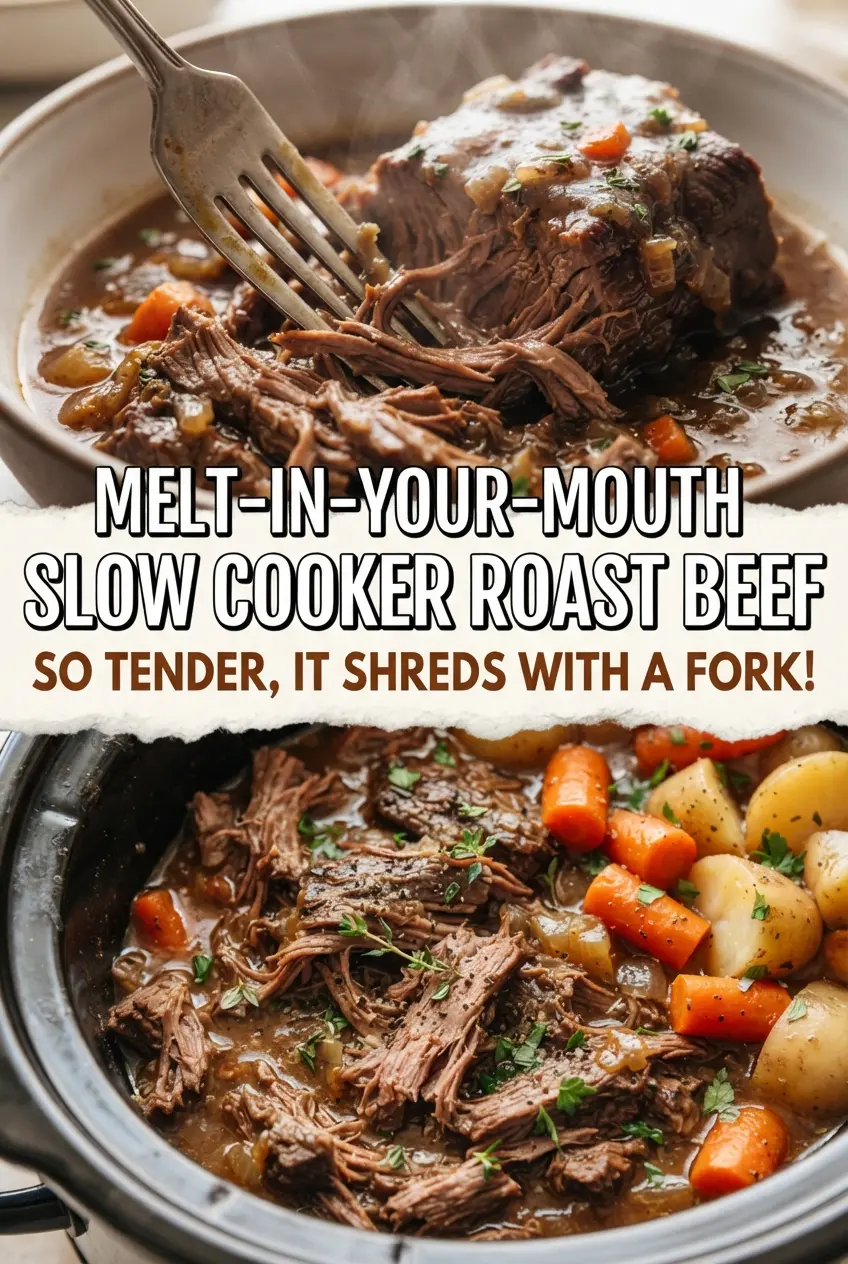
Slow Cooker Roast Beef with Potatoes, Carrots and Rich Gravy
Ingredients
Equipment
Method
- Pat the roast dry and rub it all over with the salt, pepper and garlic powder. This helps the seasoning stick and promotes browning.
- Heat the olive oil in a large skillet over medium-high heat (about 375°F to 400°F) and sear the roast for 4 minutes per side, until deeply browned all over. Flip once to build an even crust.
- Scatter the onion, garlic, potatoes and carrots in the bottom of a 6-quart slow cooker and set the roast on top. Keep the vegetables spread so they cook evenly.
- Whisk the broth and Worcestershire sauce together, pour it around the roast, and tuck in the thyme and rosemary. Make sure the herbs are nestled so the aroma infuses the liquid.
- Cover and cook on LOW for 8–9 hours or HIGH for 5–6 hours, until the beef pulls apart easily with a fork. The cooking liquid should look flavorful and slightly reduced.
- Move the beef and vegetables to a platter and tent with foil. This keeps everything warm while you thicken the gravy.
- Strain the cooking liquid into a saucepan and bring it to a simmer. Keep it at a steady simmer for smooth thickening.
- Whisk the cornstarch with the cold water, then whisk it into the simmering liquid. Cook for 2–3 minutes, until glossy and thick enough to coat a spoon.
- Slice or pull apart the beef, pour the gravy over the top, garnish with parsley, and serve hot with the potatoes and carrots. The gravy should cling to the meat and vegetables.
