
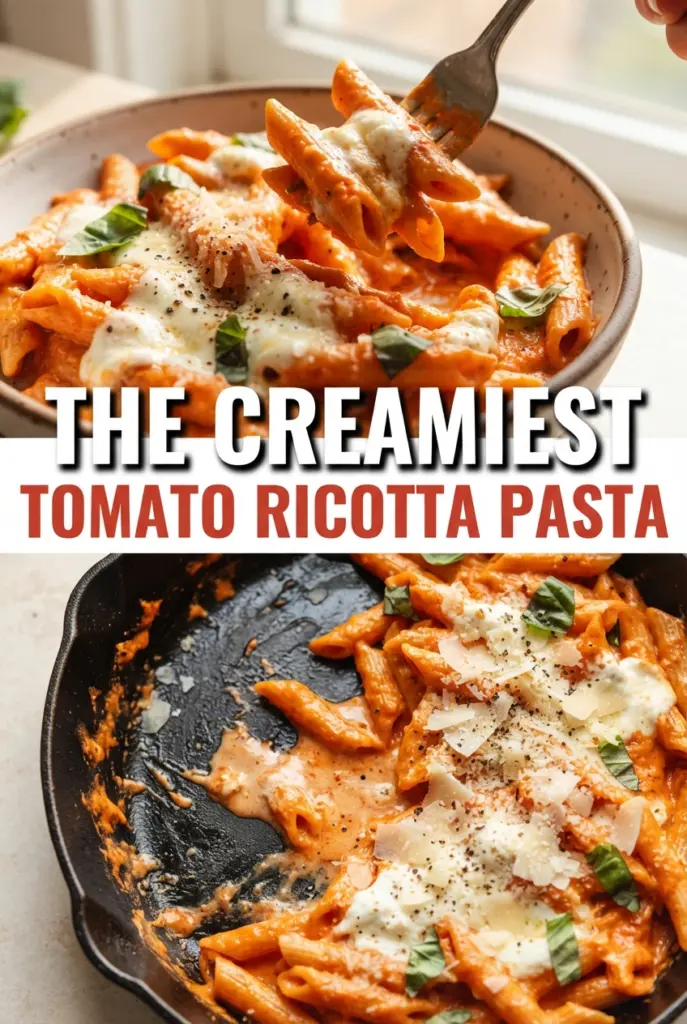
Creamy Tomato Ricotta Pasta (No Heavy Cream Rigatoni)
Rigatoni coated in a silky tomato-ricotta sauce has that dependable, weeknight kind of comfort that keeps earning its spot on the menu. The sauce turns a soft blush-pink when the…
Tip: save now, cook later.Rigatoni coated in a silky tomato-ricotta sauce has that dependable, weeknight kind of comfort that keeps earning its spot on the menu. The sauce turns a soft blush-pink when the ricotta and Parmesan melt into the crushed tomatoes, and the whole dish lands in that sweet spot between bright and rich without needing any heavy cream.
The trick here is building flavor in layers. Garlic and red pepper flakes bloom in olive oil first, then the tomato paste cooks long enough to lose its raw edge and deepen in color before the tomatoes go in. That short extra step gives the sauce a slow-cooked taste in a fraction of the time. Whole-milk ricotta matters too, because it melts into the sauce smoothly and keeps the texture plush instead of grainy.
Below, you’ll find the exact point where the sauce changes from simple tomato sauce to something velvety and substantial, plus the best way to loosen it with pasta water so it clings to every ridge of the rigatoni.
The ricotta melted into the tomato sauce so smoothly, and the pasta water made it cling to the rigatoni instead of pooling at the bottom. My husband went back for seconds and asked if I could pack the leftovers for lunch tomorrow.
Creamy tomato ricotta pasta is the kind of stovetop dinner that turns pantry tomatoes and ricotta into a blush-pink sauce that clings to every rigatoni tube.
The Tomato Paste Step That Gives This Sauce Real Depth
Most quick tomato sauces taste flat because the tomatoes never get a chance to deepen. The tomato paste fixes that here, but only if it cooks for a minute or two in the oil before the crushed tomatoes go in. That short step caramelizes the paste just enough to bring out a richer, rounder flavor that tastes like the sauce simmered all afternoon.
Don’t rush the simmer either. Ten minutes is enough to tighten the sauce and soften the sharp edge of the canned tomatoes. If it still tastes bright in a raw way, give it another couple of minutes before adding the ricotta. Once the dairy goes in, the sauce should already taste balanced.
What Each Ingredient Is Actually Doing in This Dish
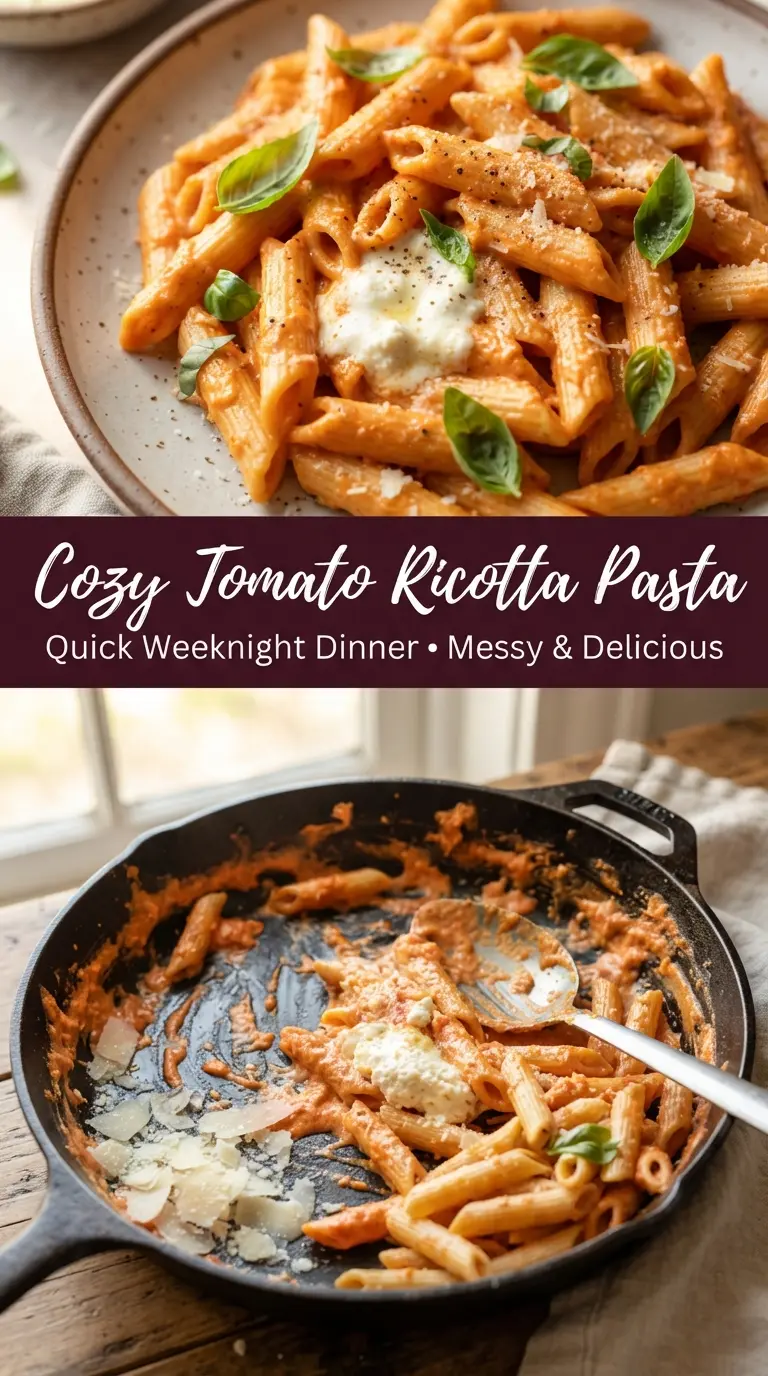
- Rigatoni — The tubes catch the sauce inside and out, which matters with a ricotta-based sauce that should cling instead of slide off. Penne works in a pinch, but rigatoni gives you the best coating and the best bite.
- Whole-milk ricotta — This is what makes the sauce creamy without heavy cream. Low-fat ricotta can work, but it tends to taste drier and can turn grainy more easily. If your ricotta looks watery, drain it briefly in a fine strainer first.
- Parmesan — It adds salt, savoriness, and a little body as it melts. Use freshly grated Parmesan if you can; the pre-shredded stuff doesn’t melt as smoothly and can leave the sauce a little dusty.
- Crushed tomatoes — They create a sauce that’s already halfway smooth, which is why this comes together so fast. If all you have are whole canned tomatoes, crush them by hand or with a spoon before they hit the pan.
- Reserved pasta water — This is the ingredient that ties everything together. The starch helps the ricotta emulsify into the tomato sauce so it coats the pasta instead of turning loose or pasty.
How to Build the Sauce So It Stays Silky
Blooming the Garlic Without Browning It
Warm the olive oil over medium heat, then add the garlic and red pepper flakes just until the garlic smells fragrant. If the garlic starts to color, it will taste sharp and bitter in the finished sauce. You want it softened and aromatic, not toasted. This only takes about a minute, so stay close to the pan.
Cooking the Tomato Paste Until It Turns Brick Red
Stir in the tomato paste and keep it moving for about two minutes. It should darken from bright red to a deeper brick color and start sticking lightly to the pan. That means the raw canned taste is gone and the paste has developed the kind of sweetness that gives the sauce depth.
Finishing With Ricotta Off the Heat
Lower the heat before adding the ricotta and Parmesan. High heat can make ricotta seize or turn grainy, which is the main mistake in this kind of sauce. Stir slowly until the sauce becomes smooth and blush-pink, then add the pasta and thin it with splashes of pasta water until it looks glossy and coats the rigatoni instead of sitting at the bottom of the skillet.
Make It Spicier Without Throwing Off the Balance
Add another pinch of red pepper flakes with the garlic, or finish the bowls with chili oil. The heat should stay in the background and lift the tomato flavor, not overwhelm the ricotta. If you go too hard on the spice, the sauce starts tasting sharper instead of richer.
Make It Gluten-Free Without Changing the Sauce
Use your favorite gluten-free rigatoni and cook it just to al dente, since gluten-free pasta can go soft fast once it hits the sauce. The sauce itself doesn’t need any changes. Save extra pasta water if the brand is prone to drying out, since it helps the sauce cling.
Make It Lighter With Part-Skim Ricotta
Part-skim ricotta will work, but the sauce won’t be quite as plush and it may need a little more pasta water to loosen smoothly. If that’s what you have, whisk it before adding it to the pan so it blends more evenly. The dish still tastes good, just a touch less rich.
Storage and Reheating
- Refrigerator: Store leftovers in an airtight container for up to 4 days. The sauce will thicken as it chills and the pasta will absorb some of it.
- Freezer: It freezes, but the ricotta sauce can turn a little grainy after thawing. If you do freeze it, cool it completely first and store it for up to 2 months in a tightly sealed container.
- Reheating: Warm it gently in a skillet over low heat with a splash of water or milk, stirring until it loosens again. Don’t blast it in the microwave on high, or the ricotta can separate and the pasta can dry out before the center heats through.
Answers to the Questions Worth Asking
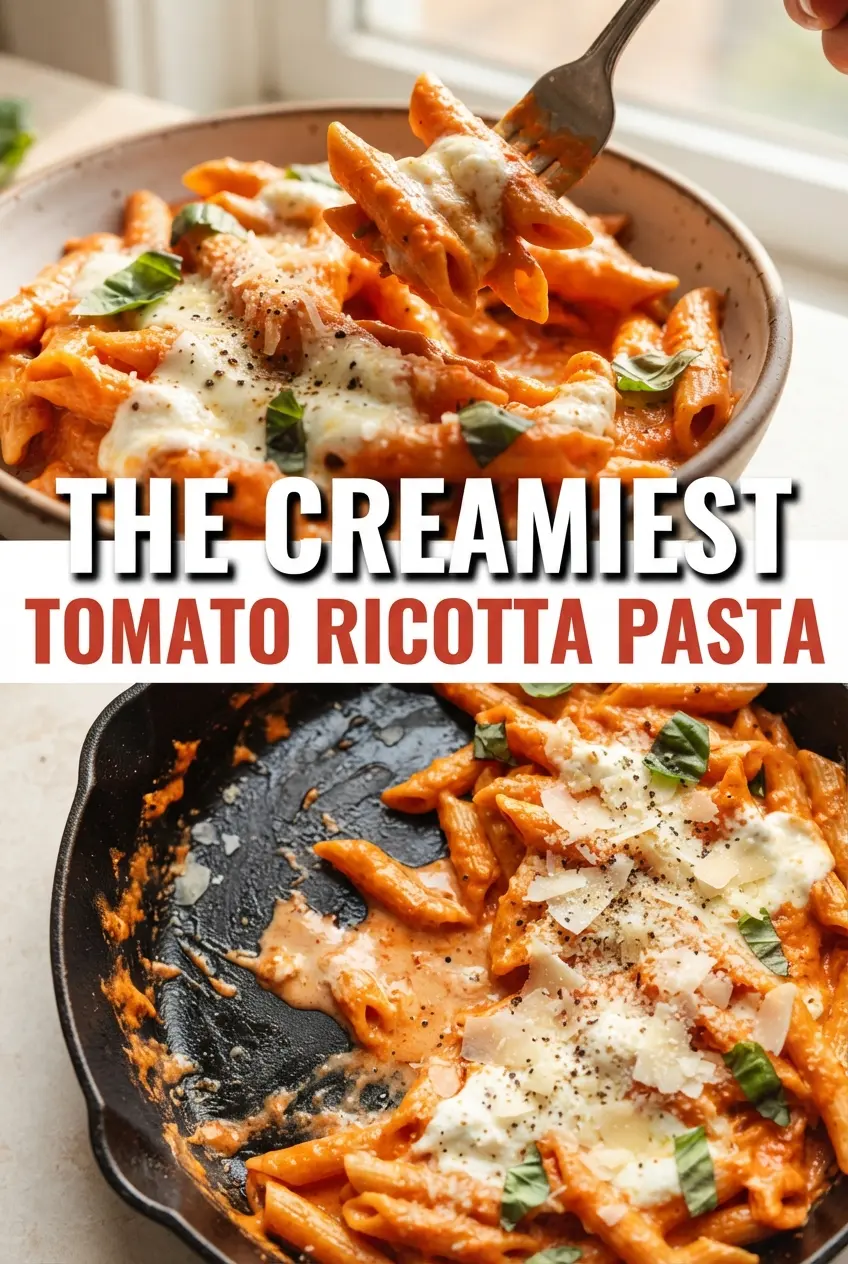
Creamy Tomato Ricotta Pasta (No Heavy Cream Rigatoni)
Ingredients
Equipment
Method
- Bring a large pot of salted water to a boil and cook the rigatoni until al dente (around 8–10 minutes), then reserve 1 cup of pasta water and drain.
- Heat the extra-virgin olive oil in a large deep skillet over medium heat and cook the garlic with the red pepper flakes for 1 minute, stirring, until fragrant but not browned.
- Stir in the tomato paste and cook for 2 minutes, until it darkens to a brick red.
- Add the crushed tomatoes, 1 tsp salt, and black pepper, then simmer for 10 minutes, stirring occasionally, until slightly thickened.
- Lower the heat and stir in 1 cup ricotta and the Parmesan until the sauce turns smooth, creamy, and blush-pink.
- Add the drained rigatoni and toss for 1–2 minutes, adding splashes of reserved pasta water until the sauce is glossy and coats every tube.
- Spoon into bowls and top with dollops of the remaining ricotta and torn basil, then serve hot.
