
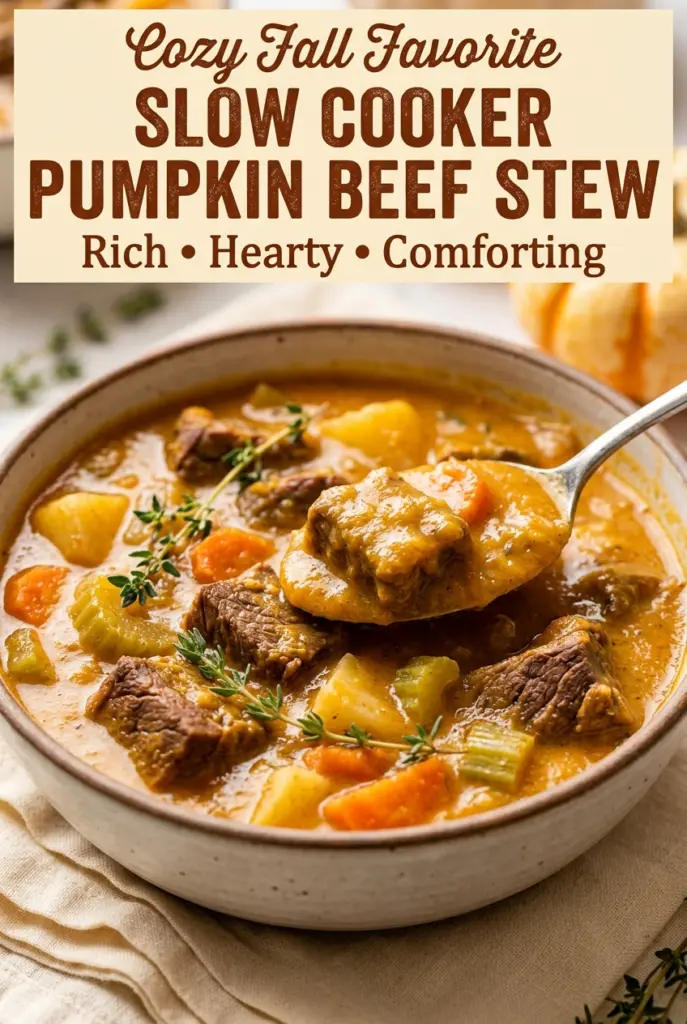
Slow Cooker Pumpkin Beef Stew
Slow Cooker Pumpkin Beef Stew lands with that deep, slow-cooked comfort people want when the weather turns and dinner needs to do more than just fill a bowl. The beef…
Tip: save now, cook later.Slow Cooker Pumpkin Beef Stew lands with that deep, slow-cooked comfort people want when the weather turns and dinner needs to do more than just fill a bowl. The beef turns tender enough to fall apart with a spoon, the pumpkin melts into the broth until it feels naturally thick, and the vegetables hold onto enough texture to keep every bite interesting. It tastes like a classic beef stew that got a little more rounded, a little richer, and a lot more satisfying.
The key here is balance. Pumpkin puree doesn’t just add color; it softens the edges of the broth and gives the stew body without making it heavy or sweet, especially when you pair it with tomato paste, Worcestershire, thyme, and rosemary. Browning the beef first also matters. That step gives you the savory base the slow cooker can’t create on its own, and it keeps the finished stew tasting layered instead of flat.
Below, you’ll find the part that really makes this recipe work: how to build enough flavor before the lid goes on, when to add the slurry so the stew thickens cleanly, and a few easy swaps if you want to adjust the vegetables or make it dairy-free and gluten-free.
The pumpkin gave the broth this velvety texture without making it taste sweet, and the beef was fork-tender after 8 hours on low. I added the cornstarch at the end like you suggested and it thickened up perfectly.
Save this Slow Cooker Pumpkin Beef Stew for a thick, cozy dinner with tender beef and savory pumpkin broth.
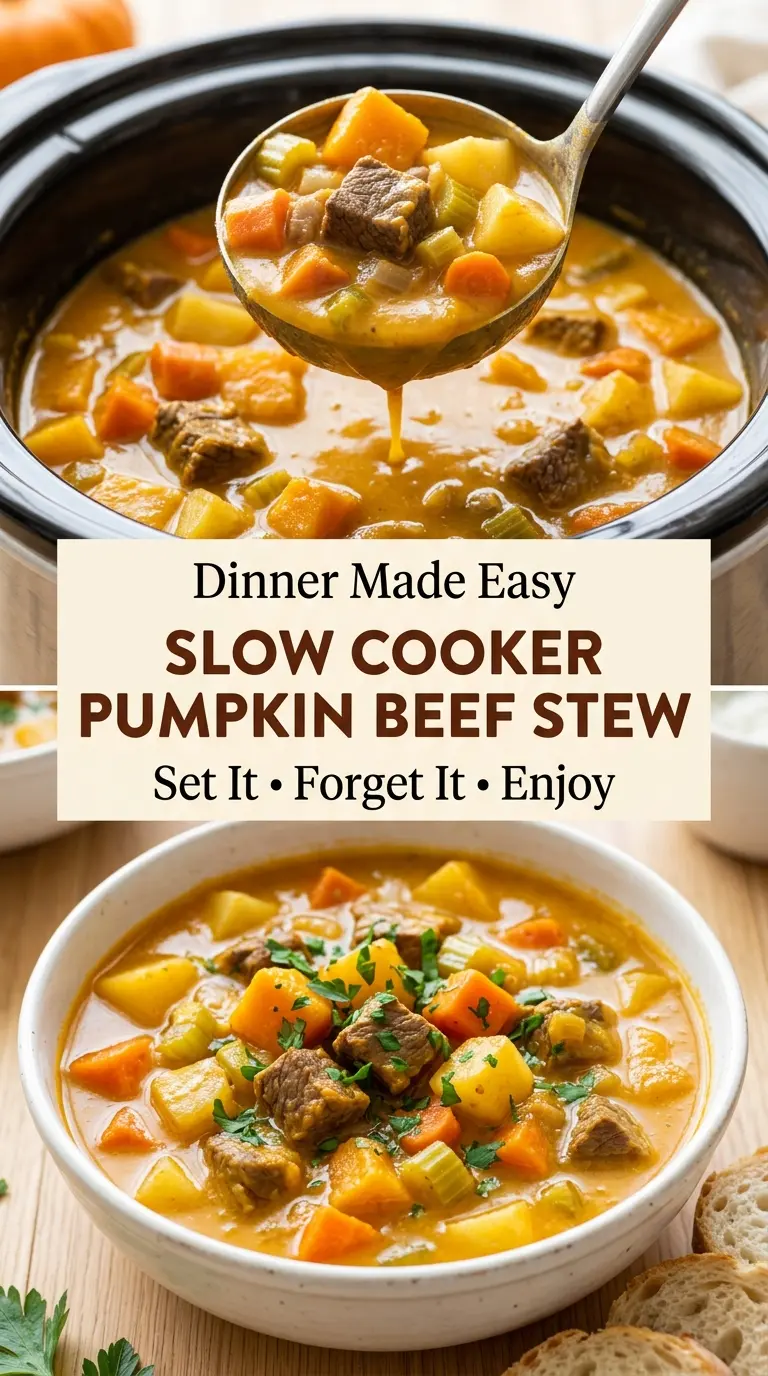
The Trick to Keeping Pumpkin Stew Savory Instead of Sweet
Pumpkin puree can go two ways in a stew: it can deepen the broth, or it can push everything into baby-food sweetness. The difference is restraint and seasoning. This version uses just enough pumpkin to thicken the broth and round out the beef, but it leans on tomato paste, Worcestershire, thyme, rosemary, and smoked paprika to keep the flavor anchored in the savory lane.
The other mistake is skipping the browning step because the slow cooker will handle it later. It won’t. Browning the beef creates the browned bits that give the stew its backbone, and those little caramelized edges matter even more once the pumpkin softens the broth. If the stew tastes one-note at the end, it usually means the beef went in raw and the base never got the chance to develop.
- Beef chuck — This is the cut that turns tender instead of dry after hours of cooking. Look for well-marbled chuck roast and cut it into larger pieces so it stays juicy in the slow cooker.
- Pumpkin puree — Use plain pumpkin puree, not pumpkin pie filling. The puree gives the stew body and a silky finish without adding cream, and canned puree works just as well as homemade here.
- Tomato paste — This brings concentrated savory depth and helps the broth taste more stew-like. A small amount goes a long way, and cooking it with the other ingredients keeps it from tasting sharp.
- Worcestershire sauce — This adds the kind of background richness you notice more than you can name. If you need a substitute, use a splash of soy sauce plus a little extra tomato paste, but the flavor won’t be quite as rounded.
- Potatoes and carrots — Yukon Gold potatoes hold their shape better than russets and give the stew a creamier bite. Cut everything into similar sizes so the vegetables finish at the same time.
How to Build the Stew So the Broth Turns Thick and Rich
Browning the Beef First
Heat the oil until it shimmers, then brown the beef in batches so the pan stays hot enough to color the meat instead of steaming it. You want a deep brown crust on the outside, not gray cubes with pale spots. If the pan starts crowding, the beef will leak liquid and you’ll lose the flavor that should be left in the pot. Those browned bits are the base of the stew.
Layering Everything Into the Slow Cooker
Once the beef is seared, add the vegetables and pumpkin puree directly to the slow cooker, then pour in the broth and seasonings. Stir well enough that the tomato paste disappears and the pumpkin is broken up evenly through the liquid. If it looks too thick before cooking, that’s fine; the vegetables will release moisture as they soften. The mixture should look dense and hearty, not soupy.
Letting the Slow Cooker Do the Work
Cook on low for the best texture if you have the time. High heat will still work, but low gives the beef more time to relax into tenderness without shredding itself into dry strings. You’ll know it’s done when the beef pulls apart with almost no resistance and the potatoes are soft but still intact. If the beef is tender but the vegetables are already collapsing, they were cut too small.
Thickening at the End
Stir in the cornstarch slurry during the last 20 minutes, not earlier. Cornstarch needs heat to activate, but it also breaks down if it cooks too long, which can leave the broth thinner than you want. Mix the slurry until smooth before adding it, then give the stew time to come back to a gentle simmer. It should coat a spoon lightly and settle into a rich gravy-like consistency.
Three Ways to Adjust This Stew Without Losing the Comfort
Gluten-Free Without Compromise
This stew is already close to gluten-free as written, but check your Worcestershire sauce and beef broth to be sure both are certified gluten-free. The cornstarch slurry works well here and gives you the same glossy thickness you’d expect from flour without changing the flavor.
Swap the Beef for a Hearty Mushroom Version
For a vegetarian version, replace the beef with a mix of cremini and portobello mushrooms and use vegetable broth instead of beef broth. You’ll lose the long-braised meatiness, but the pumpkin still gives the broth body and the mushrooms bring enough depth to keep the stew satisfying.
Make It More Root-Vegetable Heavy
Swap one of the potatoes for parsnips or extra carrots if you want a sweeter, earthier finish. Parsnips bring a little natural sugar, so the stew tastes softer and more rustic, while the potatoes keep the broth from feeling too loose.
Dairy-Free as Written
There’s no cream or butter in this stew, so it already works as a dairy-free dinner. The pumpkin does the job of adding richness, which means you don’t need to replace anything to keep the texture full and hearty.
Storage and Reheating
- Refrigerator: Store for up to 4 days. The broth thickens as it chills, and the vegetables soften a little more overnight.
- Freezer: This freezes well for up to 3 months. Cool it completely first, then freeze in portions so the potatoes don’t turn the whole batch watery when thawed.
- Reheating: Warm it gently on the stove over medium-low heat or in the microwave in short bursts, stirring between intervals. Add a splash of broth or water if it’s tightened up too much in the fridge, and don’t boil it hard or the beef can turn stringy.
Answers to the Questions Worth Asking
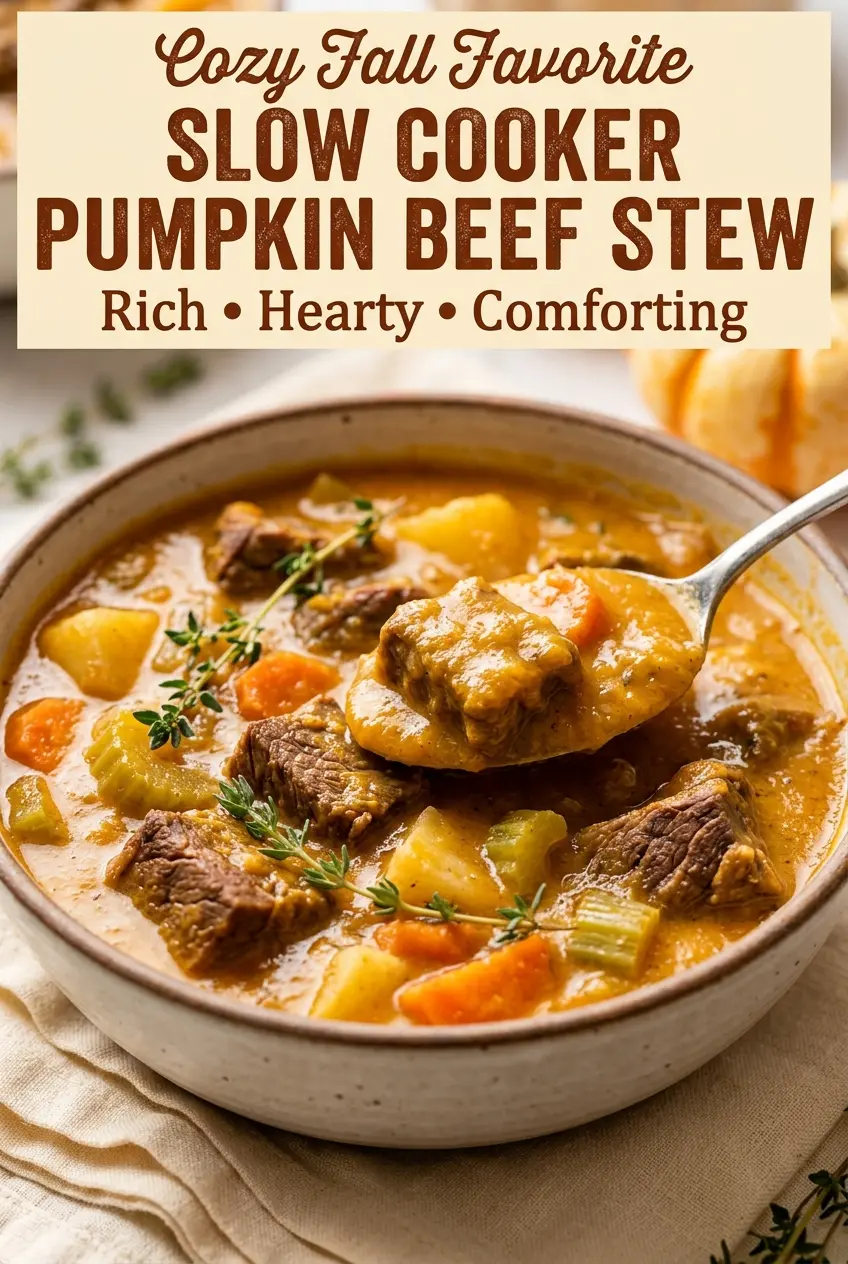
Slow Cooker Pumpkin Beef Stew
Ingredients
Equipment
Method
- Heat olive oil in a large skillet over medium-high heat, shimmering the oil before adding the meat.
- Brown the beef cubes for 4–5 minutes until nicely caramelized on all sides, then transfer them to the slow cooker.
- Add the yellow onion, garlic, carrots, celery, potatoes, and pumpkin puree to the slow cooker with the beef.
- Pour in the beef broth and stir in the Worcestershire sauce, tomato paste, thyme, rosemary, smoked paprika, salt, pepper, and bay leaves until well combined.
- Cover and cook on Low for 8 hours, until the beef is fork-tender and the vegetables are soft, with the surface gently bubbling under the lid.
- Whisk together cornstarch and cold water until smooth, with no visible dry lumps.
- Stir the slurry into the stew during the final 20 minutes of cooking until the broth becomes rich and slightly thickened, then remove bay leaves before serving if desired.
- Stir in chopped fresh parsley just before serving for a fresh green finish.
