
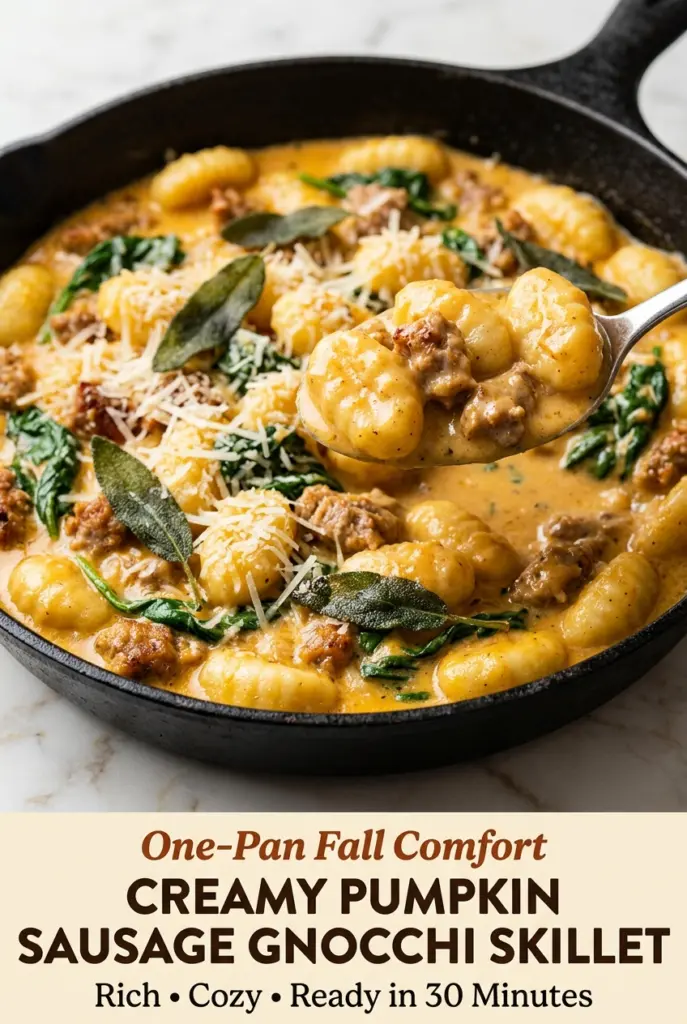
Creamy Pumpkin Sausage Gnocchi Skillet
Pillowy gnocchi, browned sausage, and a silky pumpkin cream sauce make one skillet feel like a complete dinner without a lot of fuss. The gnocchi cooks right in the sauce,…
Tip: save now, cook later.Pillowy gnocchi, browned sausage, and a silky pumpkin cream sauce make one skillet feel like a complete dinner without a lot of fuss. The gnocchi cooks right in the sauce, which lets it soak up all that sage, Parmesan, and smoky paprika instead of tasting like a separate component tossed on top at the end.
What makes this version work is the balance. Pumpkin purée brings body and a gentle sweetness, but it needs broth and cream to keep it from turning heavy. The sausage adds enough fat and seasoning to carry the whole pan, while the spinach and a final knob of butter keep the sauce from feeling flat. If you’ve had pumpkin pasta that tasted chalky or one-note, the fix is almost always better browning, a little acid-free richness from dairy, and enough salt to wake the pumpkin up.
Below, I’ve included the timing that keeps the gnocchi tender instead of gummy, plus a few smart swaps if you want to make this dairy-free or use a different sausage.
The sauce turned out so silky and the gnocchi stayed perfectly tender after simmering in it. My husband went back for seconds and said the sage with the pumpkin tasted like fall in the best way.
Creamy Pumpkin Sausage Gnocchi Skillet makes one-pan comfort dinner even easier, with tender gnocchi and a rich pumpkin Parmesan sauce worth saving for busy nights.

The Trick to Keeping Gnocchi Tender in a Creamy Skillet Sauce
The biggest mistake with skillet gnocchi is treating it like pasta that can hang out forever. Gnocchi absorbs liquid fast, and if the sauce boils hard while it cooks, the outside gets soft before the center has the chance to settle. A gentle simmer is enough. You want the sauce thickened and glossy, with the gnocchi plump and just tender when you cut one open.
Brown the sausage first and leave the browned bits in the pan. That fond is doing more work than most people realize. It gives the pumpkin sauce depth, and it keeps the skillet from tasting like straight dairy and squash. The Parmesan also matters here because it adds salt and body at the same time, which is why the sauce tastes rounded instead of flat.
- Italian sausage — Mild gives you a softer, more family-friendly skillet. Spicy brings heat and extra depth, especially against the sweet pumpkin. Either way, remove the casings so it browns in crumbles instead of steaming in links.
- Pumpkin purée — Use pure pumpkin purée, not pumpkin pie filling. The canned version is perfect here because you want consistency, not extra spices or sugar.
- Heavy cream — This is what makes the sauce silky instead of grainy. Half-and-half will work in a pinch, but the sauce will be a little thinner and more likely to break if it boils hard.
- Freshly grated Parmesan — Pre-grated cheese can turn sandy and won’t melt as smoothly. Freshly grated Parmesan disappears into the sauce and gives it that savory finish that keeps pumpkin from tasting sweet.
- Potato gnocchi — Shelf-stable gnocchi is perfect here. You don’t need fresh gnocchi for a good result, but cook it only until tender so it keeps some structure in the sauce.
Building the Sauce Before the Gnocchi Goes In
Brown the Sausage Until It Has Color
Heat the olive oil and add the sausage in a single layer so it can actually brown. Stir it just enough to break it into bite-sized pieces, then let the edges deepen before moving on. If the sausage stays pale, the sauce will taste one-dimensional and you’ll miss the savory backbone this dish needs.
Soften the Onion, Then Wake Up the Garlic
The onion should turn translucent and sweet, not browned hard. Garlic only needs about 30 seconds here; once it smells fragrant, move on. If the garlic starts to color, it can turn bitter and that bitterness stands out in a cream sauce.
Stir the Sauce Together Before the Heat Gets Too High
Add the pumpkin, broth, cream, sage, thyme, paprika, salt, and pepper, then stir until the mixture looks smooth and evenly colored. Bring it to a gentle simmer, not a rolling boil. High heat is what breaks cream sauces and makes the texture feel greasy instead of velvety.
Let the Gnocchi Finish in the Sauce
Add the uncooked gnocchi and cook it right in the skillet until it’s tender and the sauce clings to the back of a spoon. Stir occasionally so the bottom doesn’t catch, but don’t keep smashing the gnocchi. When it’s ready, the sauce will look glossy and a little thicker than when you started, and the gnocchi will feel soft but still intact.
Three Smart Ways to Adapt This Skillet
Dairy-Free Version That Still Tastes Rich
Swap the heavy cream for full-fat coconut milk and use a dairy-free Parmesan-style cheese if you have one that melts well. The sauce will be slightly sweeter and a little less sharp, but the sausage and sage still give it enough savory weight to work. Pull the pan off the heat before adding the cheese substitute so it doesn’t seize.
Make It Gluten-Free Without Losing Texture
Use certified gluten-free gnocchi and check that your sausage and broth are gluten-free as well. The cooking method stays the same, but gluten-free gnocchi can soften a little faster, so start checking a minute or two early. The goal is tender, not mushy.
Swap the Sausage for a Lighter Dinner
Ground turkey or chicken sausage works well if you want something a little lighter. You’ll need a touch more salt and probably a little extra olive oil because leaner meat doesn’t leave as much flavor behind in the pan. The result is still cozy, just less rich.
Storage and Reheating
- Refrigerator: Store leftovers in an airtight container for up to 3 days. The sauce thickens as it sits, and the gnocchi softens a bit, but it still reheats well.
- Freezer: I don’t recommend freezing this dish. Cream sauces can turn grainy, and gnocchi tends to get mealy after thawing.
- Reheating: Warm it gently in a skillet over low heat with a splash of broth or cream to loosen the sauce. The common mistake is blasting it in the microwave until the dairy separates and the gnocchi turns rubbery.
Questions I Get Asked About This Recipe
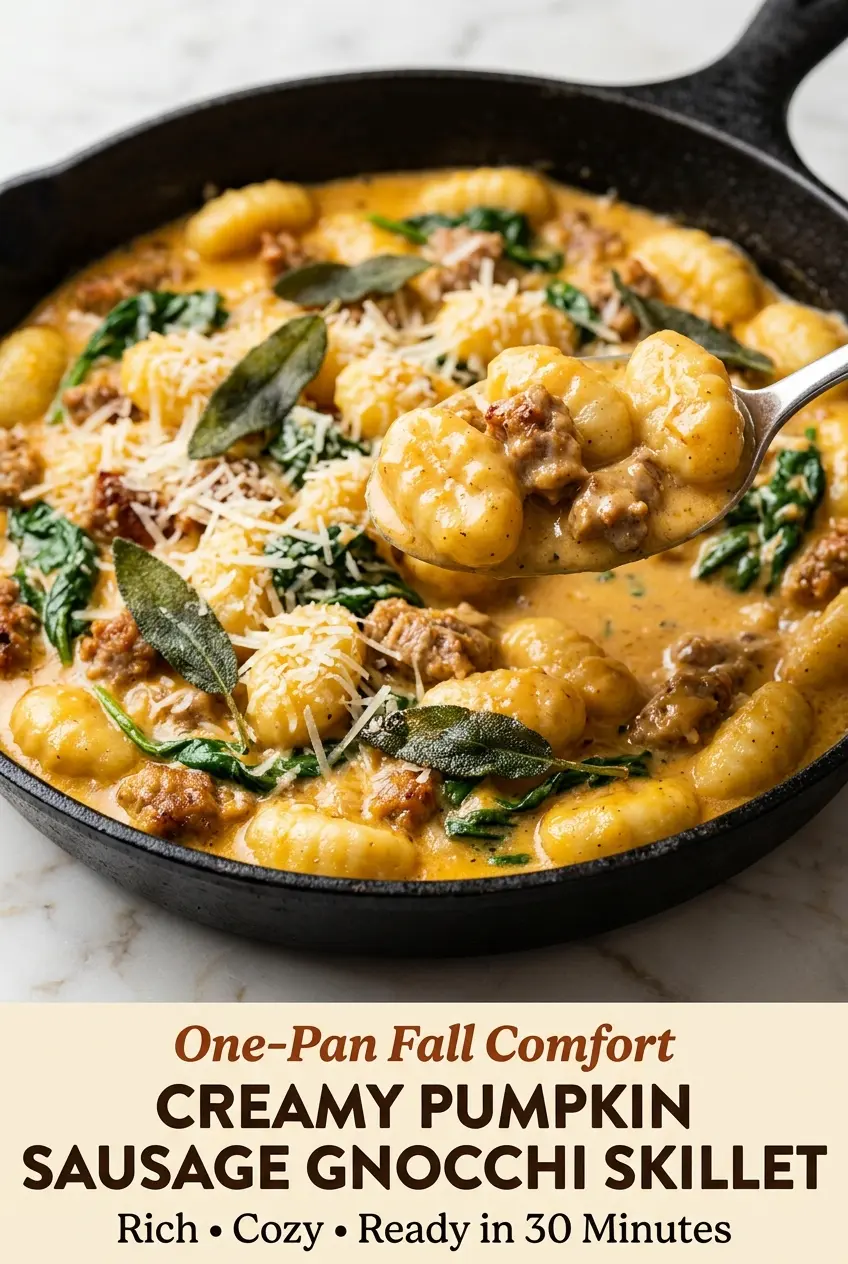
Creamy Pumpkin Sausage Gnocchi Skillet
Ingredients
Equipment
Method
- Heat the olive oil in a large skillet over medium-high heat. Add the Italian sausage and cook for 6–8 minutes, breaking it into bite-sized pieces until browned, with a steady sizzle and visible browning.
- Transfer the browned sausage to a plate. Set aside so it doesn’t overcook while you make the sauce.
- In the same skillet, sauté the small yellow onion for 3–4 minutes until softened. Stir occasionally until the onion looks translucent.
- Stir in the minced garlic and cook for 30 seconds. Keep it moving until fragrant but not browned.
- Add the pumpkin purée, chicken broth, heavy cream, sage, thyme, smoked paprika, kosher salt, and freshly ground black pepper. Stir until smooth, with no pumpkin streaks visible.
- Bring the sauce to a gentle simmer, then stir in the Parmesan cheese until melted. Watch for the sauce to turn silky and slightly thickened as the cheese disperses.
- Add the uncooked potato gnocchi and cook for 4–5 minutes, stirring occasionally, until tender and the sauce thickens. Look for gnocchi to float and feel pillowy when pierced with a fork.
- Return the browned sausage to the skillet and stir to combine. Make sure everything is coated in the creamy sauce.
- Add the baby spinach and unsalted butter, stirring until the spinach wilts and the butter melts into the sauce. Stop when the spinach is bright green and fully wilted.
- Taste and adjust seasoning if needed. Add a pinch more salt, pepper, or red pepper flakes only if your flavor balance requires it.
- Garnish with fresh parsley or sage leaves and additional Parmesan, then serve immediately. Finish with a visible sprinkle so the top looks fresh and inviting.
