
Pumpkin Pie Cheesecake
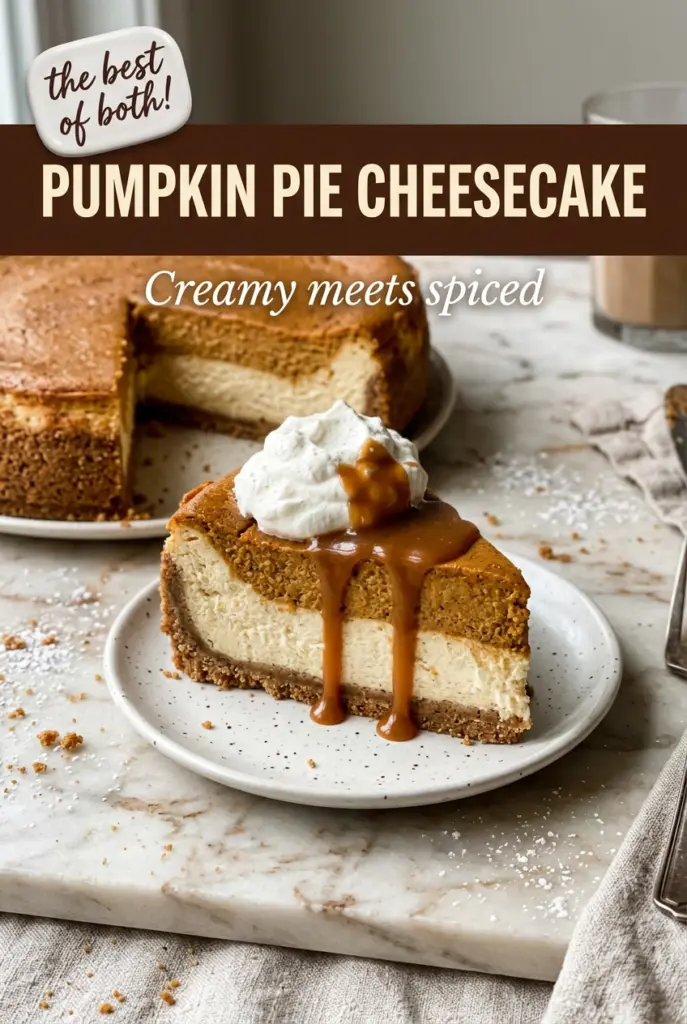
Rich, creamy pumpkin pie cheesecake gives you the best parts of two desserts in one clean slice: a buttery graham crust, a smooth vanilla cheesecake layer, and a spiced pumpkin…
Tip: save now, cook later.Rich, creamy pumpkin pie cheesecake gives you the best parts of two desserts in one clean slice: a buttery graham crust, a smooth vanilla cheesecake layer, and a spiced pumpkin topping that bakes into its own distinct layer. The texture is what makes it worth repeating. You get the firm chill of cheesecake, the silky density of pumpkin pie, and just enough spice to keep every bite interesting without turning heavy.
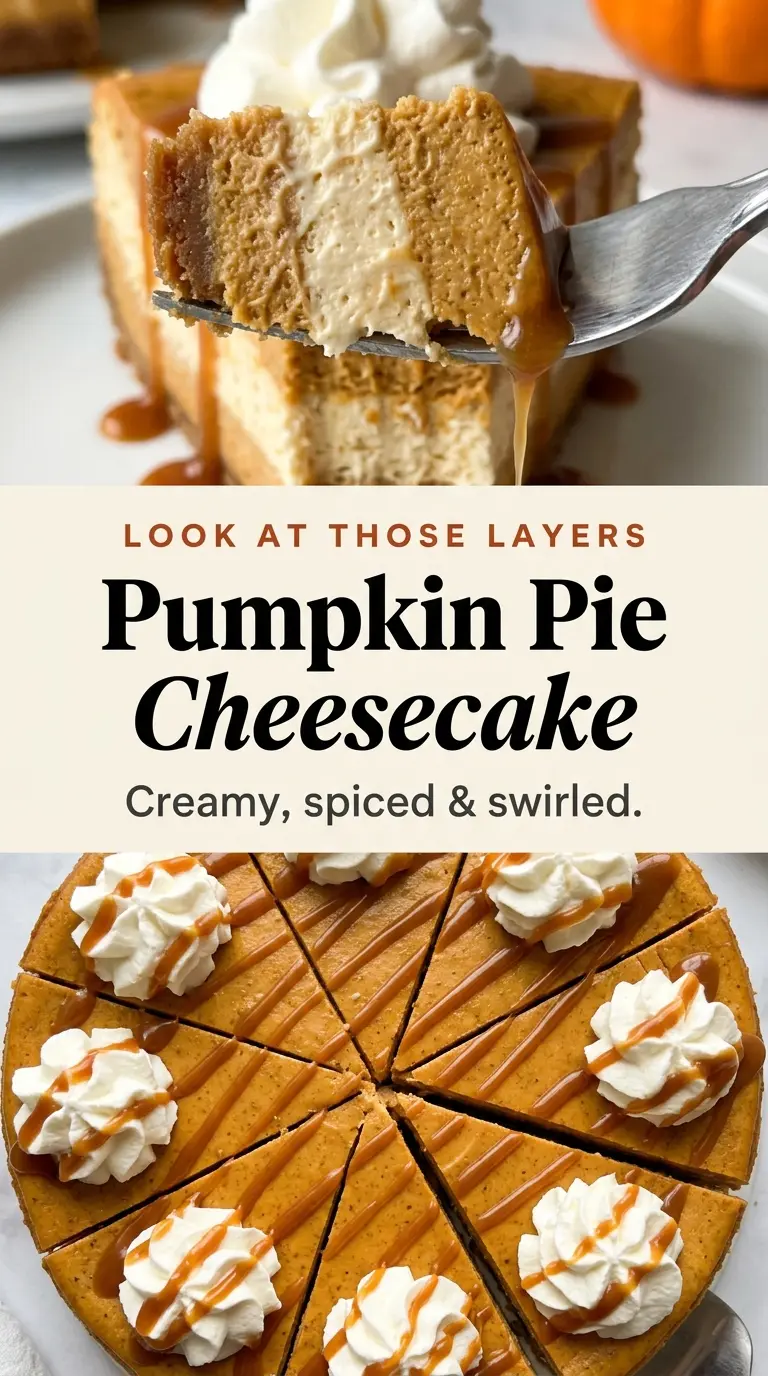
The part that makes this version work is the layering. The cheesecake batter goes on first and gets a little head start before the pumpkin mixture is spooned over the top, which helps the two layers stay separate instead of muddying together. Using softened cream cheese and adding the eggs one at a time keeps the filling smooth instead of lumpy, and the slow cool-down in the oven helps prevent the surface from cracking.
Below, I’ve included the one timing cue that matters most, a few smart swaps, and the storage note I wish more cheesecake recipes included. Once you’ve made it this way, it’s hard to go back to choosing between pie and cheesecake.
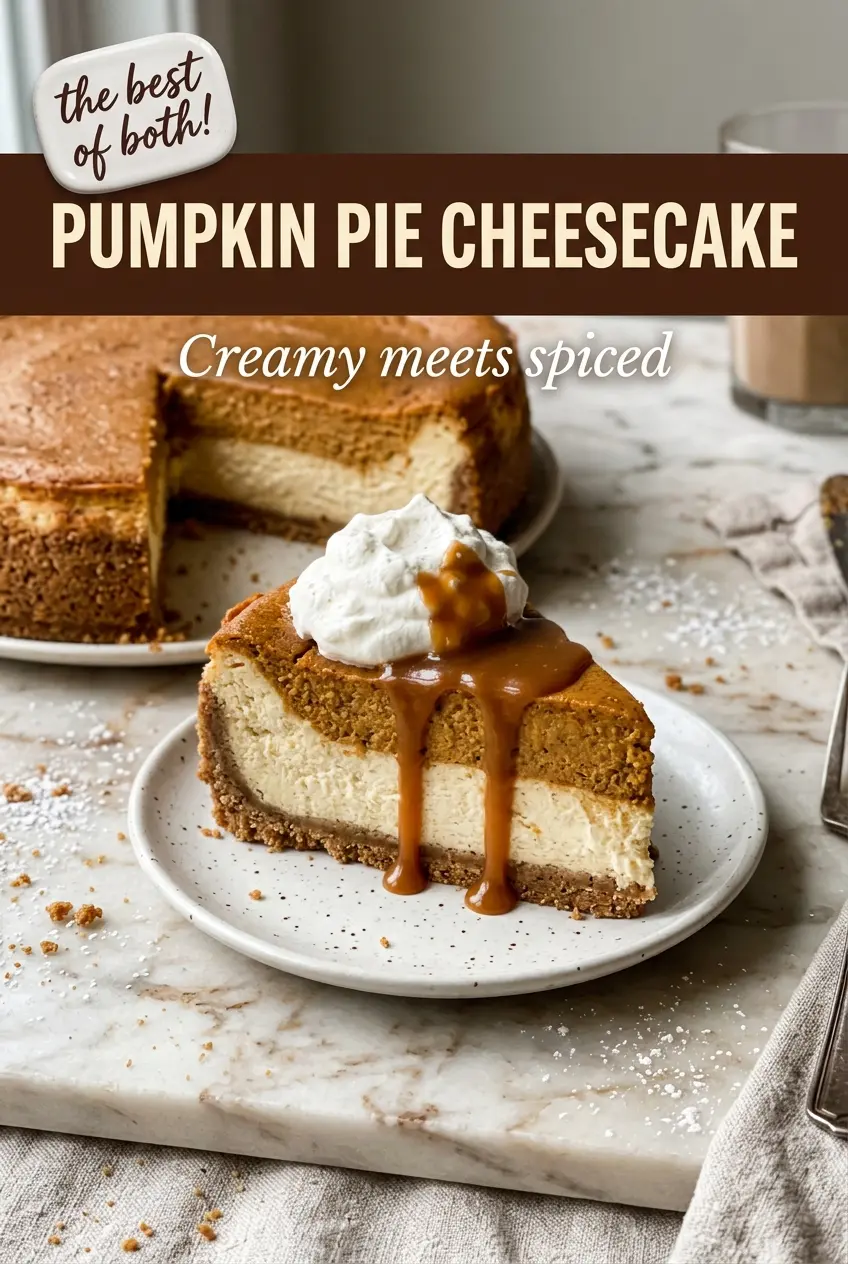
The layers stayed separate and the center set up beautifully after chilling overnight. I topped it with whipped cream and caramel and it sliced like a dream.
Pumpkin pie cheesecake with its creamy layers and caramel finish is one to pin for the next time you need a make-ahead dessert that slices cleanly.
The Layer Order That Keeps Pumpkin Pie Cheesecake Neat Instead of Swirled
The biggest mistake with a layered cheesecake like this is pouring the pumpkin mixture too aggressively or too early. If the base cheesecake batter gets disturbed, the layers blend together and you lose that clean pumpkin-over-vanilla look that makes the first slice so satisfying. Spoon the pumpkin layer gently over the back of a spoon or pour it in small additions, then smooth it with a light hand.
The other thing that matters is the bake. A cheesecake with a pumpkin layer should look barely set in the center when it comes out. If you wait for the middle to look fully firm in the oven, it will overbake by the time it chills, and that’s when you get a dry edge or a cracked top. The slight jiggle is the cue you want.
What Each Ingredient Is Actually Doing in This Pumpkin Pie Cheesecake
- Graham cracker crumbs — These give you a sturdy, buttery base that stands up to the heavy filling. If you only have whole graham crackers, crush them finely and measure after crushing so the crust presses together evenly.
- Unsalted butter — This is what binds the crust and gives it that toasted, cookie-like flavor after baking. Salted butter works in a pinch, but the crust will taste a little sharper.
- Cream cheese — Full-fat cream cheese is worth using here because low-fat versions can bake up loose and grainy. Let it soften fully so it beats smooth before the eggs go in, or you’ll chase little lumps the whole time.
- Pumpkin puree — Use plain pumpkin puree, not pumpkin pie filling. Pie filling already contains sugar and spices, which throws off both the texture and the balance of the cheesecake layer.
- Spices — Cinnamon, nutmeg, and cloves are doing different jobs. Cinnamon gives warmth, nutmeg brings depth, and cloves add that unmistakable pumpkin pie finish; the cloves are potent, so measuring them carefully matters.
Building the Two Layers Without Beating the Air Into Them
Pressing and Baking the Crust
Mix the crumbs, melted butter, and sugar until the texture looks like damp sand, then press it firmly into the bottom of the springform pan. A loose crust crumbles the second you slice into it, so use the bottom of a measuring cup to compact it into an even layer. The 8-minute bake sets the crust and keeps it from turning soggy under the filling.
Whipping the Cheesecake Base Smooth
Beat the cream cheese, sugar, and vanilla until the mixture looks glossy and no longer has streaks. Add the eggs one at a time and stop as soon as they disappear into the batter. If you overbeat after the eggs go in, you whip in extra air, and that air expands in the oven and can lead to cracks or a puffed center that sinks later.
Spooning on the Pumpkin Layer
Whisk the pumpkin layer until it’s completely smooth, then spoon it gently over the cheesecake batter. Dragging the spoon through the base will mix the layers together, so use the lightest touch you can. A few small swirls with a knife are fine if you want a marbled look, but keep them shallow or the layers will blend into one color.
Cooling Like a Cheesecake, Not a Pie
When the edges are set and the middle still has a small wobble, turn off the oven and let the cheesecake cool inside with the door cracked. That slow drop in temperature helps the top settle without splitting. After that, the long chill in the fridge isn’t optional — it’s what gives you clean slices instead of a soft, messy center.
Three Ways to Make This Pumpkin Pie Cheesecake Work for Different Tables
Gluten-Free Crust Swap
Use gluten-free graham-style crumbs or gluten-free vanilla cookie crumbs in the crust. The filling stays the same, but the crust may be a little more delicate, so press it firmly and let it cool fully before adding the cheesecake layer.
Dairy-Free Version
Use a dairy-free cream cheese block-style substitute and plant-based butter for the crust. The texture will be slightly softer and less tangy, but it still slices well after a long chill. Avoid whipped tub-style substitutes, which can bake up loose.
Extra-Spiced Pumpkin Layer
If you like a stronger pumpkin pie flavor, add a pinch of ginger and an extra small pinch of cloves. That pushes the dessert toward classic pie territory without making it taste busy or overly sharp.
Storage and Reheating
- Refrigerator: Store covered for up to 5 days. The crust softens a little by day two, but the cheesecake layer stays creamy.
- Freezer: It freezes well. Chill completely, slice or leave whole, wrap tightly, and freeze for up to 2 months. Thaw overnight in the refrigerator for the best texture.
- Reheating: Serve this chilled or at cool room temperature. Don’t microwave it, since the filling turns greasy and loses the clean layered texture.
Answers to the Questions Worth Asking
Pumpkin Pie Cheesecake
Ingredients
Equipment
Method
- Preheat the oven to 325°F and grease a 9-inch springform pan so the crust releases cleanly.
- Stir together graham cracker crumbs, melted unsalted butter, and granulated sugar, then press firmly into the bottom of the pan.
- Bake the crust for 8 minutes, until set and lightly fragrant, then set aside to cool slightly.
- Beat cream cheese, granulated sugar, and vanilla extract until smooth and creamy.
- Add eggs one at a time, beating just until combined to keep the batter silky.
- Pour the cheesecake batter over the crust and smooth the top.
- Whisk together pumpkin puree, granulated sugar, egg, ground cinnamon, ground nutmeg, ground cloves, and salt until smooth.
- Gently spoon the pumpkin mixture over the cheesecake layer and smooth into an even layer.
- Swirl the two layers together slightly with a knife if desired, leaving visible ribbons.
- Bake for 55-60 minutes at 325°F, until edges are set and the center jiggles only slightly.
- Turn off the oven, crack the door, and cool the cheesecake inside for 1 hour to prevent cracking.
- Refrigerate for at least 4 hours, or overnight, before releasing from the pan so the slice holds its shape.
- Top with whipped cream, drizzle with caramel sauce, and dust with ground cinnamon right before slicing.
