
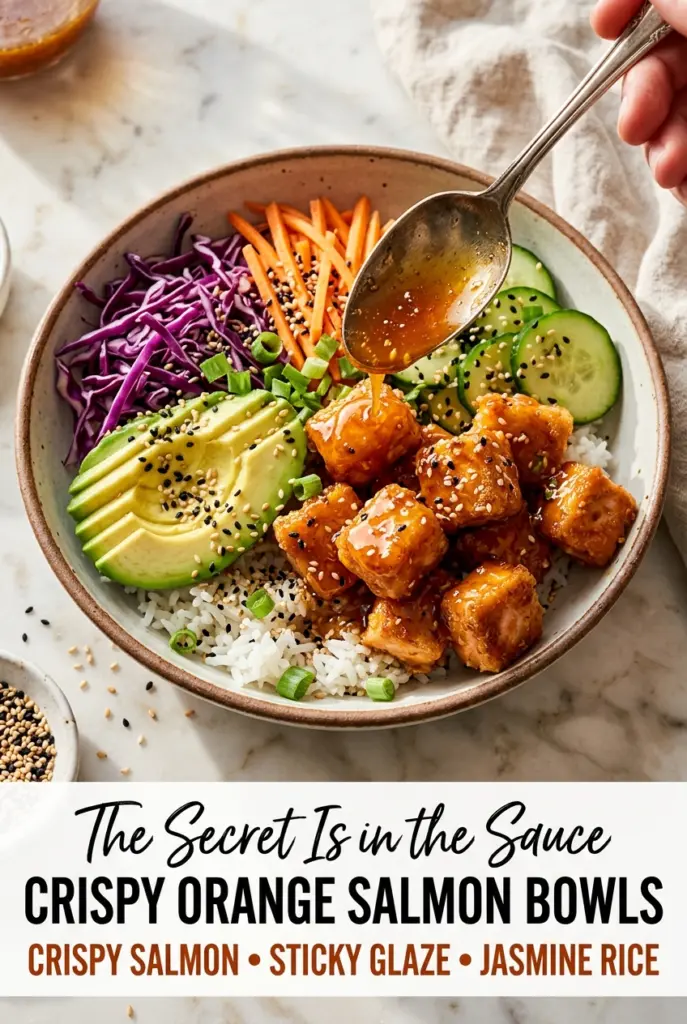
Crispy Orange Salmon Bowls
Golden, crisp-edged salmon coated in a sticky orange glaze is the kind of dinner that disappears fast. The fish stays tender inside, the sauce clings to every surface, and the…
Tip: save now, cook later.Golden, crisp-edged salmon coated in a sticky orange glaze is the kind of dinner that disappears fast. The fish stays tender inside, the sauce clings to every surface, and the rice underneath catches all the extra glaze that slides off the salmon. Add crunchy cabbage, cool cucumber, and creamy avocado, and you’ve got the full takeout-style bowl experience without waiting on delivery.
The trick here is treating the salmon like something that deserves a sear before it ever sees sauce. Cornstarch gives the cubes that light crust, but it only works if the fish is patted dry first and laid in a hot skillet with enough room to brown instead of steam. The orange glaze also matters: fresh juice gives brightness, soy sauce gives depth, and a small cornstarch slurry turns it into a glossy coating instead of a thin pan sauce.
Below, I’m walking through the part that matters most — how to keep the salmon crisp, not soggy, when the glaze goes in. I’ve also included a few easy swaps and the best way to prep these bowls ahead if you want lunch sorted for a couple of days.
The salmon stayed crisp even after tossing it in the orange glaze, and the sauce thickened up in just a minute or two. I packed the leftovers for lunch and the rice didn’t get soggy at all.
Save these crispy orange salmon bowls for the nights when you want a glossy, takeout-style dinner with crunchy veggies and minimal cleanup.
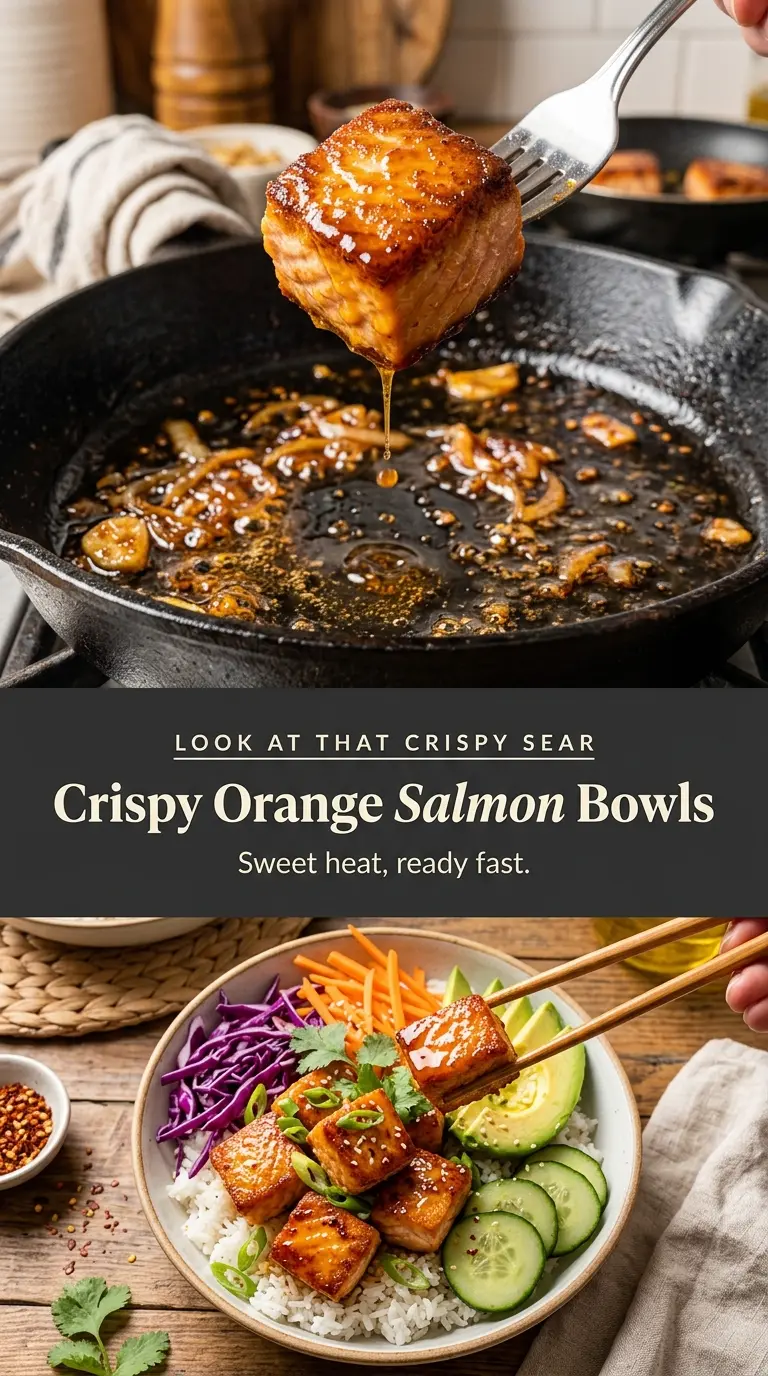
The Crisp Coating Is What Keeps the Salmon from Going Soft
The biggest mistake in salmon bowls is rushing the fish straight from skillet to sauce. Once salmon is wet with glaze, the crust starts to soften fast. That’s fine if you want a saucy dinner, but here the goal is contrast: a crisp exterior, tender center, and a glaze that clings without turning the fish into something stewed.
Cornstarch does the heavy lifting because it dries the surface just enough to brown cleanly. The other part is heat control. If the pan isn’t hot enough, the salmon releases moisture and the coating turns pasty instead of crisp; if the pan is overcrowded, the pieces steam. Work in a single layer and let each side sit long enough to build that deep golden edge before you move anything around.
- Salmon: Skinless fillets are easiest here because they cube cleanly and brown on all sides. If you only have skin-on salmon, remove the skin after cooking or cut the cubes off the skin before coating.
- Cornstarch: This is what gives the salmon its light crust. Flour won’t give the same shattery edge, and arrowroot can work in a pinch, though it browns a little less reliably.
- Fresh orange juice and zest: Bottled juice tastes flatter and softer. The zest matters because it carries the citrus aroma that makes the glaze taste bright instead of just sweet.
- Rice vinegar: This keeps the glaze from tasting heavy. If you don’t have it, use apple cider vinegar, but start with a little less since it can read sharper.
How to Sear the Salmon Before the Glaze Goes In
Drying and coating the fish
Pat the salmon dry first, then toss it until every cube has a thin, even dusting of cornstarch, salt, and pepper. You want the pieces coated, not buried; too much starch turns gummy in the pan. The fish should look matte on the outside before it hits the oil.
Getting the crust in the skillet
Heat the oil until it shimmers, then add the salmon in a single layer. If you hear only a soft hiss, the pan is too cool and the crust will lag behind the cooking. Leave the pieces alone long enough to turn deeply golden on the first side, then roll or flip them until they’re crisp on most edges, about 5 to 6 minutes total.
Building the orange glaze
Use the same skillet without wiping it out. Those browned bits are part of the sauce. Stir in the orange juice, zest, soy sauce, honey, rice vinegar, garlic, and ginger, then bring it to a simmer before adding the slurry. The sauce should go from thin and foamy to glossy and spoon-coating in a minute or two.
Finishing without breaking the salmon
Put the salmon back in only after the sauce has thickened. Toss gently, just enough to lacquer the cubes. Hard stirring tears the crust off and leaves you with soft fish in a sticky pan, which is exactly what this technique avoids. Once coated, get it onto the bowls right away so the glaze stays shiny and the salmon stays crisp at the edges.
How to Adapt These Bowls Without Losing the Texture
Gluten-Free Version
Use tamari instead of soy sauce and check that your cornstarch is certified gluten-free if cross-contamination matters to you. The texture stays the same, and the glaze still tightens up nicely.
Lower-Sugar Bowl
Cut the honey to 1 tablespoon and let the orange juice do more of the work. The sauce will be a little less sticky and a touch brighter, but it still clings well if you let it simmer long enough to thicken.
Swap the Grain
Jasmine rice gives you the softest base, but brown rice, quinoa, or cauliflower rice all work. Brown rice makes the bowl heartier, while cauliflower rice keeps it lighter but won’t catch the glaze quite as well.
Storage and Reheating
- Refrigerator: Store the salmon, rice, and vegetables separately for up to 3 days. The salmon softens a bit after chilling, but the flavor holds well.
- Freezer: The salmon and rice can be frozen, though the glazed coating loses some crispness. Freeze in portions for up to 2 months and thaw in the fridge before reheating.
- Reheating: Warm the salmon in a skillet over low heat or in the oven at 325°F until just heated through. The microwave works in a pinch, but it softens the crust fastest, so keep the reheating short and add the avocado and cucumber after warming.
Answers to the Questions Worth Asking
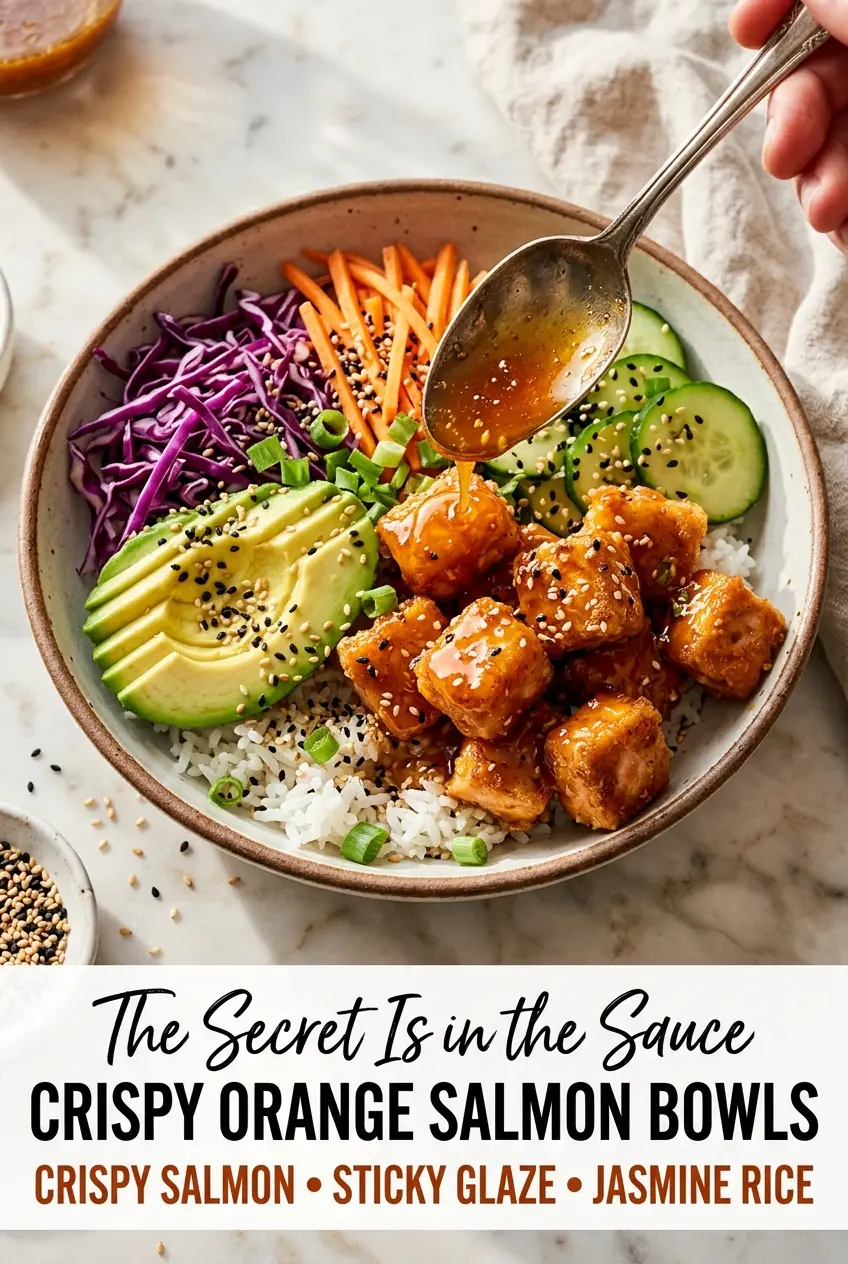
Crispy Orange Salmon Bowls
Ingredients
Equipment
Method
- Pat the salmon dry and toss the cubes with cornstarch, salt, and black pepper until evenly coated.
- Heat the vegetable oil in a large skillet over medium-high heat. Add the salmon in a single layer and sear until deeply golden and crispy on all sides, 5-6 minutes total, then remove and set aside.
- In the same skillet, whisk together the orange juice, orange zest, soy sauce, honey, rice vinegar, minced garlic, and grated ginger.
- Bring the mixture to a simmer over medium-high heat.
- Stir in the cornstarch slurry and cook until the sauce thickens and turns glossy, about 1-2 minutes.
- Return the crispy salmon to the skillet and toss gently to coat in the sticky orange glaze without breaking it apart.
- Divide the cooked jasmine rice among bowls and top with the glazed salmon, shredded purple cabbage, shredded carrots, sliced avocado, and sliced cucumber.
- Garnish with sliced green onions and sesame seeds, then serve immediately.
