
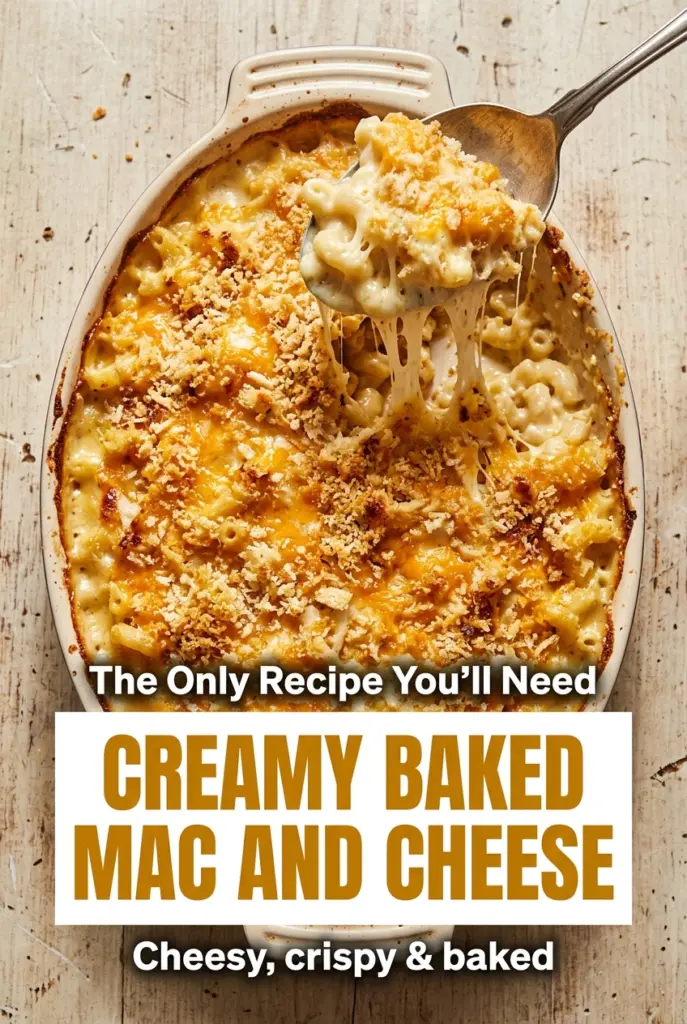
Creamy Baked Macaroni and Cheese
Golden, bubbly baked macaroni and cheese earns its place on the table when the sauce clings to every curve of pasta and the top turns into a crisp, buttery lid.…
Tip: save now, cook later.Golden, bubbly baked macaroni and cheese earns its place on the table when the sauce clings to every curve of pasta and the top turns into a crisp, buttery lid. This version stays creamy underneath the breadcrumb crust instead of baking into a dry block, which is the difference between a pan that gets scraped clean and one that sits half-finished. The flavor lands in that sweet spot between sharp and mellow, with enough richness to taste special without turning heavy.
The key is building a sauce that’s thick enough before it ever hits the oven. A quick roux gives the milk structure, and the cheese goes in off the heat so it melts smoothly instead of turning grainy. The mix of sharp cheddar, Gruyère, and Parmesan gives you depth, stretch, and salt in one pan. The panko topping keeps the bake from feeling soft all the way through, and a little butter on those crumbs is what gives you that toasted finish.
Below, you’ll find the timing that keeps the pasta from going mushy, plus a few smart swaps if you need to work with what’s already in your kitchen.
The sauce came out silky and thick, and the panko topping stayed crisp even after we went back for seconds. I loved that the cheese melted smoothly without getting grainy.
Save this baked macaroni and cheese for the nights when you want a creamy center, a crisp breadcrumb top, and three-cheese comfort in one dish.
The Trick to Keeping Baked Mac and Cheese Creamy Instead of Gluey
The biggest mistake in baked mac and cheese is pushing the sauce too far before the pasta even goes in. If the cheese sauce gets too thick on the stove, it tightens up in the oven and bakes into something dense instead of creamy. This version stops at glossy and spoon-coating, which gives the pasta room to absorb a little sauce without stealing all of it.
The other place people lose control is the cheese itself. Pre-shredded cheese can work in a pinch, but it melts less smoothly because of the anti-caking coating. Freshly shredded cheddar, Gruyère, and Parmesan melt into a sauce that stays elastic and smooth instead of turning sandy. That matters most once the pan goes into the oven, where a broken sauce won’t come back together.
What Each Cheese Is Doing in the Sauce
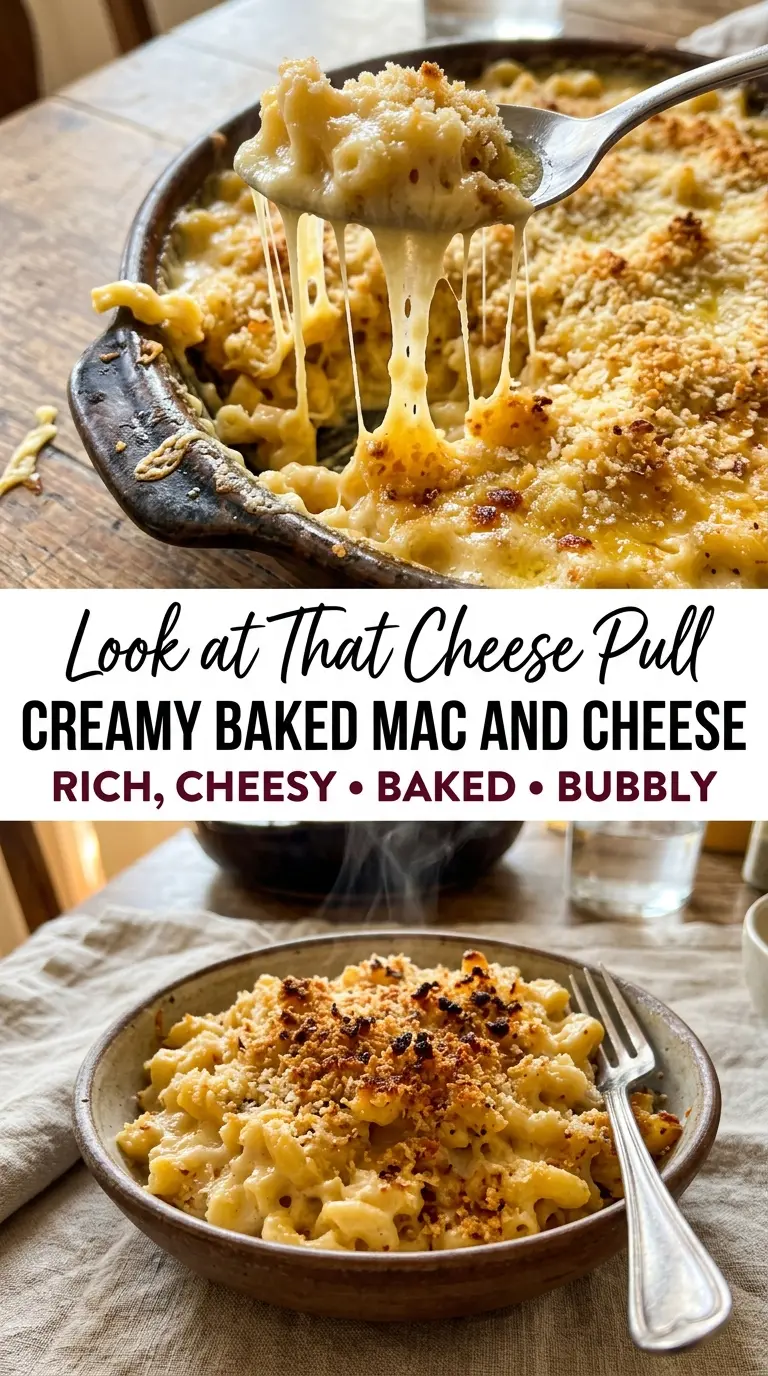
The cheddar brings the familiar mac and cheese backbone, the Gruyère adds melt and a deeper savory note, and the Parmesan sharpens the whole pan with salt and a little nuttiness. You can use all cheddar if that’s what you have, but the flavor will be flatter and the sauce won’t taste as layered. If you want the cleanest melt, shred the cheese yourself right before cooking so it goes into the pan without clumping.
- Elbow macaroni — The curved shape catches sauce inside and out. Any short pasta with ridges or hollow centers works, but elbows give you the classic spoonful with the most sauce in each bite.
- Whole milk — This gives the sauce enough fat to stay smooth in the oven. Lower-fat milk will work, but the sauce won’t feel as rich and is more likely to thicken into a tighter texture.
- Dry mustard powder — It doesn’t make the dish taste like mustard. It sharpens the cheese flavor and keeps the sauce from tasting one-note.
- Gruyère — This cheese melts beautifully and gives the sauce a little depth. If you can’t find it, use fontina or Monterey Jack for melt, but expect a milder flavor.
- Panko breadcrumbs — These toast into a lighter, crunchier topping than regular breadcrumbs. If you use standard crumbs, the top will be denser and less crisp.
Building the Sauce, Folding the Pasta, and Baking It at the Right Moment
Cooking the Pasta Just Short of Done
Boil the macaroni until it’s still firm in the center, about a minute less than the box says. It keeps cooking in the oven, and if you take it to full tenderness on the stove, it turns soft and bloated by the time the top browns. Drain it well so extra water doesn’t thin the sauce.
Whisking the Roux Until It Smells Nutty
Melt the butter, whisk in the flour, and cook it for a full minute while stirring. That little pause takes the raw edge off the flour and gives the sauce a clean, cooked base. If you rush this part, the finished sauce can taste pasty.
Melting the Cheese Off the Heat
Once the milk mixture has thickened, pull the pan from the burner before adding the cheese. High heat is what makes cheese seize into strings or go grainy, especially with sharper cheeses. Stir slowly until the sauce turns glossy and smooth, then fold in the pasta while it’s still warm so everything coats evenly.
Finishing with the Buttery Crust
Mix the panko with melted butter and the last bit of cheddar, then scatter it evenly over the top. The thin layer of cheese helps the crumbs brown instead of just drying out. Bake until the edges bubble and the topping is deep golden, then let the pan sit for five minutes so the sauce settles instead of running loose on the plate.
Three Practical Ways to Adjust This Mac and Cheese
Gluten-Free Version
Use your favorite gluten-free short pasta and swap the flour for a gluten-free all-purpose blend that works as a thickener. Cook the pasta on the lower end of the package time because gluten-free shapes can go mushy fast once baked.
Extra Creamy Stove-to-Oven Texture
If you like a looser sauce, hold back about 1/2 cup of the milk and add it only if the sauce looks too tight before the pasta goes in. That gives you a softer, silkier result after baking instead of a sliceable casserole texture.
Different Cheese Blend
You can swap in fontina, Monterey Jack, or Gouda for part of the cheese if that’s what you have. Just keep at least one sharper cheese in the mix or the dish will taste rich but flat.
Storage and Reheating
- Refrigerator: Store leftovers covered for up to 4 days. The sauce will firm up as it chills, but it stays flavorful.
- Freezer: It freezes well if you portion it tightly wrapped and sealed for up to 2 months. The texture softens a bit after thawing, but it still reheats nicely.
- Reheating: Warm covered in a 325°F oven with a splash of milk stirred around the edges before heating. Microwaving straight from the fridge can dry out the pasta and make the sauce separate.
Answers to the Questions Worth Asking
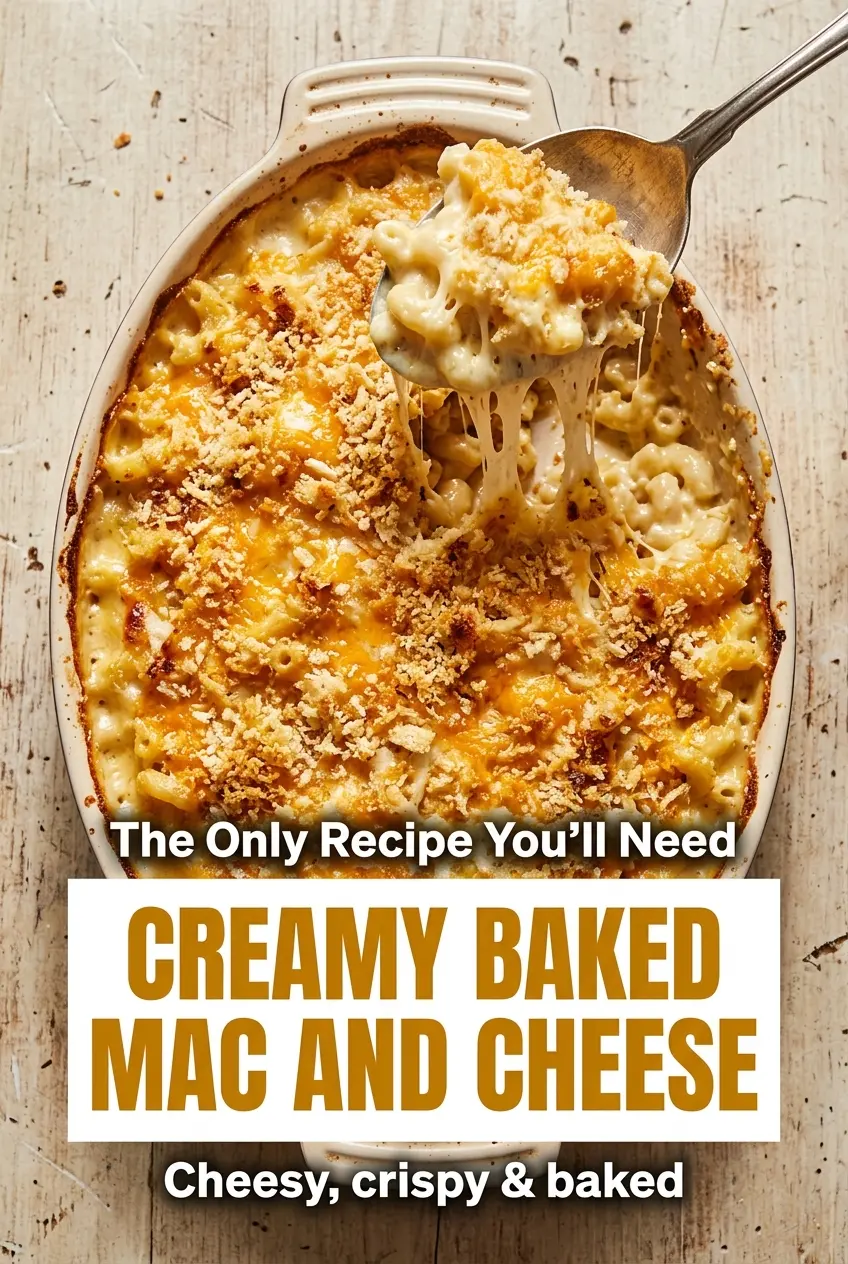
Creamy Baked Macaroni and Cheese
Ingredients
Equipment
Method
- Preheat the oven to 375°F and grease a 9x13-inch baking dish, ensuring the corners are coated so the baked mac releases easily.
- Bring a pot of salted water to a boil and cook the elbow macaroni until just al dente, about 1 minute less than the package directs.
- Drain the macaroni and set it aside while you make the cheese sauce so it stays firm enough to bake without over-softening.
- Melt the butter in a large saucepan over medium heat, stirring until it fully melts and looks glossy.
- Whisk in the flour and cook for 1 minute, stirring constantly, until it smells slightly toasted.
- Slowly whisk in the milk, then add the dry mustard powder, garlic powder, salt, and black pepper.
- Cook the sauce, whisking often, until thickened and smooth, about 5-6 minutes, with a spoonable consistency.
- Remove the saucepan from heat and stir in the cheddar, Gruyère, and Parmesan until melted and glossy.
- Fold the cooked macaroni into the cheese sauce until fully coated, with no dry pasta visible.
- Pour the coated macaroni into the prepared baking dish and spread into an even layer.
- Toss the panko breadcrumbs with the melted butter and remaining cheddar until evenly moistened and crumbly.
- Sprinkle the panko topping evenly over the top so it bakes into a golden crust.
- Bake at 375°F for 20-25 minutes, until bubbly and golden brown on top.
- Let the macaroni and cheese rest for 5 minutes so the sauce sets slightly and slices cleanly.
