
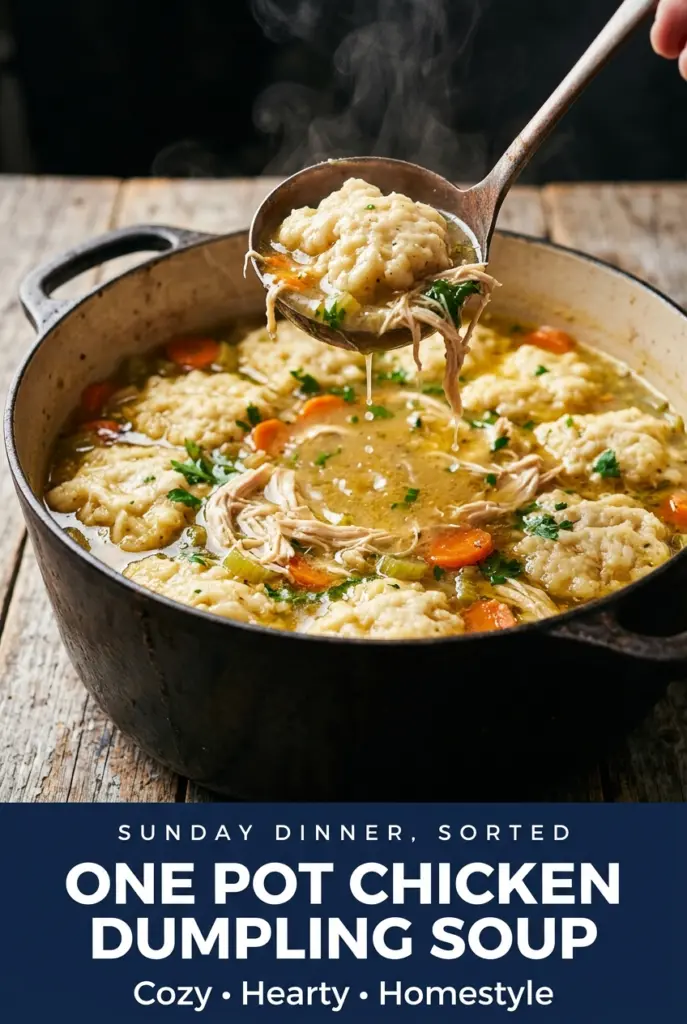
One Pot Chicken Dumpling Soup
Tender chicken, soft dumplings, and a broth that tastes like it simmered all afternoon belong together in one bowl. This soup lands somewhere between chicken noodle soup and a full…
Tip: save now, cook later.Tender chicken, soft dumplings, and a broth that tastes like it simmered all afternoon belong together in one bowl. This soup lands somewhere between chicken noodle soup and a full comfort-food dinner, but the dumplings give it the edge: they turn the pot richer, heartier, and a little old-fashioned in the best way. The broth stays savory and herby, the vegetables melt down just enough, and the dumplings cook up pillowy instead of dense.
What makes this version work is the order. The chicken cooks right in the broth so it stays juicy and seasons the soup as it goes, and the dumpling dough stays cold until the last minute so the butter can create a light, tender texture. The other detail that matters is the lid: once those dumplings go in, the pot needs steady steam to puff properly. Lift the lid too soon and they’ll lose that lift.
Below, I’ll walk through the part that matters most: how to keep the broth gentle, how to mix dumplings without overworking them, and what to do if you want to stretch this into a bigger pot for leftovers.
The dumplings came out fluffy and held together perfectly, and the broth thickened just enough after the cream went in. I used rotisserie chicken to save time and it still tasted like it cooked all day.
Save this one-pot chicken dumpling soup for the nights when you want fluffy dumplings, rich broth, and one pot doing all the work.
The Broth Has to Stay at a Bare Simmer, Not a Roll
Chicken dumpling soup falls apart when the heat gets away from you. A hard boil can make the chicken stringy, knock the vegetables to mush, and rough up the dumplings before they’ve had time to set. A bare simmer keeps everything tender and gives the dumplings a chance to steam from the inside out.
The other place people run into trouble is lifting the lid during dumpling cooking. Those 15 minutes depend on trapped steam. Once you uncover the pot, the temperature drops fast and the dumplings can turn heavy in the center instead of fluffy all the way through.
What Each Ingredient Is Doing in This Dish
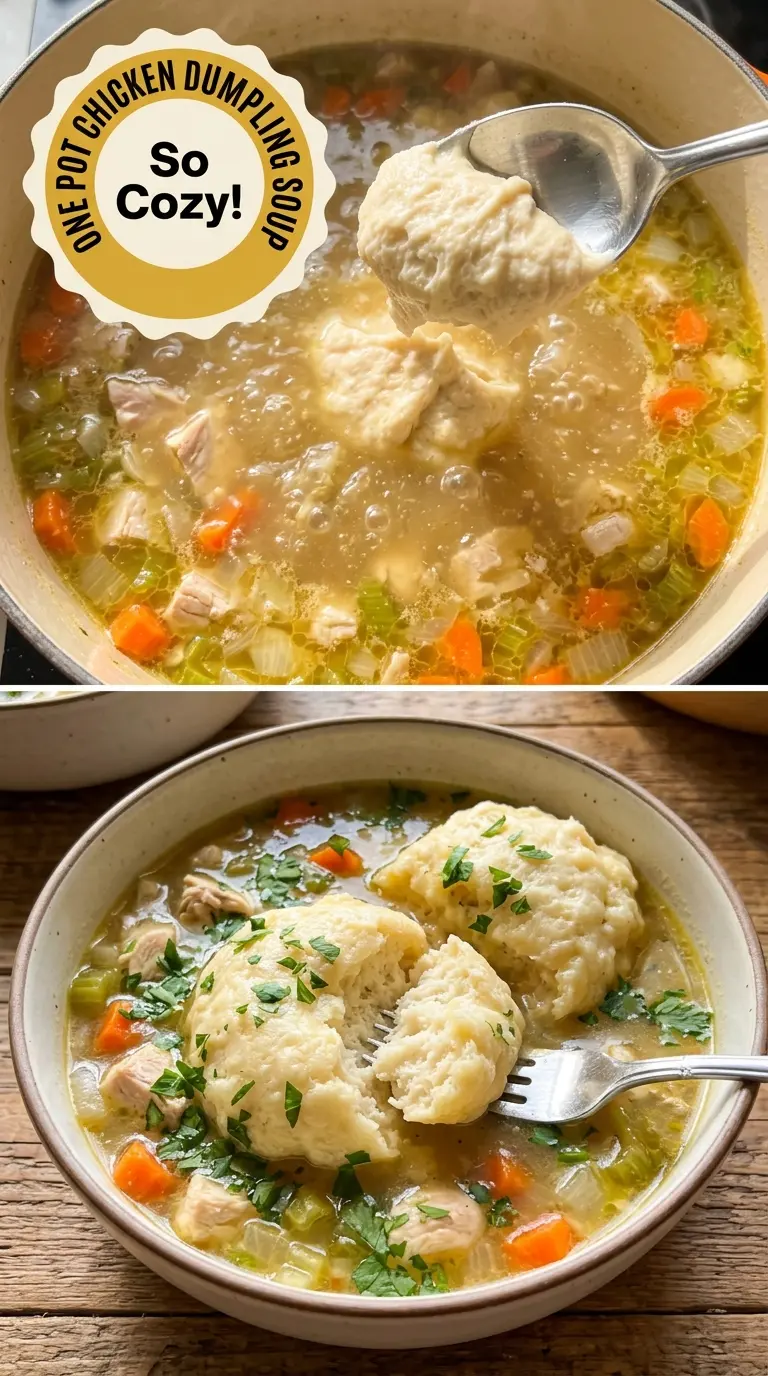
- Chicken breast — Cooking the chicken whole in the broth keeps it moist and gives you a cleaner shred than starting with pre-cooked pieces. Rotisserie chicken works in a pinch, but it won’t season the broth the same way, so the soup tastes a little flatter unless you add extra broth seasoning.
- Butter, onion, carrot, and celery — This is the base that makes the soup taste built, not dumped together. Let the vegetables soften before the broth goes in so the onion loses its raw edge and the carrots start to sweeten.
- Thyme and sage — These are the herbs that give the soup its classic dumpling-soup character. Dried herbs work well here because they have time to bloom in the hot broth; if you use fresh, add a bit more at the end for a brighter finish.
- Cold butter in the dumplings — The small butter pieces create tenderness as they melt in the steam. Warm butter or overmixed dough gives you heavier dumplings, which is the opposite of what you want.
- Heavy cream — This rounds out the broth and gives it that cozy, restaurant-style finish. Half-and-half will work, but the soup will be lighter and a little less plush.
Building the Dumplings So They Stay Light
Softening the vegetables first
Melt the butter and cook the onion, carrots, and celery until they’ve lost their raw crunch and the onion looks translucent at the edges. That’s the point where the soup starts tasting layered instead of watery. If you rush this and add broth too soon, the vegetables stay sharp and the finished soup tastes thin.
Cooking the chicken in the broth
Add the broth, seasonings, and whole chicken breast, then bring the pot to a gentle simmer and cover it. The chicken should poach quietly, not bounce around in a boil. When it’s done, it should shred easily with two forks and the broth should already taste seasoned from the herbs and chicken juices.
Mixing the dumpling dough just until it comes together
Cut the cold butter into the flour mixture until it looks crumbly, then stir in the milk and parsley only until a soft dough forms. Stop as soon as the flour disappears. If you keep stirring, the dumplings tighten up and turn chewy instead of airy.
Steaming the dumplings through
Drop spoonfuls of dough straight into the simmering broth, cover the pot, and leave it alone for 15 minutes. Don’t stir once they’re in. Stirring can break them apart before the centers set, and peeking under the lid steals the steam they need to puff.
Three Ways to Adapt This Without Losing the Heart of It
Use rotisserie chicken for a faster weeknight version
Shred about 3 cups of cooked chicken and add it after the broth has simmered with the vegetables. You’ll save time, but the broth won’t pick up as much chicken flavor from the meat itself, so the soup benefits from an extra pinch of salt or a splash more broth if it tastes flat.
Make it dairy-free without losing body
Use a good dairy-free butter in the soup base and swap the heavy cream for full-fat canned coconut milk or an unsweetened oat cream. The texture stays rich, though the flavor will shift slightly, so keep the herbs balanced and don’t overdo the coconut if you want the soup to stay savory.
Gluten-free dumplings that still hold together
A 1:1 gluten-free flour blend can work for the dumplings, but use one that includes xanthan gum or another binder. The dough will be a little softer and less elastic, so drop it into the broth gently and keep the simmer steady so the dumplings set before they break apart.
Make the soup a little thicker
If you want a more stew-like finish, simmer the broth uncovered for a few extra minutes before adding the cream, or stir in a small cornstarch slurry at the end. Don’t add too much, because the dumplings already thicken the pot as they cook and you still want a spoonable soup, not a paste.
Storage and Reheating
- Refrigerator: Store leftovers for up to 4 days. The dumplings will absorb broth and soften more as they sit, so expect a thicker soup the next day.
- Freezer: This freezes, but the dumplings lose some of their tenderness after thawing. For the best result, freeze the broth and chicken without the dumplings, then make fresh dumplings when you reheat.
- Reheating: Warm it slowly over low heat on the stove until just steaming. A hard boil will break up the dumplings and can make the cream separate.
Answers to the Questions Worth Asking
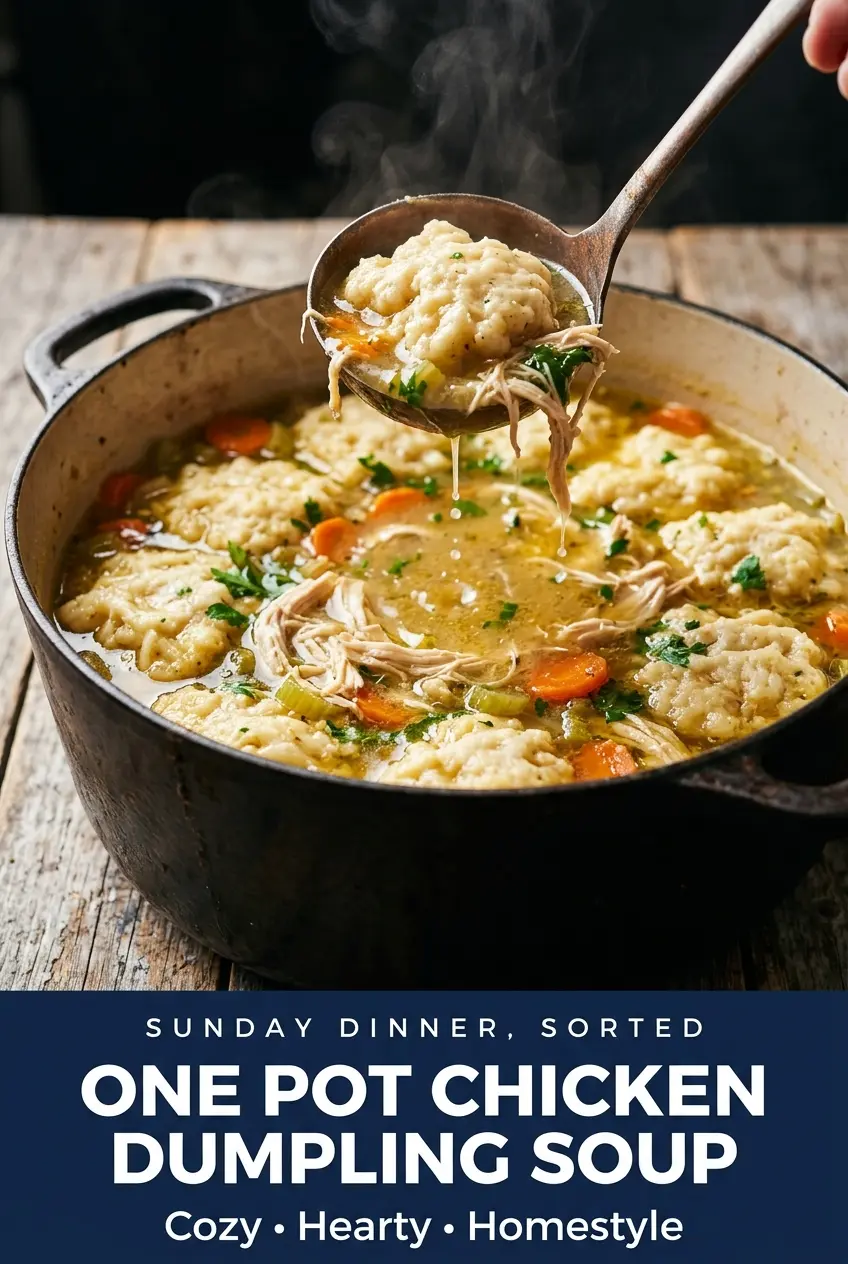
One Pot Chicken Dumpling Soup
Ingredients
Equipment
Method
- Melt the butter in a large pot over medium heat. Add the onion, carrots, and celery and cook until softened, about 6-7 minutes, stirring occasionally until glossy and tender.
- Add the garlic and cook until fragrant, about 1 minute. Stir continuously so it smells aromatic without browning.
- Pour in the chicken broth and add the whole chicken breast, thyme, sage, salt, pepper, and bay leaves. Bring to a simmer, cover, and cook for 20 minutes until the chicken is cooked through and the broth is actively bubbling.
- Remove the chicken, shred it with two forks, and set aside. Discard the bay leaves and keep the broth simmering.
- While the chicken cooks, whisk together the flour, baking powder, and salt for the dumplings. Cut in the cold butter until crumbly, then stir in the milk and parsley just until a soft dough forms, no dry flour left.
- Return the shredded chicken to the pot and bring the broth back to a gentle simmer. Stir to distribute the chicken through the broth evenly.
- Drop spoonfuls of the dumpling dough directly into the simmering broth. Cover and cook for 15 minutes without lifting the lid, until the dumplings are puffed and cooked through.
- Stir in the heavy cream, ladle into bowls, and top with fresh parsley. Serve immediately while the dumplings stay pillowy and the broth looks creamy.
