
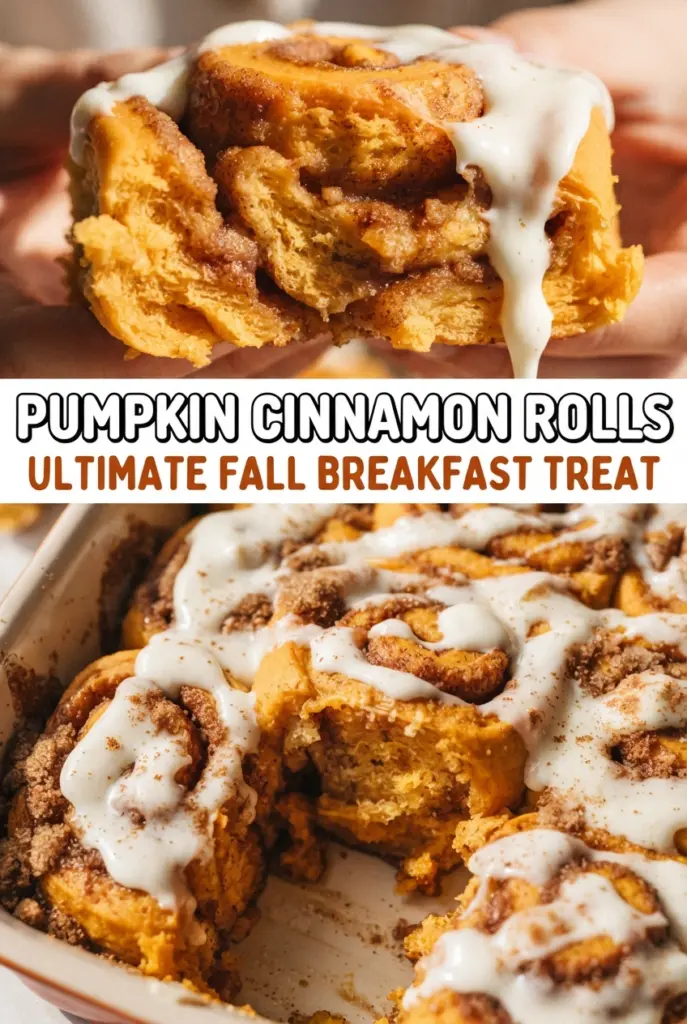
Pumpkin Cinnamon Rolls
Pumpkin cinnamon rolls bake up soft, tall, and tender, with a plush crumb that pulls apart in warm, buttery layers. The pumpkin adds a gentle earthiness and keeps the dough…
Tip: save now, cook later.Pumpkin cinnamon rolls bake up soft, tall, and tender, with a plush crumb that pulls apart in warm, buttery layers. The pumpkin adds a gentle earthiness and keeps the dough moist without making it heavy, while the brown sugar-cinnamon filling melts into those spiraled ridges and turns sticky at the edges. Finished with cream cheese frosting, they land right in that sweet spot between breakfast and dessert.
The trick is treating the dough like a soft enriched bread, not a stiff roll dough. Pumpkin puree brings extra moisture, so the flour amount matters more than exact volume alone; the dough should be smooth and slightly tacky, not dry. If you add too much flour too soon, the rolls bake up dense instead of pillowy. The second thing that helps is letting the cut rolls rise in the pan until they look puffy and crowded, which gives you those bakery-style swirls once they hit the oven.
Below, I’m walking through the part that matters most: how to keep the dough tender, how to roll the filling without squeezing it out, and how to frost the rolls so the icing melts into the top without disappearing into the pan.
The dough rose beautifully and the rolls came out super soft, not dry at all. I used the exact bake time and the centers were cooked through with that gooey cinnamon swirl I was hoping for.
Save these pumpkin cinnamon rolls for a soft, fluffy breakfast with gooey swirls and thick cream cheese frosting.
The Dough Needs to Stay Soft All the Way Through
Pumpkin cinnamon roll dough gets into trouble when people treat it like standard bread dough and keep adding flour until it stops sticking to their hands. That’s the fastest way to lose the tender, plush texture that makes these rolls worth baking. The dough should feel elastic and a little tacky after kneading, which means it has enough structure to rise well without turning bready.
The other common failure point is the rise. Because pumpkin adds moisture and richness, the dough often looks slower than a plain white dough at the start. Give it time in a warm spot until it has doubled in size. If you rush this stage, the rolls will still taste fine, but they’ll bake up tighter and the spirals won’t open as much in the oven.
What Each Ingredient Is Doing in These Rolls
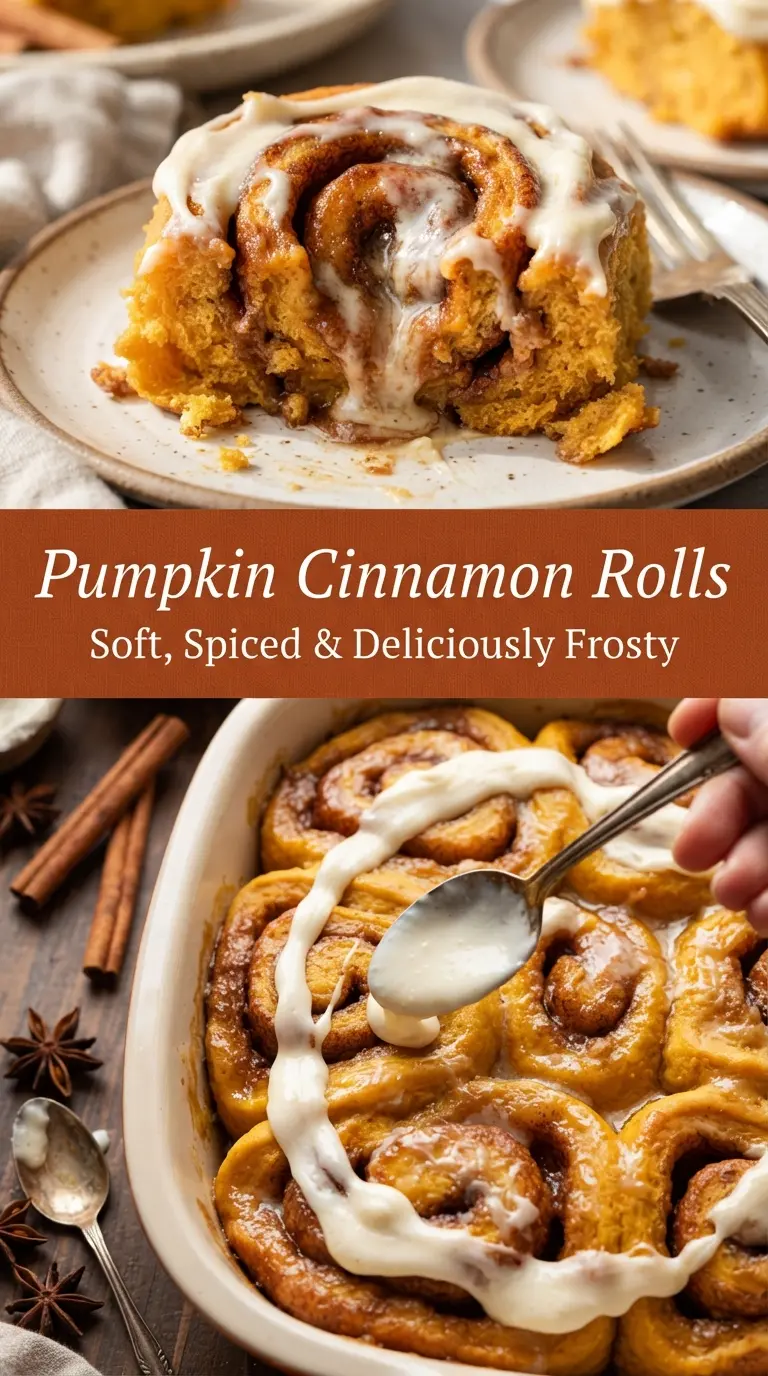
- Warm milk — This gives the yeast a gentle start and helps the dough mix into a soft, supple mass. Keep it warm, not hot; anything too hot can slow or kill the yeast before the dough has a chance to rise.
- Instant yeast — Instant yeast moves fast and works well in rich doughs like this one. If you only have active dry yeast, use the same amount and let it sit a few extra minutes in the warm milk until foamy before adding the rest of the ingredients.
- Pumpkin puree — This is what gives the dough its color, moisture, and subtle pumpkin flavor. Use plain pumpkin puree, not pumpkin pie filling, or the dough will be too sweet and spiced before you even get to the filling.
- All-purpose flour — This is one ingredient where measuring carefully matters. Start with the stated amount, then only add more if the dough is still overly sticky after kneading; too much flour is the main reason cinnamon rolls turn dry.
- Brown sugar and cinnamon — These create the gooey center and the sticky edges that make the rolls feel generous. Light brown sugar melts smoothly here, but dark brown sugar works too if you want a deeper molasses note.
- Cream cheese — Full-fat cream cheese gives the frosting body and that slight tang that balances the sweetness. Neufchâtel can work in a pinch, but the frosting will be softer and a little less rich.
The 20 Minutes That Matter Most
Building the Dough
Stir the warm milk, yeast, and sugar together first so the yeast can wake up while you prep the rest. Once the pumpkin, butter, egg, salt, and spice go in, add the flour gradually and stop as soon as the dough pulls together. Knead until it’s smooth and elastic, with a soft tackiness that barely clings to your fingers. If it feels dry before the first rise, it will bake dry later.
Rolling and Filling Without Leaks
Roll the dough into a clean rectangle and spread the softened butter all the way to the edges. Scatter the brown sugar and cinnamon in an even layer, then press it gently into the butter so it stays put when you roll. Roll from the long side with steady pressure, keeping it tight but not so tight that the filling squeezes out the ends. A sharp knife or unflavored dental floss gives the cleanest cuts.
Proofing Until Puffy
Once the rolls are in the pan, cover them and let them rise until they look noticeably puffy and the sides are touching. This is where the final texture is set. If the rolls go into the oven underproofed, the centers stay cramped and the finished buns tear instead of separating into soft layers. They should look airy and a little bigger than when you first arranged them.
Baking and Frosting at the Right Moment
Bake until the tops are golden and the centers are set but still soft when pressed lightly. If the tops brown too quickly, the rolls are done by appearance but not in the middle, which is how you end up with doughy centers. Let them cool for just a few minutes, then spread the frosting over the warm rolls so it melts into the swirls without disappearing completely.
Three Ways to Make These Pumpkin Rolls Work for Your Kitchen
Dairy-Free Version
Use a neutral plant-based milk in the dough, dairy-free butter for the filling, and a dairy-free cream cheese for the frosting. The rolls will still rise and bake up soft, though the frosting will be a little less tangy and a touch softer than the original.
Make-Ahead Overnight Rolls
After shaping the rolls and placing them in the pan, cover tightly and refrigerate overnight. In the morning, let them sit at room temperature until puffy before baking. This slows the rise but gives you fresh-baked rolls without the early-morning kneading.
How to Make Them a Little Less Sweet
Cut the frosting in half and use a lighter hand with the filling sugar if you want more of the pumpkin and spice to come through. The texture stays the same, but the rolls taste more like a soft breakfast bread and less like a dessert.
Storage and Reheating
- Refrigerator: Store covered for 3 to 4 days. The rolls stay soft, though the frosting firms up in the fridge.
- Freezer: Freeze baked rolls without frosting for best results. Wrap tightly and freeze for up to 2 months, then thaw before warming and frosting.
- Reheating: Warm individual rolls in the microwave for 15 to 25 seconds or cover a pan and heat in a 300 F oven until soft. Overheating dries out the edges before the center is warm.
Answers to the Questions Worth Asking
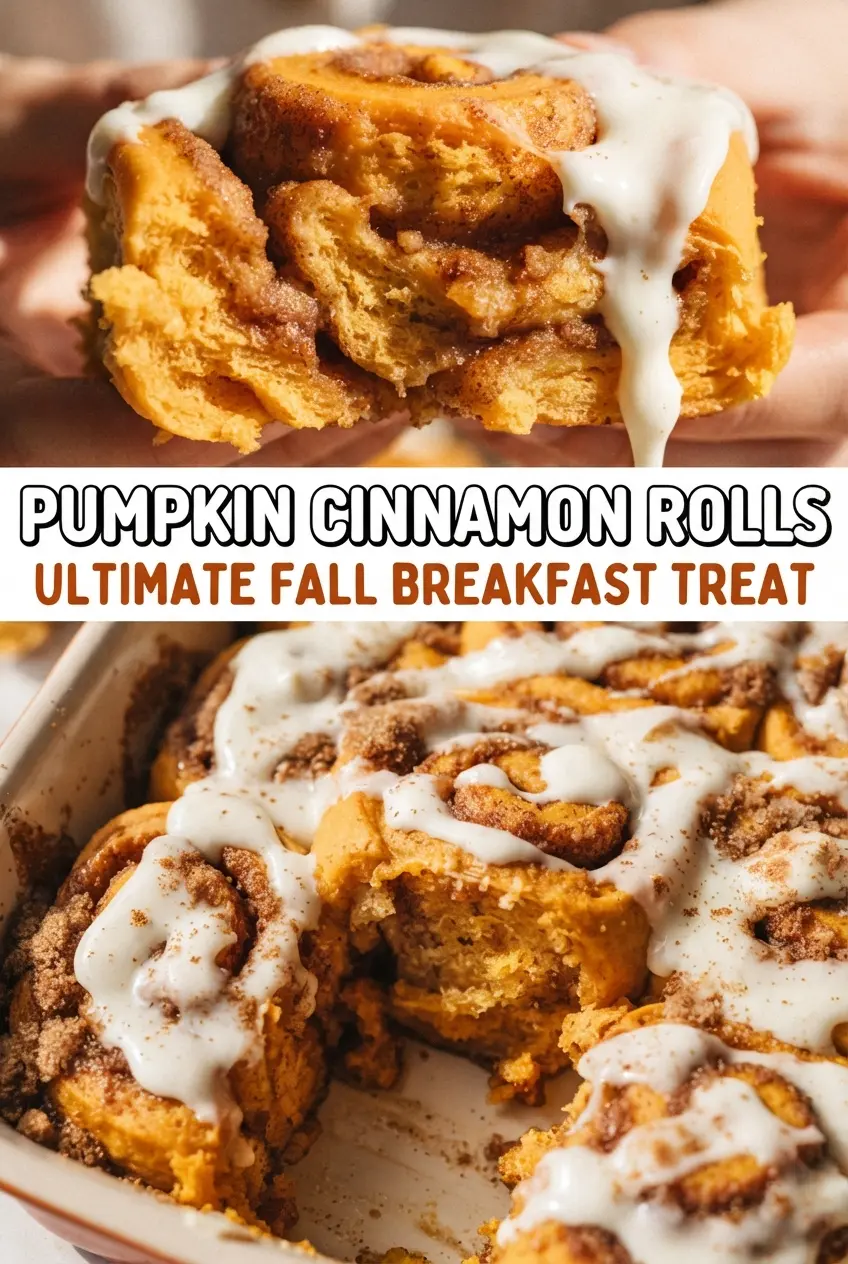
Pumpkin Cinnamon Rolls
Ingredients
Equipment
Method
- Stir the warm milk, instant yeast, and granulated sugar together, then let sit for 5 minutes until foamy.
- Mix in the pumpkin puree, melted unsalted butter, large egg, salt, and pumpkin pie spice until evenly combined.
- Add the all-purpose flour gradually and knead for 5 to 7 minutes until smooth and slightly tacky.
- Cover and let the dough rise in a warm place for 1 to 1 1/2 hours until doubled in size.
- Roll the dough into a 16x12-inch rectangle.
- Spread with the softened unsalted butter and sprinkle evenly with packed light brown sugar and ground cinnamon.
- Roll up tightly from the long side and cut into 12 rolls.
- Place the rolls in a greased 9x13-inch pan, cover, and let rise for 30 to 45 minutes until puffy.
- Bake at 350 F (175 C) for 22 to 26 minutes, until the rolls are golden.
- Beat the cream cheese, softened unsalted butter, powdered sugar, vanilla extract, and milk until smooth, then spread over the warm rolls.
