
Patriotic Bundt Cake
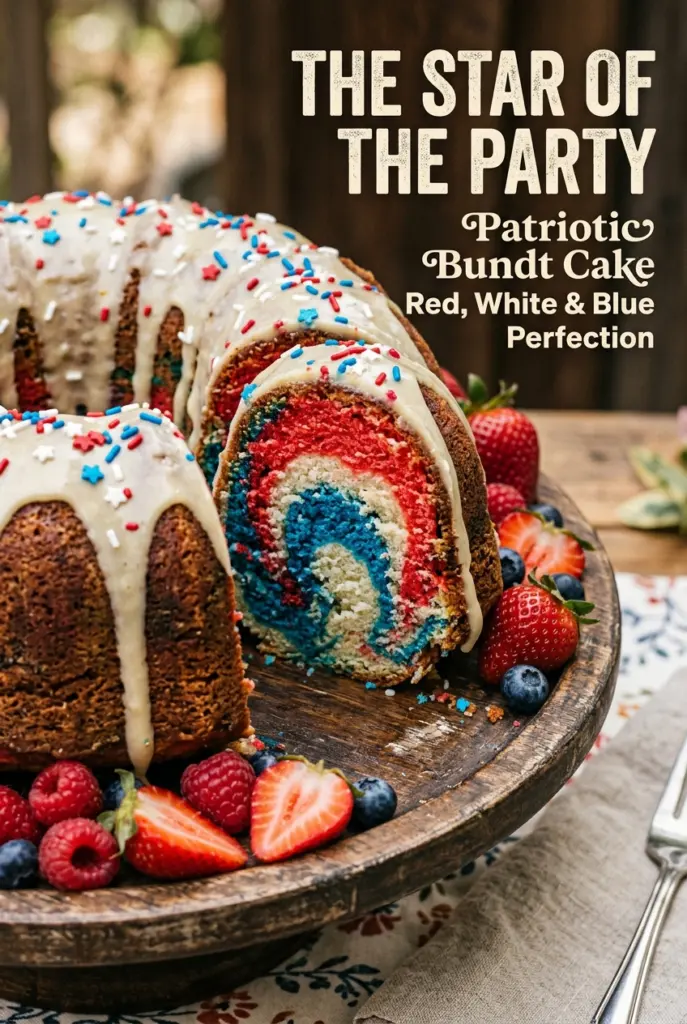
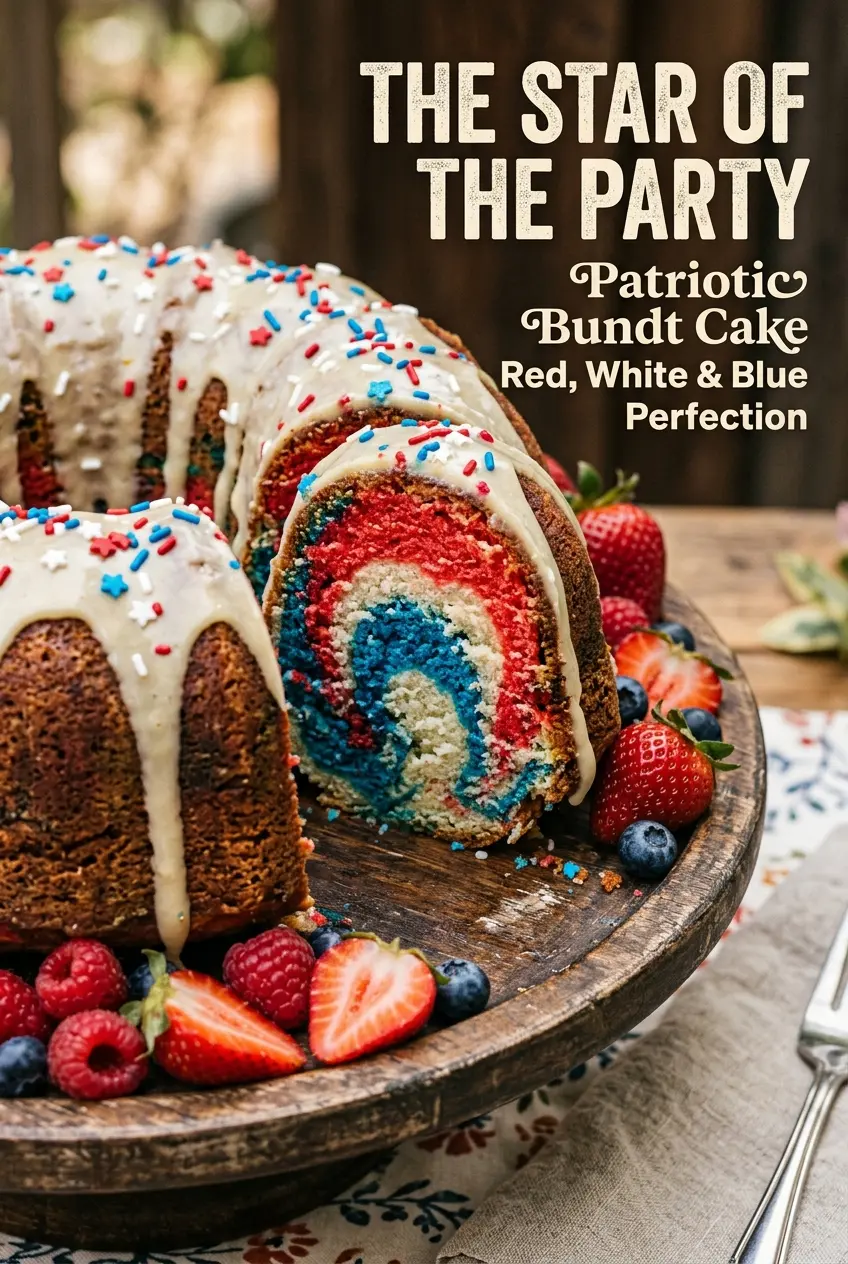
Patriotic Bundt Cake brings a clean vanilla crumb, bold red-white-and-blue stripes, and a glossy glaze that settles into every ridge of the pan. The slice looks festive on the plate…
Tip: save now, cook later.Patriotic Bundt Cake brings a clean vanilla crumb, bold red-white-and-blue stripes, and a glossy glaze that settles into every ridge of the pan. The slice looks festive on the plate before you even add the berries, and the cake stays tender enough to hold its shape without feeling dense or dry. It’s the kind of dessert that gets passed around twice because people want to see the inside again.
The trick is using a white cake mix as the base and treating it like a scratch cake in the places that matter: proper greasing, careful dividing, and a light hand when you swirl the colors. Gel food coloring matters here because it gives you strong color without thinning the batter. A thin glaze finishes the cake without hiding the pattern, and the berries add a fresh, bright bite that keeps the whole thing from tasting one-note.
Below, I’ll walk through the part that matters most: how to keep the colors distinct enough to look impressive after baking. I’ve also included the swaps that work if you want to change the garnish or avoid a boxed mix.
The colors stayed crisp after baking, and the glaze set up just enough that the cake sliced clean instead of smearing all over the plate. I took it to a cookout and the center swirls got more compliments than the frosting.
Like this red, white, and blue Bundt cake? Save it to Pinterest for the cookouts when you want a moist vanilla cake with a striking swirl inside.
The Reason Bundt Cakes Lose Their Swirl Before They Ever Leave the Pan
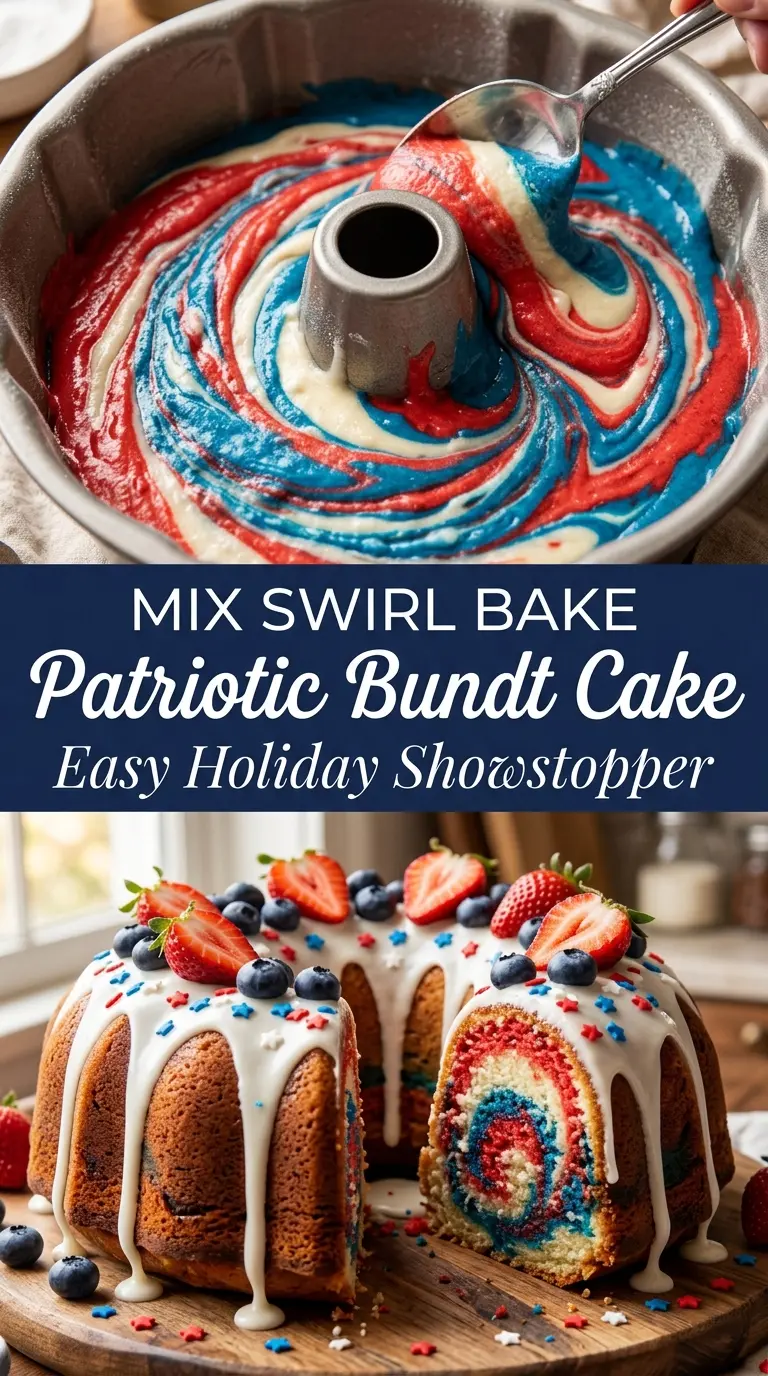
The biggest mistake with a patriotic Bundt cake is overmixing after the batter is colored. Once the red and blue streaks get stirred too much, they blend into a muddy purple-gray instead of baking into clean layers of color. Spoon the batters into the pan in alternating patches and stop before you think it looks perfect; the oven does the rest.
Greasing the pan thoroughly matters just as much. Bundt pans have every ridge working against you, and any missed spot can tear the cake when you turn it out. I use a generous coat of baking spray with flour or softened butter plus flour, then tap the pan and check the bottom ridge before adding batter.
- White cake mix — This gives you a sturdy, pale base that takes color well. A yellow cake mix muddies the red and blue more quickly.
- Eggs, oil, and water — These create the soft crumb and keep the cake sliceable. If you replace the oil with melted butter, the cake tastes richer but bakes a little firmer.
- Gel food coloring — Gel gives deep color without thinning the batter. Liquid coloring can work in a pinch, but it takes more product and can slightly loosen the batter.
- Powdered sugar glaze — This is the clean finish that drips into the grooves without burying the striped interior. Milk is the easiest liquid here, but a spoonful of lemon juice gives the glaze a sharper edge.
- Fresh berries — Strawberries and blueberries echo the colors on top and add freshness. Use dry berries so they don’t bleed into the glaze.
How to Build the Color Layers Without Turning Them Into One Shade
Mix the base batter first
Whisk the cake batter until it’s smooth and no dry mix remains, then stop. That first mix is where the structure gets built, and you want it even before you divide it. Once the batter is portioned, stir the coloring into separate bowls just until the color looks even. If you keep working it, the batter gets tighter and the finished cake can turn a little gummy.
Spoon, don’t pour
Add the white, red, and blue batters in alternating spoonfuls around the pan so the colors sit next to each other instead of sinking into one another. The batter should look patched and uneven in the pan. That’s correct. A quick pass with a knife through the top is enough; more swirling than that starts blending the colors instead of creating the marbled effect.
Bake until the top springs back
At 40 minutes, start checking the cake by touching the top lightly in the center. It should spring back and a tester should come out with a few moist crumbs, not wet batter. If the top is browning too fast before the center finishes, tent it loosely with foil. Bundt cakes often look done at the edges first, so don’t pull it too early or the center can collapse when you turn it out.
Cool before releasing
Let the cake rest in the pan for 15 minutes, then turn it onto a rack. That short rest gives the structure time to set without letting sugar glue itself to the pan. If it sits too long, the cake can stick. If you turn it out too soon, it can split along the ridges.
Three Ways to Change the Cake Without Losing the Effect
Dairy-Free Glaze
Swap the milk in the glaze for unsweetened almond milk, oat milk, or even a splash of water. The glaze will still set nicely, though it may taste a little less rich than one made with dairy. Start with less liquid than you think you need; powdered sugar thins fast.
From Box Mix to Scratch Cake
Use your favorite vanilla cake batter in place of the boxed mix if you want a richer, more homemade flavor. The color effect works the same, but a scratch batter usually needs a little more care to stay light enough for the swirl to show. Keep the batter pale and avoid adding too much vanilla if you want the white center to stay bright.
Fruit-Free Topping
Skip the berries and finish the cake with extra sprinkles or a dusting of powdered sugar if you want a cleaner look for slicing and serving. The cake will still read as patriotic because the color is baked inside, not only on top. This is the better choice if the cake has to sit out for a while before serving.
Storage and Reheating
- Refrigerator: Store covered for up to 4 days. The crumb stays soft, though the glaze will absorb a little into the cake after day one.
- Freezer: Freeze slices tightly wrapped for up to 2 months. For best texture, freeze the cake without berries and add fresh garnish after thawing.
- Reheating: Bring a slice to room temperature or warm it for 10 to 15 seconds in the microwave. Longer heating can melt the glaze and dry the crumb out at the edges.
Answers to the Questions Worth Asking
Patriotic Bundt Cake
Ingredients
Equipment
Method
- Preheat the oven to 350°F (175°C). Keep the oven fully heated before baking for even color and rise.
- Grease a 10-inch Bundt pan thoroughly. Make sure every crevice is coated so the cake releases cleanly.
- Prepare the cake batter according to package directions. Mix until smooth and combined.
- Divide the batter into three bowls. Aim for evenly portioned batter so the color swirls look balanced.
- Leave one bowl white. Keep this portion uncolored for the clean red-white-blue pattern.
- Tint one bowl red with red gel food coloring. Stir until the batter is uniformly red.
- Tint the remaining bowl blue with blue gel food coloring. Stir until the batter is uniformly blue.
- Alternate spoonfuls of each color into the Bundt pan. Distribute them around the pan so swirls spread through the whole cake.
- Gently swirl with a knife. Use light, shallow passes to create marbling without fully mixing the colors.
- Bake for 40–45 minutes at 350°F (175°C). Bake until a toothpick inserted in the center comes out clean or with a few moist crumbs.
- Cool the cake in the pan for 15 minutes. Letting it rest first helps prevent sticking when unmolding.
- Transfer the cake to a wire rack. Cool until no longer hot before glazing.
- Whisk powdered sugar, milk, and vanilla extract until smooth. Mix to a pourable consistency with no visible lumps.
- Drizzle the glaze over the cooled cake. Add in an even ribbon so it sets with a glossy finish.
- Decorate with fresh strawberries, fresh blueberries, and red, white, and blue sprinkles. Place the berries and sprinkles after glazing for the best visual contrast.
- Slice and serve. Serve at room temperature so the glaze firms up nicely.
