
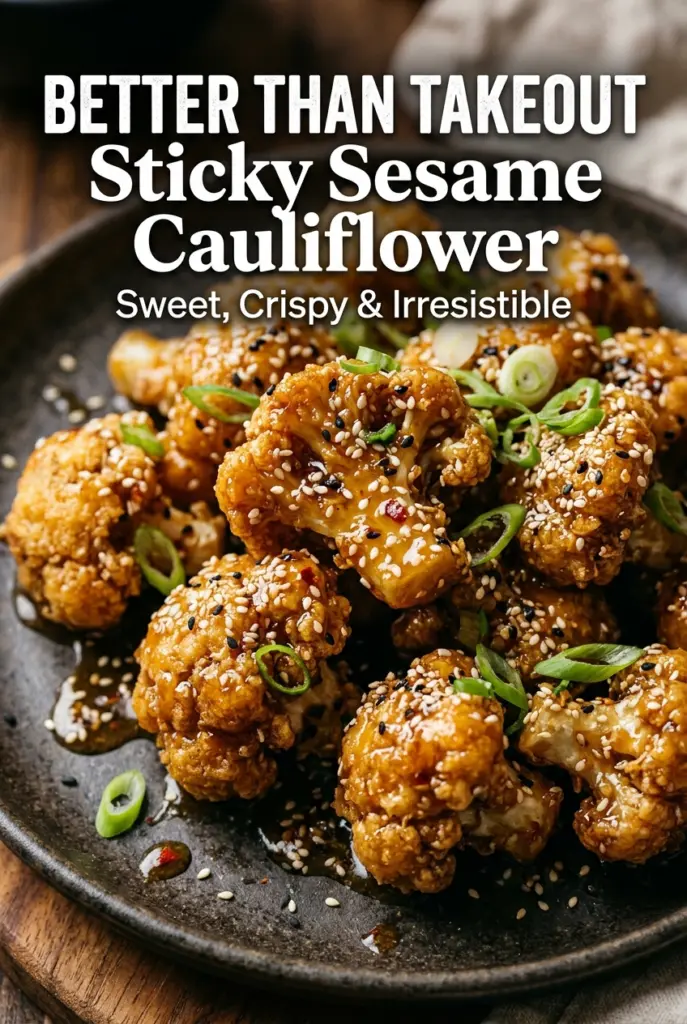
Sticky Sesame Cauliflower
Crispy sticky sesame cauliflower earns its place on the table because it gives you that takeout-style bite without turning soft under the sauce. The florets roast up with a shattering…
Tip: save now, cook later.Crispy sticky sesame cauliflower earns its place on the table because it gives you that takeout-style bite without turning soft under the sauce. The florets roast up with a shattering panko crust, then get tossed in a glossy sesame glaze that clings instead of puddling. Every bite has a little crunch, a little chew, and that sweet-salty finish that keeps people reaching back into the bowl.
The key is building enough structure on the cauliflower before the sauce goes on. The batter needs to be thick enough to act like glue, and the panko needs to cover the florets in an even layer so they brown instead of steaming. The sauce also matters here: it should simmer just long enough for the cornstarch to thicken it into a lacquer, not a syrup that hardens on contact.
Below, I’ve laid out the small details that keep the coating crisp, plus the swaps that still work if you need to make it gluten-free or a little more pantry-friendly.
The cauliflower stayed crisp even after I tossed it in the sauce, and the sesame glaze thickened up exactly like takeout. My husband kept stealing pieces straight from the bowl before dinner.
Crispy sticky sesame cauliflower is the kind of meatless dinner worth saving for the nights when you want bold flavor and a crunchy finish.
The Trick to Keeping the Cauliflower Crisp Under Sauce
The biggest mistake with sauced cauliflower is treating it like it can handle the same timing as wings or meatballs. It can’t. Once that glaze hits, the clock starts ticking, so the cauliflower needs enough surface crunch to survive the toss without collapsing into a soggy pile. That’s why the roast has to go all the way to deep golden edges before the sauce comes out of the pan.
The other trap is a thin batter. If it drips off the florets, the panko never gets a proper grip and you end up with bald spots that turn soft first. A thicker batter coats the cauliflower like paste, and pressing the panko on with your fingers gives you a crust that actually stays put.
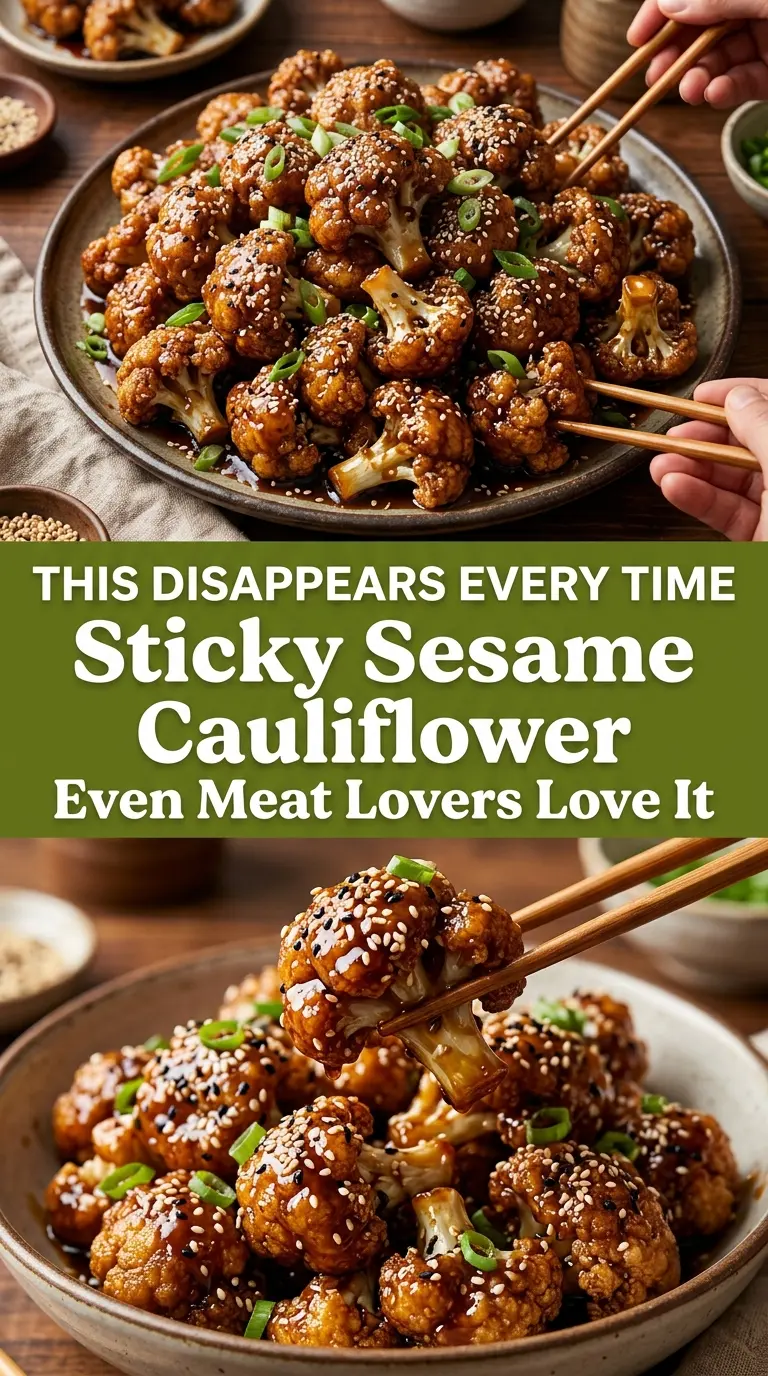
What Each Ingredient Is Actually Doing in This Dish
Cauliflower is the blank canvas here, but it needs to be cut into medium florets so it cooks through without drying out. Tiny pieces burn before the coating browns; huge ones stay pale in the center.
Flour and water form the batter that gives the panko something to cling to. All-purpose flour works best, but a 1:1 gluten-free flour blend can stand in if you need the dish gluten-free.
Panko breadcrumbs are what give you the light, crisp shell. Regular breadcrumbs tend to pack down too tightly and bake up denser, so panko is worth using here.
Soy sauce, honey, brown sugar, rice vinegar, and sesame oil build the glaze. Honey gives shine and body, brown sugar deepens the sweetness, and sesame oil brings that unmistakable nutty finish. If you want a vegan version, swap the honey for maple syrup; the sauce will still thicken, though the flavor gets a little darker and less floral.
Cornstarch is what turns the sauce from thin and watery into glossy and sticky. Whisk it with cold water first so it dissolves cleanly; if it goes straight into hot liquid, it can clump.
Building the Coating and Sauce Without Losing Either One
Mixing the Batter
Whisk the flour, water, garlic powder, onion powder, salt, and pepper until the batter looks smooth and a little thick, like pancake batter that still falls from the whisk in ribbons. If it’s too thin, it slides off the cauliflower before the breadcrumbs can stick. Coat each floret completely, then let the excess drip off for a second so the crust doesn’t turn gummy.
Pressing on the Panko
Roll each battered floret in the panko and press lightly so the crumbs actually adhere. A loose coating falls away in the oven and leaves bare spots that bake up dry. Spread the pieces out with space between them; crowded cauliflower steams before it crisps.
Making the Sticky Sesame Sauce
Combine the soy sauce, honey, brown sugar, rice vinegar, sesame oil, garlic, and ginger in a saucepan and bring it to a gentle simmer. Once the cornstarch slurry goes in, stir constantly and watch for the sauce to turn glossy and coat the spoon. Pull it off the heat as soon as it thickens; if you boil it too hard, it can turn dull and overly tight.
Tossing and Finishing
Move the baked cauliflower into a large bowl and pour the sauce over it while both are hot. Toss gently but quickly, just until every piece is coated. Finish with sesame seeds and sliced green onions for a fresh, sharp contrast that cuts through the sweetness.
How to Adapt This for Different Diets and Different Cravings
Gluten-Free Version With the Same Crunch
Use a gluten-free all-purpose flour blend in the batter and swap in gluten-free panko. The texture stays close to the original, but don’t skip the high-heat bake because gluten-free crumbs need that extra browning to taste crisp rather than dusty.
Vegan Sticky Sesame Cauliflower
Replace the honey with maple syrup or agave. Maple gives the sauce a deeper, earthier note, while agave stays closer to the clean sweetness of honey. Either one still makes a glossy coating that clings well.
Spicier Sesame Cauliflower
Add a spoonful of chili garlic sauce or a pinch of red pepper flakes to the simmering glaze. That heat sits nicely against the sweet sauce and keeps the dish from reading one-note, especially if you’re serving it as dinner instead of an appetizer.
Storage and Reheating
- Refrigerator: Store leftovers for up to 3 days. The coating softens, but the flavor holds up well.
- Freezer: The finished dish doesn’t freeze well because the sauce and crust both turn soggy after thawing. You can freeze the baked, unsauced cauliflower for up to 2 months and sauce it after reheating.
- Reheating: Reheat on a sheet pan in a 400°F oven or air fryer until the edges crisp back up. Microwaving makes the coating limp and the sauce sticky in the wrong way.
Questions I Get Asked About This Recipe
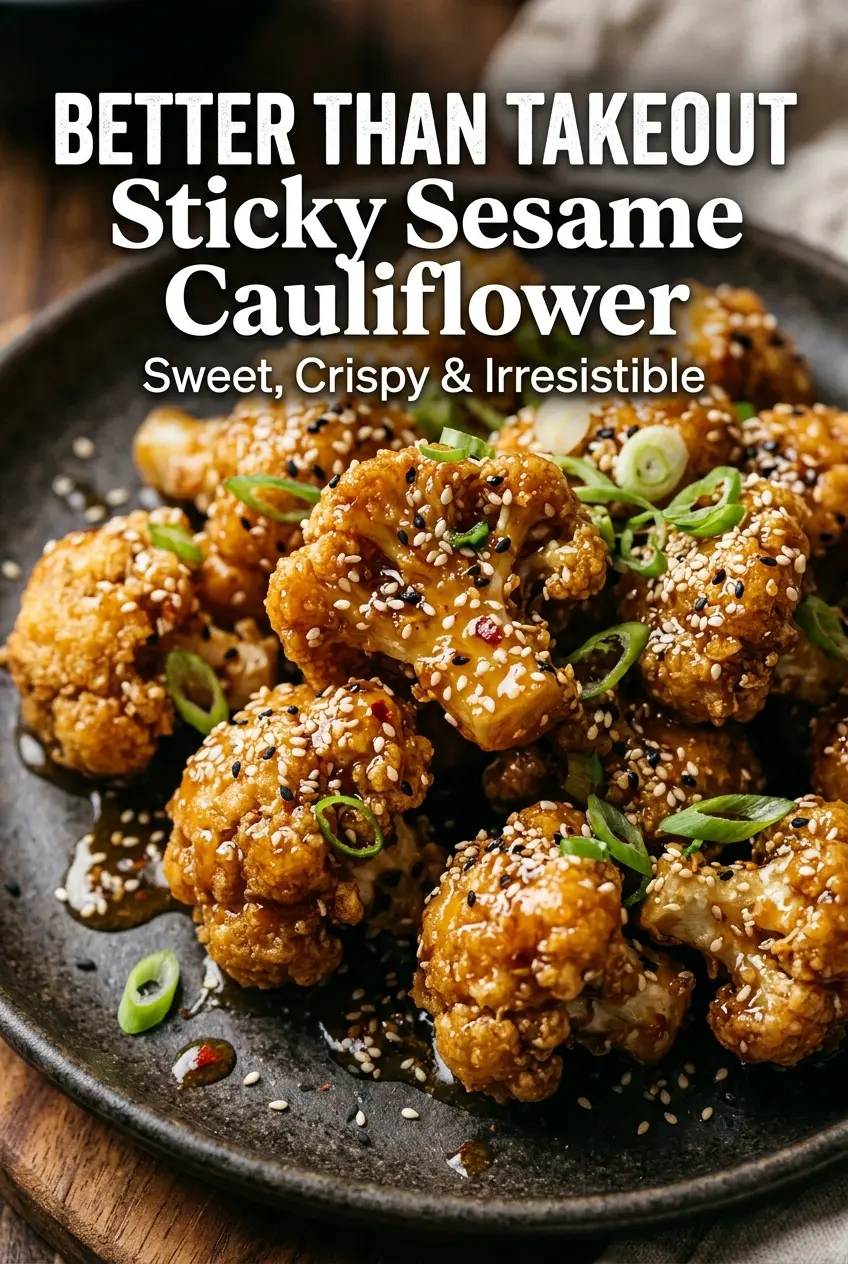
Sticky Sesame Cauliflower
Ingredients
Equipment
Method
- Preheat the oven to 425°F (220°C). Set a sheet pan with parchment paper so the coated cauliflower bakes evenly.
- Whisk all-purpose flour, water, garlic powder, onion powder, salt, and black pepper in a bowl. Whisk until a smooth batter forms with no dry pockets.
- Dip cauliflower florets into the batter. Let excess batter drip off so the coating stays thick but not gummy.
- Coat each battered piece with panko breadcrumbs. Press lightly so the crumbs adhere across the surface for crisp edges.
- Arrange the coated cauliflower on the prepared baking sheet. Keep pieces spaced so steam can escape and they turn golden.
- Bake for 25–30 minutes at 425°F (220°C) until golden and crisp. Turn once halfway if your oven browns unevenly for consistent crunch.
- In a saucepan, combine soy sauce, honey, brown sugar, rice vinegar, sesame oil, garlic, and ginger. Stir until the sugars dissolve.
- Bring the sauce to a gentle simmer. Simmer until it smells fragrant and looks slightly reduced.
- Mix cornstarch and water in a small bowl, then stir into the simmering sauce. Cook until thick and glossy, stirring to prevent lumps.
- Transfer baked cauliflower to a large bowl. Use the hot cauliflower so the sauce clings immediately.
- Pour the sticky sesame sauce over the cauliflower. Toss gently until every piece is evenly coated.
- Garnish with sesame seeds and sliced green onions. Serve immediately for the crispest texture.
