
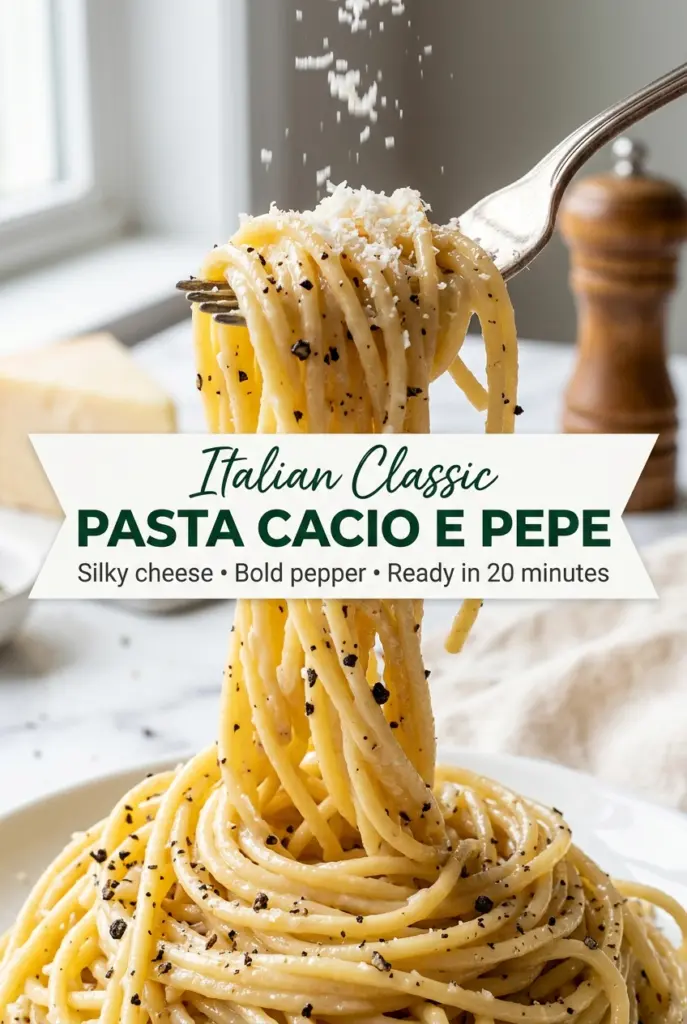
Pasta Cacio e Pepe
Pasta cacio e pepe lands on the plate looking almost bare, and that’s the trick. The sauce isn’t heavy, but it clings in a glossy coat that turns every strand…
Tip: save now, cook later.Pasta cacio e pepe lands on the plate looking almost bare, and that’s the trick. The sauce isn’t heavy, but it clings in a glossy coat that turns every strand into a hit of peppery cheese and salt. When it’s done right, the pasta tastes bigger than the short ingredient list suggests, with a sharp Pecorino bite and enough black pepper to wake everything up.
The part that separates a silky bowl from a clumpy one is heat control. Pecorino Romano needs hot pasta water and gentle tossing, not a screaming pan, or it can seize into grainy little threads. Toasting the pepper first matters too, because it pulls out the spice and the warm, almost piney edge that makes this dish taste like more than cheese on noodles. A little butter is optional here, but it does soften the sauce and gives you a wider margin if you’re nervous about the cheese tightening up.
Below, I’m walking through the exact points that matter most: how to keep the cheese smooth, why the pasta water is doing more than just thinning the sauce, and the few swaps that still keep the spirit of this Roman classic intact.
The sauce turned silky instead of clumpy, and the pepper bloomed so nicely in the pan. I followed the pasta water trick and it coated every strand perfectly.
Save this cacio e pepe for the night you want a restaurant-style bowl with just pepper, Pecorino Romano, and perfectly silky sauce.
The Small Heat Mistake That Ruins Cacio e Pepe
Most cacio e pepe goes wrong at the exact moment the cheese hits the pan. If the skillet is too hot, the Pecorino tightens up before it can dissolve into the starch in the pasta water, and you get a stringy mess instead of a smooth sauce. The fix is not more stirring. It’s backing the heat down and giving the cheese a gentle, starchy bath so it melts into the liquid instead of grabbing onto itself.
Pasta water matters here because it’s not just water. It carries starch from the noodles, and that starch helps the sauce emulsify and cling. That’s why the toss in the skillet has to be brisk and constant once the cheese goes in. You’re building a sauce from the pasta itself, not adding a separate cream sauce on top.
- Don’t start with a dry pan. The pepper needs a little fat or starch around it to bloom properly, which is why a touch of butter can help if you’re worried about breaking the sauce.
- Use finely grated Pecorino Romano. Coarse shreds melt unevenly. Fine grating gives the cheese a better chance of disappearing into the pasta water smoothly.
- Keep the pasta water hot. Lukewarm water won’t help the cheese melt, and the sauce will look dull instead of glossy.
What Each Ingredient Is Actually Doing in This Dish
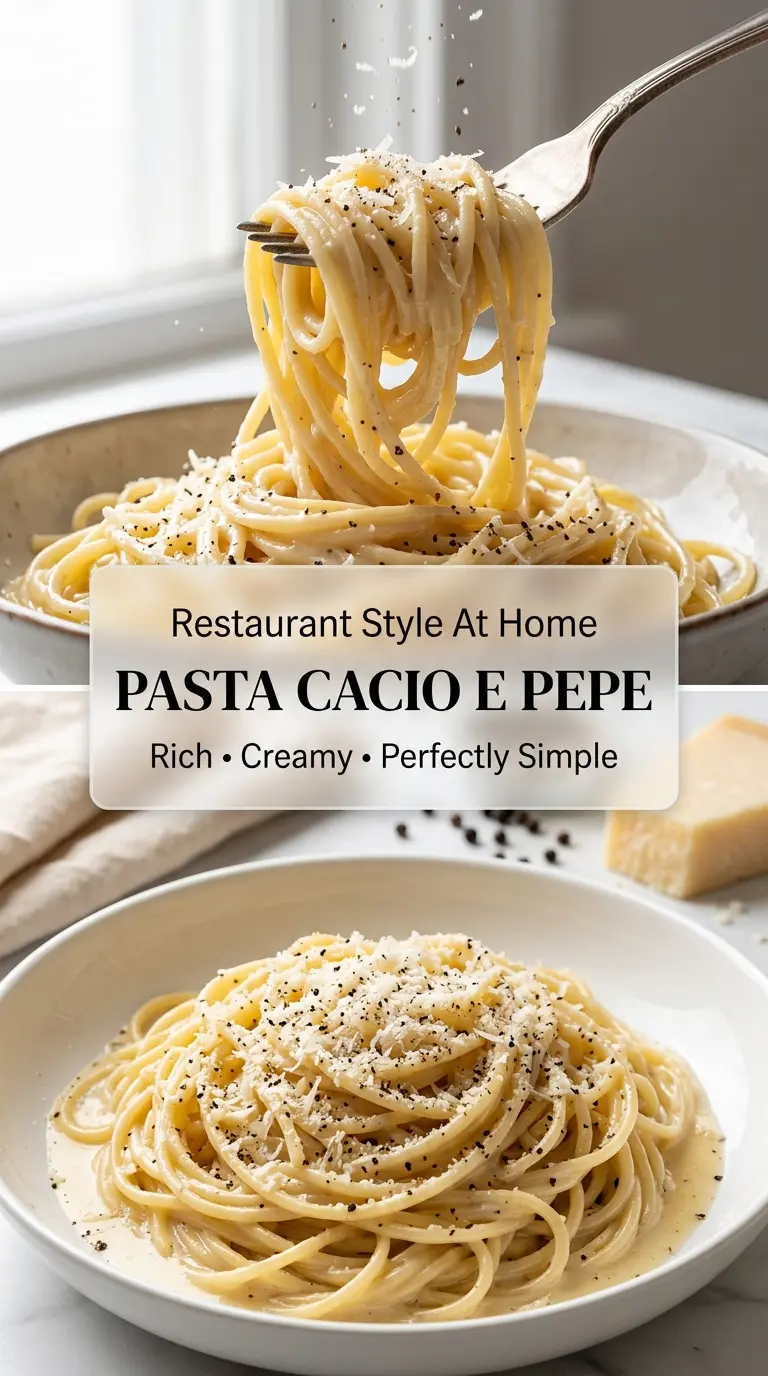
- Spaghetti or tonnarelli — Long noodles give the sauce room to coat every strand. Tonnarelli is the classic Roman choice because its square edges catch more sauce, but spaghetti works well if that’s what you have.
- Pecorino Romano — This is the backbone of the dish. It’s saltier and sharper than Parmesan, which is why the recipe needs so few ingredients to taste complete. Buy a wedge and grate it yourself; pre-grated cheese often contains anti-caking agents that can make the sauce grainy.
- Black peppercorns — Freshly crushed pepper is not a garnish here. Toasting it briefly in the pan softens the raw bite and brings out the warmth that defines the dish.
- Butter, optional — Not traditional in every version, but it adds insurance. It gives the cheese a little more fat to work with, which can help the sauce stay glossy if you’re new to the technique.
- Reserved pasta water — This is the emulsifier. You need enough to loosen the cheese and enough starch to bind it back together, so don’t dump it all in at once.
Building the Sauce Without Letting It Seize
Blooming the Pepper
Crush the peppercorns coarsely so you get some bigger flecks and some finer dust. Toast them in the skillet over medium heat until they smell deep and pungent, about a minute or two. If they start to smoke hard or darken too fast, the pan is too hot and the pepper will taste harsh instead of warm.
Coating the Pasta First
Move the hot pasta straight into the skillet and add a splash of pasta water before the cheese goes in. Toss hard so the noodles start to pick up the pepper and starch. This first coating gives the cheese something to emulsify with instead of hitting dry pasta and clumping on contact.
Melting the Cheese Gently
Lower the heat before you add the Pecorino Romano, then sprinkle it in gradually while tossing constantly. If the skillet looks dry, add just a spoonful or two more pasta water. Stop and let it sit for a second if the sauce looks tight; constant heat is what causes the cheese to clump, but steady motion on low heat keeps it smooth and glossy.
The Finish in the Pan
Keep tossing for another minute or two until the sauce looks creamy and clings to the noodles in a thin sheen, not a puddle. If it seems too thick, loosen it with a little more hot pasta water. If it looks loose, keep tossing off the heat and it will tighten as the starch settles.
How to Adapt This for a Different Kitchen
Gluten-Free Pasta That Still Coats Well
Use a sturdy gluten-free spaghetti that holds up to tossing, not a delicate rice noodle that turns soft before the sauce comes together. Save a little extra pasta water, since some gluten-free pastas release less starch and the sauce may need more liquid to cling properly.
Dairy-Free Version
This dish depends on Pecorino, so a true dairy-free swap changes it a lot. The closest workaround is to use a dairy-free hard cheese alternative plus extra pepper and a bit more olive oil, but the sauce will be less sharp and less silky than the original.
Extra Creamy With Butter
The optional butter gives the sauce a wider margin and a softer finish. Use it if you want a rounder, slightly richer bowl, but keep the amount modest so the dish still tastes like cacio e pepe and not buttered noodles with cheese.
Scaling It Up for More People
Double the recipe in a very large skillet so the pasta has room to move. Crowding the pan makes tossing harder and gives you uneven sauce, with some noodles coated and others left dry.
Storage and Reheating
- Refrigerator: Store leftovers for up to 3 days. The sauce will tighten as it sits, so the pasta won’t stay as silky as it was right after tossing.
- Freezer: I don’t recommend freezing this one. The cheese sauce can turn grainy after thawing, and the pasta texture softens too much.
- Reheating: Warm it slowly in a skillet with a splash of water over low heat, tossing until the sauce loosens again. High heat is the fastest way to break the cheese and turn the pasta clumpy.
Answers to the Questions Worth Asking
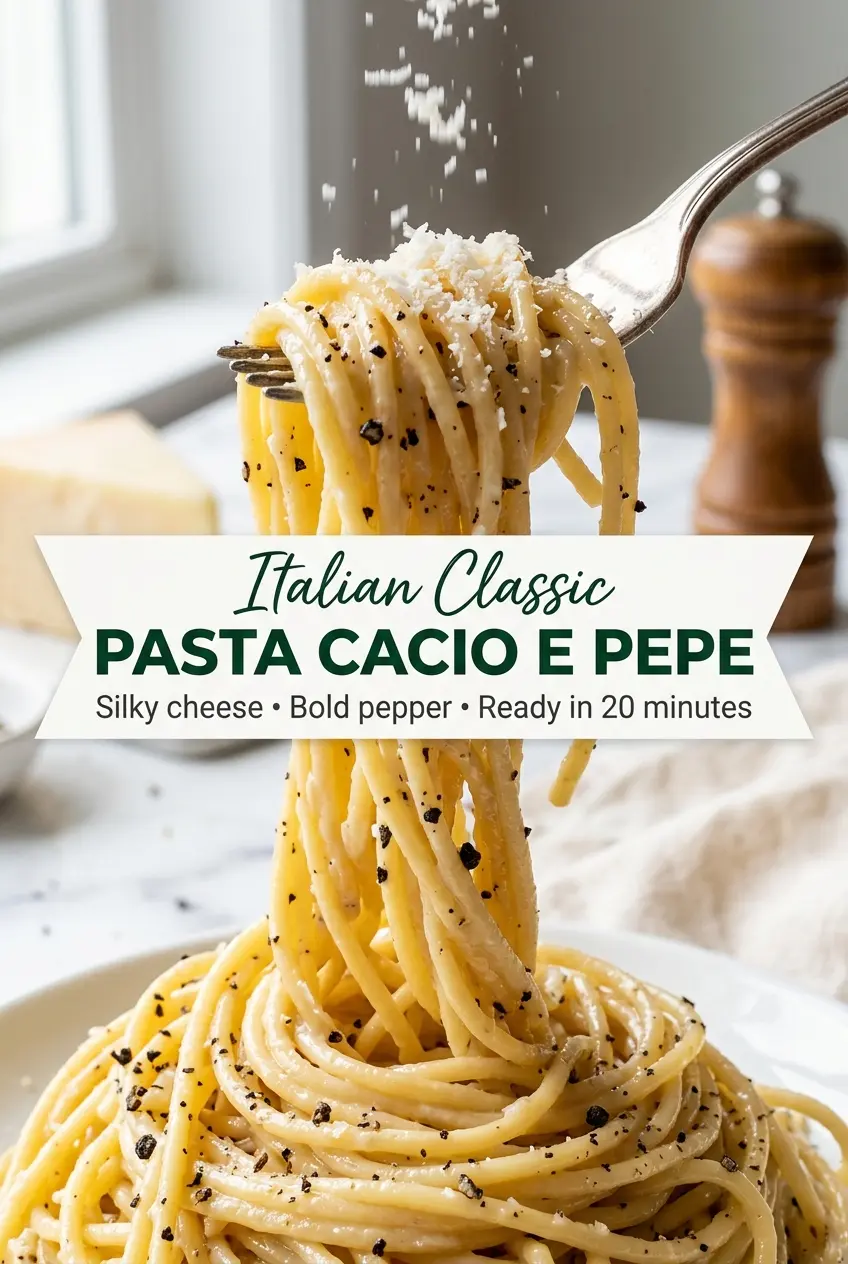
Pasta Cacio e Pepe
Ingredients
Equipment
Method
- Bring a large pot of generously salted water to a boil. Cook the spaghetti until al dente according to the package directions.
- Reserve 1 cup of the hot pasta water before draining the pasta. Keep the water hot so it emulsifies smoothly with the cheese.
- Crush the black peppercorns coarsely using a mortar and pestle or the bottom of a heavy pan. Aim for a mix of coarse bits and smaller fragments.
- Toast the crushed black pepper in a large skillet over medium heat for 1–2 minutes until fragrant. Watch closely so it doesn’t burn.
- Add the butter, if using, and allow it to melt gently. Stir once or twice so it coats the bottom of the skillet.
- Transfer the cooked pasta directly to the skillet. Add about 1/2 cup of the reserved pasta water and toss vigorously to coat the pasta.
- Reduce the heat to low. Gradually sprinkle in the Pecorino Romano while continuously tossing the pasta.
- Add additional pasta water a little at a time until a smooth, glossy sauce forms and coats every strand. Keep tossing so the cheese emulsifies instead of clumping.
- Continue tossing for 1–2 minutes until the sauce becomes silky and creamy without clumping. Remove from heat as soon as it looks glossy.
- Serve immediately with extra Pecorino Romano and freshly cracked black pepper. Add a final pepper shower right before eating.
