Ingredients
Equipment
Method
Cook the pasta and prep the water
- Bring a large pot of generously salted water to a boil. Cook the spaghetti until al dente according to the package directions.
- Reserve 1 cup of the hot pasta water before draining the pasta. Keep the water hot so it emulsifies smoothly with the cheese.
Toast and perfume the pepper
- Crush the black peppercorns coarsely using a mortar and pestle or the bottom of a heavy pan. Aim for a mix of coarse bits and smaller fragments.
- Toast the crushed black pepper in a large skillet over medium heat for 1–2 minutes until fragrant. Watch closely so it doesn’t burn.
Emulsify the cacio e pepe sauce
- Add the butter, if using, and allow it to melt gently. Stir once or twice so it coats the bottom of the skillet.
- Transfer the cooked pasta directly to the skillet. Add about 1/2 cup of the reserved pasta water and toss vigorously to coat the pasta.
- Reduce the heat to low. Gradually sprinkle in the Pecorino Romano while continuously tossing the pasta.
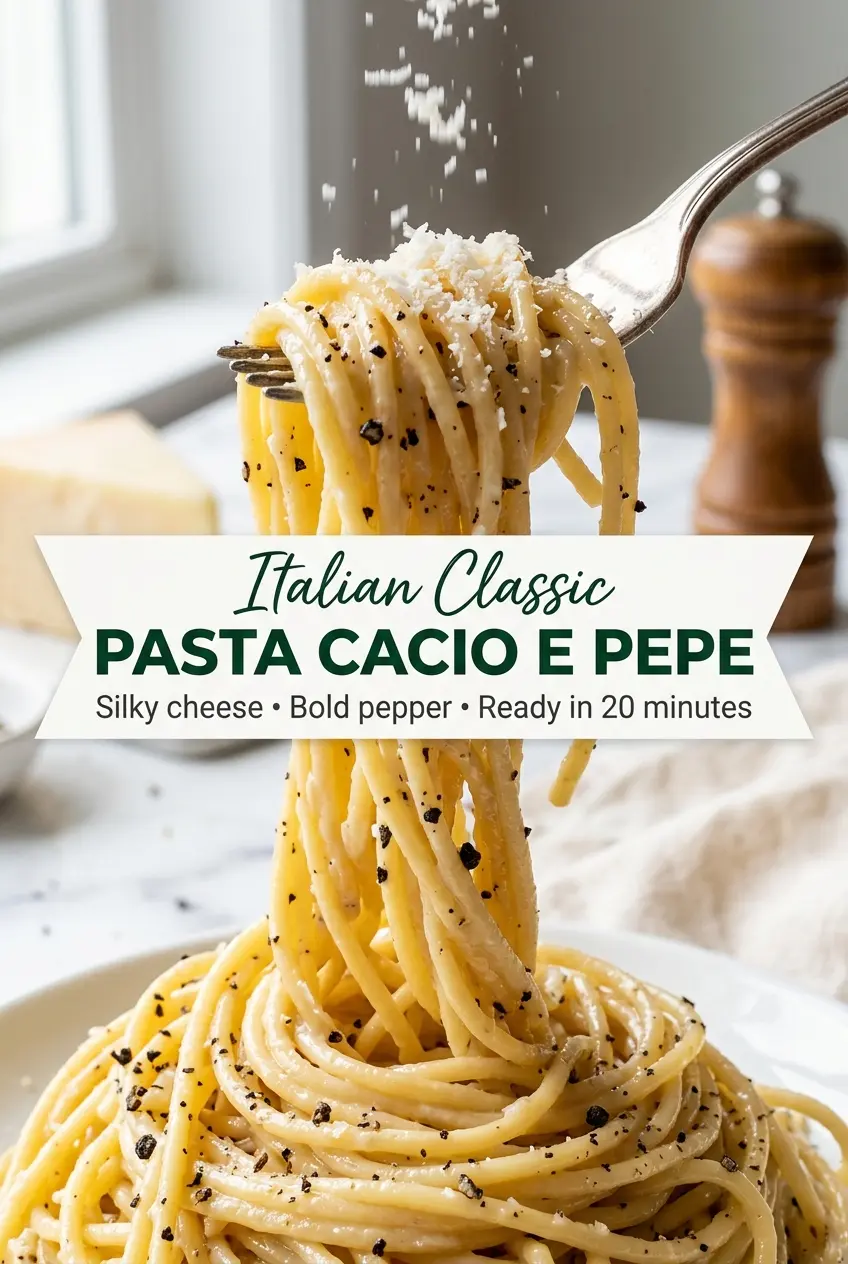
- Add additional pasta water a little at a time until a smooth, glossy sauce forms and coats every strand. Keep tossing so the cheese emulsifies instead of clumping.
- Continue tossing for 1–2 minutes until the sauce becomes silky and creamy without clumping. Remove from heat as soon as it looks glossy.
Serve
- Serve immediately with extra Pecorino Romano and freshly cracked black pepper. Add a final pepper shower right before eating.
Notes
Pro tip: keep the heat on low once the cheese goes in—continuous tossing and a splash of reserved pasta water are what create the smooth, glossy emulsion. Store leftovers in an airtight container in the fridge for up to 2 days; rewarm gently with a splash of hot water to loosen the sauce. Freezing is not recommended because the cheese sauce can break. For a dairy-light swap, use a high-quality aged hard cheese alternative that melts well, though texture and flavor will change.