
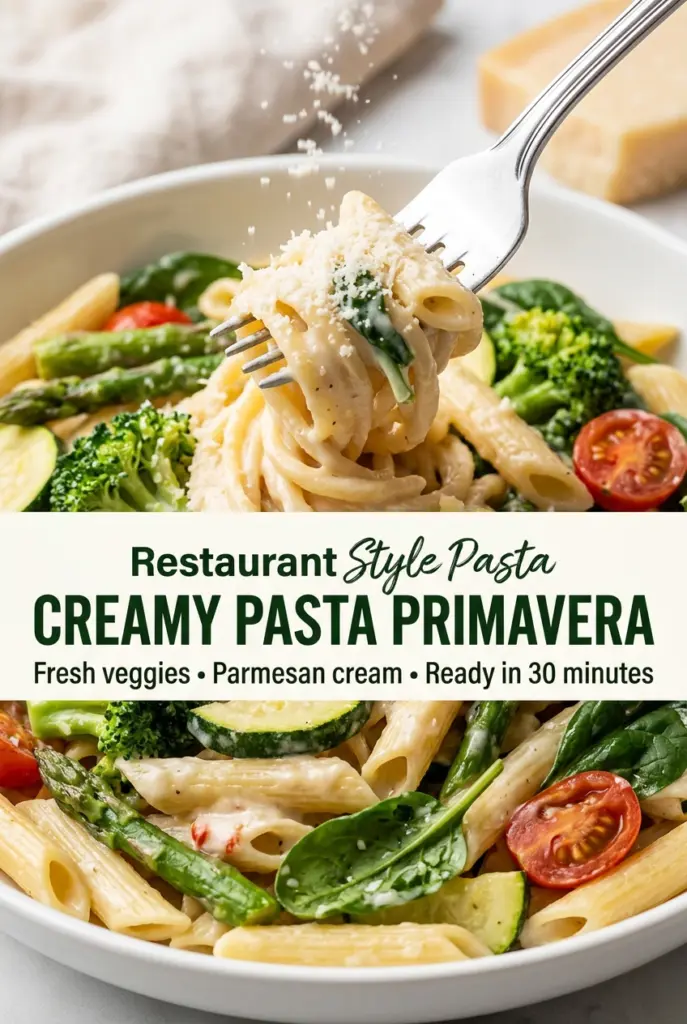
Creamy Pasta Primavera
Creamy Pasta Primavera earns its place in the regular dinner rotation because it lands in that sweet spot between fresh and comforting. The vegetables stay bright and crisp-tender, the sauce…
Tip: save now, cook later.Creamy Pasta Primavera earns its place in the regular dinner rotation because it lands in that sweet spot between fresh and comforting. The vegetables stay bright and crisp-tender, the sauce turns silky without feeling heavy, and every bite gets a little bit of garlic, Parmesan, and sweet tomato. It tastes like a meal you put some care into, even though it comes together in about half an hour.
The trick is keeping the vegetables in stages instead of dumping everything in at once. Broccoli, zucchini, and asparagus need a head start so they soften without turning dull, while spinach and tomatoes go in later because they cook in minutes. The other detail that matters is the Parmesan: grate it fresh and stir it in over low heat so the sauce stays smooth instead of grainy.
Below, I’ve laid out the parts that actually change the outcome — the order you cook the vegetables, the reason the sauce stays creamy, and a few swaps that still keep the dish balanced if you need to work with what’s in the fridge.
The sauce coated the pasta perfectly and didn’t break at all, even after I added the Parmesan. The vegetables stayed crisp and colorful, and my kids ate the broccoli without picking it out.
Creamy Pasta Primavera with bright vegetables and a silky Parmesan sauce belongs in your weeknight dinner rotation.
The Reason the Sauce Stays Creamy Instead of Turning Heavy
Pasta primavera can go wrong when the vegetables overcook and the sauce gets thick before the pasta even hits the pan. That leaves you with soft vegetables and a clumpy coating instead of a glossy, balanced dish. The better approach is to cook the sturdier vegetables first, then add the quick-cooking ones later so everything finishes at the same time.
The second place things fall apart is the cheese. Parmesan goes in after the cream has had a minute to settle over low heat, not while the pan is boiling. High heat can make the dairy seize or turn grainy, and once that happens, no amount of stirring fixes it. Low heat gives the sauce time to emulsify and cling to the pasta.
- Broccoli, zucchini, and asparagus hold up to the skillet heat and give the dish its structure.
- Cherry tomatoes add moisture and sweetness, but they need only a short cook so they keep their shape.
- Freshly grated Parmesan melts smoothly and seasons the sauce from the inside out.
- Reserved pasta water helps the sauce loosen just enough to coat every piece without turning soupy.
What Each Ingredient Is Actually Doing in This Dish
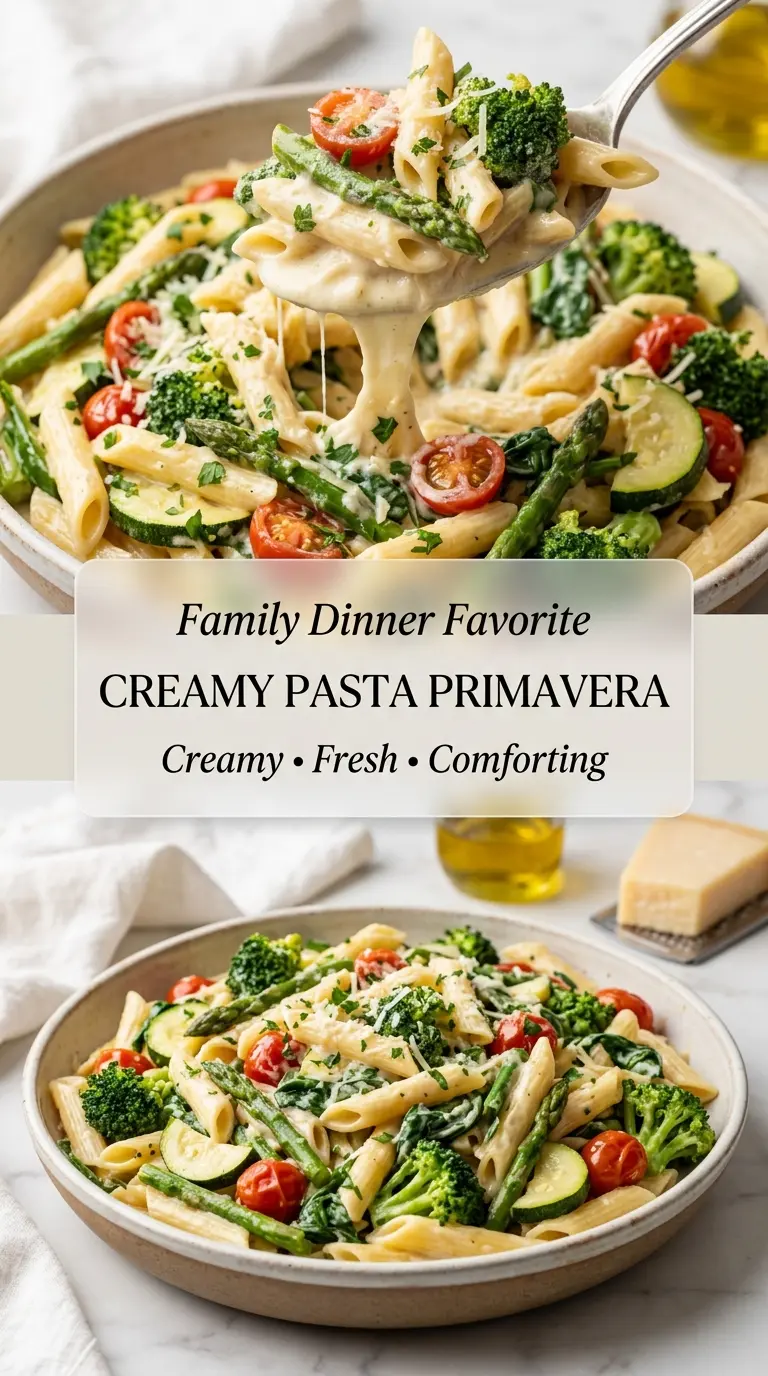
- Penne pasta gives the sauce plenty of ridges and nooks to cling to. Short pasta holds up better than long strands here because the vegetables are cut into similar bite-size pieces.
- Olive oil and butter build a base with enough richness to carry the vegetables without making the dish greasy. The butter adds roundness, while the oil keeps it from browning too fast.
- Garlic and onion make the sauce taste like it had more work behind it than it did. Let the onion soften first; if the garlic goes in too early, it can burn before the rest of the vegetables are ready.
- Heavy cream gives the sauce body and stays stable when simmered gently. Half-and-half works in a pinch, but the sauce will be thinner and needs a little more pasta water to cling properly.
- Fresh Parmesan is the ingredient that ties the whole dish together. Pre-grated cheese often contains anti-caking agents that can leave the sauce sandy instead of smooth.
- Spinach, tomatoes, broccoli, zucchini, and asparagus each cook at a different pace, which is why the timing matters. If you swap the vegetables, keep the same logic: hard vegetables first, leafy or juicy ones last.
The 20 Minutes That Matter Most
Cooking the Pasta Al Dente
Boil the pasta until it still has a little bite in the center. It will finish softening in the sauce, and that keeps it from going mushy. Reserve the pasta water before draining; that starchy water is what helps the sauce loosen and coat instead of sitting in the pan like cream soup.
Softening the Aromatics
Cook the onion in the butter and oil until it loses its raw edge and turns translucent at the edges. Garlic only needs about 30 seconds, just long enough to smell fragrant. If it browns, it turns bitter fast, so keep the heat moderate and move quickly once it goes in.
Building the Vegetable Base
Add the broccoli, zucchini, and asparagus before the cream. They need enough time to turn crisp-tender and take on a little color, but they should still have structure when you bite into them. The tomatoes and spinach come later because they collapse fast; adding them too soon leaves you with pale vegetables and a watery skillet.
Finishing the Sauce Without Breaking It
Pour in the cream and keep the heat at medium-low while it simmers. Stir in the Parmesan after the sauce has had a minute to thicken, and keep the pan off a hard boil. If the sauce looks too tight after the pasta goes in, splash in reserved pasta water a tablespoon at a time until it turns glossy and coats the noodles cleanly.
How to Adapt This for Different Kitchens and Different Diets
Dairy-Free Version
Use a full-fat unsweetened oat or cashew cream and swap the butter for extra olive oil. The sauce won’t taste quite as rich as the dairy version, but it still gets creamy if you keep the heat gentle and finish with a little extra salt and a squeeze of lemon to wake it up.
Make It Vegetarian-Plus
This dish is already vegetarian, but you can make it more substantial by adding sautéed mushrooms or white beans. Mushrooms deepen the savory side of the sauce, while beans add protein and make the bowl eat more like a full main course.
Gluten-Free Pasta Swap
Use a good gluten-free penne made from rice or corn, and cook it just to the edge of done because it softens quickly once it hits the sauce. Gluten-free pasta tends to drink up more liquid, so keep a little extra pasta water back in case the skillet tightens up too fast.
What to Do When the Fridge Is Sparse
Any mix of quick-cooking vegetables will work as long as you keep the timing sorted by texture. Bell peppers, mushrooms, snap peas, or peas all fit in nicely. Just keep the hard vegetables in first and the delicate ones for the last minute so nothing turns limp.
Storage and Reheating
- Refrigerator: Store in an airtight container for up to 3 days. The pasta will absorb some of the sauce, so expect it to thicken a bit.
- Freezer: It freezes, but the cream sauce can separate and the vegetables lose their best texture. I’d keep this one in the fridge rather than the freezer.
- Reheating: Warm it slowly on the stovetop or in the microwave with a splash of water or milk. High heat is the mistake here; it tightens the sauce and dries out the pasta before the center is hot.
Answers to the Questions Worth Asking
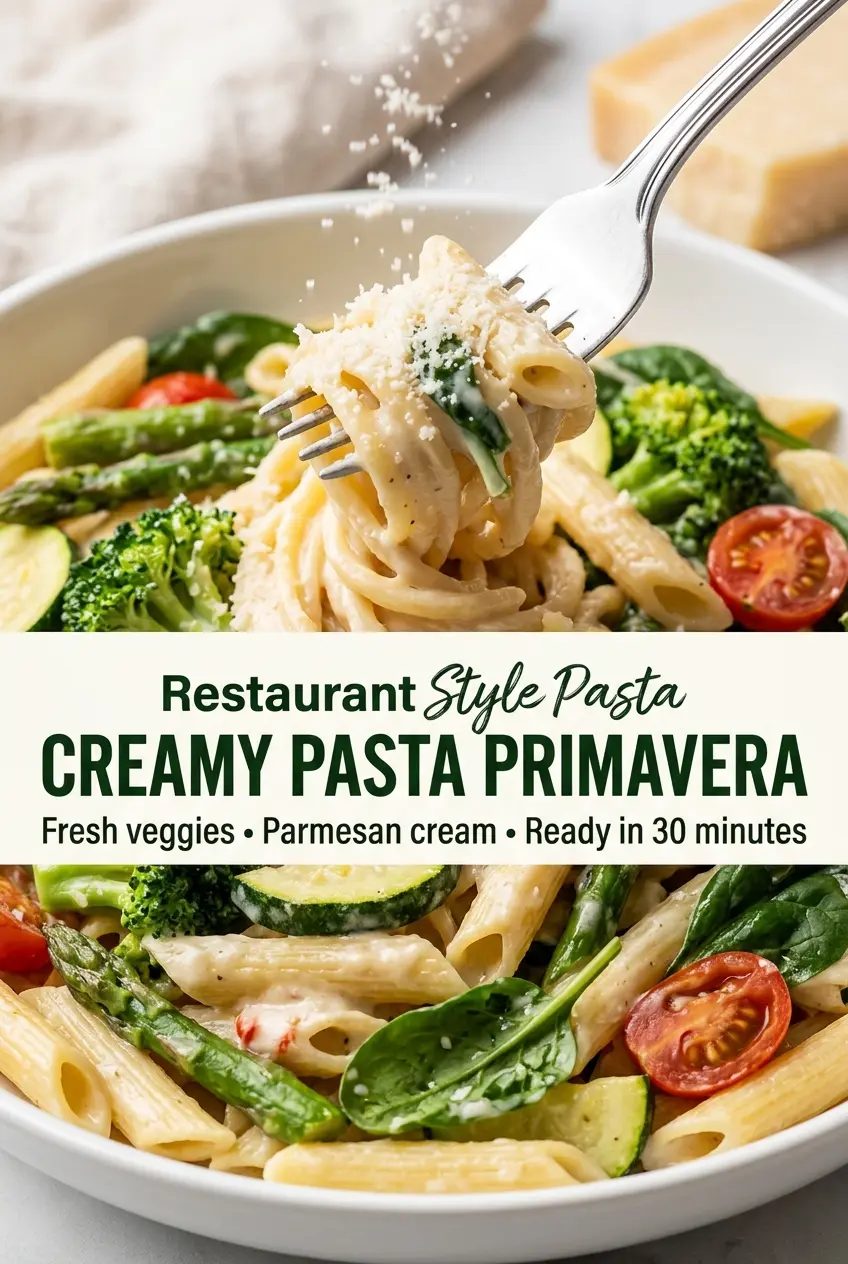
Creamy Pasta Primavera
Ingredients
Equipment
Method
- Bring a large pot of salted boiling water to a boil, then cook the penne pasta according to package directions until al dente. Reserve 1/2 cup of pasta water, then drain.
- Heat the olive oil and butter in a large skillet over medium heat until the butter is melted and bubbling. Add the yellow onion and cook for 3–4 minutes until softened, stirring to coat.
- Stir in the minced garlic and cook for 30 seconds until fragrant. Keep it moving so it doesn’t brown.
- Add the broccoli, zucchini, and asparagus, then sauté for 5–6 minutes until the vegetables are crisp-tender and brightly colored. Toss occasionally for even cooking.
- Add the cherry tomatoes and cook for 2 minutes until they begin to soften. Stir gently so the vegetables stay intact.
- Pour in the heavy cream and stir in the Italian seasoning, salt, black pepper, and crushed red pepper flakes if using. Simmer over medium-low heat for 3 minutes until slightly thickened.
- Whisk in the freshly grated Parmesan cheese until the sauce becomes smooth and creamy. Reduce heat if needed to prevent separation.
- Fold in the baby spinach and cook for 1 minute until wilted. Stir just until the leaves darken.
- Combine the cooked penne pasta with the sauce, adding a splash of reserved pasta water if needed to create a silky coating. Toss until every piece is evenly coated.
- Serve immediately with chopped fresh parsley and generous Parmesan shavings. Plate while the sauce is hot and creamy.
