
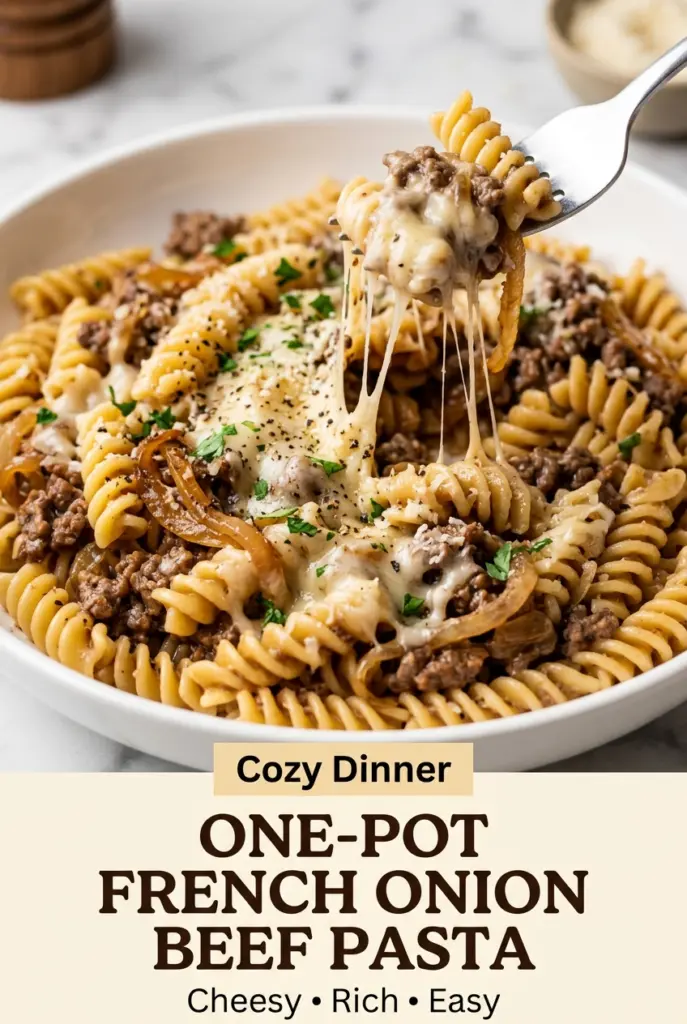
One-Pot French Onion Beef Pasta
Caramelized onions, savory beef, and a glossy cheese-coated pasta come together in one pot with the kind of deep, slow-cooked flavor that usually takes a lot more effort. The onions…
Tip: save now, cook later.Caramelized onions, savory beef, and a glossy cheese-coated pasta come together in one pot with the kind of deep, slow-cooked flavor that usually takes a lot more effort. The onions turn sweet and jammy before the broth ever goes in, and that’s what gives this pasta its French onion character instead of just tasting like beefy noodles with cheese on top. By the time the pasta is tender, the sauce has picked up every bit of richness from the pan.
The trick is giving the onions enough time to brown before the rest of the ingredients rush the process. That long cook builds the base of the dish. A little Worcestershire sauce sharpens the beefy flavor, beef consommé adds extra depth if you can get it, and the final stir of cream and Gruyère turns the whole thing silky without making it heavy.
The onions got properly sweet and the sauce clung to every piece of rotini. I was worried the cheese would turn greasy, but it melted into a smooth sauce and the leftovers reheated great the next day.
Save this One-Pot French Onion Beef Pasta for the nights when you want deep caramelized onion flavor, a creamy cheese sauce, and only one pot to wash.
The Reason the Onions Have to Go First
The biggest mistake with French onion-style pasta is rushing the onions and hoping the broth will cover it up later. It won’t. If the onions are pale and soft, the whole dish tastes flat. You need them deeply golden and sweet before the beef goes in, because that browning is where the flavor starts. The beef and cheese can be rich, but they can’t fake caramelization.
Once the onions are ready, the rest of the recipe moves fast. The broth goes in to loosen the browned bits from the bottom of the pan, and those bits matter just as much as the onions. That’s how you get the savory, soup-like depth without needing a separate sauce or stock reduction.
What Each Ingredient Is Actually Doing in This Dish
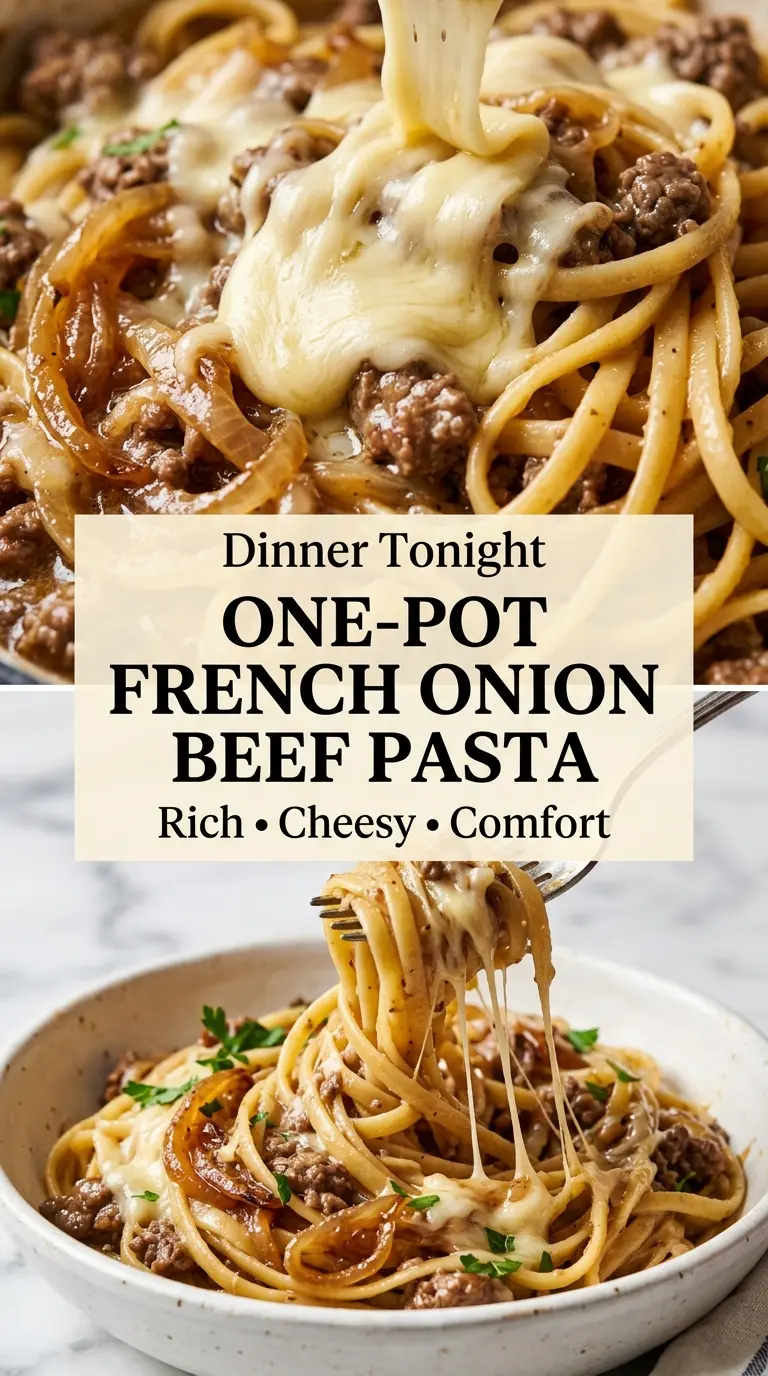
- Yellow onions — These are the backbone of the recipe. Thin slices cook down into that sweet, savory base that makes the pasta taste like French onion soup. Red onions won’t give the same round sweetness, and sweet onions work too, but yellow onions hold their shape and deepen nicely.
- Beef consommé — This is the ingredient that gives the sauce extra intensity. If you can get it, use it. If not, add more low-sodium beef broth, but expect a little less depth in the finished dish.
- Gruyère cheese — Gruyère melts smoothly and gives the dish that classic French onion flavor. It’s worth buying good Gruyère here, because pre-shredded versions can be coated with anti-caking agents that make the sauce less silky. If you need a substitute, use Swiss cheese, which keeps the same nutty direction even if it’s a little milder.
- Rotini or penne — You want a pasta shape with ridges or curves so the sauce has somewhere to cling. Long pasta doesn’t work as well in a one-pot dish like this because it tends to clump and cook unevenly.
- Heavy cream — This softens the sharpness of the cheese and turns the broth into a proper sauce. Half-and-half can work in a pinch, but the result will be thinner and less plush.
Building the Sauce Without Making It Greasy
Caramelizing the onions
Melt the butter with the olive oil and give the onions enough time to take on real color. They should look soft, glossy, and deeply golden, not just translucent. If they start to scorch, lower the heat and keep stirring; burnt onion turns the whole pot bitter. This is the part that sets the flavor for everything else, so don’t pull them early.
Cooking the beef in the onion base
Add the ground beef right into the onions and break it up as it cooks. The onions will pick up the beef drippings, and the beef will take on some of the onion sweetness. Cook off any excess liquid so the final sauce doesn’t taste watery. Stir in the garlic at the end of this stage so it stays fragrant instead of going dull.
Letting the pasta finish in the broth
Once the broth and consommé go in, bring the pot to a gentle boil before adding the pasta. Then reduce the heat to a steady simmer. Stir every few minutes so the pasta doesn’t stick to the bottom, and watch the liquid level closely. If the pot looks dry before the pasta is tender, add a splash more broth or water; if there’s too much liquid at the end, keep simmering uncovered until it thickens.
Finishing with cheese and cream
Turn the heat down before the cream and cheese go in. High heat is the fastest way to get a grainy sauce. Stir in the cream first, then the Gruyère, mozzarella, and Parmesan a handful at a time until the sauce turns smooth and coats the pasta. Let the finished dish rest for a few minutes off the heat so it thickens instead of running across the plate.
Three Smart Ways to Adapt This Pasta
Gluten-Free Version
Swap in a sturdy gluten-free short pasta and keep a closer eye on the simmer, because some gluten-free shapes soften faster and can break apart if overcooked. The sauce still works well, but stir more often and start checking a minute or two early.
Dairy-Light Shortcut
Use half-and-half instead of heavy cream and reduce the mozzarella slightly. The sauce won’t be quite as plush, but it will still coat the pasta nicely. This works best if you keep the heat low when the cheese goes in so the lighter dairy doesn’t separate.
Make It Meatless
Swap the ground beef for sliced mushrooms and use vegetable broth instead of beef broth. You’ll lose some of the heavy savory depth, but the onions and Gruyère still give the dish a strong French onion feel. Let the mushrooms brown well so they add their own richness instead of turning soggy.
Storage and Reheating
- Refrigerator: Store covered for up to 4 days. The pasta will absorb some sauce, so it thickens as it sits.
- Freezer: It freezes, but the sauce can turn a little grainy after thawing because of the dairy. If you freeze it, use an airtight container and thaw in the fridge overnight.
- Reheating: Warm it gently on the stove or in the microwave with a splash of broth or water. High heat is the main mistake here — it can dry out the pasta and tighten the cheese sauce too much.
Answers to the Questions Worth Asking
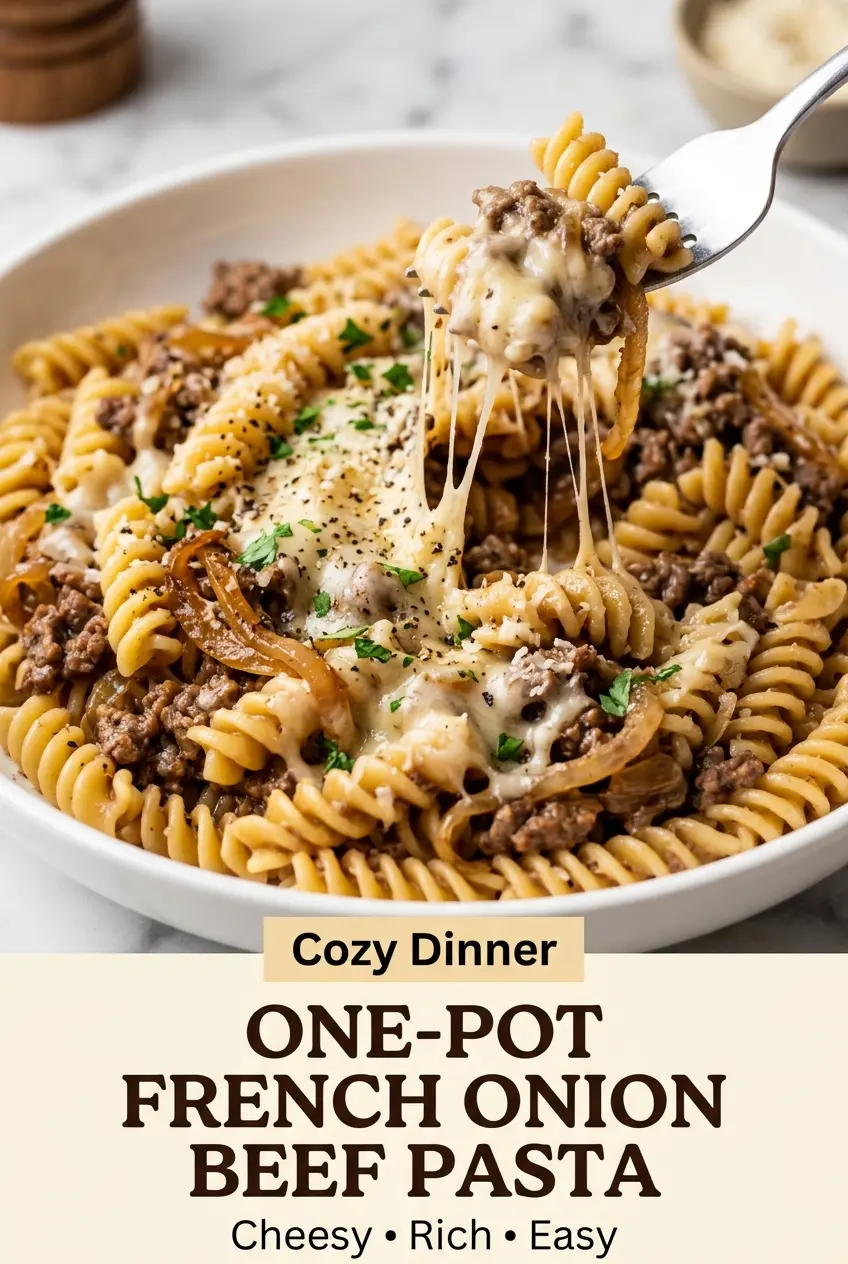
One-Pot French Onion Beef Pasta
Ingredients
Equipment
Method
- Melt the butter with the olive oil in a large Dutch oven over medium heat. Add the sliced yellow onions and cook for 20–25 minutes, stirring often, until deeply golden and caramelized.
- Add the ground beef and cook for 5–6 minutes, breaking it apart until no pink remains. Stir in the garlic and cook for 30 seconds until fragrant.
- Mix in the Worcestershire sauce, thyme, salt, and black pepper. Stir well to coat the beef and onions.
- Pour in the beef broth and beef consommé. Bring to a gentle boil.
- Add the uncooked pasta. Reduce to a steady simmer and cook for 10–12 minutes, stirring occasionally, until the pasta is tender and most of the liquid has been absorbed.
- Reduce the heat to low. Stir in the heavy cream, Gruyère cheese, mozzarella cheese, and Parmesan cheese until melted into a smooth, creamy sauce.
- Remove from the heat and let the pasta rest for 2–3 minutes to thicken slightly. Sprinkle with fresh parsley and serve hot with extra Gruyère or Parmesan if desired.
