

Make-Ahead Mashed Potatoes
The tricky moment comes after mashing: potatoes that look fluffy in the pot can reheat unevenly if they're packed into a deep bowl. Spreading these Make-Ahead Mashed Potatoes in a…
Tip: save now, cook later.The tricky moment comes after mashing: potatoes that look fluffy in the pot can reheat unevenly if they’re packed into a deep bowl. Spreading these Make-Ahead Mashed Potatoes in a 9×13-inch baking dish gives them a shallow, even layer that warms through without leaving the edges dry while the center is still cold. The same dish goes from the counter to the refrigerator and then into the oven when it’s time to eat.
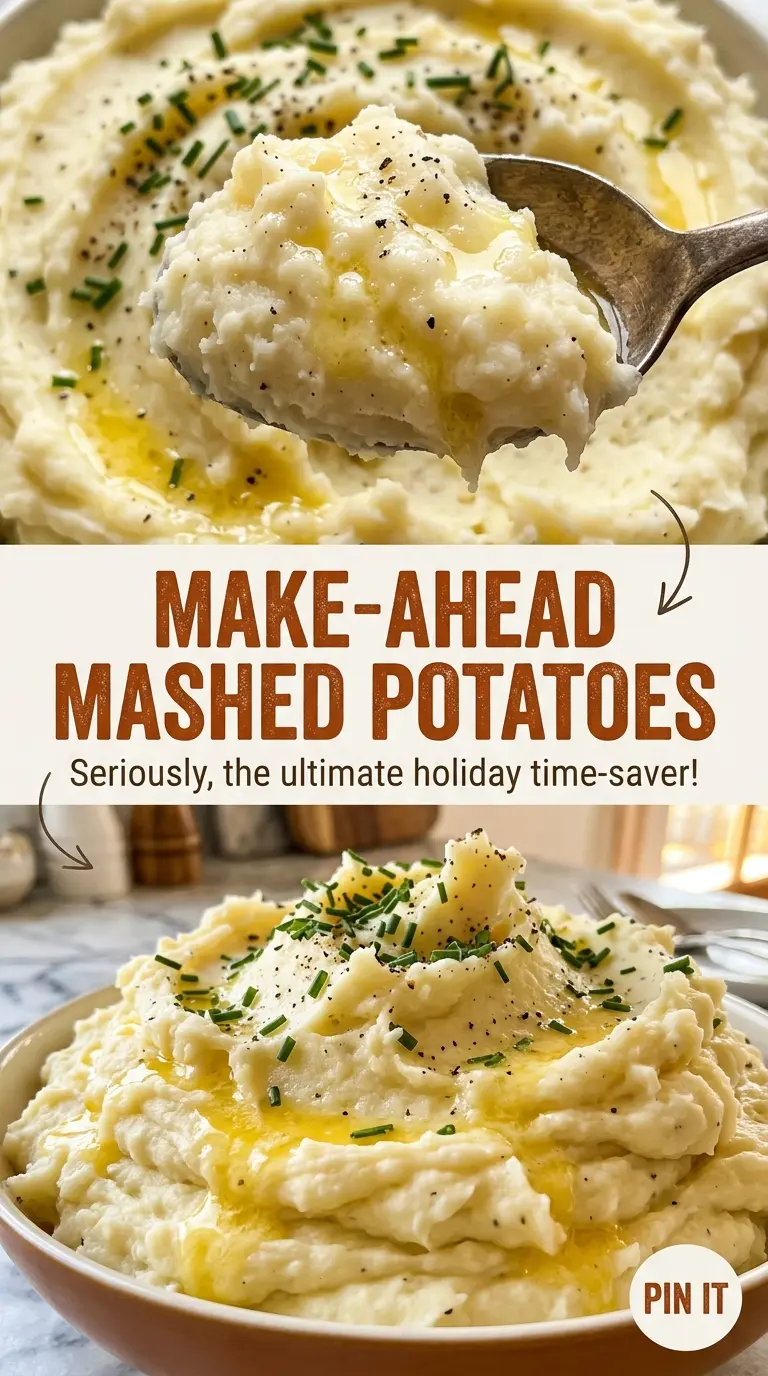
Yukon Gold potatoes give the mash a naturally creamy texture, and the softened butter and cream cheese blend into them before the sour cream and warm milk go in. That order makes it easier to get a smooth, creamy mash without working the potatoes more than they need. Once baked, they’re rich and soft with a lightly settled top, ready to scoop beside the rest of dinner.

Kitchen Note
Give the baked potatoes their full 5-minute rest with the dish still covered. Scooping right away leaves the top looser, while those few minutes help the mash settle into soft, tidy spoonfuls.
Save these Make-Ahead Mashed Potatoes for a dinner that needs one less task at serving time: creamy Yukon Golds are ready to bake straight from the refrigerator.
Why These Mashed Potatoes Reheat Better in a Wide, Covered Dish
A mound of cold mashed potatoes takes longer to warm in the middle than a level layer, and the outside can lose moisture while you wait. Spreading the mash evenly across a 9×13-inch dish gives the heat a more consistent path through the potatoes. It also leaves plenty of room to cover the surface, which helps keep the top from drying during the oven bake.
The covered bake matters because this dish is already cooked before it goes into the refrigerator. The oven’s job is to bring the chilled potatoes back to serving temperature, not to brown or crisp the top. Keep the layer even rather than leaving a tall heap in the center; a smooth surface helps the whole dish heat at about the same pace. Once the center is hot, the potatoes are ready for the table without stirring or transferring them to another serving bowl.
What Yukon Golds and the Dairy Bring to This Mash
- Yukon Gold potatoes — Their creamy, moderately starchy texture gives the mash body without the dry, fluffy quality of russets. Russets can stand in at the same weight if that’s what you have; expect a lighter, less buttery texture and mash gently to keep them from turning gluey.
- Butter and cream cheese — Softened butter adds richness, while cream cheese gives the potatoes a full, cohesive texture after chilling and baking. Full-fat Neufchâtel can replace the cream cheese in the same amount, though the finished mash will be a little less rich. Softened dairy blends more evenly than cold blocks.
- Sour cream — It brings a gentle tang that keeps the butter and cream cheese from making the potatoes taste heavy. Plain, full-fat Greek yogurt can replace it one-for-one; the result will taste tangier and feel a touch thicker.
- Whole milk — Warming it helps it mix into the potatoes without cooling the mash. Warm half-and-half can replace it in the same amount for a richer finish, but the potatoes will feel heavier.
- Nonstick cooking spray — A light coating helps the chilled mash release cleanly from the baking dish. A standard nonstick spray is all you need; there isn’t a flavor advantage to choosing a specialty one here.
From Fork-Tender Potatoes to an Evenly Heated Casserole
Simmer the potatoes until a fork slips in easily
Put the peeled, 1-inch potato pieces in an 8-quart pot and cover them with cold water. Bring the pot to a boil over high heat, then lower the heat and simmer for 15 to 20 minutes. Start checking at the earlier end of that range: the pieces are ready when a fork slides in easily, not when the outside is falling apart. Keeping the pieces roughly the same size helps them finish together.
Mash in the dairy in the right order
Drain the potatoes and return them to the pot over low heat for 1 to 2 minutes, gently shaking until excess moisture evaporates. Add the softened butter and cream cheese, then mash until mostly smooth. Mix in the sour cream, warm milk, kosher salt, and black pepper until creamy. Stop once the mash is even; working it hard after it smooths out can make potatoes pasty.
Spread, chill, and bake covered
Coat a 9×13-inch baking dish with nonstick cooking spray and spread the potatoes evenly in it. Let the dish cool for 20 minutes, then cover and refrigerate it; get it into the refrigerator within 2 hours of cooking. When you’re ready to serve, heat the oven to 350°F and bake the covered dish for 45 to 60 minutes. The center should reach 165°F before serving.
Two Practical Ways to Adapt the Potatoes
Leave the skins on for a more rustic mash
Skip peeling the Yukon Golds and cut them into the same 1-inch pieces. The finished potatoes will have flecks of skin and a more textured, less uniform feel, while keeping the same buttery, tangy base. Scrub the potatoes well before cutting.
Make a dairy-free version
Replace the butter with plant-based butter, the cream cheese with dairy-free cream cheese, the sour cream with plain unsweetened dairy-free sour cream, and the whole milk with unsweetened plant milk. Warm the plant milk before mixing it in. The potatoes will still make a creamy casserole, though the flavor and richness depend on the brands you choose.
Storage and Reheating
- Refrigerator: Keep the covered, unbaked dish refrigerated for up to 2 days. Cool it for 20 minutes and get it into the refrigerator within 2 hours of cooking.
- Freezer: These can be frozen in an airtight, freezer-safe container, though the sour cream and cream cheese may leave the thawed potatoes slightly grainy or watery. Thaw overnight in the refrigerator before reheating.
- Reheating: For the best texture, bake the covered dish at 350°F for 45 to 60 minutes, following the center-temperature cue in the process section. Leaving the dish uncovered can dry out the surface.
Questions That Come Up When Making These Ahead
Make-Ahead Mashed Potatoes
Ingredients
Equipment
Method
- Put the potatoes in an 8-quart pot.
- Add the cold water, or enough to cover the potatoes by 1 inch.
- Bring to a boil over high heat, then reduce the heat and simmer for 15 to 20 minutes, until the potatoes are easily pierced with a fork.
- Drain the potatoes and return them to the pot over low heat.
- Gently shake the pot for 1 to 2 minutes until excess moisture evaporates.
- Add the butter and cream cheese and mash until mostly smooth.
- Mix in the sour cream, warm milk, salt, and pepper until creamy.
- Coat a 9x13-inch baking dish with nonstick cooking spray.
- Spread the potatoes evenly in the dish.
- Cool for 20 minutes, then cover and refrigerate for up to 2 days, getting them into the refrigerator within 2 hours of cooking.
- When ready to serve, heat the oven to 350°F.
- Bake the covered dish for 45 to 60 minutes, until the center reaches 165°F.
- Let the potatoes rest, covered, for 5 minutes before serving.
