
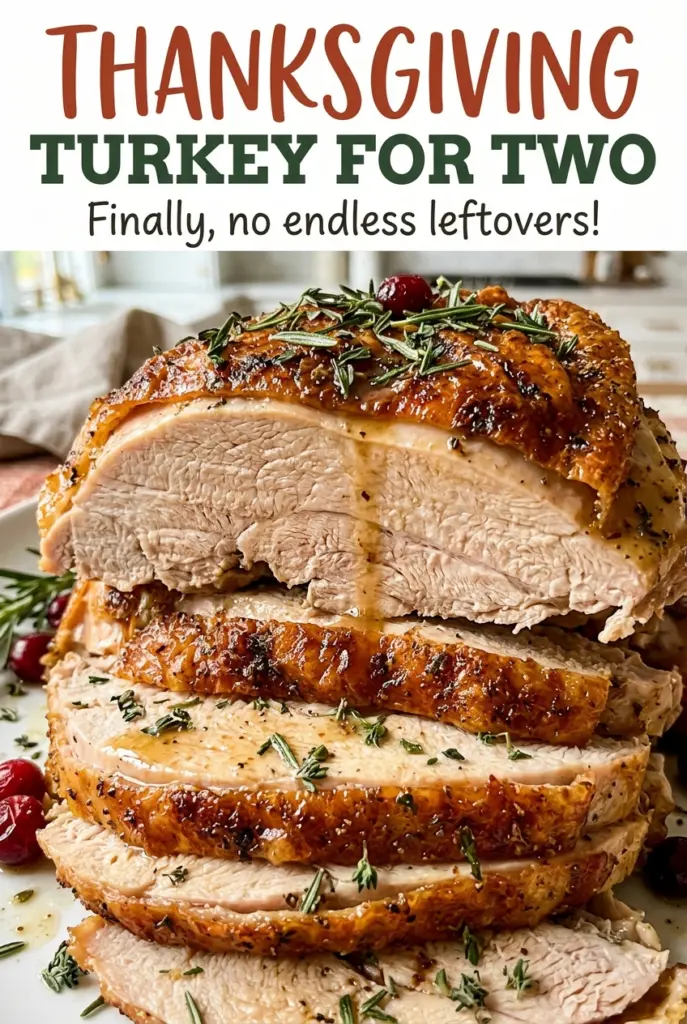
Thanksgiving Turkey for Two
The sage starts to smell warm and woodsy before the turkey is ready, and the skin gradually turns from pale to a deep golden brown. That’s the reassuring part of…
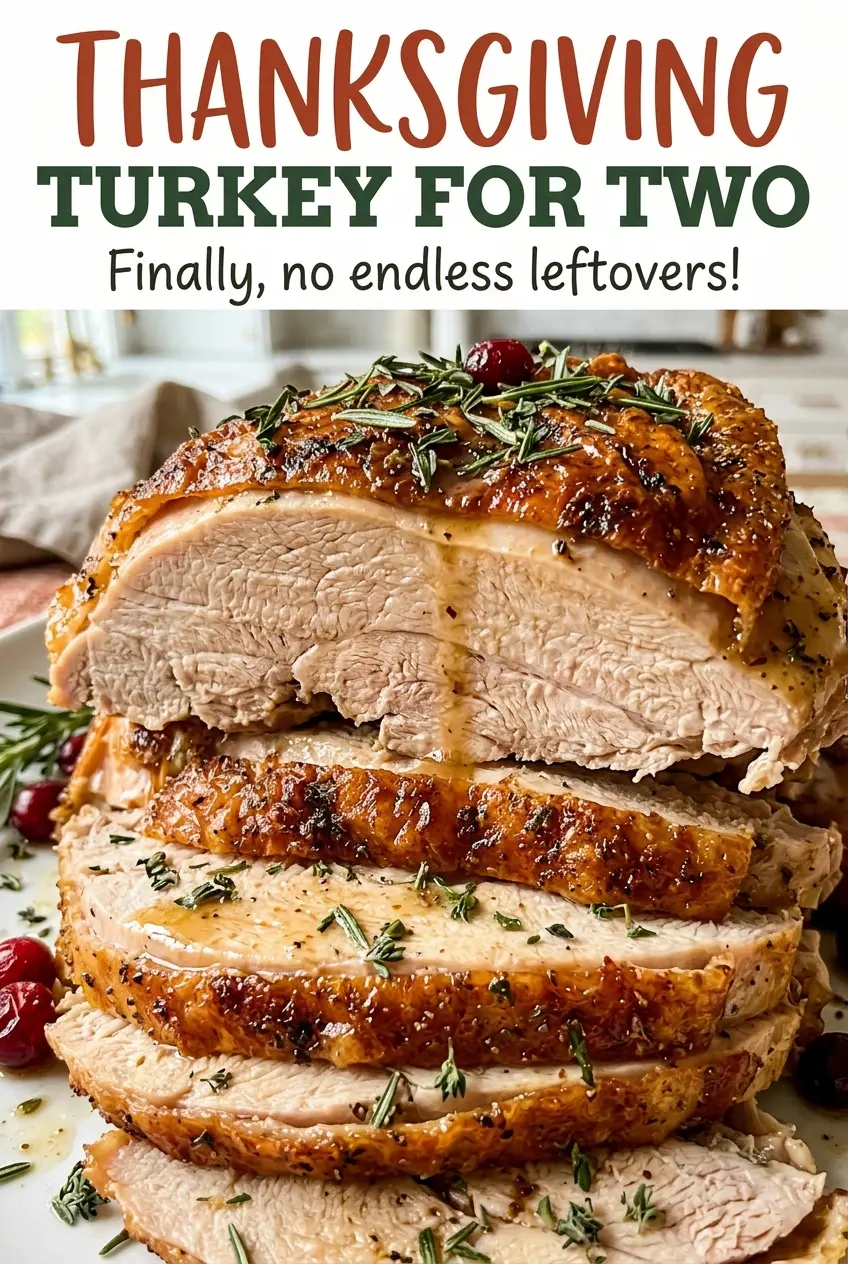
Tip: save now, cook later.The sage starts to smell warm and woodsy before the turkey is ready, and the skin gradually turns from pale to a deep golden brown. That’s the reassuring part of roasting a small bird: you can see the progress without opening the oven every few minutes. For Thanksgiving turkey for two, a bone-in breast gives you the classic roast-turkey feel without leaving you with a whole bird to manage.
I spread softened herb butter both under the skin and over the top, so the seasoning reaches the meat while the skin gets its own coat. Onion wedges lift the breast above the broth in the pan, and the open roasting lets the skin brown instead of trapping steam. Let the finished breast rest before carving; the slices come away more neatly, and the board stays less flooded with juices.
Kitchen Note
Use butter that’s soft enough to spread easily before you loosen the skin. Work gently with your fingers so the skin stays intact, then smooth the butter underneath rather than pushing it in one lump.
Save this Thanksgiving turkey for two for a smaller holiday table, with golden skin and fresh sage-and-thyme butter.
Why the Broth Belongs Around the Onion Bed, Not on the Turkey Skin
A little broth in the roasting pan might sound like a shortcut to moist meat, but the placement matters. The liquid goes around the onion wedges, underneath the turkey, while the skin stays exposed to the oven. Pouring broth over the breast would wet the very surface you want to turn golden.
The onion wedges do more than add flavor to the pan. They form a low bed for the breast, keeping it from sitting directly in the broth while the underside cooks. The broth and any drippings collect below, where they can take on the savory taste of the roast without bathing the top of the turkey.
That balance suits a single breast especially well: enough liquid at the bottom of the pan to support the onions, but a dry, uncovered top for browning. Keep the breast skin side up and let the oven do its work. If you’re used to pouring liquid over poultry before roasting, hold it back here; the pan’s moisture belongs beneath the skin, not on it.
What the Bone, Skin, and Fresh Herbs Contribute to a Two-Person Roast
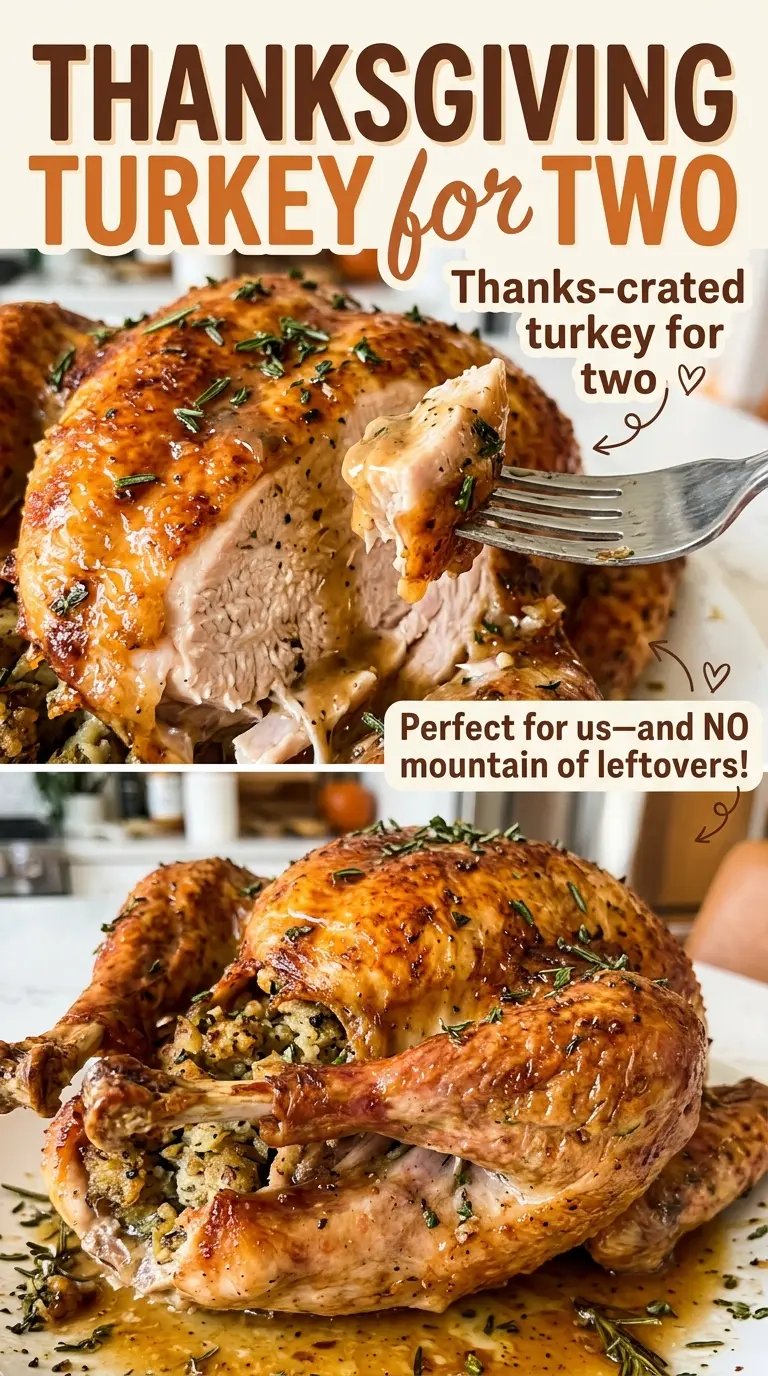
- Bone-in, skin-on turkey breast — The bone gives the breast its structure in the pan, while the skin browns and helps shield the meat’s surface as it roasts. Buy it fully thawed so it can roast evenly from the start. A boneless cut cooks differently, so it isn’t a direct swap for this timing.
- Unsalted butter — Softened butter carries the garlic and herbs and spreads beneath the skin without adding salt beyond what you measure into the mixture. A good-quality butter brings a fuller dairy taste, but a standard unsalted butter works well here. For a dairy-free version, use a stick-style plant-based butter; the flavor will be a little less rich.
- Fresh thyme and sage — These herbs give the butter its savory, woodsy character, and their fresh aroma comes through clearly against mild turkey. Choose leaves that look green and smell fragrant. Dried herbs are more concentrated and won’t taste as bright, so they aren’t a straight one-for-one replacement.
- Yellow onion and low-sodium chicken broth — The onion wedges make the roasting bed and lend their flavor to the pan liquid. Low-sodium broth gives that liquid a chicken-savory base while leaving the recipe’s measured salt in control. The broth doesn’t need to be an expensive specialty brand; a familiar low-sodium option is fine.
- Garlic — Minced garlic blends into the butter and seasons both the meat under the skin and the outside. Use a fresh clove for its clean, rounded flavor; garlic powder won’t distribute in the same way through this soft butter mixture.
From a Dry Surface to a Clean Carve: The Four Stages That Matter
Set Up the Roasting Pan
Heat the oven to 350°F with a rack in the middle position. Cut the onion into 1-inch wedges, arrange them in a 9×13-inch roasting pan, and pour the broth around them. Pat the fully thawed turkey dry, then set it skin side up on the onion bed. A dry surface gives the butter a better grip and lets the skin roast rather than steam.
Season Beneath and Above the Skin
Stir together the softened butter, minced garlic, chopped thyme, chopped sage, kosher salt, and black pepper until evenly combined. Gently loosen the turkey skin, then spread half of the mixture underneath it. Rub the rest over the skin in an even layer, including across the top and sides. If the butter gathers in one thick patch, smooth it out so the coating is more even.
Roast Until the Skin Is Golden
Roast the turkey uncovered for 1 1/2 to 2 hours. Look for golden-brown skin, then check the thickest part of the breast with a thermometer, taking care not to touch bone; it should read 165°F. The roast may finish sooner or later within that window depending on the breast, so use the thermometer reading rather than color alone to judge doneness. If the skin browns too quickly before the center is ready, tent the breast loosely with foil.
Rest Before Slicing
Move the turkey to a cutting board once it’s done and leave it to rest for 15 minutes before carving. The pause gives the meat time to settle after roasting, which helps the slices hold together instead of breaking apart as you cut. Use a sharp carving knife and steady strokes through the breast. Keep the board close by; a little juice will collect as the turkey rests.
Two Useful Ways to Adapt This Turkey Breast
Make It Dairy-Free With Plant-Based Butter
Replace the unsalted butter with an equal amount of softened, stick-style plant-based butter. It spreads under the skin and over the top in the same way, though the finished turkey will have less of the rounded, buttery flavor of dairy butter. Choose an unsalted version so the seasoning stays balanced.
Let Sage Lead the Herb Butter
For a more pronounced sage flavor, use a larger share of sage and a smaller share of thyme while keeping the total amount of fresh herbs the same. The result tastes earthier and more distinctly like a traditional holiday roast, without changing the roasting method.
Storage and Reheating
- Refrigerator: Store carved turkey in a covered, airtight container for 3 to 4 days. The skin will soften in the fridge, but the meat stays useful for sandwiches or another warm meal.
- Freezer: Freeze cooled slices in an airtight freezer container or bag for 2 to 6 months for best quality. Portioning the meat before freezing makes it easier to thaw only what you need.
- Reheating: Put slices in a covered baking dish with a small splash of broth and warm until the turkey reaches 165°F. Keep it covered; reheating uncovered can dry the lean breast meat before it warms through.
Questions That Come Up When Roasting Turkey for Two
Thanksgiving Turkey for Two
Ingredients
Equipment
Method
- Heat the oven to 350°F with a rack in the middle position.
- Arrange the onion wedges in a 9x13-inch roasting pan and pour the broth around them.
- Pat the turkey dry and set it skin side up on the onions.
- Mix the butter, garlic, thyme, sage, salt, and pepper.
- Gently loosen the turkey skin and spread half the butter mixture underneath.
- Spread the rest of the butter mixture over the skin.
- Roast uncovered for 1 1/2 to 2 hours, until the skin is golden brown and a thermometer inserted into the thickest part of the breast without touching bone reads 165°F.
- Tent loosely with foil if the skin browns too quickly.
- Transfer the turkey to a cutting board.
- Rest for 15 minutes before carving.
