
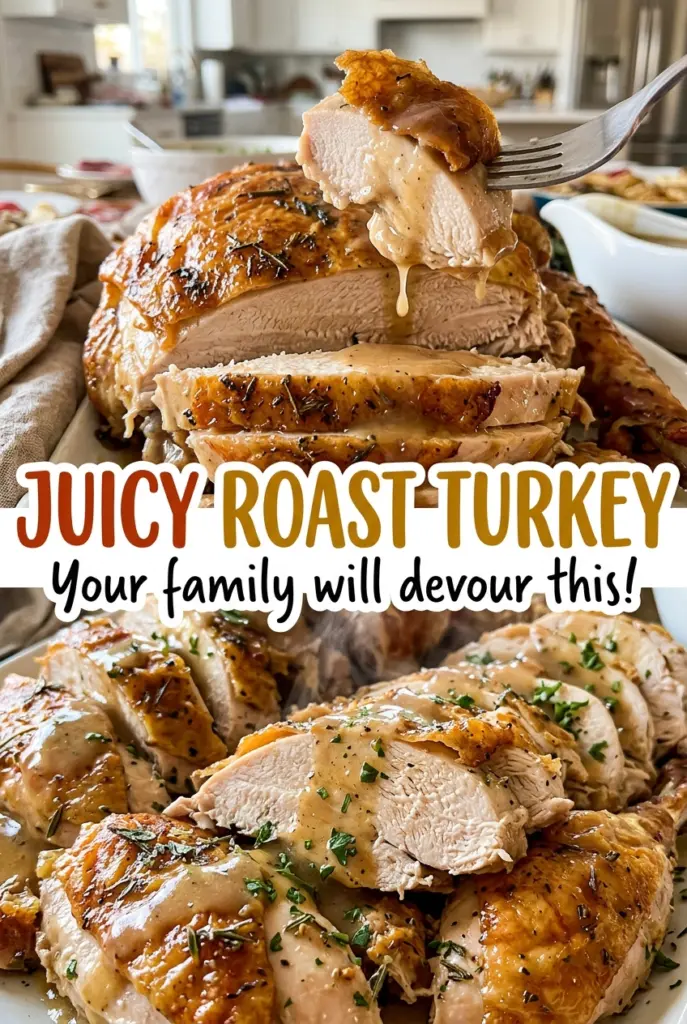
Juicy Roast Turkey
The salt has had its overnight turn in the refrigerator, and the turkey’s skin feels dry instead of slick when I reach for the butter. That small change in the…
Tip: save now, cook later.The salt has had its overnight turn in the refrigerator, and the turkey’s skin feels dry instead of slick when I reach for the butter. That small change in the surface is what helps this Juicy Roast Turkey brown well while the meat stays tender. I roast a fully thawed 12- to 14-pound bird on a rack, with softened herb butter worked under the breast skin and rubbed over the outside.
Leaving the salted turkey uncovered for 12 to 24 hours gives the seasoning time to work beyond the surface, and the refrigerator air dries the skin at the same time. I keep the cavity aromatics simple: quartered onion and lemon, tucked in loosely rather than packed tight. The result is savory meat, fragrant herbs, and a browned bird ready for the carving board.
Kitchen Note
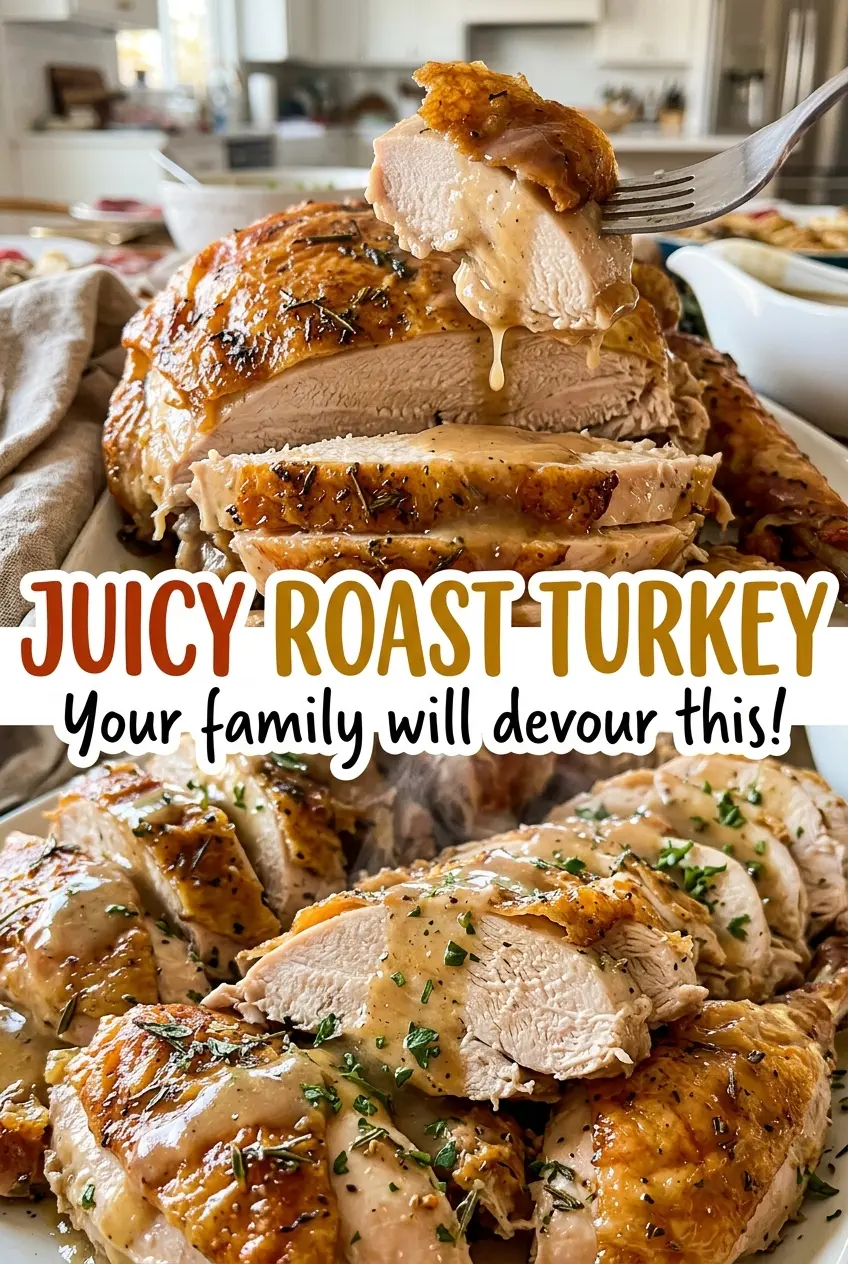
Give the turkey the full 30-minute rest before carving. I know it’s hard to wait when it’s just come out of the oven, but cutting too soon lets the juices run onto the board instead of staying in the meat.
Save this Juicy Roast Turkey for its overnight dry brine, herb butter, and tender slices at the carving board.
Why the Overnight Salt Needs an Uncovered Bird
Salt rubbed over the skin and inside the cavity has time to season more than the outermost layer during its refrigerator rest. The uncovered part matters, too: air circulating around the turkey helps the skin dry. Damp skin has to lose surface moisture before it can brown, so starting with a drier surface gives the oven a better chance to color it evenly.
This isn’t a wet brine, and you don’t need to rinse the turkey afterward. The salt stays on the bird while it rests, then the butter goes on before roasting. Keep the turkey on its rack in the roasting pan, breast-side up, so air can move around it rather than leaving the underside pressed against the pan. The full 12-to-24-hour window is useful planning time: salt it the day before, then it’s ready for butter and the oven when you are.
What the Butter, Herbs, and Cavity Aromatics Contribute
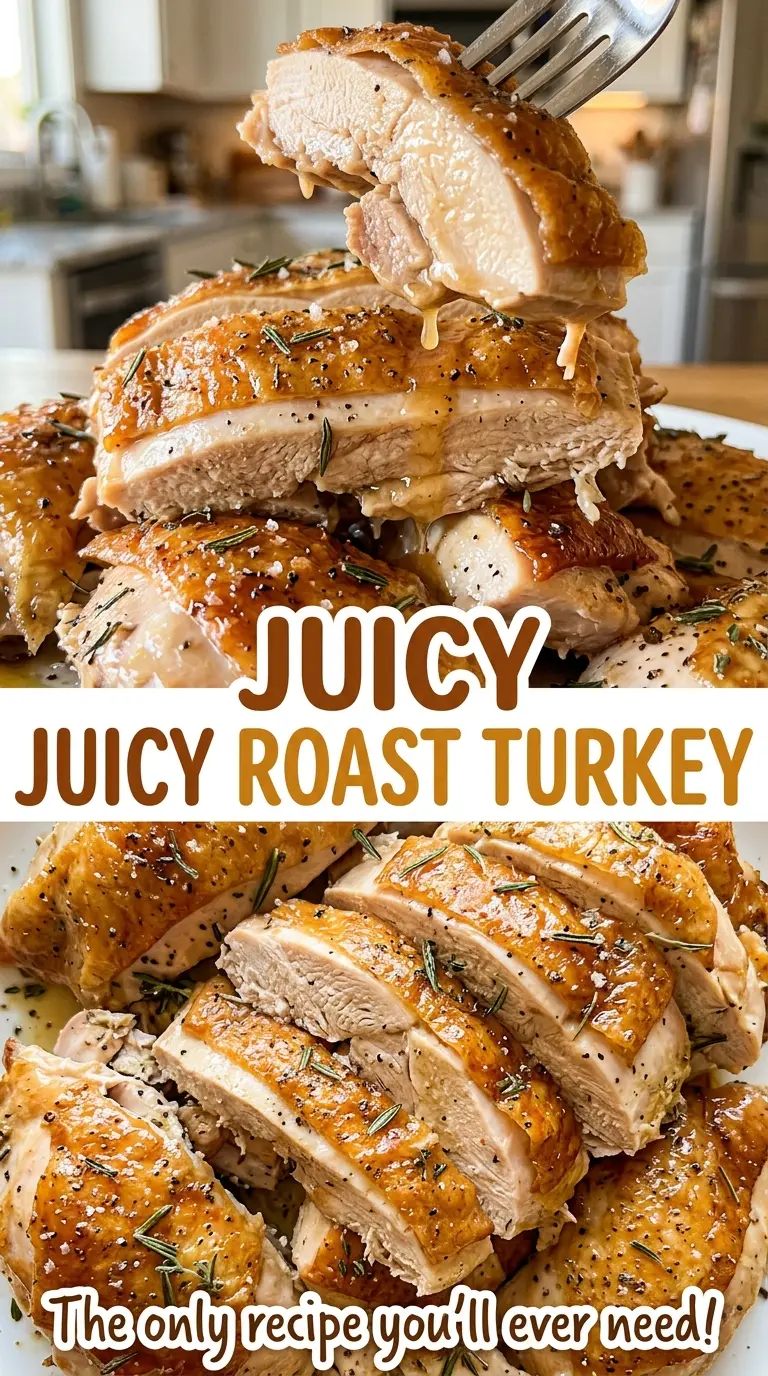
- Whole turkey — Start with a fully thawed bird in the specified 12-to-14-pound range. Thawing matters because a bird that is still icy in the center won’t cook on the same schedule as a fully thawed one. The size range is part of the timing, not a detail to overlook.
- Kosher salt — Its job is to season the skin and cavity during the long uncovered rest. Use kosher salt for the listed amount; a different salt has a different grain size and can make a direct swap taste saltier.
- Unsalted butter — Softened butter spreads without tearing the skin and carries the pepper and herbs across the bird. Unsalted butter also lets the kosher salt do the seasoning work without adding an unknown amount of salt from the butter.
- Fresh thyme and rosemary — Chopping them helps distribute their fragrant, savory notes through the butter. Fresh herbs bring a brighter character here than dried herbs, and there isn’t a direct swap in this ingredient set that keeps the same texture and flavor.
- Onion and lemon — Quartering both lets them sit loosely in the cavity and perfume the turkey as it roasts. They’re aromatics, not a tight stuffing; leaving room around them keeps the cavity from being packed full.
- Black pepper — It adds a little warm bite to the butter without competing with the fresh herbs. Freshly ground pepper has a more pronounced aroma, while ordinary ground black pepper works for even seasoning.
From Dry-Brined Skin to a Rested Carve
Salt the Bird and Let the Skin Dry
Remove the neck and giblets from the cavity, then pat the turkey dry. Rub kosher salt across the skin and inside the cavity, and set the turkey breast-side up on a rack in a 16-inch roasting pan. Refrigerate it uncovered for 12 to 24 hours; don’t cover it, since the exposed skin is meant to dry during that time.
Mix the Herb Butter
Heat the oven to 325°F. Stir the softened unsalted butter together with the black pepper, chopped thyme, and chopped rosemary until the herbs are distributed throughout. The butter should be soft enough to spread, not melted and running off the bird. If it’s still firm, give it a little time at room temperature before you work with it.
Butter Under the Skin and Fill the Cavity Loosely
Gently loosen the skin over the breast with your fingers, taking care not to tear it. Spread some of the herb butter underneath the skin, then rub the rest over the turkey’s exterior. Put the quartered onion and lemon loosely in the cavity; don’t cram them in or use them to pack the opening.
Roast Until Both Checks Reach Temperature
Roast for 3 to 3 3/4 hours. If the breast browns deeply before the turkey is done, lay foil loosely over the breast so it doesn’t darken further while the rest continues cooking. Check the thickest part of the breast and the innermost thigh with a thermometer, keeping the probe away from bone. Both readings need to reach 165°F; the clock alone can’t tell you whether the center is ready.
Rest Before You Carve
Move the turkey to a carving board and leave it to rest for 30 minutes before carving. Keep the bird intact during that rest rather than slicing into it to check the meat. Once the rest is over, carve and serve; the board gives you room to work without trying to steady the hot roasting pan.
Choosing the Bird Size That Fits Your Table
Choose a 12-pound bird for a more compact roast
The lower end of the listed size range is a practical choice when you want a little more room in the oven or less extra meat afterward. Keep the same dry-brining and herb-butter method, and use the thermometer rather than assuming the smaller bird is finished at a particular point in the roasting window.
Choose a 14-pound bird when leftovers matter
The larger bird stays within the recipe’s stated range and gives you more meat to carve for the table and save afterward. It still belongs in the same 16-inch roasting pan, and its doneness depends on the thermometer readings, not simply on choosing the longest time on the clock.
Storage and Reheating
- Refrigerator: Refrigerate carved leftovers within 2 hours and use them within 3 to 4 days. The meat will lose some of its just-roasted crispness once chilled, but it stays suitable for reheating.
- Freezer: Freeze carved turkey in airtight portions for 2 to 6 months for best quality. Smaller portions thaw and reheat more evenly than freezing the whole bird.
- Reheating: Warm portions in a covered oven-safe dish until steaming hot throughout. Reheat only what you plan to eat; repeated warming dries the meat out.
Questions That Come Up Before the Turkey Goes in the Oven
Juicy Roast Turkey
Ingredients
Equipment
Method
- Remove the neck and giblets from the turkey cavity, then pat the turkey dry.
- Rub the salt all over the skin and inside the cavity.
- Set the turkey breast-side up on a rack in a 16-inch roasting pan and refrigerate uncovered for 12 to 24 hours.
- Heat the oven to 325°F.
- Stir together the softened butter, black pepper, thyme, and rosemary.
- Loosen the skin over the breast and spread some herb butter underneath it.
- Rub the remaining butter over the turkey.
- Put the onion and lemon loosely in the cavity.
- Roast for 3 to 3 3/4 hours, tenting the breast loosely with foil if it browns deeply before the turkey is done, until a thermometer inserted in the thickest part of the breast and the innermost thigh without touching bone reads 165°F.
- Transfer the turkey to a carving board and rest for 30 minutes before carving.
