
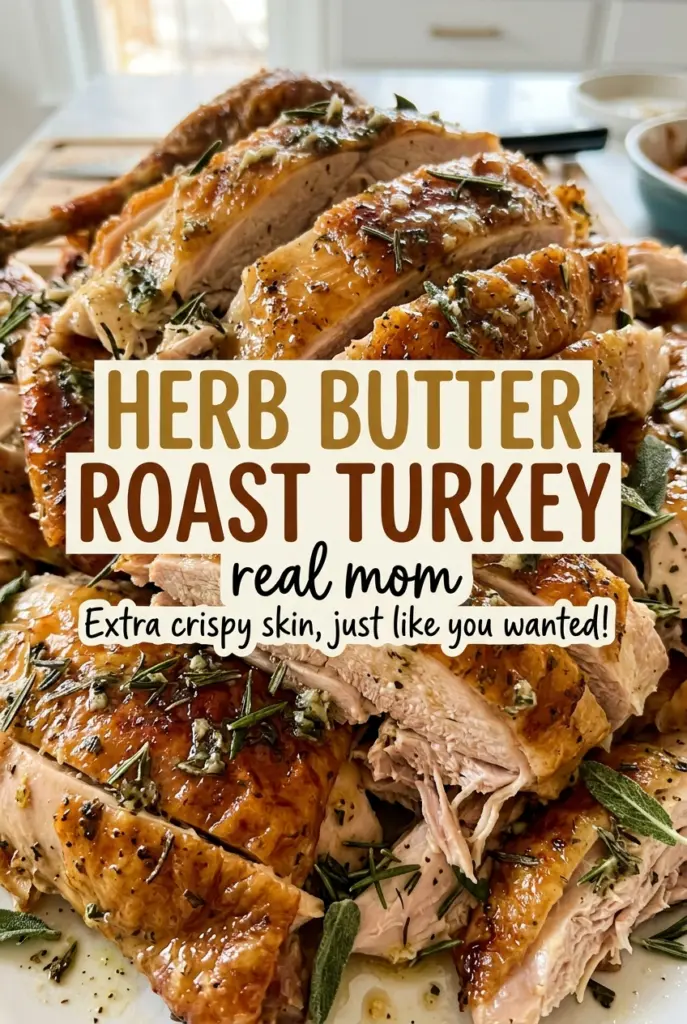
Herb Butter Roast Turkey
The herb leaves cling to the softened butter as I stir, and that’s the first sign this roast is going to have seasoning in every bite, not just on the…
Tip: save now, cook later.The herb leaves cling to the softened butter as I stir, and that’s the first sign this roast is going to have seasoning in every bite, not just on the skin. For Herb Butter Roast Turkey, I work the rosemary, thyme, sage, and garlic into the butter before it goes anywhere near the bird. A 12- to 14-pound turkey gives the mixture plenty of surface to cover, and the onion and lemon in the cavity add a gentle aromatic note while it roasts.
I use unsalted butter so the kosher salt can be measured into the herb mixture, rather than relying on whatever salt happens to be in a butter wrapper. The butter goes both under the skin and over the outside, which gives the breast and thighs direct contact with the herbs while still coating the skin. With the turkey roasted at 325°F and rested before carving, the result is savory, fragrant meat beneath crisping, deeply browned skin.
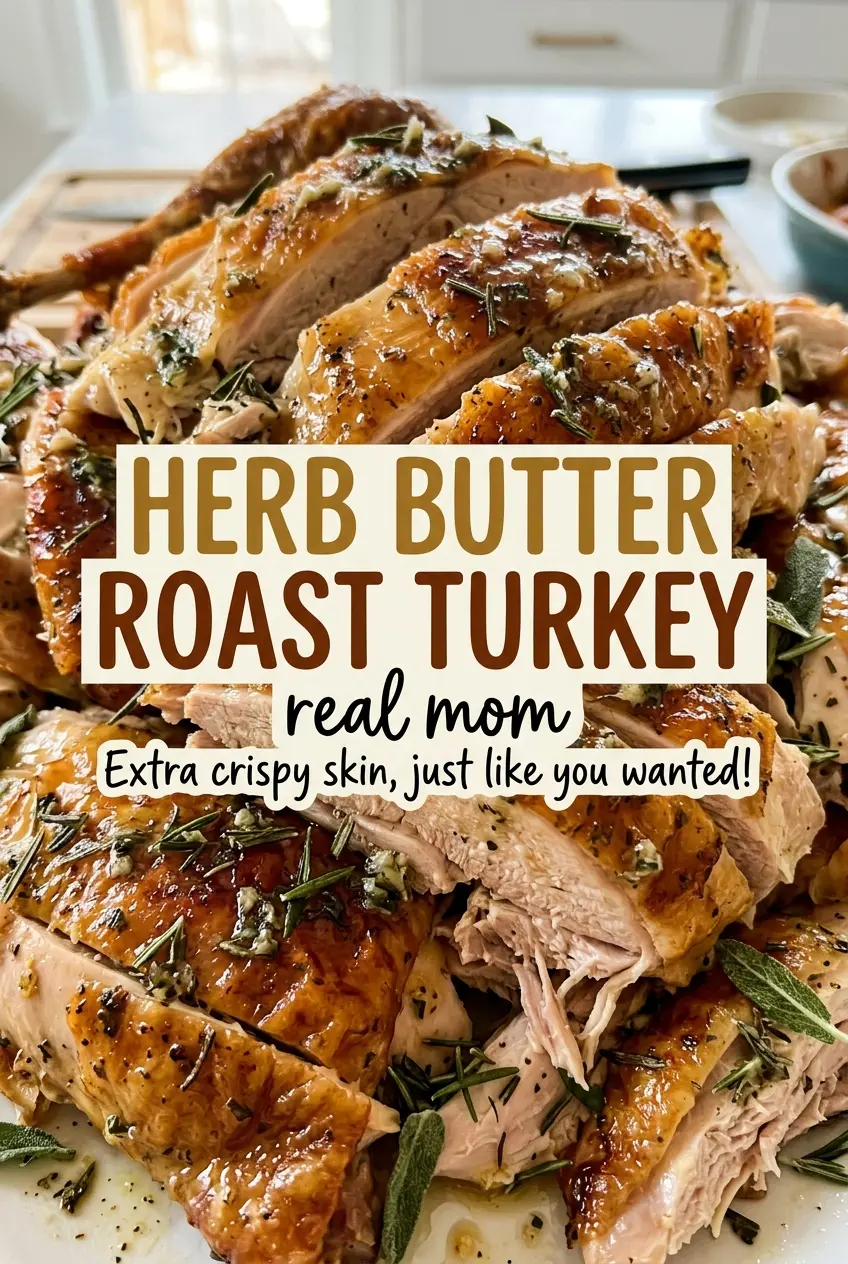
Kitchen Note
Softened butter spreads without tearing the skin or dragging the herbs into clumps. If it still feels firm when you stir it, give it more time to soften before you start rubbing it onto the turkey.
Save Herb Butter Roast Turkey for a holiday table or a dinner for ten, with rosemary, thyme, and sage tucked into every layer.
Why Herb Butter Belongs Under the Turkey Skin, Not Just on Top
Butter on the outside seasons the skin, but it can’t do the same job as butter placed directly against the meat. The skin forms a barrier, so an all-over coating leaves much of the breast and thigh dependent on seasoning that has to travel through that layer. Loosening the skin creates room for the herb butter to sit against the meat itself, where its garlic and chopped herbs are close to the part you’ll carve and serve.
Using both placements matters. The butter under the skin gives the meat contact with the seasoned mixture, while the butter on the outside coats the skin as it roasts. I spread it over both the breast and thighs rather than concentrating it on the breast alone; that way, the darker meat gets its share of the rosemary, thyme, and sage, too. This is a useful distinction with a whole bird: a pretty exterior is welcome, but seasoning the meat beneath it is what makes the carving taste considered from edge to center.
How the Butter, Fresh Herbs, and Aromatics Shape This Roast
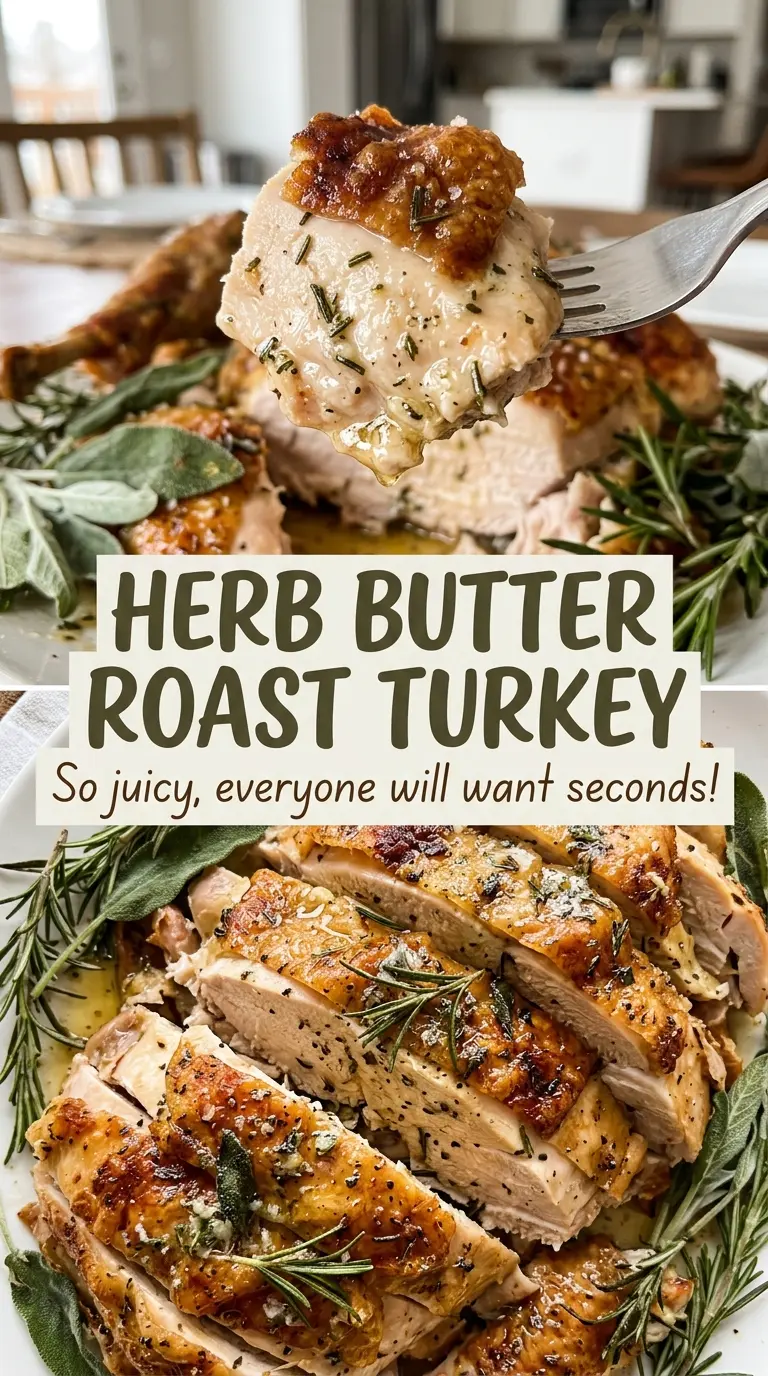
- Unsalted butter — It carries the garlic and herbs and lets you control the salt in the mixture. Choose butter that softens easily; there’s no like-for-like replacement among the listed ingredients, and a non-dairy spread would change how the coating behaves.
- Rosemary, thyme, and sage — Freshly chopped leaves bring separate piney, earthy, and savory notes, and they distribute through the butter better when finely chopped. Use herbs that look fresh and green; dried herbs won’t give the same texture. If you’re missing one, leave that herb out rather than trying to match it with an unmeasured dried substitute.
- Garlic — Minced garlic spreads through the butter so you don’t get a large piece in one spot. If you need a garlic-free version, omit it instead of replacing it with another ingredient.
- Whole turkey — The weight range matters because it’s tied to the roasting window here. Start with a fully thawed bird with the giblets and neck removed, then pat the skin dry so the butter can coat it rather than slide over moisture.
- Yellow onion and lemon — The quartered onion and halved lemon go inside the cavity as aromatics. A fresh lemon is worth choosing because its cut surface releases fragrance; there isn’t a direct ingredient-for-ingredient replacement needed for the onion.
From Herb Butter to a Rested, Carvable Turkey
Stir the herbs into the softened butter
In a medium bowl, stir the butter with the minced garlic, chopped rosemary, thyme, and sage, kosher salt, and black pepper until evenly combined. Scrape the sides and bottom as you mix so the salt and herbs don’t collect in one patch. The finished butter should look evenly flecked, with no large pocket of plain butter. If the butter is too firm to stir smoothly, let it soften more before continuing.
Dry the turkey and loosen the skin
Heat the oven to 325°F and set a rack in a large roasting pan. Pat the fully thawed turkey dry with paper towels; a damp surface makes the butter harder to spread evenly. Gently work your fingers beneath the skin over the breast and thighs to loosen it. Move slowly rather than forcing your fingers through a spot that resists, since tearing the skin makes it harder to keep the butter in place.
Season under and over the skin
Rub about half of the herb butter beneath the loosened skin over the breast and thighs, spreading it out instead of leaving one thick mound. Rub the remaining butter across the turkey’s exterior. Put the quartered onion and halved lemon in the cavity, tuck the wing tips under the body, and loosely tie the legs together with kitchen twine. Set the turkey breast-side up on the roasting-pan rack.
Roast until both readings are right
Roast at 325°F for 3 to 3 3/4 hours, loosely tenting the turkey with foil if the skin browns too quickly. Check the thickest part of the breast and the innermost part of the thigh with a thermometer, keeping the tip away from bone. The turkey is ready when both spots read 165°F; don’t judge doneness by skin color alone. If one spot hasn’t reached that reading, return the bird to the oven and check again.
Rest before carving
Transfer the turkey to a cutting board and tent it loosely with foil. Let it rest for 30 minutes before carving so the juices have time to settle rather than running out as soon as you cut. Keep the tent loose; a tight wrap traps more steam against the skin. Once rested, carve and serve.
Two Small Changes That Shift the Herb Butter
Make the butter lower in sodium
Use less kosher salt in the herb butter or leave it out. The turkey will taste less seasoned, but the garlic and fresh herbs still coat it in the same way; this change doesn’t alter the roasting method.
Leave out the garlic
For a gentler herb butter, omit the minced garlic and keep the rosemary, thyme, and sage. The roast will have a cleaner herbal taste, with no change to how you coat or cook the turkey.
Storage and Reheating
- Refrigerator: Store carved turkey in an airtight container for 3 to 4 days. The skin will soften as it sits.
- Freezer: Freeze carved portions in airtight, freezer-safe packaging for 2 to 6 months for best quality. Thaw in the refrigerator before reheating.
- Reheating: Warm sliced turkey covered in a microwave-safe dish in short intervals, until it reaches 165°F throughout. Avoid leaving it uncovered for a long stretch in the microwave, which dries the edges before the middle is hot.
Questions That Come Up Before the Turkey Goes in the Oven
Herb Butter Roast Turkey
Ingredients
Equipment
Method
- Stir together the butter, garlic, rosemary, thyme, sage, salt, and pepper in a medium bowl until evenly combined.
- Heat the oven to 325°F.
- Set a rack in a large roasting pan.
- Pat the turkey dry with paper towels.
- Gently loosen the skin over the breast and thighs with your fingers.
- Rub about half the herb butter under the skin over the breast and thighs.
- Rub the remaining butter over the outside of the turkey.
- Put the onion and lemon in the turkey cavity.
- Tuck the wing tips under the body.
- Loosely tie the legs together with kitchen twine.
- Set the turkey breast-side up on the roasting-pan rack and roast at 325°F for 3 to 3 3/4 hours, loosely tenting with foil if the skin browns too quickly, until a thermometer reads 165°F in the thickest part of the breast and the innermost part of the thigh without touching bone.
- Transfer the turkey to a cutting board and tent loosely with foil.
- Rest for 30 minutes before carving.
