
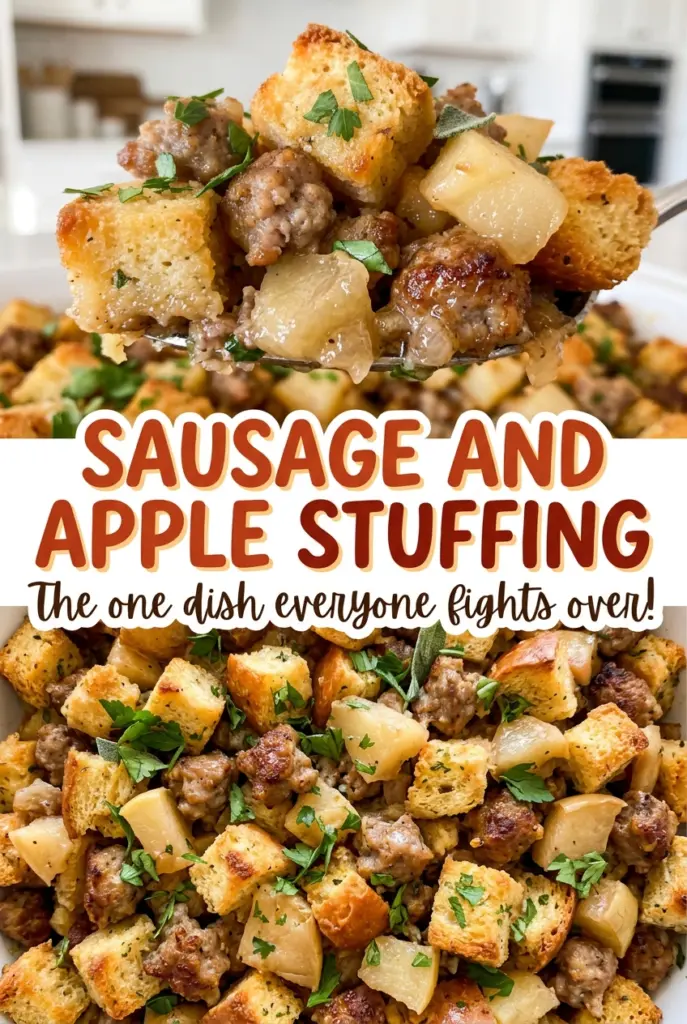
Sausage and Apple Stuffing
The bread cubes should feel crisp when they come out of the oven, not just a little stale around the edges. I learned to give them the full drying time…
Tip: save now, cook later.The bread cubes should feel crisp when they come out of the oven, not just a little stale around the edges. I learned to give them the full drying time because soft bread can turn a pan of sausage and apple stuffing heavy before it ever reaches the table. Dry cubes take in the broth and egg without collapsing, so the finished center stays tender while the top gets golden.
I cook the sausage first, then use that same skillet for the onion, celery, and apple. The vegetables soften in the butter alongside the browned bits left behind by the sausage, and the sage and thyme settle into that savory base. Toss everything gently with the bread so the pieces stay intact, then bake until the center is set and the top has a little crunch.
Kitchen Note
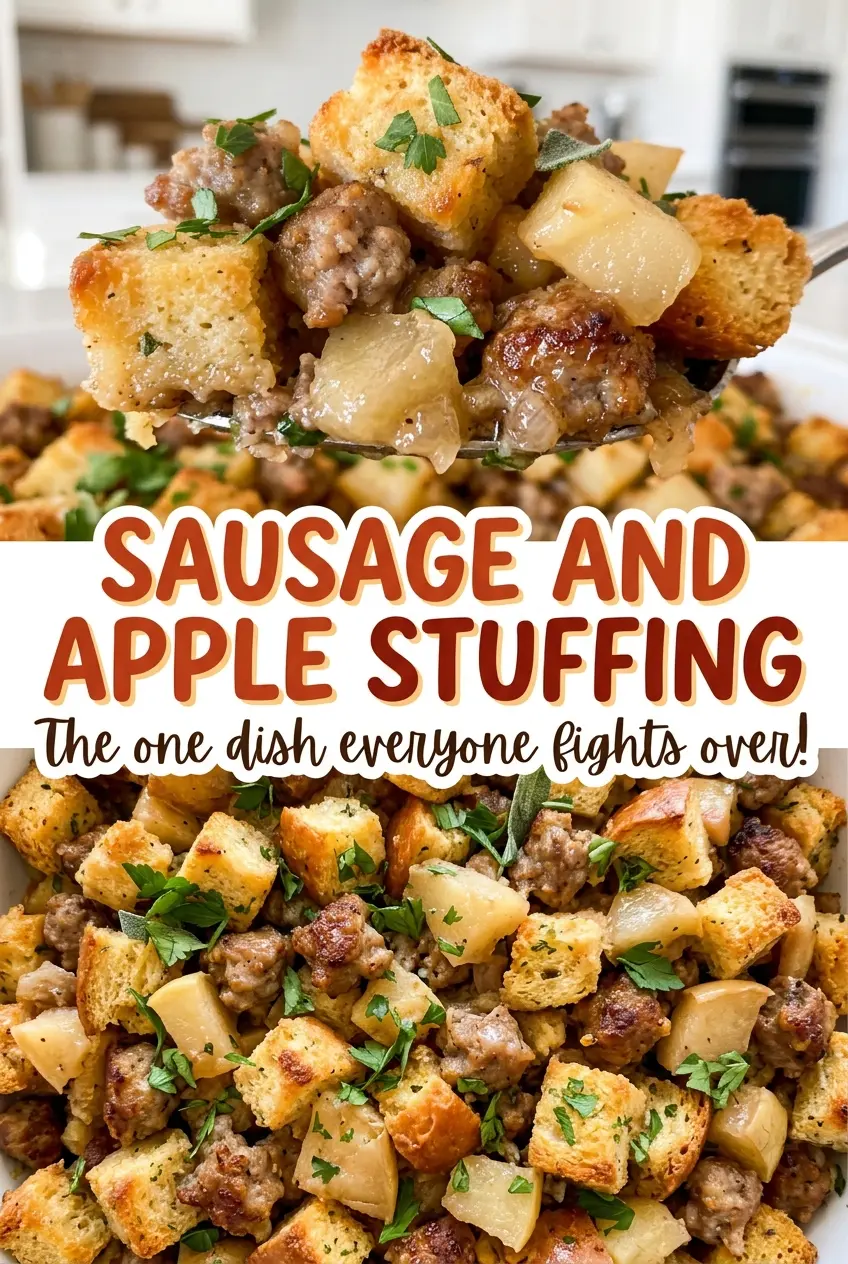
Keep the sausage drippings and browned bits right in the skillet when you add the butter and vegetables. That same-pan base gives the onion, celery, and apple a deeper savory flavor without adding another step.
Save this Sausage and Apple Stuffing for its crisp golden top, tender bread, and savory-sweet mix of pork sausage and tart apple.
Why Soft Bread Makes Stuffing Heavy Before It Even Bakes
Fresh bread can look like the convenient choice, but it holds a lot more moisture than dried bread cubes. Once broth and egg go in, soft cubes absorb liquid quickly and begin to break down as you toss them. The casserole can bake through and still feel dense, with fewer distinct, tender pieces of bread.
Drying the cubes first gives you control over how much liquid they take up. Spread them in a single layer on a rimmed baking sheet and stir once while they bake at 300°F for 25 to 35 minutes. They should feel dry and crisp, not browned like toast. If some pieces are still soft in the middle, give them more time before mixing; unevenly dried cubes absorb the broth at different rates.
The goal after adding the broth-and-egg mixture is even moisture, not a puddle at the bottom of the bowl. Toss gently so the cubes stay whole, then transfer the mixture to the baking dish. The finished stuffing has a soft, cohesive middle and a browned surface instead of a compact, soggy layer.
How the Tart Apple and Breakfast Sausage Balance the Bread
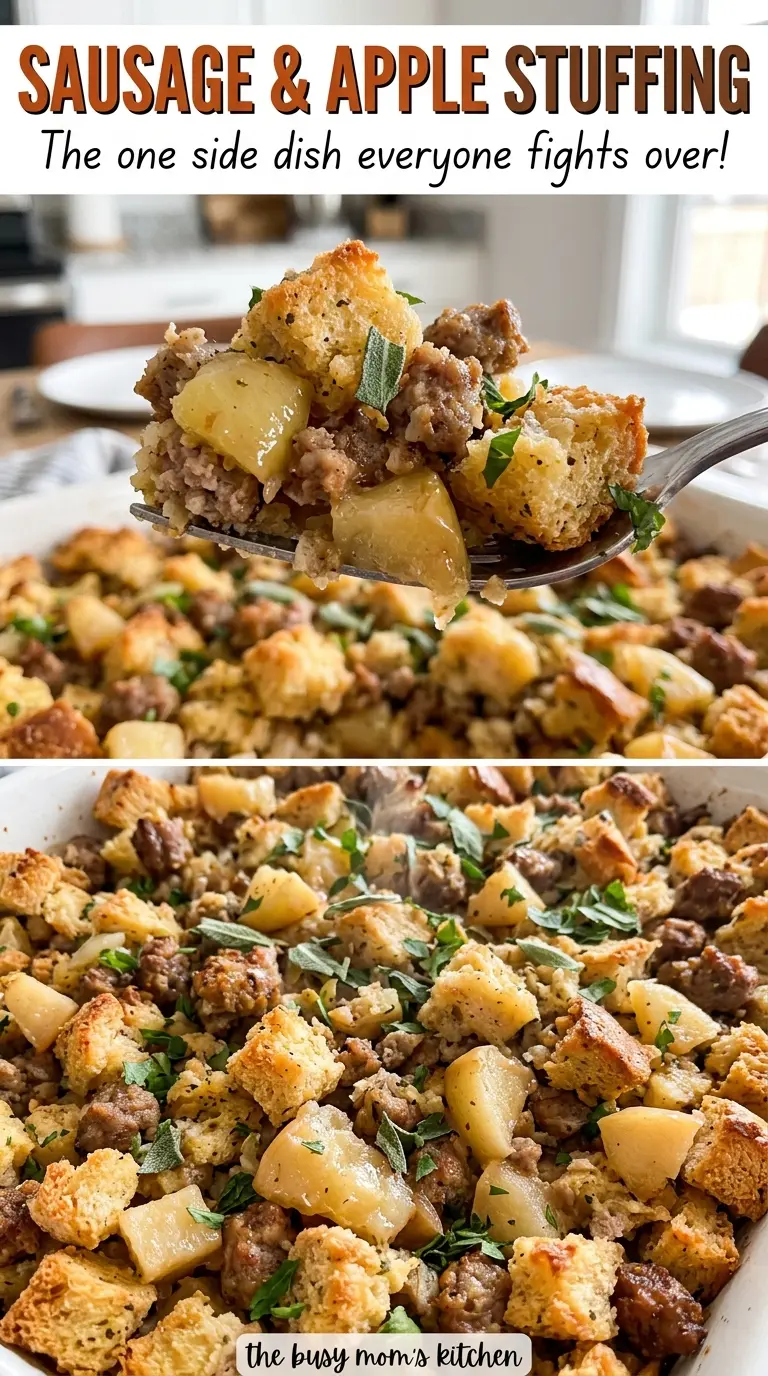
- Bulk pork breakfast sausage — It seasons the stuffing from the inside, bringing savory richness to the bread and vegetables. Use bulk sausage rather than links so it breaks into small pieces in the skillet. A familiar grocery-store breakfast sausage works well; its seasoning is already built in.
- Tart apple — A peeled, diced Granny Smith or another tart apple brings a bright note that cuts through the rich sausage and butter. Peel it so the pieces soften into the stuffing rather than leaving chewy bits of skin. Granny Smith is an easy, dependable choice.
- Bread cubes — A sturdy loaf gives you pieces that hold their shape when tossed with broth. The bread doesn’t need to be expensive or artisan-made; even, well-dried cubes matter more than the label. Sourdough works if you like a tangier background flavor.
- Chicken broth and eggs — Broth seasons and moistens the bread, while the eggs help the mixture hold together as it bakes. Low-sodium broth lets the sausage and measured salt stay in balance. Whisk the eggs thoroughly into the broth before pouring it over the bread.
- Fresh parsley and dried herbs — Dried sage and thyme give the skillet mixture its warm, savory character, while fresh parsley adds a clean finish. Chop the parsley shortly before using it so it stays fresh-looking in the broth mixture.
- Unsalted butter — It softens the vegetables and carries the sage and thyme through the skillet. Unsalted butter keeps the salt level easier to control because the sausage contributes seasoning of its own.
From Crisp Bread Cubes to a Set, Golden Center
Dry the Bread Until the Centers Feel Crisp
Heat the oven to 300°F and spread the bread cubes across a rimmed baking sheet. Bake for 25 to 35 minutes, stirring once, until the cubes feel dry and crisp rather than soft in the middle. Keep an eye on color: they need to dry, not toast deeply. While they bake, grease a 9×13-inch baking dish with 1 tablespoon of butter and raise the oven to 350°F.
Brown the Sausage in Small Pieces
Set a 12-inch skillet over medium-high heat and cook the bulk pork breakfast sausage for 8 to 10 minutes. Break it up as it cooks so you get small browned pieces throughout the dish instead of a few large clumps. The sausage should be browned and cooked to 160°F. Transfer it to a large bowl with the dried bread cubes, leaving the browned bits in the skillet.
Soften the Vegetables and Apple in the Same Skillet
Melt the remaining 4 tablespoons of butter in the skillet, then add the diced onion, celery, and apple along with the sage, thyme, salt, and pepper. Cook for 6 to 8 minutes, stirring occasionally, until the vegetables have softened. The apple should begin to lose its firm raw look but still hold its shape. Add the skillet mixture to the bowl with the sausage and bread.
Moisten Gently, Then Bake Covered and Uncovered
Whisk the broth and eggs in a medium bowl, stir in the chopped parsley, and pour the mixture over the bread. Toss gently until the bread is evenly moistened; rough stirring can crush the cubes into a dense mass. Transfer everything to the prepared dish, cover with foil, and bake for 30 minutes, then uncover and bake for 15 to 20 minutes more. The top should be golden and the center should reach 165°F; let the stuffing rest for 10 minutes before serving.
Two Ingredient Swaps That Change the Character of the Stuffing
Use Gluten-Free Bread for a Gluten-Free Pan
Replace the bread with gluten-free bread cubes, keeping the same 12-cup volume. Dry them until crisp just as you would regular bread; gluten-free loaves can vary in texture, so use the feel of the cubes rather than their color to judge when they’re ready. The stuffing will still have a tender middle, though the bread’s texture may be a little different.
Choose Sourdough for a Tangier, More Savory Bite
Use sourdough for the bread cubes if you want a sharper flavor against the sweet-tart apple. Cut it into the same 3/4-inch cubes and dry it until crisp; a sturdy loaf keeps its shape through the gentle toss. The sourdough tang comes through more clearly, so the finished stuffing tastes a little less mild.
Storage and Reheating
- Refrigerator: Store leftovers covered in the refrigerator and use within 3 to 4 days. The bread softens as it sits, so the top won’t stay as crisp.
- Freezer: Freeze cooled portions in airtight containers for up to 3 months. Thaw them in the refrigerator before reheating; the texture may be softer than freshly baked stuffing.
- Reheating: Warm covered in a 350°F oven until hot throughout. Add a small splash of chicken broth if the edges look dry, and uncover near the end if you’d like to bring back some crispness. Reheating uncovered from the start can dry the surface before the middle is warm.
Questions That Come Up While Making Sausage and Apple Stuffing
Sausage and Apple Stuffing
Ingredients
Equipment
Method
- Heat the oven to 300°F and spread the bread cubes on a rimmed baking sheet. Bake for 25 to 35 minutes, stirring once, until dry and crisp.
- Raise the oven temperature to 350°F and grease a 9x13-inch baking dish with 1 tablespoon of the butter.
- Cook the sausage in a 12-inch skillet over medium-high heat for 8 to 10 minutes, breaking it into small pieces, until browned and cooked to 160°F.
- Transfer the sausage to a large bowl with the dried bread cubes.
- Melt the remaining 4 tablespoons butter in the skillet.
- Add the onion, celery, apple, sage, thyme, salt, and pepper, and cook for 6 to 8 minutes, stirring occasionally, until the vegetables soften.
- Add the vegetable mixture to the bowl.
- Whisk the broth and eggs in a medium bowl, then stir in the parsley.
- Pour the broth mixture over the bread mixture and toss gently until evenly moistened.
- Transfer the stuffing to the prepared baking dish and cover with foil.
- Bake for 30 minutes.
- Uncover and bake for 15 to 20 minutes more, until the top is golden and the center reaches 165°F.
- Rest for 10 minutes before serving.
