
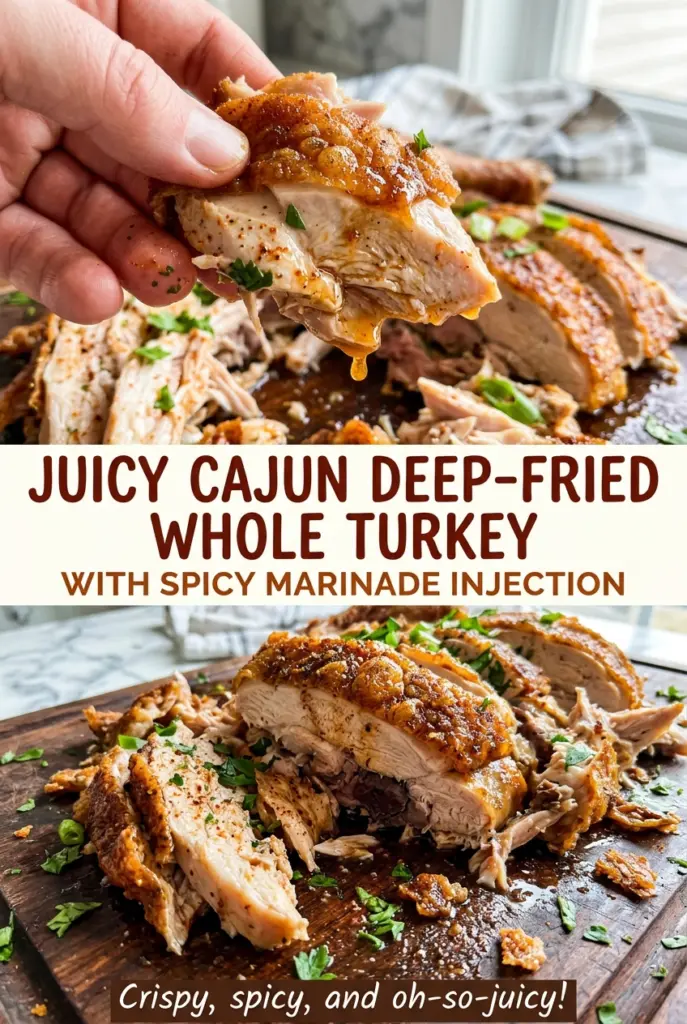
Juicy Cajun Deep-Fried Whole Turkey with Spicy Marinade Injection
The oil line climbs quickly when a whole turkey goes into the pot, so guessing at the fill level isn’t worth the risk. I test the level with cold water…
Tip: save now, cook later.The oil line climbs quickly when a whole turkey goes into the pot, so guessing at the fill level isn’t worth the risk. I test the level with cold water and this exact bird before the oil ever heats; that simple check is especially important with a 12- to 14-pound turkey. This Cajun deep-fried turkey serves 10, with spicy butter injected through the meat and a savory rub on the skin and inside the cavity.
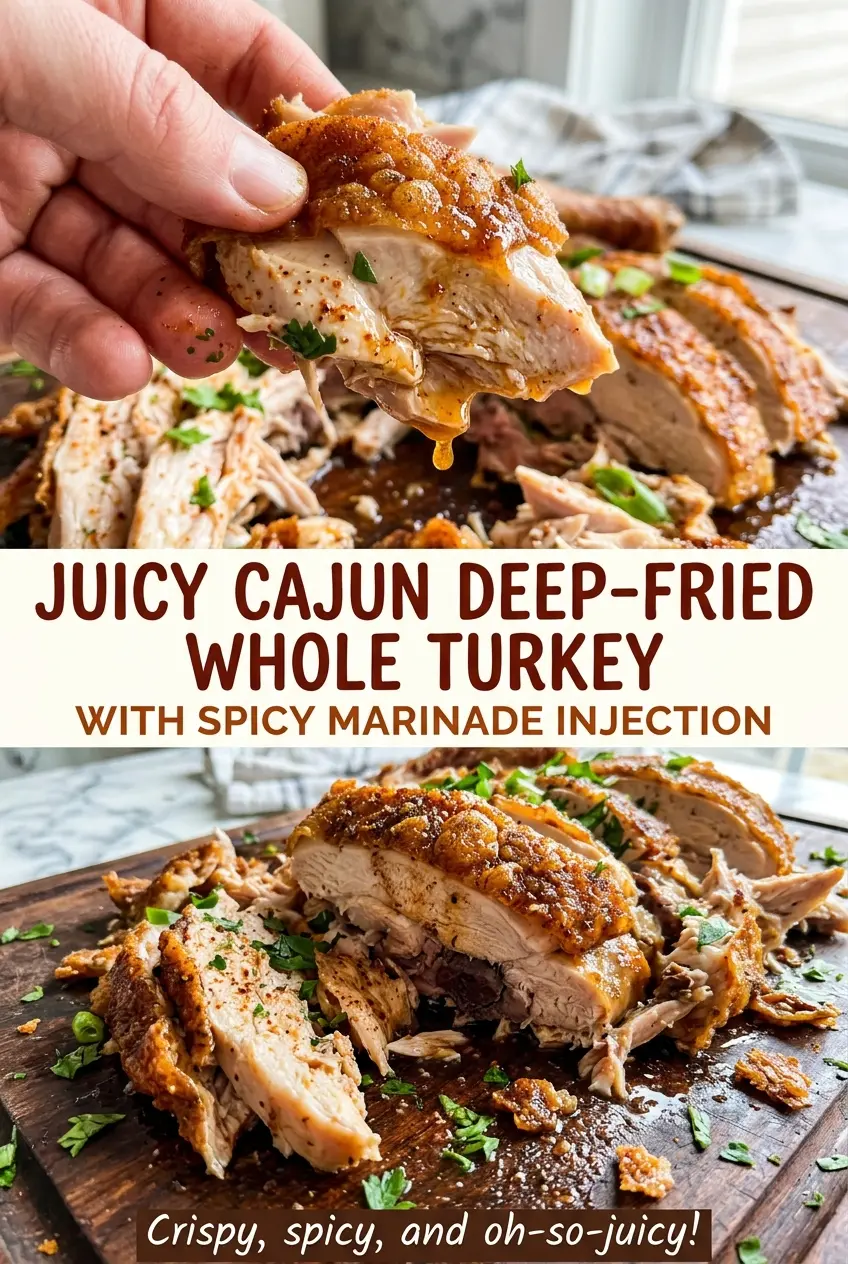
The injection adds seasoning beyond the surface, but it needs to be cool enough to handle and worked into several spots slowly. I use the full mixture across the breasts, thighs, and drumsticks, then dry the outside again before the rub goes on. That last pat-down matters before frying. The result is a deeply seasoned bird with crisp, browned skin and juicy meat.
Kitchen Note
Turn the burner off before lowering the turkey, and don’t rush to relight it. Wait until the bubbling settles and the oil level is stable; that pause makes this part much more controlled.
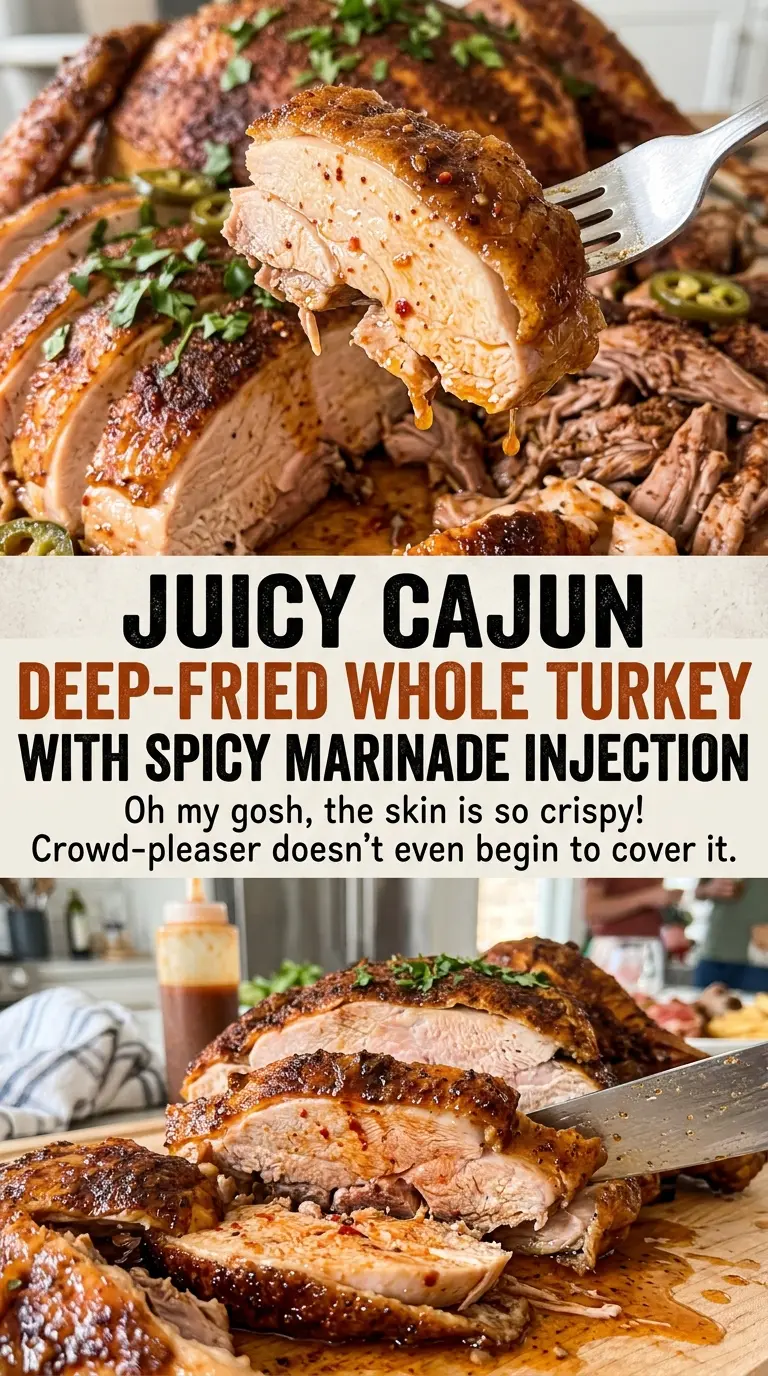
Save this Cajun deep-fried turkey for its spicy butter injection, boldly seasoned skin, and juicy slices.
Why the Fill-Line Test Matters More Than the Turkey’s Weight
A turkey’s weight gives you a useful starting point, but it can’t tell you exactly where the oil will rise in your fryer. Bird shape varies, and the oil level changes as soon as the turkey is lowered into the pot. The cold-water test measures the space this particular turkey takes up in this particular fryer. That’s much more reliable than filling the pot by eye or assuming a certain number of gallons will fit.
The test also catches a mismatch before you heat several gallons of oil. If the marked level sits above the fryer’s maximum-fill line, don’t try to make it work by pouring in less oil; use a smaller turkey or a larger fryer instead. A level cooking spot matters, too, because a tilted pot can make the oil level uneven. Set the outdoor fryer on level, noncombustible ground, well away from buildings, decks, trees, and overhangs. This is an outdoor job, never an indoor or garage one.
What the Butter Injection and Cajun Rub Each Bring
- Whole turkey — Start with a completely thawed bird in the listed 12- to 14-pound range, with the giblets and neck removed. The size is tied to fryer capacity, so the water-level test still decides whether your turkey fits safely.
- Peanut oil — It’s the frying medium for this recipe and needs to reach the fryer’s marked level. Use oil suitable for deep frying; a low-heat cooking oil isn’t a safe stand-in for sustained frying temperatures. There’s no reason to buy a premium brand if the oil is fresh and appropriate for the fryer.
- Butter and chicken broth — Melted butter carries richness through the injection, while room-temperature broth helps it whisk into a smooth mixture. Use unsalted butter so the rub’s kosher salt remains the main source of salt in the seasoning.
- Louisiana-style hot sauce and cayenne — Together they give the injection its heat. The hot sauce brings its own seasoned tang, while cayenne adds a more direct kick; they aren’t identical, so omitting one changes the balance.
- Paprika, garlic powder, and onion powder — These form the savory, full-bodied base of the rub and help it coat the turkey evenly. Ordinary grocery-store spices work; freshness matters most when a jar has been open long enough to lose its aroma.
- Dried thyme, dried oregano, kosher salt, and black pepper — The herbs give the rub its familiar Cajun character, and the salt seasons both the exterior and cavity. Keep the dried herbs and spices dry as you measure and mix so the rub stays easy to distribute.
How to Get the Turkey into the Oil Without Guesswork
Mark the Oil Level with the Turkey in Place
Set the 30-quart outdoor fryer on level, noncombustible ground well away from buildings, decks, trees, and overhangs. Put the turkey on its rack in the empty pot, then add cold water until the bird is covered by about 1 inch. Lift the turkey out and mark the water level, then discard the water and dry the pot and rack completely. If your mark is above the fryer’s maximum-fill line, choose a smaller bird or a larger fryer before continuing.
Dry, Inject, and Season the Bird
Pat the turkey dry inside and out, then refrigerate it while you prepare the injection and rub. Melt the butter and whisk in the room-temperature chicken broth, hot sauce, and cayenne until smooth; let the mixture cool to lukewarm. Inject it slowly into several spots in the breasts, thighs, and drumsticks, using all of it, then pat the outside completely dry again. Mix the rub and work it over the skin and inside the cavity.
Bring the Oil to Temperature Before Lowering
Pour peanut oil into the completely dry fryer pot, stopping at the marked level, and heat it to 350°F according to the fryer manufacturer’s instructions. Turn off the burner before lowering the turkey slowly on its rack. Keep clear of the pot as the turkey enters the oil, and wait for the bubbling to settle and the oil level to stabilize. Only then relight the burner.
Fry by Temperature, Not by Skin Color
Keep the oil between 325°F and 350°F as the turkey fries. Plan on 3 to 4 minutes per pound; for this 12- to 14-pound bird, that’s about 36 to 56 minutes. Check the thickest part of the breast and the innermost thigh without touching bone, and remove the turkey when both read 165°F. Let it drain over the pot for 1 to 2 minutes, transfer it to a rimmed baking sheet, and rest it for 20 minutes before carving.
Three Practical Ways to Adjust the Cajun Turkey
A Milder, Still-Spiced Injection
Leave the cayenne out of the injection for a gentler heat, while keeping the Louisiana-style hot sauce. The butter and broth still carry seasoning through the meat, but the peppery finish is less intense.
Season the Skin, Not the Cavity
For a less boldly seasoned interior, rub the outside of the turkey and skip the cavity. The skin still gets the complete Cajun seasoning, while the meat closest to the cavity will taste more simply seasoned.
Make the Packaged Ingredients Gluten-Free
Use gluten-free chicken broth in place of regular chicken broth and a gluten-free Louisiana-style hot sauce. The injection keeps its buttery, spicy character, though the exact tang can vary by brand; use a clean fryer and fresh oil if avoiding gluten cross-contact is important.
Storage and Reheating
- Refrigerator: Refrigerate leftovers within 2 hours and store carved turkey in an airtight container for 3 to 4 days. The skin will soften in storage.
- Freezer: Freeze carved meat in airtight freezer containers for up to 2 to 3 months; the meat holds up well, though the skin won’t stay crisp.
- Reheating: Warm portions in a covered baking dish until hot throughout. Avoid reheating uncovered for too long, which dries out the breast meat.
Questions That Come Up When Frying a Whole Turkey
Juicy Cajun Deep-Fried Whole Turkey with Spicy Marinade Injection
Ingredients
Equipment
Method
- Set a 30-quart outdoor turkey fryer on level, noncombustible ground well away from buildings, decks, trees, and overhangs; never fry indoors or in a garage.
- Place the turkey on the fryer rack in the empty pot and add cold water to cover it by about 1 inch.
- Lift out the turkey and mark the water level; discard the water and dry the pot and rack completely.
- If the mark is above the fryer’s maximum-fill line, use a smaller turkey or a larger fryer.
- Pat the turkey dry inside and out, then refrigerate it while you prepare the injection and rub.
- Melt the butter, then whisk in the chicken broth, Louisiana-style hot sauce, and cayenne pepper until smooth.
- Let the mixture cool to lukewarm.
- Inject the mixture slowly into several spots in the breasts, thighs, and drumsticks, using all of it.
- Pat the turkey’s exterior completely dry.
- Mix the paprika, garlic powder, onion powder, dried thyme, dried oregano, kosher salt, black pepper, and cayenne pepper.
- Rub the seasoning over the turkey skin and inside the cavity.
- Pour the peanut oil into the completely dry fryer pot to the marked level and heat it to 350°F, following the fryer manufacturer’s instructions.
- Turn off the burner and lower the turkey slowly into the oil on its rack.
- Wait until the bubbling settles and the oil level is stable before relighting the burner.
- Fry at 325°F to 350°F for 3 to 4 minutes per pound, about 36 to 56 minutes for this turkey.
- Check the thickest part of the breast and the innermost thigh without touching bone, and remove the turkey when both reach 165°F.
- Lift the turkey from the oil and let it drain over the pot for 1 to 2 minutes.
- Transfer the turkey to a rimmed baking sheet and rest for 20 minutes before carving.
