

Rich Italian Bolognese Sauce Simmered for Hours with Red Wine
The pancetta starts to hiss as its fat melts into the bottom of the Dutch oven, and the kitchen smells savory before the vegetables even go in. I keep the…
Tip: save now, cook later.The pancetta starts to hiss as its fat melts into the bottom of the Dutch oven, and the kitchen smells savory before the vegetables even go in. I keep the heat at medium and give it time to brown lightly; rushing this first stretch means there’s less rendered fat to carry the rest of the sauce. This rich Italian Bolognese sauce simmers for hours with red wine, but the deep flavor starts with that slow, steady build.
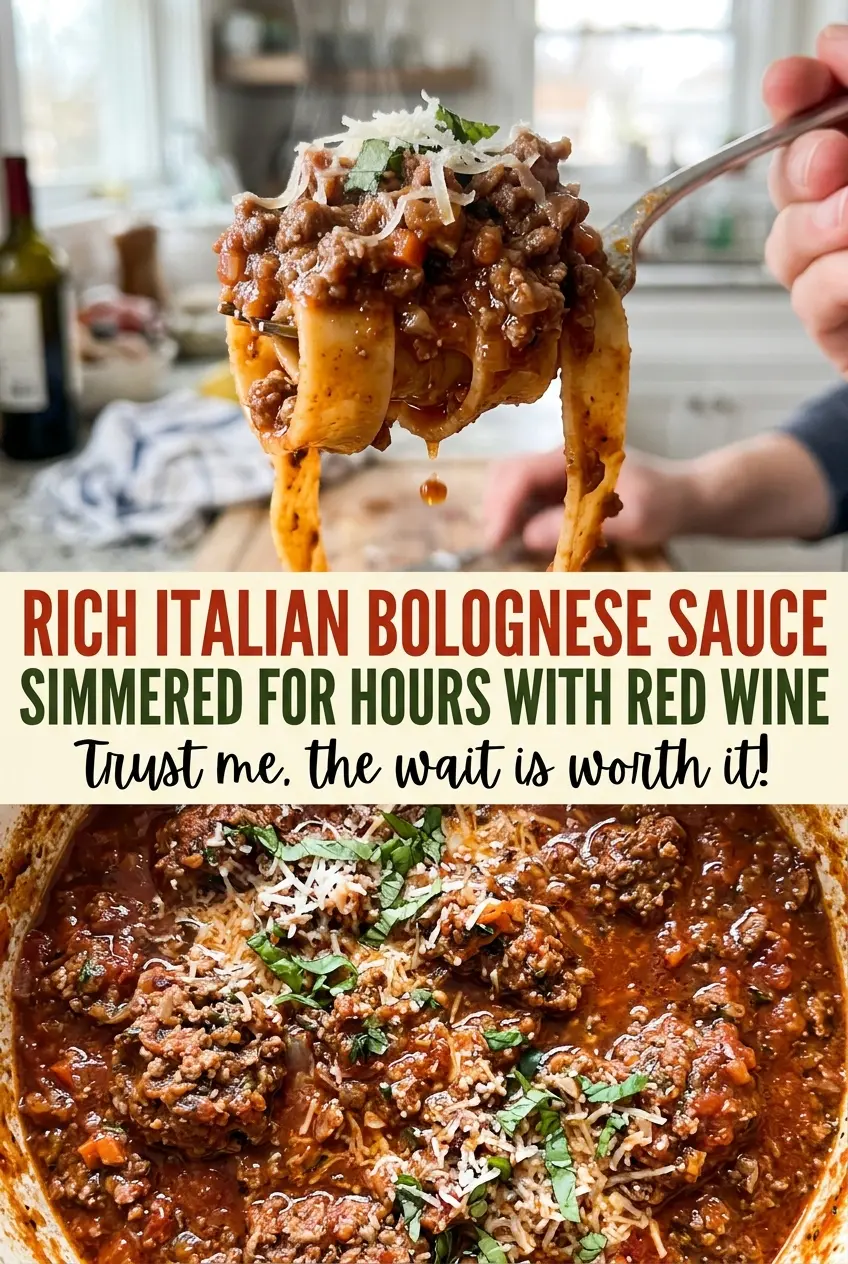
Beef and pork make a hearty base, while red wine, whole milk, tomatoes, and beef broth each join the pot in their own turn. I like the way the milk simmers with the meat before the tomatoes go in: it blends into the sauce rather than sitting on top as a separate creamy note. After a long, gentle simmer, the sauce turns thick and cohesive, with tender meat throughout and enough richness to cling to pasta.
Kitchen Note
Chop the onion, carrot, and celery to a similar fine size. Even pieces soften at the same pace, so you won’t end up with firm carrot bits after the rest of the vegetables have melted into the sauce.
Save this red wine Bolognese for a slow-simmer day when you want a thick, deeply savory sauce ready for the table.
Why the Milk Goes In Before the Tomatoes
The order matters here. I let the milk simmer with the browned meat after the wine has mostly cooked away, then add the tomato paste, diced tomatoes, and broth. By the time the tomatoes arrive, much of the milk has been absorbed into the meat instead of pooling in the finished sauce.
That gives the Bolognese a rounded, savory quality without making it taste like a cream sauce. The milk softens the edges of the wine and tomato, while the meat keeps its place at the center of the dish. It’s a small step, but skipping the simmer and pouring everything in at once changes the way the sauce comes together.
Watch the milk stage rather than hurrying it along. Stir occasionally and wait until most of it has disappeared into the meat before you add the tomato paste. A little liquid still in the pot is fine; the goal isn’t to dry the meat out, but to avoid leaving a milky layer in the finished sauce.
What the Meat, Milk, and Tomatoes Each Bring to This Bolognese
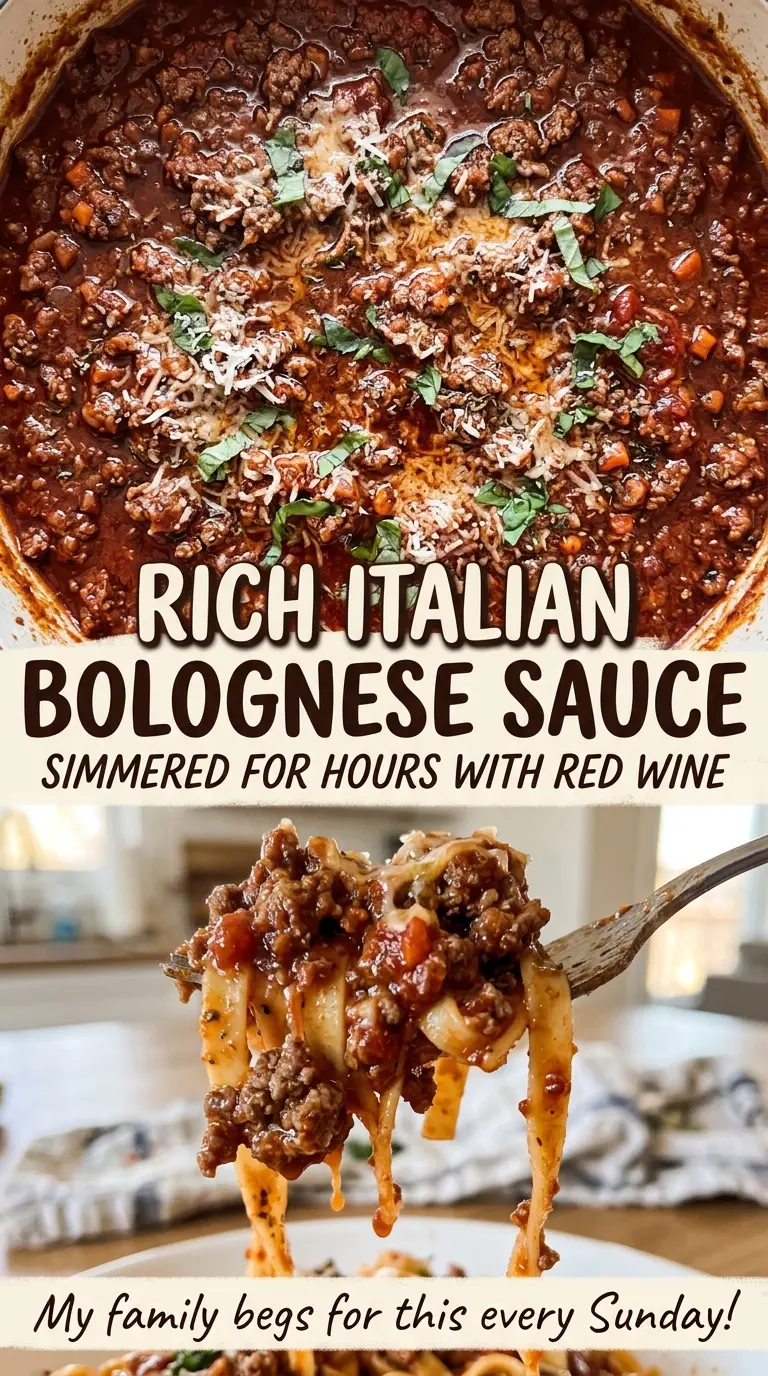
- Pancetta — It renders savory fat that becomes the base for the vegetables and meat. Look for a fresh-smelling piece with a good balance of meat and fat; a less expensive package is fine here. Unsmoked bacon can stand in, but it brings a noticeably smokier taste.
- Ground beef and pork — The 85% lean beef gives the sauce a meaty structure, and pork adds a softer, richer texture. If you only have ground beef, use it in place of both meats; expect a firmer, less supple sauce.
- Dry red wine — The wine adds depth and acidity, and an affordable dry table wine works as well as a costly bottle. If you’re cooking without alcohol, use beef broth in its place; the sauce will have less wine complexity and may need more time to reduce.
- Whole milk — Whole milk contributes richness that lower-fat milk won’t quite match. Two-percent milk can work, though the sauce will feel a little less rounded. For a dairy-free adaptation, leave the milk out; the sauce will be less mellow but still develop body as it simmers.
- Tomato paste and diced tomatoes — The paste gives the sauce a concentrated tomato base, while the canned tomatoes and their juices provide body and texture. Good-quality canned tomatoes are worth choosing when available. Crushed tomatoes can replace the diced ones for a smoother, less textured sauce.
- Beef broth — It adds savory depth and helps the sauce simmer down to a cohesive consistency. Chicken broth is a workable substitute, but the finished sauce will taste a little less beefy; water won’t bring the same savory richness.
Build the Sauce in Stages, Then Let the Simmer Do Its Work
Render the Pancetta and Soften the Vegetables
Heat the olive oil in a 6-quart Dutch oven over medium heat, then add the finely diced pancetta. Cook for 6 to 8 minutes, stirring occasionally, until the fat has rendered and the pieces are lightly browned. Add the onion, carrot, and celery and cook for 8 to 10 minutes, stirring often, until softened. If the pancetta is browning too fast before it renders, lower the heat rather than letting the bits scorch.
Brown the Beef and Pork
Add the ground beef, ground pork, kosher salt, and black pepper. Cook for 12 to 15 minutes, breaking the meat into small pieces as it browns. You’re looking for browned meat with no pink remaining, and a thermometer should read 160°F. If liquid collects in the pot, keep cooking until it cooks off and the meat can brown.
Reduce the Wine, Then the Milk
Pour in the dry red wine and scrape the bottom of the pot to loosen the browned bits. Simmer for 8 to 10 minutes, until most of the wine has evaporated; the sharp wine smell should mellow as it reduces. Stir in the whole milk and simmer for 10 to 15 minutes, stirring occasionally, until it’s mostly absorbed. Don’t add the tomatoes before this stage is finished.
Add the Tomatoes and Hold a Bare Simmer
Stir in the tomato paste and cook for 1 minute, then add the diced tomatoes with their juices, beef broth, and bay leaf. Bring the pot to a gentle simmer, reduce the heat to low, and cook partially covered for 2 1/2 to 3 hours. Stir every 20 to 30 minutes and keep the sauce at a bare simmer; a rolling boil can reduce it too quickly around the edges. When it’s thick and rich, remove the bay leaf, take the pot off the heat, and let the sauce rest for 10 minutes before serving.
Two Practical Ways to Adapt This Long-Simmered Sauce
Make It Dairy-Free
Leave out the whole milk and continue with the tomato paste and remaining ingredients in the same order. The sauce will lose some of the milk’s mellow richness, but the meat and long simmer still give it a substantial texture.
Cook a Half Batch
Halve each ingredient and follow the same cooking sequence. A smaller batch may reach the thick, rich stage sooner, so use the sauce’s texture rather than assuming the full simmer time will be needed. A smaller heavy pot helps keep the reduced quantity from spreading too thin across the bottom.
Storage and Reheating
- Refrigerator: Store in an airtight container for 3 to 4 days. The sauce will firm up as it chills.
- Freezer: Freeze in airtight containers or freezer-safe bags for up to 3 months. Leave a little space for expansion, and thaw overnight in the refrigerator.
- Reheating: Warm gently in a saucepan, stirring often, until it reaches 165°F. If it has thickened in the refrigerator, stir in a small splash of beef broth; high heat can scorch the bottom before the sauce warms through.
Questions That Come Up While the Sauce Simmeres
Rich Italian Bolognese Sauce Simmered for Hours with Red Wine
Ingredients
Equipment
Method
- Heat the olive oil in a 6-quart Dutch oven over medium heat.
- Add the pancetta and cook for 6 to 8 minutes, stirring occasionally, until it has rendered its fat and is lightly browned.
- Add the onion, carrot, and celery and cook for 8 to 10 minutes, stirring often, until softened.
- Add the ground beef, ground pork, salt, and pepper; cook for 12 to 15 minutes, breaking up the meat, until browned, no pink remains, and the meat reaches 160°F.
- Pour in the red wine and scrape up any browned bits from the bottom of the pot.
- Simmer for 8 to 10 minutes, until most of the wine has evaporated.
- Stir in the milk and simmer for 10 to 15 minutes, stirring occasionally, until mostly absorbed.
- Stir in the tomato paste and cook for 1 minute.
- Add the diced tomatoes with their juices, beef broth, and bay leaf.
- Bring the sauce to a gentle simmer.
- Reduce the heat to low and cook partially covered for 2 1/2 to 3 hours, stirring every 20 to 30 minutes, until thick and rich; keep the sauce at a bare simmer.
- Remove the bay leaf.
- Take the pot off the heat.
- Let the sauce rest for 10 minutes before serving.
