
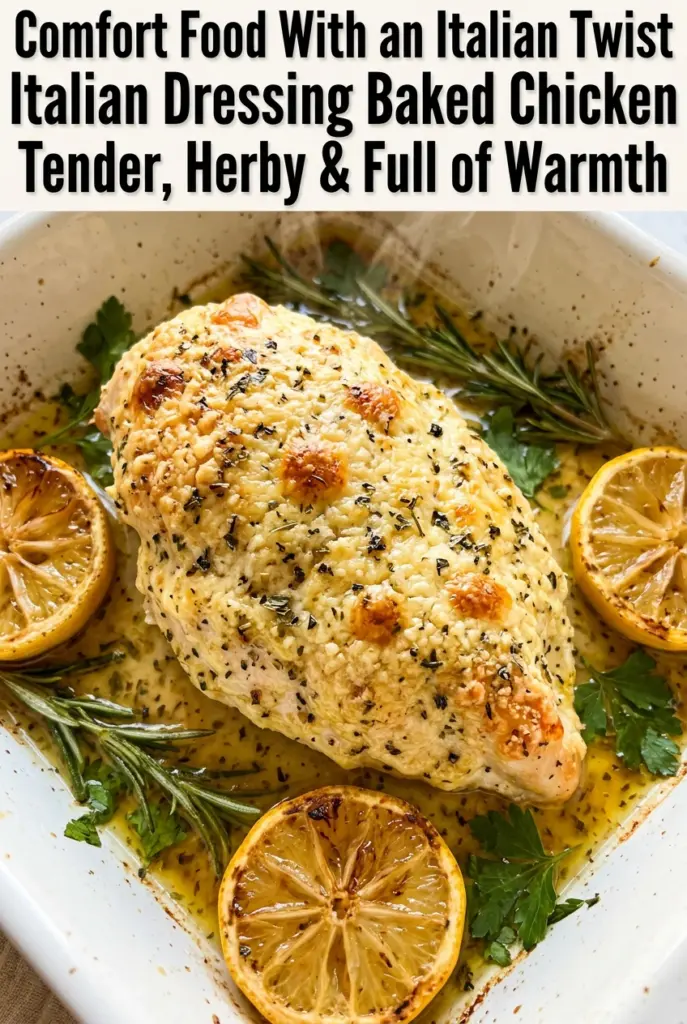
Italian Dressing Baked Chicken
Italian dressing baked chicken comes out juicy, bronzed, and full of herby tang with almost no hands-on work. The dressing carries garlic, vinegar, oil, and seasoning all at once, so…
Tip: save now, cook later.Italian dressing baked chicken comes out juicy, bronzed, and full of herby tang with almost no hands-on work. The dressing carries garlic, vinegar, oil, and seasoning all at once, so the chicken gets flavor all the way through instead of sitting on top like a crust. A quick bake at high heat gives you golden edges and tender meat without the usual fuss of breading, searing, or babysitting a skillet.
The trick is letting the dressing do two jobs at once: it seasons the chicken and helps protect it from drying out in the oven. Parmesan on top adds a salty, savory finish and gives the surface a little extra color as it bakes. If you’ve ever had baked chicken turn out bland or stringy, this method solves both problems with a simple marinade and a hot oven.
The chicken stayed so juicy and the parmesan on top got those little caramelized edges I was hoping for. I marinated it for about 4 hours and the flavor went all the way through, even the leftovers the next day.
Juicy Italian Dressing Baked Chicken for the nights when you want bold flavor, golden edges, and almost no cleanup.
The Reason This Chicken Stays Juicy Instead of Drying Out
Boneless chicken breasts dry out when they spend too long in the oven or start cooking from a cold, under-seasoned surface. Italian dressing helps on both fronts. The oil and vinegar coat the meat, the herbs and garlic season it deeply, and the short marinade time keeps the texture tender without turning the chicken mushy.
The other mistake is baking chicken at a temperature that is too low. That gives you pale meat with no color before the center is done. A hotter oven helps the top catch some browning while the inside finishes cooking at the same pace, which is exactly what you want with boneless breasts.
What the Dressing, Parmesan, and Seasonings Are Each Doing
- Italian dressing — This is the backbone of the recipe. It brings oil for moisture, vinegar for brightness, and built-in seasoning in one step. Use a good store-bought bottle if that’s what you have; homemade works too, but the finished chicken is only as good as the dressing’s balance of tang and salt.
- Boneless, skinless chicken breasts — They’re lean, so they benefit from the marinade more than fattier cuts would. If your breasts are very thick, pound them to an even thickness so the thinner ends don’t dry out before the center is done.
- Parmesan cheese — Freshly grated Parmesan melts into the top and helps the surface brown in the oven. The pre-shredded kind works in a pinch, but it won’t melt as smoothly and can look a little dusty instead of golden.
- Garlic powder, onion powder, and Italian seasoning — These deepen the flavor of the dressing without adding extra prep. The seasoning blend matters more here than in a sauce, because the chicken doesn’t have much fat of its own to carry flavor.
- Red pepper flakes — Optional, but useful if you want a little warmth under the tangy dressing. Skip them if you’re serving picky eaters or using a dressing that already has a bit of heat.
How to Bake It So the Top Browns Before the Chicken Overcooks
Marinate Just Long Enough
Coat the chicken evenly in the dressing and seasonings, then let it rest in the fridge for at least 30 minutes. That short window is enough to season the surface and start tenderizing without changing the texture of the chicken in a weird, spongy way. If you go much past 8 hours, the vinegar can start to work against you. Pull the chicken out of the fridge while the oven heats so it doesn’t go in ice-cold.
Arrange the Chicken in One Layer
Use a lightly oiled baking dish and lay the chicken pieces flat with a little space around them. If the pieces overlap, they steam instead of roast and the top never gets that savory color. Let excess marinade drip off before the chicken goes in the pan, because puddles of dressing can keep the bottoms soft.
Finish at High Heat and Rest Briefly
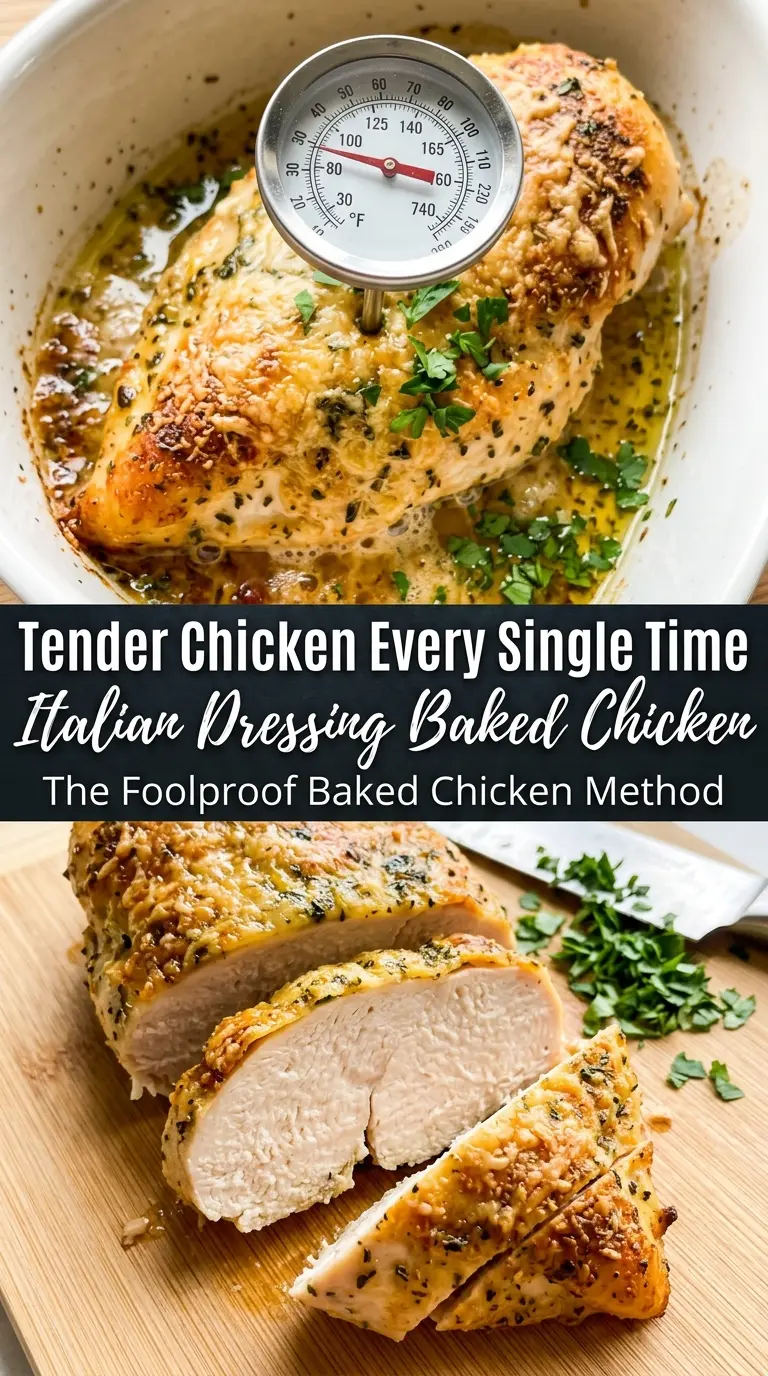
Bake at 425°F until the thickest part reaches 165°F and the tops are golden with a few caramelized spots. If the tops are browning too fast, tent loosely with foil during the last few minutes, but don’t lower the oven too much or you’ll lose the color. Rest the chicken for 5 minutes before slicing so the juices settle back into the meat instead of spilling onto the board.
Three Practical Ways to Make This Dinner Fit Your Table
Dairy-Free Version
Leave off the Parmesan and brush the tops with a little olive oil before baking. You’ll lose the salty crust from the cheese, but the chicken still browns nicely and the dressing keeps it flavorful enough on its own.
Lower-Carb Serving Idea
Serve the chicken with roasted broccoli, zucchini, or a crisp salad instead of pasta or rice. The chicken has enough punch to carry a simple plate, and the lemon at the end keeps the whole meal tasting bright.
Chicken Thigh Swap
Boneless thighs work well if you want a richer, more forgiving cut. They usually need a few extra minutes in the oven, but they stay tender even if you miss the timing by a little.
Storage and Reheating
- Refrigerator: Store in an airtight container for up to 4 days. The flavor deepens overnight, though the parmesan topping softens a bit.
- Freezer: Freezes well for up to 2 months if you cool it first and wrap it tightly. Slice before freezing if you want faster reheating later.
- Reheating: Warm gently in a 325°F oven with a splash of broth or water in the dish, covered loosely with foil. High heat dries out boneless chicken fast, so skip the microwave if you want to keep the texture tender.
Questions I Get Asked About This Recipe
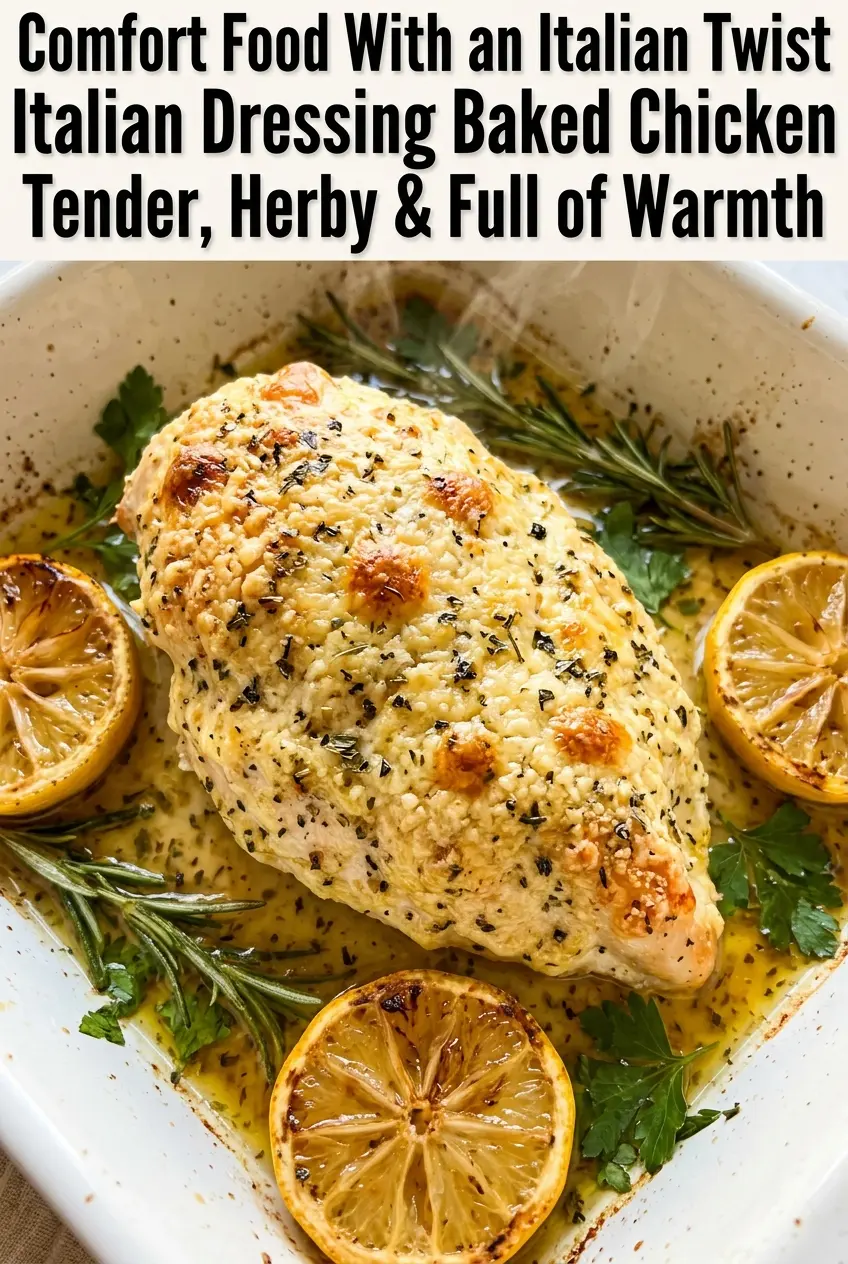
Italian Dressing Baked Chicken
Ingredients
Equipment
Method
- Place the chicken breasts in a large zip-lock bag or shallow dish and pour the Italian dressing over them, coating each piece well with a visible, wet marinade layer.
- Add garlic powder, onion powder, dried Italian seasoning, salt, black pepper, and red pepper flakes if using, then press the bag or toss gently so the spices cling evenly to the chicken surface.
- Seal and refrigerate for at least 30 minutes, or up to 8 hours for deeper flavor, until the chicken looks seasoned all the way through.
- Preheat the oven to 425°F (220°C) and lightly grease a baking dish with olive oil, leaving a thin, shiny film on the bottom.
- Remove the chicken from the marinade, let excess drip off, and arrange the pieces in a single layer so there’s space between breasts for even browning.
- Sprinkle the grated Parmesan evenly over the top of each chicken breast so you see a uniform, light cheese layer.
- Bake uncovered for 22–28 minutes at 425°F (220°C) until the chicken reaches an internal temperature of 165°F (74°C) and the tops are golden with slightly caramelized edges.
- Remove from the oven and let the chicken rest for 5 minutes so the juices redistribute and the surface firms up slightly.
- Garnish with fresh chopped parsley and serve with lemon slices alongside pasta, rice, roasted vegetables, or a crisp garden salad.
