
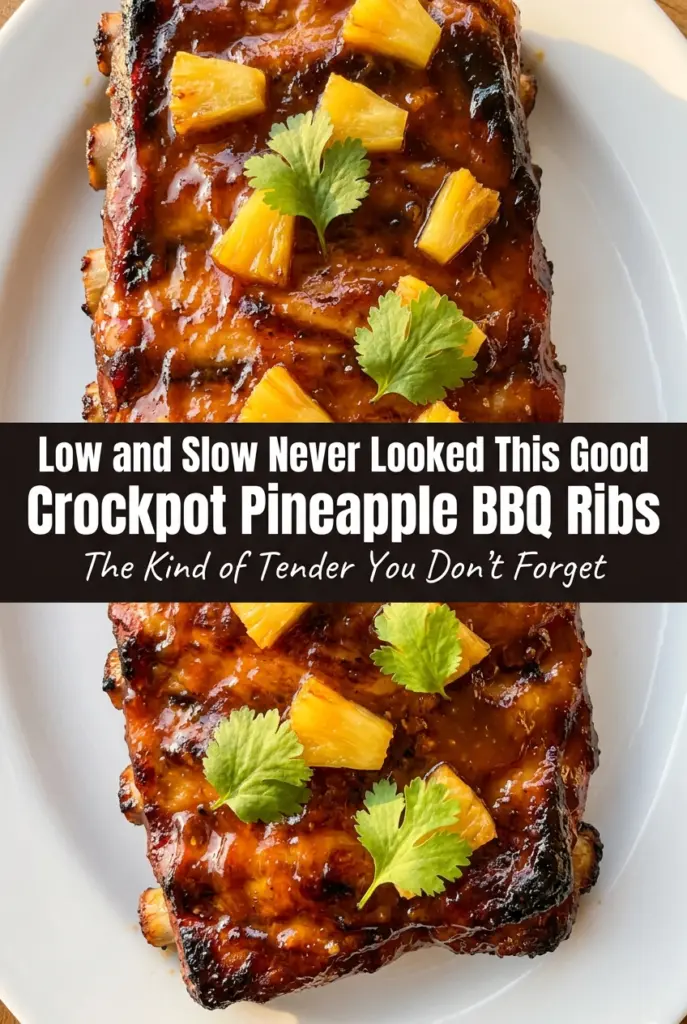
Crockpot Pineapple BBQ Ribs
Sticky pineapple BBQ ribs come out of the slow cooker with meat that slides off the bone and a sauce that clings in a glossy, sweet-smoky layer. The pineapple doesn't…
Tip: save now, cook later.Sticky pineapple BBQ ribs come out of the slow cooker with meat that slides off the bone and a sauce that clings in a glossy, sweet-smoky layer. The pineapple doesn’t just add sweetness; it gives the barbecue sauce a bright tang that keeps every bite from tasting heavy. After a long low cook, the ribs turn tender enough to pull apart with a fork, and the broiler finish gives you those caramelized edges that taste like you spent all afternoon tending a grill.
What makes this version work is the way the sauce is built. The crushed pineapple goes in with its juice, so you get both fruitiness and enough liquid to keep the ribs braising instead of drying out. A little soy sauce and Worcestershire deepen the barbecue flavor, while brown sugar helps the sauce glaze instead of staying thin and watery. If you skip the broiler step, the ribs will still be tender, but that extra few minutes under heat gives the sticky, lacquered finish people remember.
Below you’ll find the exact order I use, plus the small details that keep the ribs from turning mushy or bland. The membrane removal matters more than most people think, and the short broil at the end is worth the extra pan to wash.
The sauce got sticky and caramelized after the broil, and the ribs were tender enough to lift out in one piece. I’ve made these twice now, and the pineapple keeps them from tasting too heavy.
These crockpot pineapple BBQ ribs get that sticky broiled finish and fall-apart tenderness every single time.
The Membrane Is the Difference Between Tender Ribs and Chewy Ones
That thin silver membrane on the back of the rack is the one thing that can keep ribs from turning silky and tender in the slow cooker. If it stays on, it tightens up as it cooks and gives you a chewy layer between the meat and the sauce. Pulling it off takes a minute, and it pays you back with ribs that eat cleanly instead of fighting every bite.
The other common mistake is crowding the crockpot with ribs that sit too flat in a thick pile. Ribs need to be nestled in, not stuffed in, so the sauce can move around them and the meat can braise evenly. If you have to cut the rack in half to fit, do it. The shape matters less than giving the ribs steady, gentle heat on all sides.
- Baby back ribs — These are leaner and cook to tenderness without needing an all-day marathon. Spare ribs can work too, but they usually need a little more time and a slightly heavier hand with the sauce.
- Crushed pineapple with juice — The juice is part of the cooking liquid, so don’t drain it. The fruit softens into the sauce while the liquid keeps everything braising instead of sticking.
- BBQ sauce — Use a sauce you already like the taste of, since it sets the base flavor here. A sweeter sauce gives a thicker glaze; a smokier one pushes the ribs in that direction.
- Apple cider vinegar — This keeps the sauce from reading as jammy. If you swap in lemon juice, the ribs will still work, but the finish will taste sharper and less round.
- Soy sauce and Worcestershire — Both add the savory depth that keeps pineapple from taking over. If you need gluten-free, use a certified gluten-free soy sauce or tamari and check your Worcestershire label.
How to Layer the Sauce So the Ribs Braise, Not Boil
Seasoning the Rack
Mix the garlic powder, onion powder, smoked paprika, black pepper, salt, and cayenne first, then rub it all over the ribs before they go anywhere near the crockpot. That dry seasoning gives the meat a more complete flavor than sauce alone can manage. The paprika should look rusty-red on the surface, not clumped in one spot. If the ribs are wet from rinsing, pat them dry first or the seasoning will slide right off.
Building the Braising Base
Whisk the sauce ingredients until the brown sugar dissolves and the pineapple is evenly distributed. A few small pineapple pieces are fine, but you want the mixture pourable so it can flow around the ribs. Start with a layer in the bottom of the crockpot, then tuck the ribs in and spoon the rest over the top. This keeps the bottom from scorching and gives the sauce a chance to coat every side.
Low and Slow Until the Meat Gives
Cook on low for the best texture if you have the time. You’re looking for meat that pulls back from the bone and gives easily when lifted with tongs, not tough meat that only looks done on the outside. If the ribs are still resisting after the time is up, give them another 30 to 45 minutes; rushing this stage is how you end up with chewy ribs and thin sauce. High heat works in a pinch, but low heat gives you the cleanest, most tender result.
Finishing Under the Broiler
Move the ribs to a foil-lined sheet, brush them with the thickest sauce left in the crockpot, and broil just until the edges darken and bubble. Keep an eye on them, because sugar burns fast once it starts to caramelize. A few charred spots are good here. They add the same sticky edge you’d get from a grill and turn the sauce from good to memorable.
Three Ways to Adapt These Pineapple BBQ Ribs
Gluten-Free Version
Use a gluten-free BBQ sauce, tamari instead of soy sauce, and a Worcestershire sauce labeled gluten-free. The ribs themselves don’t need any other changes, and the finished dish still gets that sweet-smoky depth without the wheat.
Less Sweet, More Tangy
Cut the brown sugar back to 1 tablespoon and add another teaspoon of apple cider vinegar. The sauce will cook down a little sharper and less sticky, which works well if your BBQ sauce already runs sweet.
Oven Finish Instead of Broiling
If you don’t want to use the broiler, brush the ribs with sauce and bake them at 450°F for 8 to 10 minutes. You won’t get quite as much char, but you’ll still get a tacky glaze that clings better than straight crockpot ribs.
Storage and Reheating
- Refrigerator: Store leftovers in an airtight container for up to 4 days. The sauce thickens as it chills, and the meat stays tender.
- Freezer: These ribs freeze well for up to 2 months if you pack them with plenty of sauce. Thaw overnight in the refrigerator before reheating so the meat warms evenly.
- Reheating: Warm covered in a 300°F oven with a spoonful of extra sauce until heated through. The mistake people make is blasting them in the microwave, which dries the edges and turns the glaze sticky in the wrong way.
Answers to the Questions Worth Asking
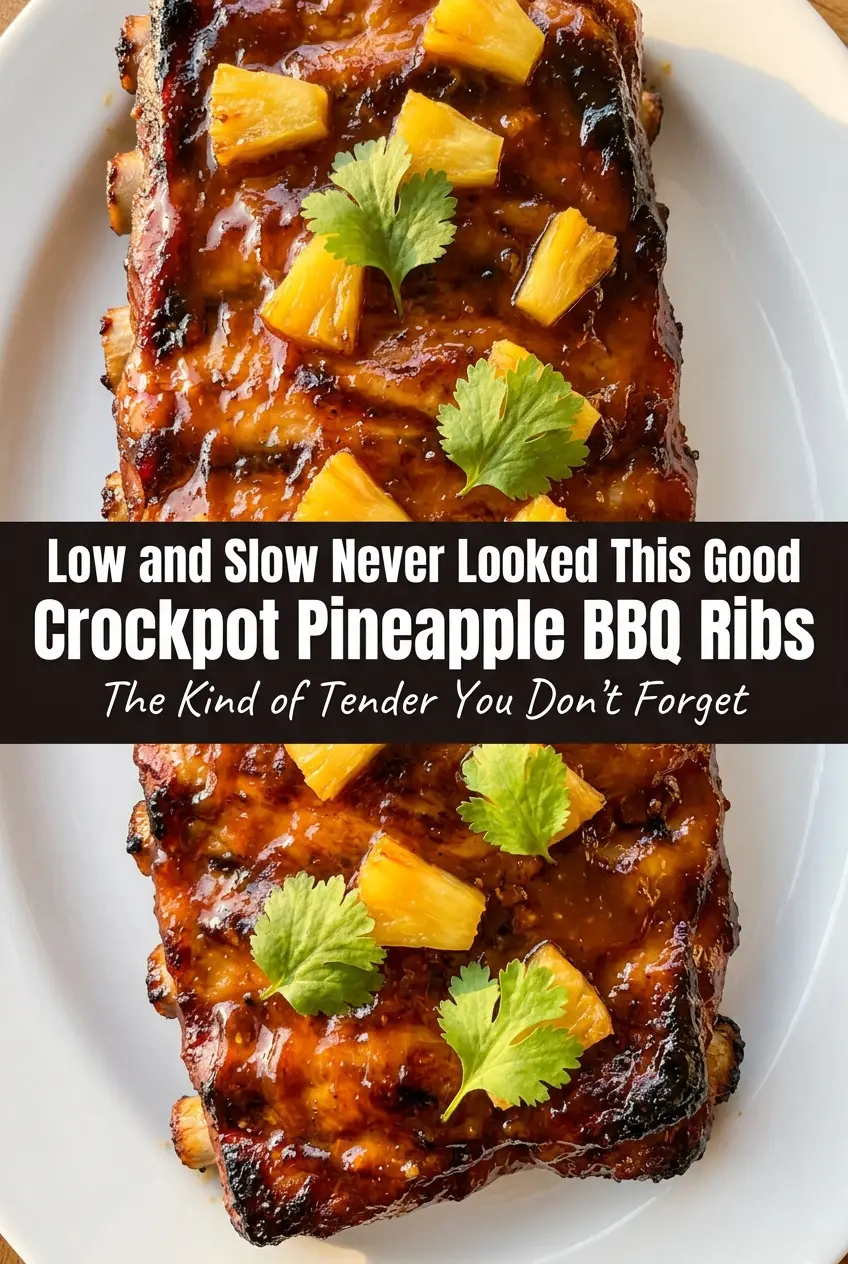
Crockpot Pineapple BBQ Ribs
Ingredients
Equipment
Method
- Remove the silver membrane from the back of the ribs by sliding a butter knife under it and pulling it off with a paper towel. This helps the ribs stay maximally tender during the slow cook.
- Mix garlic powder, onion powder, smoked paprika, black pepper, salt, and cayenne pepper in a small bowl. Rub the spice mixture all over both sides of the ribs.
- Whisk together BBQ sauce, crushed pineapple with its juice, brown sugar, soy sauce, apple cider vinegar, minced garlic, and Worcestershire sauce in a medium bowl. Whisk until the sugar dissolves and the sauce looks evenly combined.
- Pour about 1/3 of the pineapple BBQ sauce into the bottom of the crockpot. Spread it so the heat and flavor start pooling before the ribs go in.
- Place the ribs inside the crockpot, standing them upright along the edges if needed. Cut the rack in half for a better fit if required.
- Pour the remaining sauce over and around the ribs, making sure they are well coated. Add extra sauce so corners and edges are covered.
- Cover and cook on LOW for 7–8 hours or HIGH for 4–5 hours until the meat is fall-off-the-bone tender and pulls away easily. Do not uncover early—keeping the lid on helps the ribs cook through evenly.
- Remove the ribs carefully, place them on a foil-lined sheet pan, and brush with extra sauce from the crockpot. This builds a thicker glaze before broiling.
- Broil at 425°F for 5–7 minutes until the sauce caramelizes and gets slightly charred. Watch closely so the char develops without burning.
- Garnish with chopped fresh cilantro and serve with extra pineapple BBQ sauce on the side. Add pineapple rings if using for extra flavor and presentation.
