
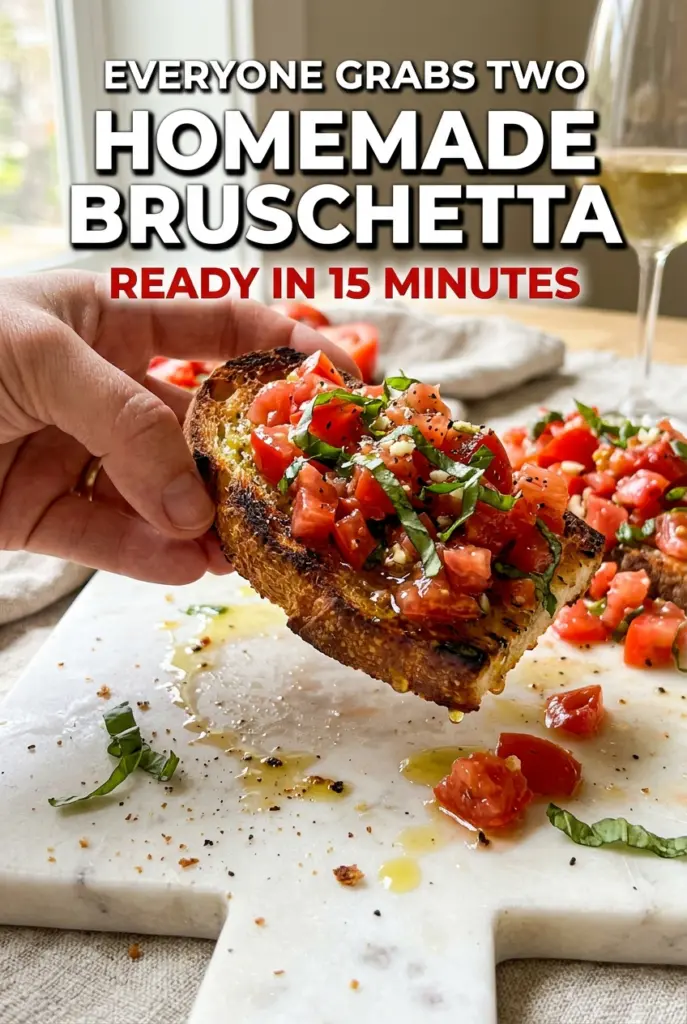
Homemade Bruschetta
Crisp toast, juicy tomatoes, and fresh basil make homemade bruschetta disappear fast, but the best versions have a little restraint built into them. The bread should shatter when you bite…
Tip: save now, cook later.Crisp toast, juicy tomatoes, and fresh basil make homemade bruschetta disappear fast, but the best versions have a little restraint built into them. The bread should shatter when you bite into it, then hold up just long enough to catch the tomato juices without turning limp. That balance is what separates a tray of bruschetta people hover around from one that sits around looking pretty.
The trick is treating the tomatoes and the bread as two separate jobs. Drain the tomatoes first so the topping stays bright and chunky instead of watery, and toast the bread hard enough that the edges go deep golden before you rub it with garlic. That warm bread grabs the garlic flavor in a way raw garlic never can. A splash of balsamic adds depth, but the tomatoes still need to taste like tomatoes first.
Below, I walk through the little details that matter most, from keeping the bread crisp to choosing the right tomatoes. There are also a few swaps for when you need to work around what’s in the kitchen, plus the storage note that matters if you’re making the topping ahead.
I drained the tomatoes like you said and the bruschetta stayed crisp right through dinner. The garlic rubbed onto the warm bread gave it that restaurant taste, and the basil stayed bright instead of getting muddy.
Save this bruschetta for the nights when you want a starter with crisp bread, garlicky tomatoes, and almost no cleanup.
The Reason Bruschetta Turns Soggy Before It Hits the Table
Most bruschetta fails in the same place: the tomatoes shed their juices, the bread goes soft, and by the time the platter reaches people, the best texture is already gone. The fix isn’t complicated. Drain the tomatoes before you season them, and toast the bread until it has a real crust, not just a light tan color. That crust buys you a few precious minutes of crunch.
The other mistake is adding the garlic too early or too aggressively. Raw garlic in the topping can taste sharp and dominate the tomatoes, while rubbing garlic onto warm toast gives you a gentler, more even flavor. If your tomatoes look especially ripe and juicy, let them sit a few extra minutes in the colander. That small pause does more for the final texture than any garnish ever will.
What Each Ingredient Is Actually Doing in This Bruschetta
- Roma tomatoes — These are firmer and less watery than slicing tomatoes, which means the topping stays chunky instead of collapsing into juice. If you use a more delicate tomato, seed it first and drain it a little longer.
- Fresh basil — Basil gives the dish its bright, peppery finish. Slice it right before mixing so it stays fragrant and doesn’t bruise into dark ribbons.
- Garlic — Two cloves go into the topping for bite, while the third gets rubbed on the bread for a softer garlic background. That split is what keeps the flavor layered instead of harsh.
- Extra virgin olive oil — Use a good one here because it’s one of the main flavors, not just a cooking fat. A peppery olive oil works especially well with the tomatoes.
- Balsamic vinegar — Optional, but worth using if your tomatoes need a little extra depth. Start with a small amount; too much makes the topping taste dark and muddled instead of fresh.
- Baguette or ciabatta — You want a loaf with enough structure to handle the topping. Soft sandwich bread won’t give you the same crunch or hold the tomato mixture the way it should.
Getting the Bread Crisp Before the Tomatoes Steal the Show
Drain the Tomatoes First
Salt the diced tomatoes and let them sit in a colander for 5 to 10 minutes. You’re not trying to dry them out completely; you’re pulling off the excess liquid that would otherwise soak into the bread immediately. If your tomatoes are very ripe, a longer drain is worth it. The topping should still look juicy, just not watery.
Toast the Bread Hard Enough to Hold Up
Brush both sides lightly with olive oil and broil or grill until the surface is crisp and the edges are just starting to deepen in color. Pale toast goes soft as soon as the topping lands on it. You want a crust that sounds dry and crisp when tapped, because that’s what keeps the bruschetta enjoyable bite after bite.
Rub with Garlic While It’s Still Warm
The minute the bread comes off the heat, rub one cut clove over the surface. Warm bread catches the garlic oils better than cool bread, so the flavor sinks in without needing a lot of garlic. If the bread cools completely first, the rub mostly skates across the surface and you lose the best part.
Spoon on the Tomatoes and Serve Right Away
Add the topping generously, but don’t drown the bread. A spoonful of the juices is enough to perfume the toast; too much and the crunch disappears fast. If you’re using Parmesan or balsamic glaze, add them at the end so they sit on top instead of sinking into the tomatoes.
Three Ways to Make This Bruschetta Fit the Table You’re Setting
Dairy-Free and Naturally Vegetarian
The base recipe is already vegetarian and dairy-free if you skip the Parmesan garnish. That leaves you with the cleanest version of the dish: tomatoes, basil, garlic, oil, and crisp bread. Nothing gets lost, and the topping stays bright instead of heavy.
Gluten-Free Bruschetta
Swap in a sturdy gluten-free baguette or sliced gluten-free artisan loaf. Toast it well so it doesn’t crumble under the tomatoes, because gluten-free bread usually needs a little extra color to get the right structure. The topping doesn’t need to change at all.
Make It More Savory
Add a few spoonfuls of finely chopped mozzarella pearls, diced olives, or a small amount of minced shallot to the tomato mixture. Each one shifts the bruschetta from a fresh starter toward something a little more substantial. Keep the add-ins light so the tomatoes stay in charge.
Storage and Reheating
- Refrigerator: Store the tomato topping in an airtight container for up to 2 days. It will soften a bit as it sits, but the flavor stays good.
- Freezer: Don’t freeze the assembled bruschetta. The tomatoes turn mushy and the bread loses its crunch. The topping alone is also better fresh than frozen.
- Reheating: Re-crisp the bread in a hot oven for a few minutes if needed, then top it just before serving. Don’t assemble ahead and warm everything together, or the toast will steam and go soft.
Answers to the Questions Worth Asking
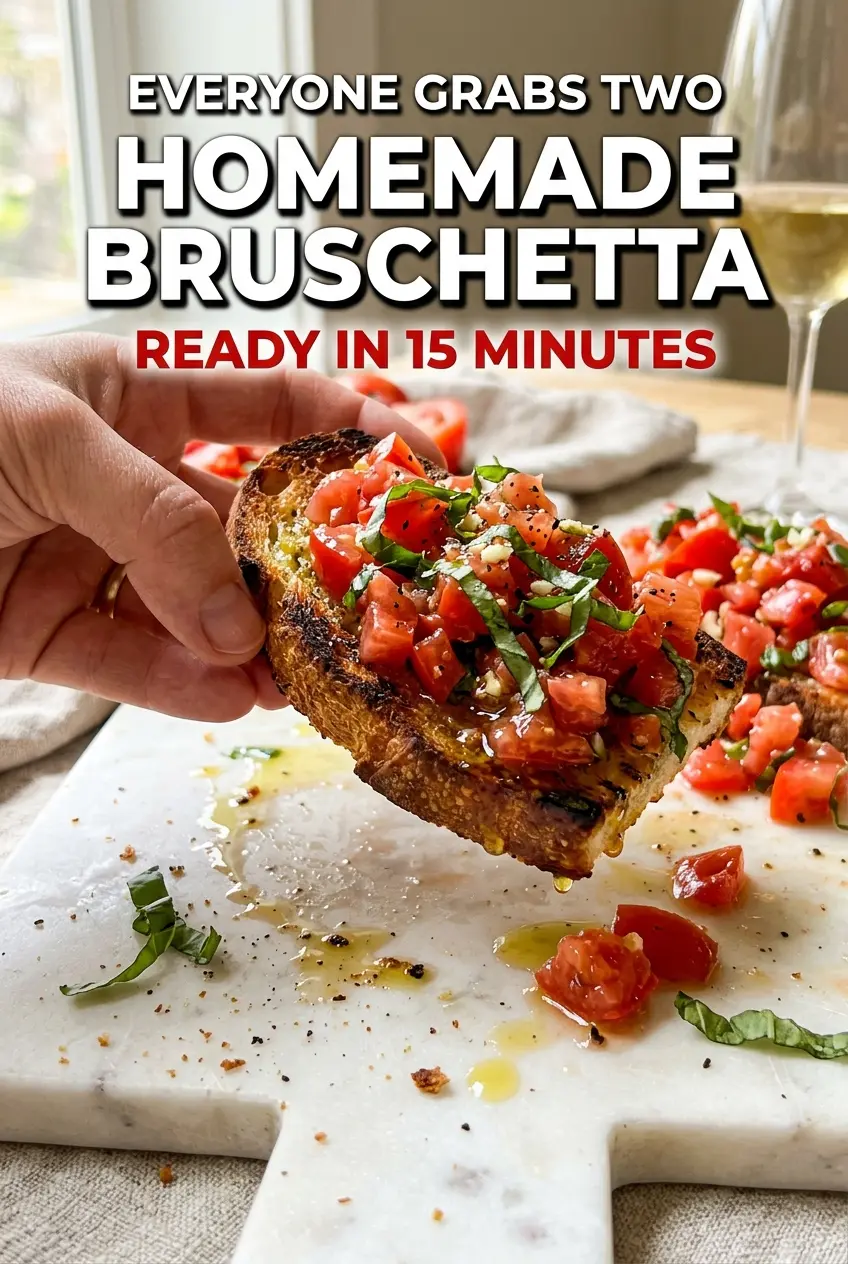
Homemade Bruschetta
Ingredients
Equipment
Method
- Dice the Roma tomatoes into small, even pieces, then place them in a colander over the sink and lightly salt them.
- Let the salted tomatoes drain for 5–10 minutes so excess water doesn’t make the topping soggy.
- Thinly slice the basil leaves into ribbons (chiffonade) and mince 2 garlic cloves.
- In a medium bowl, combine the drained tomatoes, minced garlic, basil, olive oil, balsamic vinegar, salt, and black pepper.
- Stir gently and taste, adjusting salt and vinegar as needed, then set aside to marinate for at least 5 minutes.
- Preheat your oven broiler to high, or heat a grill pan over medium-high heat.
- Arrange the bread slices on a baking sheet and brush both sides lightly with olive oil.
- Broil or grill for 1–2 minutes per side, watching closely, until golden and crisp with toasty edges.
- Immediately rub one side of each warm toast with the cut side of the halved garlic clove.
- Spoon the tomato mixture generously onto each slice, letting some juices soak in.
- Top with shaved Parmesan, extra basil leaves, and a thin drizzle of aged balsamic glaze if desired.
- Serve immediately while the bread is still crisp.
