
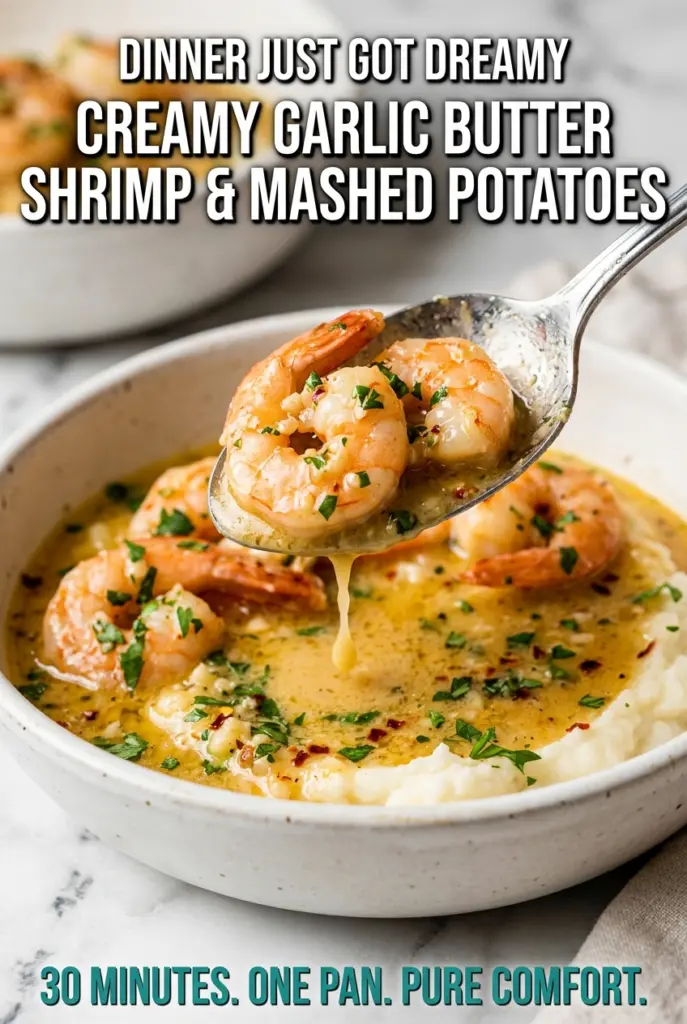
Creamy Garlic Butter Shrimp With Mashed Potatoes
Plump shrimp in a garlic butter sauce over mashed potatoes is the kind of dinner that disappears fast because every bite gives you something different: silky potatoes, juicy seafood, and…
Tip: save now, cook later.Plump shrimp in a garlic butter sauce over mashed potatoes is the kind of dinner that disappears fast because every bite gives you something different: silky potatoes, juicy seafood, and a glossy sauce that clings instead of sliding off the plate. The shrimp stay tender, the sauce turns rich without getting heavy, and the whole dish tastes like you spent far longer on it than you actually did.
What makes this version work is timing. The shrimp get a quick sear first, then come back at the very end so they don’t overcook while the sauce finishes. The garlic goes into the pan after the shrimp are out, which means it flavors the butter without burning, and a splash of broth helps pull up the browned bits from the skillet so nothing good gets left behind.
Below you’ll find the exact order that keeps the shrimp juicy and the sauce smooth, plus a few simple swaps if you’re working with what you already have in the kitchen. The mashed potatoes matter here too — not as a side thought, but as the soft, buttery base that makes the sauce feel complete.
The sauce thickened up perfectly and the shrimp stayed juicy, not rubbery. I served it over leftover mashed potatoes and my husband asked if we could put it on the menu again next week.
Creamy garlic butter shrimp over mashed potatoes is the kind of 30-minute dinner worth saving for the nights when you want something rich, fast, and a little special.
The Trick to Keeping Shrimp Tender While the Sauce Finishes
Shrimp turn from tender to rubbery fast, and that’s the main thing that ruins this kind of dish. The fix is simple: sear them first, get them off the heat, then finish the sauce in the same pan. That keeps the shrimp from sitting in hot butter and cream while you’re waiting for the garlic to bloom and the sauce to thicken.
The other mistake is cooking the garlic too hard. Garlic only needs about a minute in medium heat butter before it smells sweet and fragrant. If it goes brown, the whole sauce turns bitter, and there’s no way to hide that under cream.
What Each Ingredient Is Actually Doing in This Dish
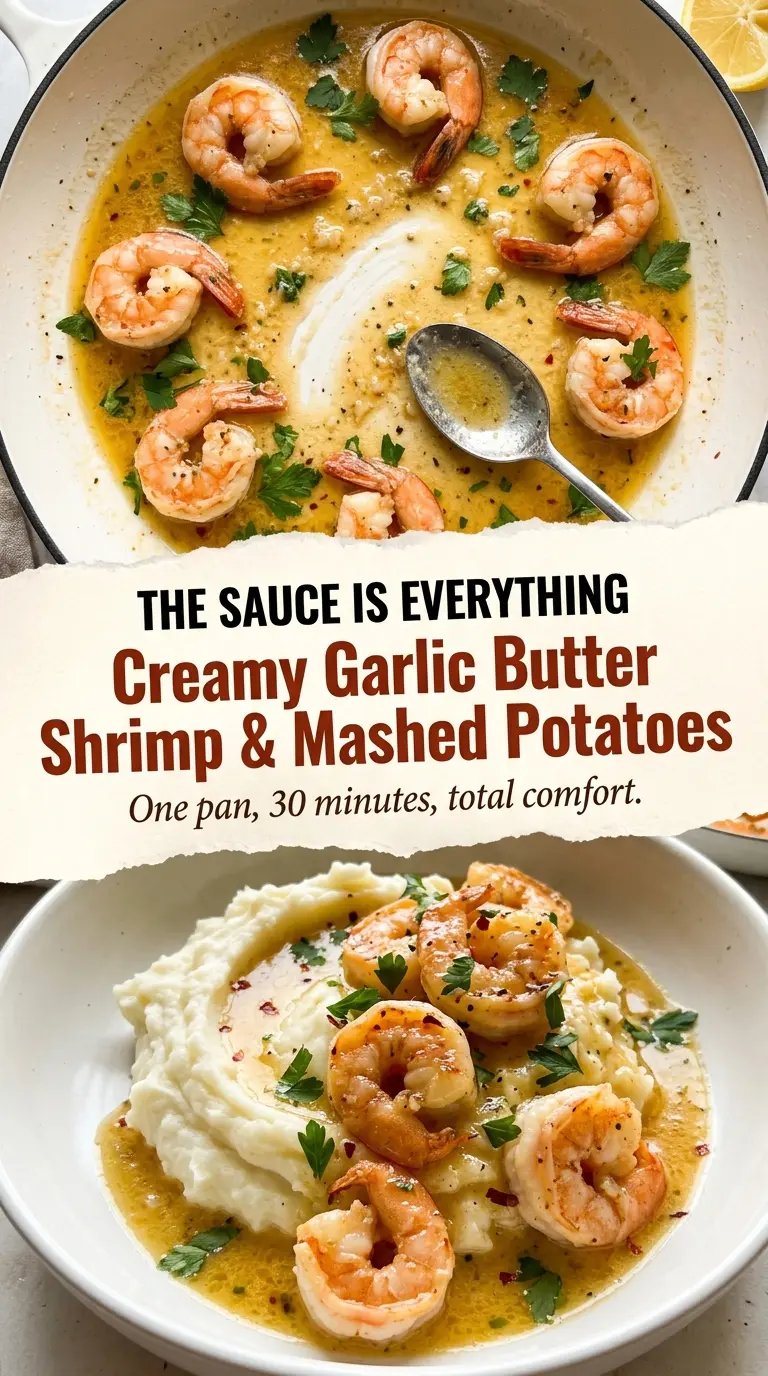
- Large shrimp — Use the biggest shrimp you can find. They sear better, stay juicy longer, and look far nicer over a bed of mashed potatoes. If you’re using smaller shrimp, cut the sear time way down so they don’t tighten up.
- Yukon Gold potatoes — These mash into a naturally buttery, smooth base without turning gluey. Russets work in a pinch, but they dry out faster and need a bit more butter or milk to feel as plush.
- Heavy cream — This gives the sauce body and that soft, glossy finish. Half-and-half can work, but the sauce will be thinner and less stable, so let it reduce a minute or two longer.
- Chicken broth — The broth loosens the pan and carries the garlic flavor through the sauce. Water will technically work, but it won’t build the same depth.
- Lemon juice — Add it at the end, not before. The acid wakes up the butter and cream, and if you add it too early the sauce can taste flat or separate a little at the edges.
Building the Sauce in the Same Pan Without Breaking It
Boiling and Mashing the Potatoes
Start the potatoes in salted water and cook them until a fork slides through with no resistance. Drain them well, then return them to the pot for a minute so excess moisture steams off. That step matters because wet potatoes turn loose and heavy instead of fluffy. Mash them with warm milk or cream and butter until smooth, then keep them covered while you finish the shrimp.
Searing the Shrimp Fast
Pat the shrimp dry before they hit the skillet. Wet shrimp steam instead of sear, and you’ll lose that quick little crust that makes the dish taste complete. Lay them in a single layer and cook just until pink and curled into a loose C shape. If they tighten into a tight O, they’ve gone too far.
Finishing the Garlic Butter Sauce
Once the shrimp are out, add the remaining butter and garlic to the same pan. Stir constantly and keep the heat at medium so the garlic turns fragrant and pale gold, not brown. Pour in the broth and scrape up every browned bit from the skillet, then add the cream and red pepper flakes. Let it simmer until it lightly coats a spoon, then return the shrimp just long enough to warm through.
Three Ways to Adapt This Without Losing What Makes It Work
Dairy-Free Swap That Still Feels Rich
Use a plant-based butter and unsweetened coconut cream or a thick oat cream in place of the dairy. The sauce will be a little different in flavor, but it still turns silky and coats the shrimp well. Keep the lemon at the end so the richness doesn’t taste flat.
Gluten-Free by Default
This dish is naturally gluten-free as long as your broth is certified gluten-free. The potatoes and shrimp don’t need any flour to thicken, so the sauce stays clean and creamy without extra work.
Make It Lighter Without Losing the Garlic Butter Feel
Cut the cream back and use a splash more broth, then finish with just enough butter to keep the sauce glossy. It won’t be as plush, but it still tastes balanced and coats the shrimp instead of pooling on the plate.
Storage and Reheating
- Refrigerator: Store the shrimp and mashed potatoes separately for up to 3 days. The potatoes may thicken as they chill.
- Freezer: The shrimp don’t freeze well once cooked, but the mashed potatoes can be frozen for about 1 month. The cream sauce is best made fresh.
- Reheating: Warm the potatoes gently with a splash of milk over low heat or in the microwave, stirring halfway through. Reheat the shrimp just until hot; if you cook them again too long, they turn tough fast.
Answers to the Questions Worth Asking
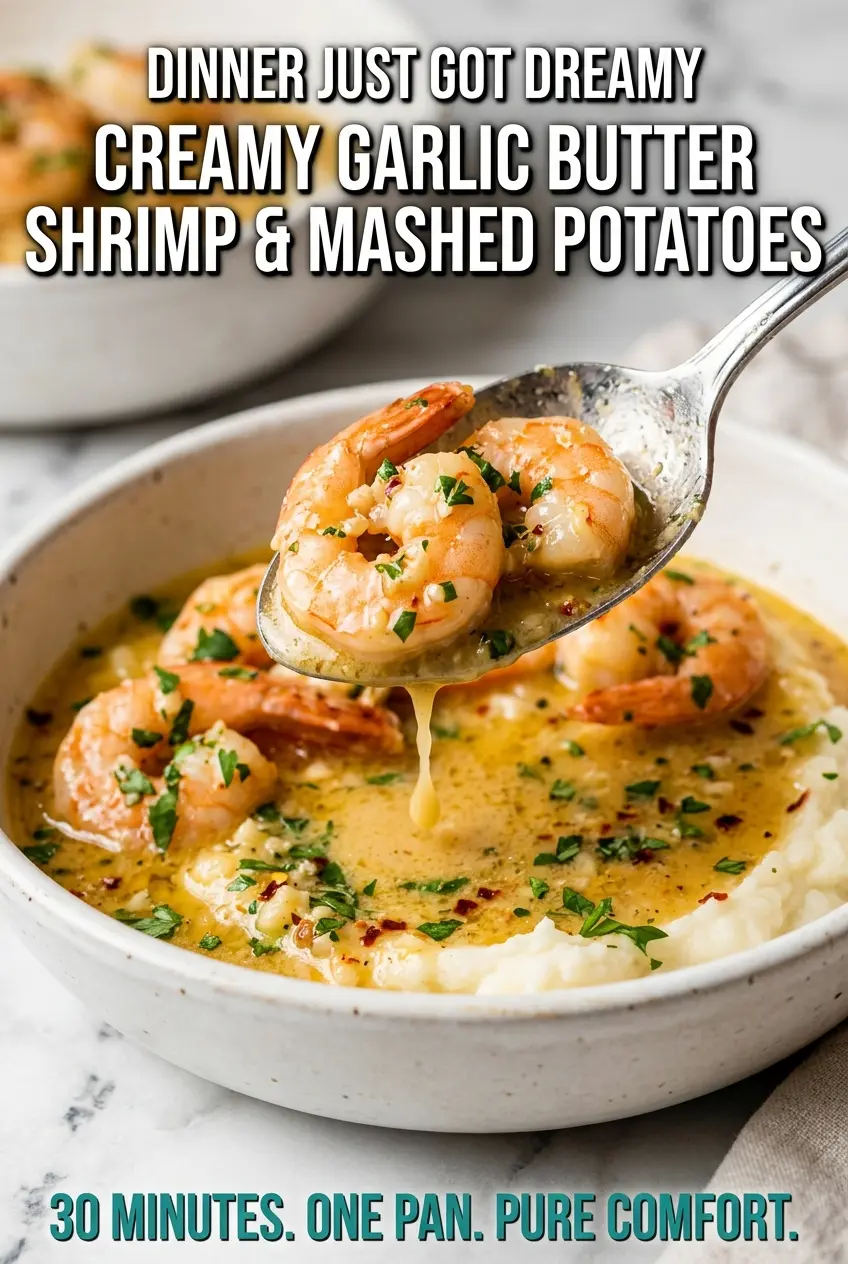
Creamy Garlic Butter Shrimp With Mashed Potatoes
Ingredients
Equipment
Method
- Bring a large pot of salted water to a boil. Add the cubed potatoes and cook at a steady boil for 15–18 minutes, until fork-tender.
- Drain the potatoes and return them to the pot. Mash with butter and warmed milk until smooth and fluffy.
- Season the mash with salt and white pepper. Cover and keep warm so the potatoes stay creamy.
- Pat the shrimp dry with paper towels and season with paprika, salt, and black pepper. Lay them out so they cook evenly.
- Heat a large skillet over medium-high heat. Add 1 tablespoon of butter and let it melt until foamy.
- Add the shrimp in a single layer and sear for 1–1.5 minutes per side, until pink and just curled. Remove shrimp from the pan and set aside.
- Reduce heat to medium and add the remaining butter and minced garlic. Sauté for 1 minute, stirring constantly, until fragrant and golden—do not brown.
- Pour in the chicken broth and stir, scraping up any browned bits from the bottom of the pan. Stir until the pan looks glossy and the bits dissolve.
- Add the heavy cream and red pepper flakes. Simmer for 2–3 minutes until the sauce thickens slightly.
- Return the shrimp to the skillet. Stir to coat and warm through for 1 minute.
- Squeeze lemon juice over the shrimp and stir in fresh parsley. Mix until the sauce looks uniformly glossy with green flecks.
- Spoon generous portions of mashed potatoes onto plates or into shallow bowls. Ladle creamy garlic butter shrimp and sauce over the top.
- Serve immediately while the shrimp are hot and the potatoes are fluffy. Keep plates warm if needed for quick serving.
