

Ground Beef Orzo with Tomato Cream Sauce
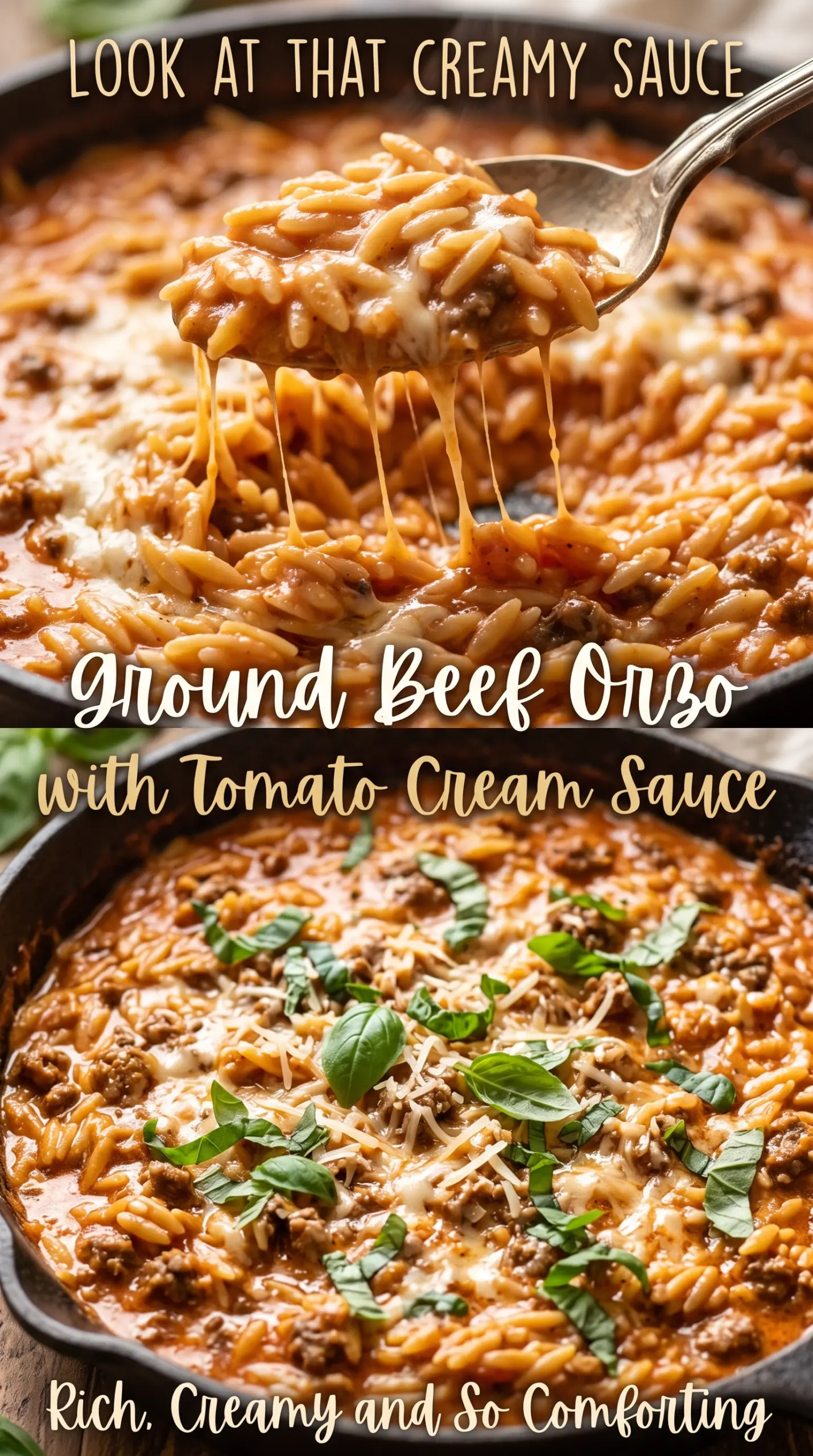
Ground beef orzo with tomato cream sauce lands in that sweet spot between cozy and practical. The orzo turns tender right in the skillet, the beef brings enough savoriness to…
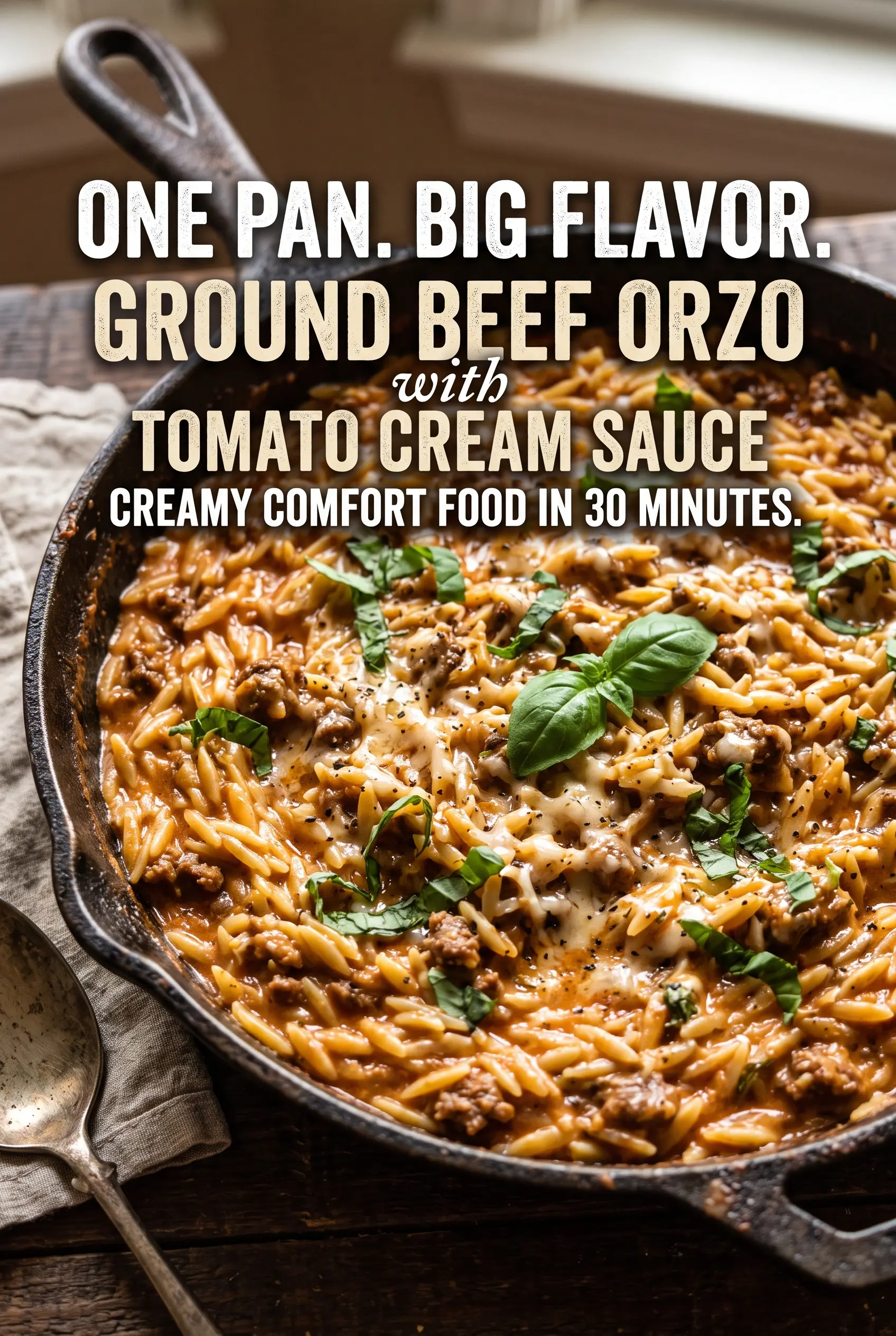
Tip: save now, cook later.Ground beef orzo with tomato cream sauce lands in that sweet spot between cozy and practical. The orzo turns tender right in the skillet, the beef brings enough savoriness to carry the whole dish, and the tomato cream sauce settles into something silky without needing a separate pot or a long simmer. It eats like comfort food, but it comes together fast enough for a weeknight.
What makes this version work is the order of the cooking. Browning the beef first builds the base, then the tomato paste gets a full minute in the pan so it loses that raw edge and deepens in color. The broth cooks the orzo directly, which means the pasta releases starch into the sauce and gives you body without needing a flour roux. The cream and Parmesan go in at the end, after the heat drops a bit, so the sauce stays smooth instead of turning grainy.
Below, I’ve included the one step people usually rush, the ingredient swaps that still keep the sauce balanced, and a few answers for the times the orzo looks too loose or too thick before serving.
The orzo soaked up the tomato cream sauce perfectly and never went mushy. I loved that the Parmesan melted in smoothly at the end, and my husband went back for seconds before I even sat down.
Save this ground beef orzo for the nights when you want a creamy one-pan dinner with a tomato-Parmesan sauce that clings to every bite.
The Step That Keeps the Sauce Creamy Instead of Chalky
Most one-pan pasta dishes go sideways when the dairy goes in too early or the pan is still too hot. Parmesan can seize into little grains if it hits a boiling sauce, and cream loses its smooth texture when it’s cooked hard for too long. The fix is simple: let the orzo finish softening first, then lower the heat before you stir in the cream and cheese.
That last few minutes is where the sauce goes from thin and brothy to glossy and cohesive. If the pan looks a little loose right before the dairy goes in, that’s fine; the starch from the orzo and the Parmesan will tighten it up. If it ever gets too thick, a splash of broth brings it back without watering down the flavor.
What Each Ingredient Is Actually Doing in This Dish
- Lean ground beef — This gives the dish its savory backbone. Lean beef works well because there’s enough fat left to flavor the pan without making the sauce greasy, but if you use a higher-fat blend, drain off the excess before adding the onion.
- Orzo — Orzo cooks quickly and releases just enough starch to help thicken the sauce. Regular short pasta won’t give you the same spoonable texture in a one-pan format, so keep the liquid measurements as written if you swap it.
- Tomato paste — This is the difference between a sauce that tastes bright and one that tastes deep. Cooking it briefly in the pan gets rid of the raw edge and concentrates the tomato flavor.
- Heavy cream and Parmesan — These finish the sauce and turn it velvety. Half-and-half can work in a pinch, but the sauce will be thinner; grate the Parmesan fresh so it melts cleanly instead of clumping.
- Diced tomatoes and beef broth — The tomatoes bring acidity and body, while the broth seasons the pasta as it cooks. A low-sodium broth gives you better control at the end, especially once the cheese goes in.
The 20 Minutes That Actually Matter
Browning the Beef First
Start with a hot skillet and let the beef cook until it loses its pink color and picks up a little browning. Those browned bits at the bottom are not something to avoid; they become part of the sauce once the broth goes in. If the beef steams instead of browns, the pan is crowded or the heat is too low.
Building the Tomato Base
Stir in the onion and cook it until it softens and turns translucent, then add the garlic for just 30 seconds. Garlic burns fast, and once it does, the whole pan tastes bitter. Tomato paste goes in next and needs that minute in the pan so it darkens slightly and starts to smell sweet and concentrated.
Cooking the Orzo in the Sauce
Add the tomatoes, broth, seasonings, and uncooked orzo, then bring everything to a gentle boil before lowering the heat. The liquid should bubble lazily, not roll hard across the pan. Stir once or twice during the simmer so the orzo doesn’t settle and stick to the bottom, and stop cooking when it’s tender with a little bite left in the center.
Finishing with Cream and Cheese
Turn the heat down before adding the cream and Parmesan. Stir until the sauce looks smooth and glossy, then let it sit for a couple of minutes so it thickens around the pasta. If the sauce looks separated, the pan was too hot; pull it off the burner and stir steadily until it comes back together.
How to Adapt This for a Different Pantry or Diet
Make It Gluten-Free
Use a gluten-free orzo or a small gluten-free pasta shape with a similar cook time. Watch the liquid closely, because some gluten-free pastas absorb more broth and can go soft faster than wheat orzo.
Make It Dairy-Free
Swap the heavy cream for full-fat coconut milk or an unsweetened dairy-free cooking cream, then use a dairy-free Parmesan-style topping if you like. The sauce will be a little less sharp and a touch richer, but it still turns creamy if you keep the heat low.
Make It Spicier
Add red pepper flakes with the garlic or stir in a pinch of cayenne with the seasonings. That gives the tomato cream sauce a little heat without changing the texture of the dish.
Storage and Reheating
- Refrigerator: Store in an airtight container for up to 4 days. The orzo will keep absorbing sauce, so expect it to thicken as it sits.
- Freezer: It freezes, but the cream sauce can turn a little grainy after thawing. If you do freeze it, cool it completely first and reheat it gently rather than trying to boil it back to life.
- Reheating: Warm it on the stove over low heat with a splash of broth or cream, stirring as it loosens. The common mistake is blasting it in the microwave until the dairy separates and the pasta dries out around the edges.
Answers to the Questions Worth Asking
Ground Beef Orzo with Tomato Cream Sauce
Ingredients
Equipment
Method
- Heat the olive oil in a large deep skillet over medium-high heat until shimmering.
- Add the lean ground beef and cook until browned, breaking it apart as it cooks.
- Stir in the onion and cook for 3 minutes.
- Add the garlic and cook for 30 seconds.
- Mix in the tomato paste and cook for 1 minute.
- Stir in the diced tomatoes, beef broth, Italian seasoning, paprika, garlic powder, onion powder, salt, and pepper.
- Add the uncooked orzo and stir well to coat the pasta.
- Bring to a gentle boil.
- Reduce the heat, cover, and simmer for 10–12 minutes until the orzo is tender, stirring once halfway through for even cooking.
- Stir in the heavy cream and Parmesan cheese, scraping up any browned bits on the bottom.
- Simmer for another 2–3 minutes until creamy and thickened.
- Garnish with chopped fresh basil or parsley and serve immediately.
