
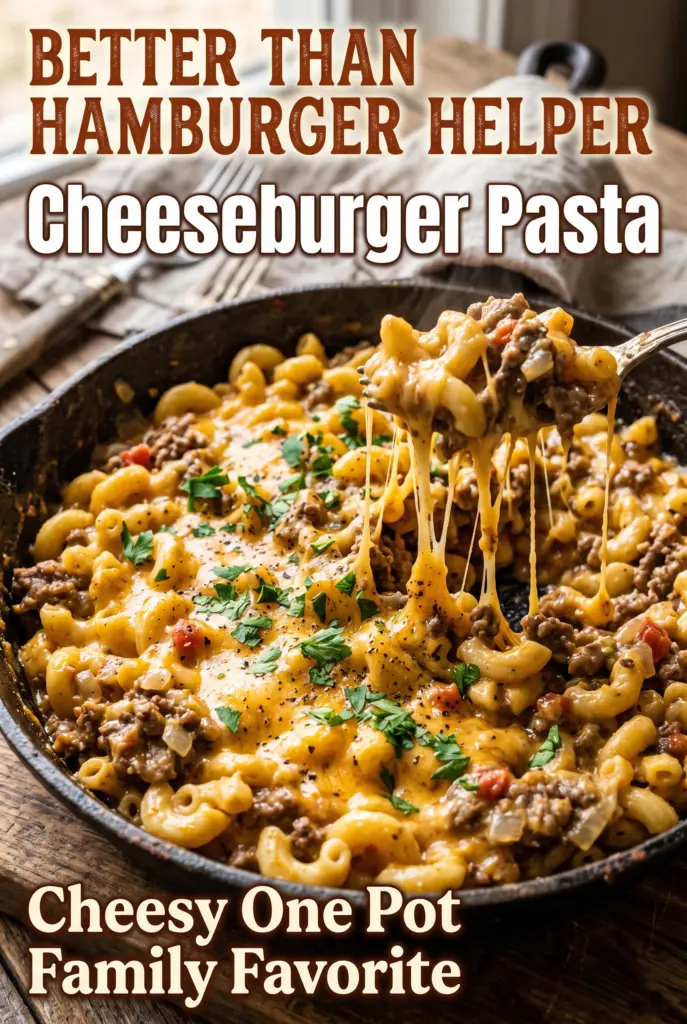
Cheeseburger Pasta Recipe
Cheeseburger pasta hits the table with the kind of comfort that makes people go quiet for a minute. The beef is savory and well-seasoned, the pasta cooks right in the…
Tip: save now, cook later.Cheeseburger pasta hits the table with the kind of comfort that makes people go quiet for a minute. The beef is savory and well-seasoned, the pasta cooks right in the sauce, and the cheddar melts into a creamy coating that clings to every bite instead of sliding off into the pan. It tastes like the best parts of a cheeseburger and a skillet pasta dinner all at once, but without the extra mess of making two separate components.
What makes this version work is the layering. Tomato paste gets cooked down with the beef, which deepens the base instead of leaving the sauce flat, and the mustard plus Worcestershire give it that unmistakable burger-house depth. The pasta simmers in broth, so it absorbs flavor as it softens, and the milk goes in at the end to keep the cheese sauce smooth instead of grainy.
Below, I’ll walk through the small decisions that keep this dish creamy, not gluey, along with a few smart swaps if you need to adjust what’s in your pantry.
The sauce thickened up perfectly and the pasta stayed tender without turning mushy. My husband said it tasted like a cheeseburger in the best possible way, and he went back for seconds right away.
Save this creamy cheeseburger pasta for the nights when you want a one-pot dinner with bold beef flavor and a cheddar sauce that stays silky.
The Reason the Cheese Sauce Stays Creamy Instead of Turning Grainy
The biggest mistake with a dish like this is dumping the cheese into a pan that’s too hot. Cheese needs low heat and a little patience; high heat tightens the proteins and leaves you with a stringy, oily sauce instead of a smooth one. That’s why the milk goes in first here, and the heat gets turned down before the cheddar and mozzarella are added.
The other key move is letting the pasta simmer in the seasoned broth before the dairy enters the picture. If the pasta is cooked separately, you lose that flavor in the pot. If the pasta cooks in the broth, the starch helps thicken the sauce naturally and the noodles carry all that beefy, tomato-rich seasoning right into the final dish.
What Each Ingredient Is Doing in This Bowl
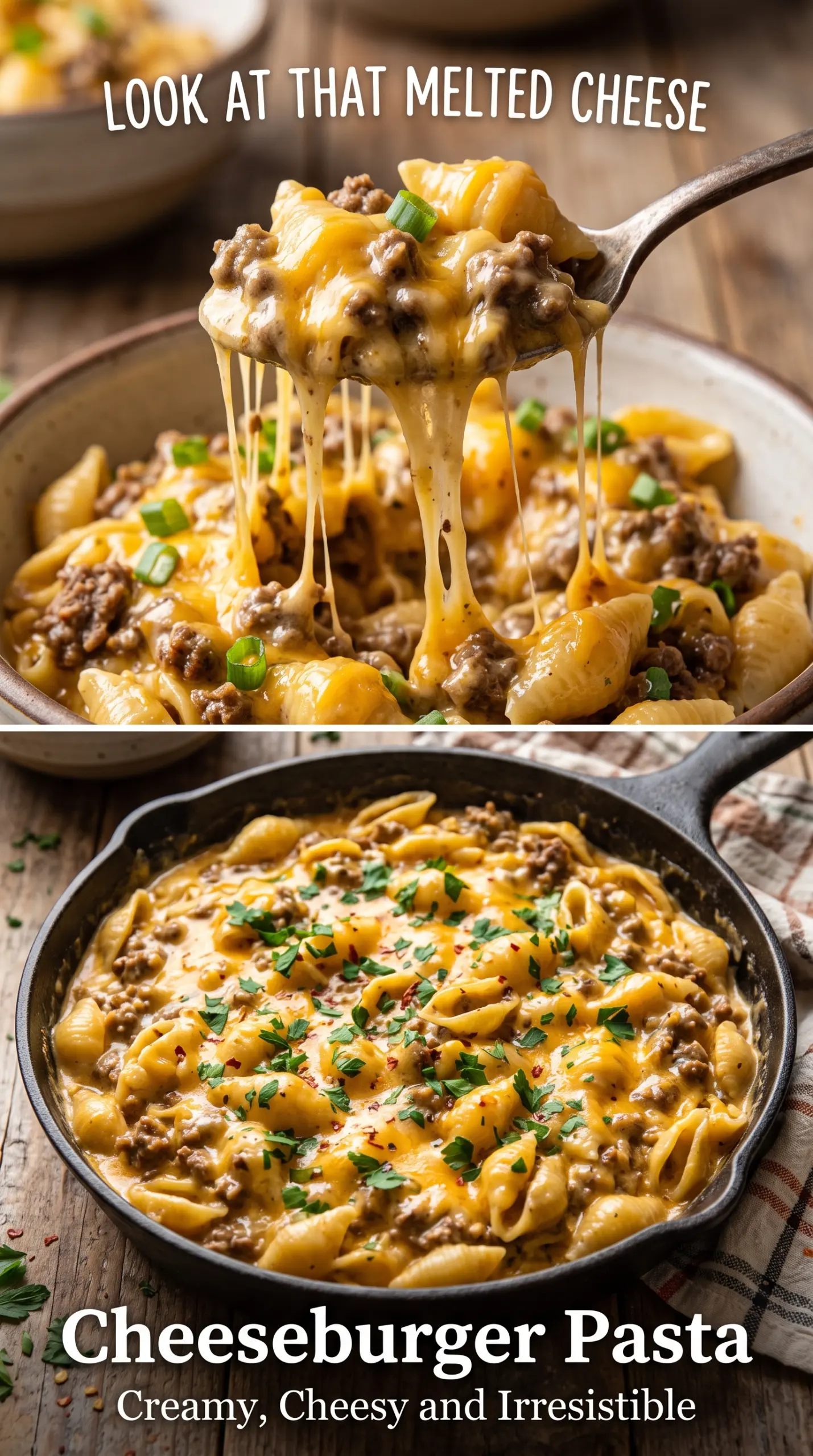
- Lean ground beef — This gives you the classic cheeseburger flavor without leaving the dish greasy. If your beef is higher in fat, drain off most of the excess after browning so the sauce doesn’t feel heavy.
- Tomato paste — Cooking it briefly with the beef concentrates the tomato flavor and takes away the raw edge. Don’t skip this step; it’s what makes the sauce taste cooked and full-bodied instead of thin.
- Beef broth — This seasons the pasta from the inside out. Water works in a pinch, but the finished dish won’t have the same savory depth.
- Whole milk — Added at the end, it loosens the sauce just enough to help the cheese melt smoothly. Lower-fat milk can work, but the sauce won’t be as plush.
- Sharp cheddar and mozzarella — Cheddar brings the burger-shop flavor, and mozzarella gives the sauce stretch and body. Shred both from a block if you can, since pre-shredded cheese often has anti-caking starch that can make the sauce less silky.
- Worcestershire sauce and yellow mustard — These are the quiet ingredients that make the whole dish taste like a cheeseburger instead of just beef and pasta. They add tang, salt, and a little aged savoriness.
The Order That Keeps the Pasta Tender and the Sauce Thick
Browning the Beef and Building the Base
Start by browning the beef in a large deep skillet or Dutch oven until there’s no pink left and the edges pick up a little color. Add the onion after the beef so it softens in the fat and starts to smell sweet rather than raw. Garlic goes in last and only needs about 30 seconds; if it cooks too long, it turns bitter and disappears under the cheese later.
Cooking Down the Tomato Paste
Stir the tomato paste into the beef and let it cook for a minute before any liquid goes in. You’re looking for a darker brick-red color and a smell that’s deeper, less sharp. This tiny step matters because it removes the tinny taste some tomato paste can have straight from the can.
Simmering the Pasta in the Broth
Once the broth, diced tomatoes, Worcestershire, mustard, and spices are in, add the uncooked pasta and stir well so nothing sticks in one clump. Bring it to a boil, then drop it to a steady simmer and cover the pot. Stir every few minutes; if you leave it alone, the pasta on the bottom can catch before the top is tender.
Finishing with Milk and Cheese
When the pasta is tender and most of the liquid has been absorbed, reduce the heat to low before adding the milk and cheese. If the sauce looks loose at first, give it a minute — the cheese will melt into it and thicken as it sits. If it turns grainy, the pan was too hot; pull it off the burner and stir until it smooths out.
Three Ways to Bend This Recipe Without Breaking It
Make It Gluten-Free
Use a gluten-free elbow or shell pasta and watch the simmer closely, since gluten-free noodles can go from tender to soft faster than regular pasta. Stir a little more often than usual so they don’t settle and stick to the bottom.
Swap in Ground Turkey
Ground turkey works well if you want a lighter version, but it needs the full hit of Worcestershire, mustard, and cheddar to taste satisfying. Add a little extra salt and don’t skip browning, because turkey can taste flat if it stays pale.
Use a Dairy-Reduced Version
You can cut back on the mozzarella and use more broth for a looser, less rich sauce, but the texture won’t be as creamy. If you need it dairy-free, the flavor changes more dramatically; use an unsweetened plant milk and a good melting-style dairy-free cheese, then expect a softer, less stretchy finish.
Storage and Reheating
- Refrigerator: Store in an airtight container for up to 4 days. The sauce thickens as it chills and the pasta keeps absorbing liquid.
- Freezer: Freezes, but the texture gets softer after thawing. For best results, cool completely, portion it, and freeze for up to 2 months.
- Reheating: Reheat gently on the stove or in the microwave with a splash of milk or broth. High heat is the quickest way to break the sauce and make the pasta dry out.
Answers to the Questions Worth Asking
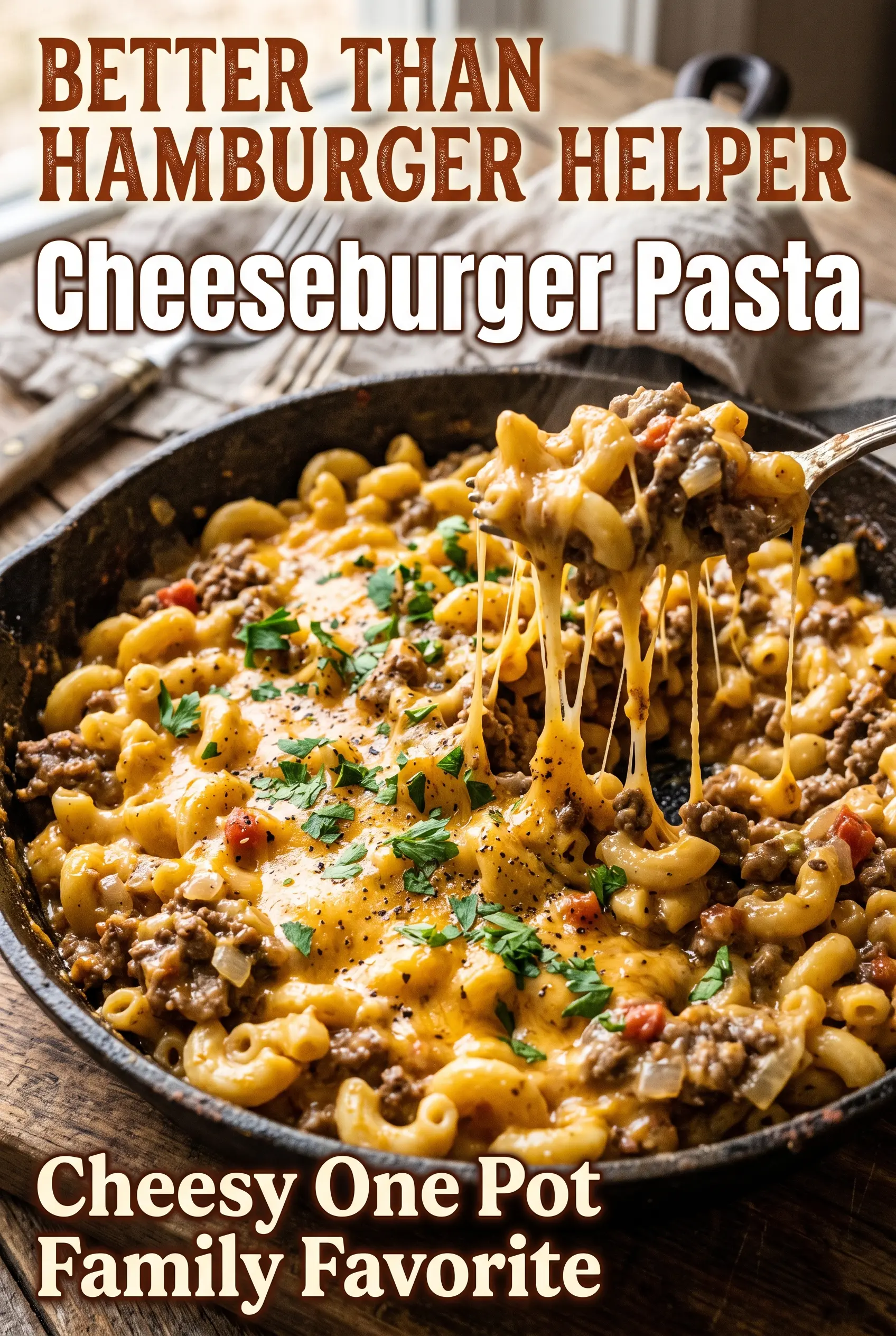
Cheeseburger Pasta Recipe
Ingredients
Equipment
Method
- Heat the olive oil in a large deep skillet or Dutch oven over medium-high heat until shimmering. Add the ground beef and cook until browned, breaking it up as it cooks.
- Stir in the onion and cook for 3 minutes, until it softens and starts to turn translucent. Add the garlic and cook for 30 seconds, just until fragrant.
- Mix in the tomato paste and cook for 1 minute, stirring to darken it slightly. Stir in the diced tomatoes, beef broth, Worcestershire sauce, yellow mustard, paprika, garlic powder, onion powder, salt, and black pepper.
- Add the uncooked pasta and stir well so it’s evenly coated in the liquid. Bring the mixture to a boil, then reduce the heat and cover.
- Simmer for 10–12 minutes, stirring occasionally, until the pasta is tender and most of the liquid is absorbed. Reduce the heat to low and stir in the whole milk.
- Add the shredded sharp cheddar cheese and shredded mozzarella cheese, stirring until smooth and creamy. Sprinkle with chopped parsley and serve immediately.
