
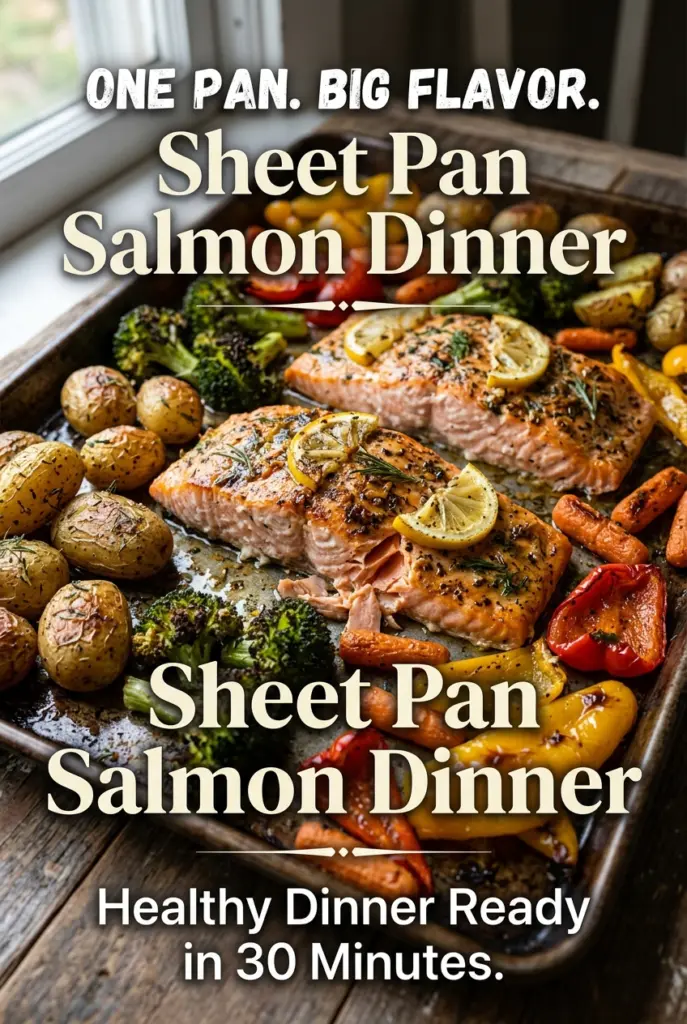
Sheet Pan Salmon Dinner Recipe
Roasted salmon and vegetables on one pan gives you the kind of dinner that looks finished without asking for much from you. The salmon comes out tender and just barely…
Tip: save now, cook later.Roasted salmon and vegetables on one pan gives you the kind of dinner that looks finished without asking for much from you. The salmon comes out tender and just barely flaky, the potatoes get those crisp edges that only happen when they’ve had a head start, and the broccoli and peppers pick up enough caramelization to taste like they belong on the same tray. It’s the kind of meal that disappears fast because every bite has a little contrast: rich fish, sweet vegetables, and bright lemon.
What makes this version work is the staging. The potatoes go in first because they need the longest time in the oven; if you add everything at once, the fish finishes before the vegetables have any real color. The garlic-butter mixture goes on the salmon near the end so it perfumes the fish instead of burning, and the lemon slices keep the top from tasting heavy. A sheet pan lined with parchment helps, but the real payoff is not crowding the pan — space is what lets the vegetables roast instead of steam.
Below, I’ve included the timing trick that keeps the salmon from overcooking, a few swaps that still hold the dinner together, and the storage notes that matter if you’re planning leftovers.
The potatoes had crisp edges, the salmon stayed moist, and the garlic butter never burned. I loved that everything was done in one pan at the same time with no soggy vegetables.
Sheet Pan Salmon Dinner with lemon, garlic butter, and roasted vegetables is the one-pan meal worth keeping close.
The Reason Sheet Pan Salmon Goes Dry Before the Vegetables Are Done
The biggest mistake with sheet pan salmon is treating it like the vegetables need the same amount of time. They don’t. Potatoes and carrots need a head start because they’re dense and slow to soften, while salmon cooks fast and keeps carrying over after it comes out of the oven. If you put everything on the pan at once, you usually end up choosing between overcooked fish and underdone vegetables.
This recipe avoids that problem by staging the tray in two parts. The vegetables that need the most time go in first, and the salmon joins later with enough heat left to cook through without drying out. The second thing that matters is spacing. If the pan is too crowded, moisture gets trapped and the vegetables steam instead of browning. You want the edges to have space to caramelize.
What Each Ingredient Is Actually Doing in This Dish
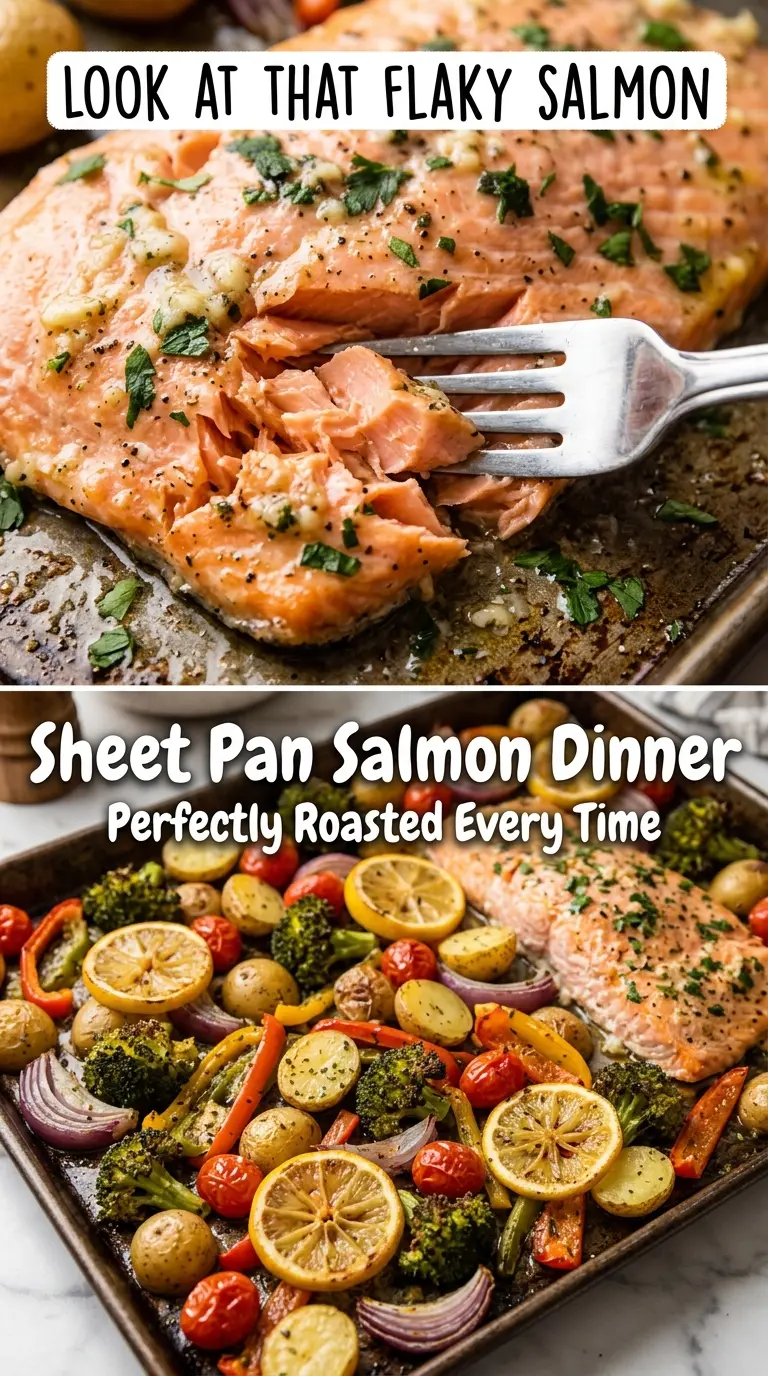
- Salmon fillets — Use fillets that are similar in thickness so they finish at the same time. Skin-on works well because it helps the fish hold together, but skinless is fine if that’s what you have. If your fillets are especially thick, add a minute or two rather than guessing from the clock.
- Baby potatoes — These are the backbone of the pan because they can take the high heat and still come out creamy inside. Halving them gives you more surface area, which means better browning. Larger potatoes can work too if you cut them into small, even chunks.
- Broccoli, carrots, and bell pepper — This mix gives you different textures: crisp-tender broccoli, sweet carrots, and peppers that soften without turning mushy. Fresh broccoli florets roast better than frozen ones here because frozen broccoli releases too much water. If you swap in another vegetable, pick one that roasts in roughly the same time.
- Olive oil and melted butter — The olive oil helps the vegetables brown, while the butter gives the salmon a richer finish. You need both: oil alone tastes flatter, and butter alone can brown too quickly in the oven. If you want to use all oil, the dinner still works, but the fish will taste a little less plush.
- Garlic, Italian seasoning, paprika, garlic powder, and onion powder — This seasoning mix builds flavor without needing a marinade. Fresh garlic gives the best aroma in the butter mixture, while the dry spices cling to the vegetables and help them roast with color. If you only have one or two of these spices, keep the garlic and paprika; those do the most work.
- Lemon slices and parsley — Lemon cuts through the richness and keeps the whole pan from tasting heavy. Parsley is the fresh finish that wakes everything up at the end. Skip the parsley if you need to, but don’t skip the lemon unless you’re replacing it with another acid like a little splash of white wine or a squeeze of orange.
The 20 Minutes That Actually Matter
Getting the Potatoes Started
Heat the oven to 425°F and let the pan preheat if you have time. Toss the halved potatoes with some of the oil, paprika, salt, and pepper, then spread them cut-side down so they can brown instead of roll around. Roast them first until the edges start to color and a fork meets a little resistance; if they’re already soft before the salmon goes in, they’ll turn mushy by the end.
Adding the Faster-Cooking Vegetables
Once the potatoes have a head start, add the broccoli, carrots, and bell pepper to the pan. Keep everything in a single layer with a little breathing room between pieces. If the vegetables pile up, they trap steam and lose the roasted edges that make this dinner worth making. A light toss with oil is enough; too much grease can make the tray soggy.
Finishing with the Salmon
Stir the butter, garlic, and seasonings together, then brush it over the salmon once the tray is ready for the fish. Lay the fillets in the open spaces on the pan and top them with lemon slices. Roast just until the salmon flakes and still looks glossy in the center; if it turns opaque all the way through and starts to separate in dry chunks, it stayed in too long. Pull it early if you’re unsure — it keeps cooking for a minute after it leaves the oven.
What to Change When You Need a Different Version
Dairy-Free Version That Still Tastes Rich
Use olive oil in place of the butter and add a little extra lemon at the end. You lose some of the roundness that butter gives the salmon, but the fish still stays moist and the vegetables still roast beautifully. A teaspoon of Dijon in the oil mixture can help bring back a little depth if you want it.
Gluten-Free Without Any Adjustment
This dinner is naturally gluten-free as written, as long as your seasoning blends are clean. It’s one of the easier meals to keep that way because the sauce is built from butter, oil, garlic, and lemon instead of a flour-thickened coating.
Changing Up the Vegetables
You can swap the broccoli, carrots, or bell pepper for vegetables that roast in a similar window, like asparagus, zucchini, or green beans. Keep in mind that softer vegetables need less time, so they should go in later than potatoes. If you use something watery, like mushrooms or zucchini, give the pan more space so you don’t end up steaming them.
Making It for a Bigger Crowd
Double the ingredients only if you have two sheet pans. Overcrowding one pan turns the vegetables soft and keeps the salmon from browning properly. If you only have one pan, roast in batches and keep the first round warm on a low oven setting.
Storage and Reheating
- Refrigerator: Store leftovers in an airtight container for up to 3 days. The salmon stays good, though the vegetables soften a little.
- Freezer: You can freeze the cooked salmon, but the vegetables lose their texture after thawing, so I don’t recommend freezing the whole tray.
- Reheating: Reheat gently in a 300°F oven until warmed through. The biggest mistake is blasting salmon in the microwave, which dries it out and makes the vegetables rubbery.
Answers to the Questions Worth Asking
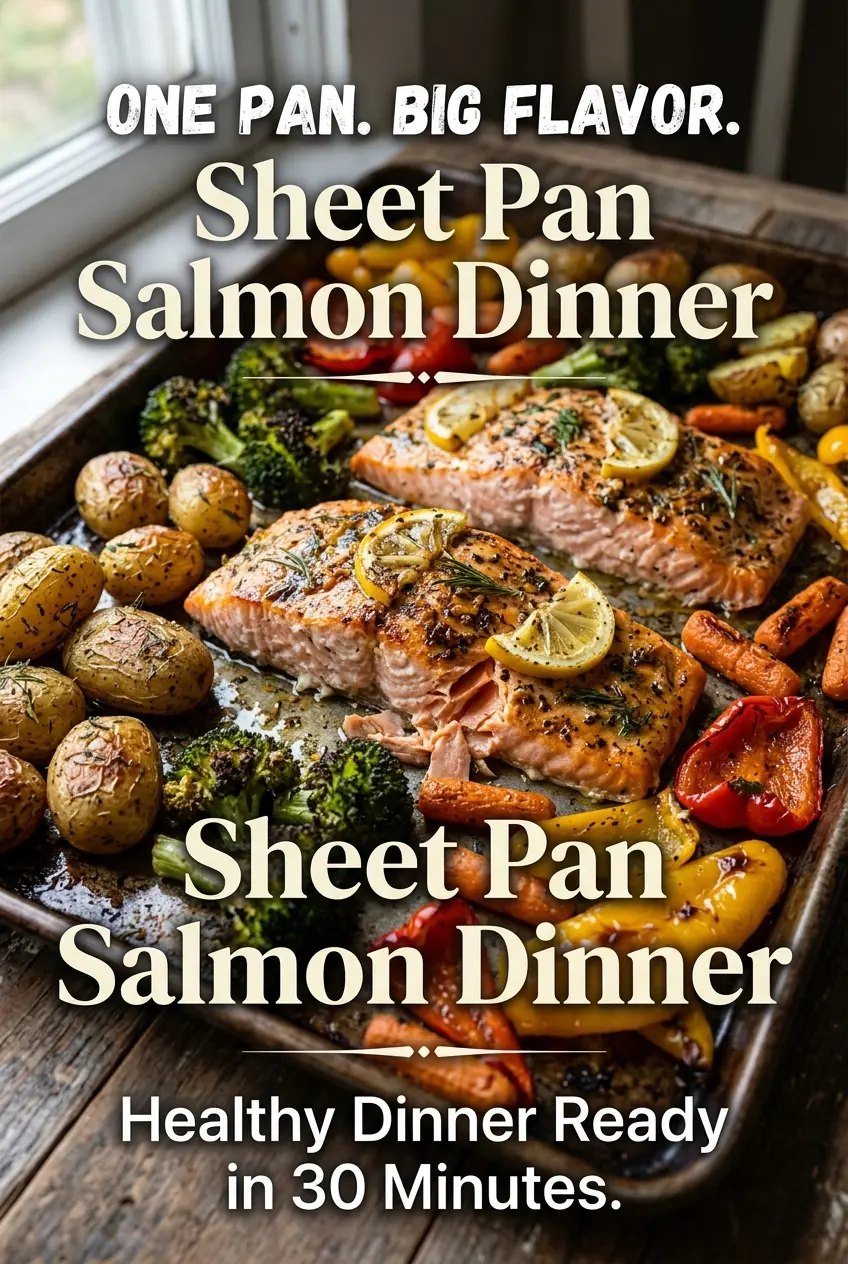
Sheet Pan Salmon Dinner Recipe – Easy Roasted Salmon and Vegetables
Ingredients
Equipment
Method
- Preheat the oven to 425°F (220°C). Line a large sheet pan with parchment paper for easy cleanup.
- Toss the baby potatoes with half of the olive oil, paprika, salt, and black pepper. Spread them in an even layer on the sheet pan.
- Roast the potatoes for 15 minutes at 425°F (220°C). Look for edges starting to brown and potatoes becoming tender.
- Add the broccoli florets, baby carrots, and sliced red bell pepper to the pan. Stir to distribute them around the potatoes.
- Mix the remaining olive oil, melted butter, garlic, Italian seasoning, garlic powder, onion powder, salt, and black pepper. The mixture should look glossy and evenly combined.
- Place the salmon fillets on the sheet pan, nestling them among the vegetables. Brush the salmon generously with the garlic butter mixture.
- Top the salmon with lemon slices. Roast for 12–15 minutes at 425°F (220°C) until the salmon flakes easily when pressed with a fork.
- Garnish with chopped fresh parsley. Serve immediately with the roasted vegetables for best texture.
