
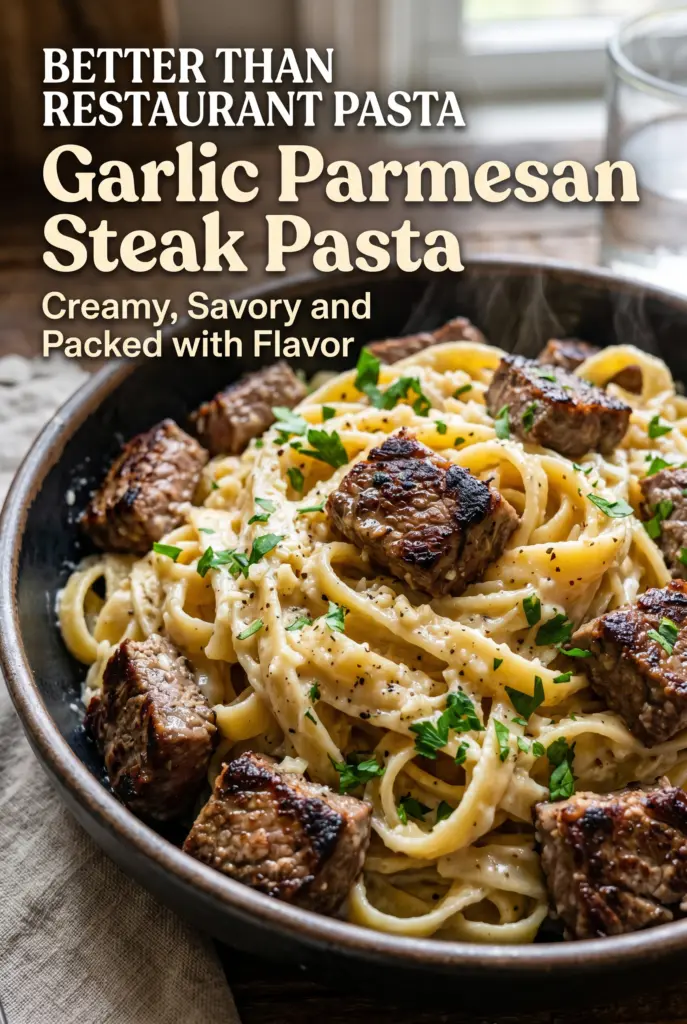
Garlic Parmesan Steak Pasta
Garlic Parmesan steak pasta hits that sweet spot between comfort food and dinner that feels a little dressed up. The steak stays tender, the sauce turns silky instead of heavy,…
Tip: save now, cook later.Garlic Parmesan steak pasta hits that sweet spot between comfort food and dinner that feels a little dressed up. The steak stays tender, the sauce turns silky instead of heavy, and every bite gets coated in garlic, butter, and sharp Parmesan. It tastes like something you’d order at a small Italian restaurant, but it comes together fast enough for a normal weeknight.
The part that makes this version work is the way the steak and sauce are handled separately, then brought together at the end. A hard sear gives the meat a deep browned edge without overcooking the center, and the sauce builds in the same pan so all those browned bits become part of the flavor. Freshly grated Parmesan matters here because it melts cleanly; the bagged stuff can leave the sauce grainy.
Below, I’ve added the timing that keeps the steak from going chewy, the reason reserved pasta water matters, and a few easy swaps if you want to adjust the richness or make it work with what you already have.
The sauce thickened up beautifully and coated every piece of pasta. I followed the steak timing exactly and it stayed tender, not tough, even after tossing it back in at the end.
Save this garlic Parmesan steak pasta for the nights when you want a creamy skillet dinner with a proper sear and a sauce that clings to every bite.
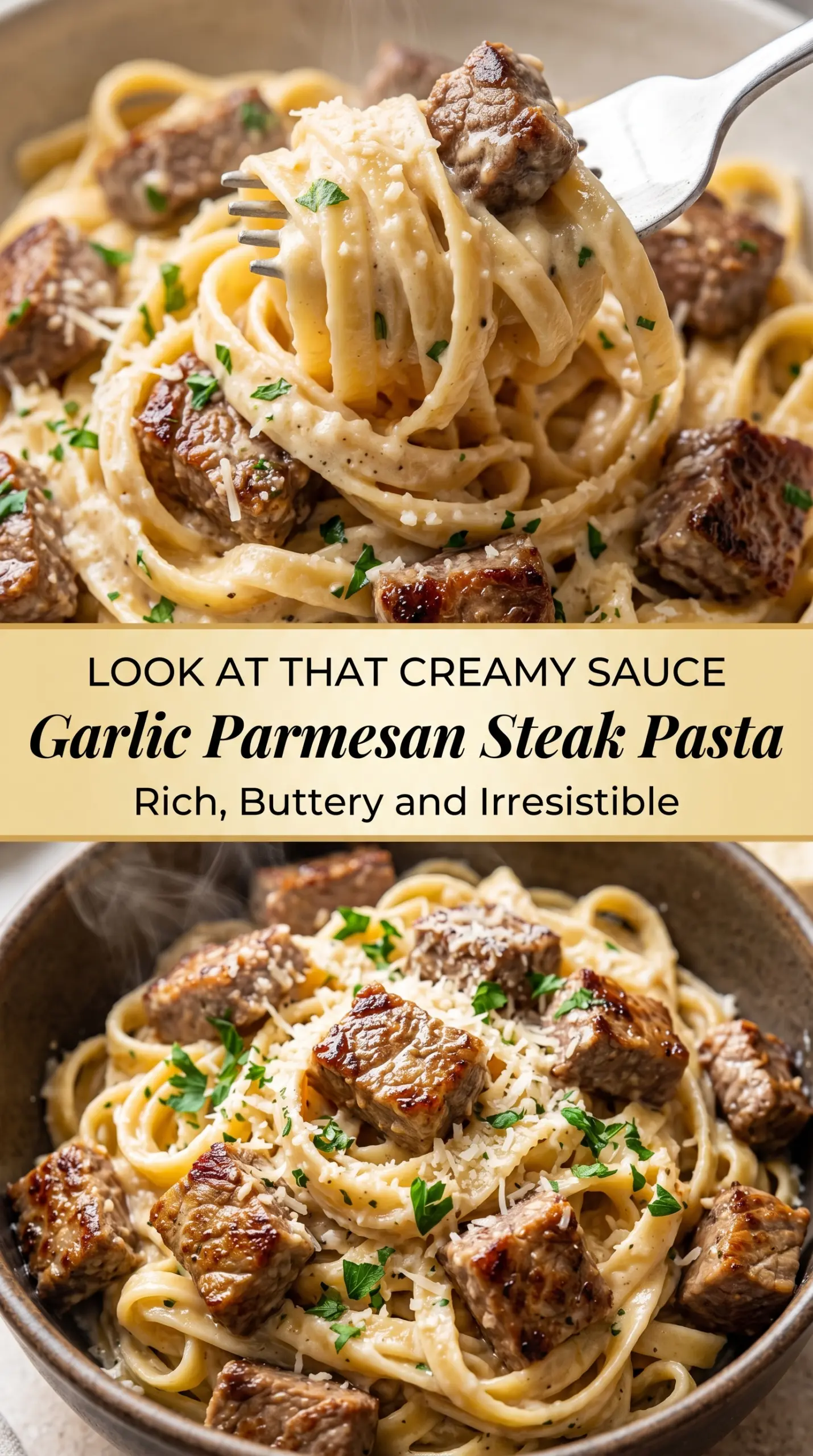
The Trick to Keeping the Steak Tender While the Sauce Finishes
The biggest mistake in steak pasta is cooking the meat all the way through before it ever sees the sauce. Thin steak pieces keep cooking after they leave the pan, and if they sit in the skillet while the cream reduces, they turn firm fast. Sear them hard, pull them out, and bring them back only at the very end. That one habit keeps the texture in the sweet spot.
The second thing worth paying attention to is the heat under the sauce. Garlic burns fast, and Parmesan can turn clumpy if the pan is too hot when it goes in. Medium heat gives the butter and cream time to thicken gently, which is what keeps the sauce glossy instead of greasy or broken.
- Sirloin steak — This is tender enough for quick searing and stays juicy if you don’t overcook it. Ribeye works too if you want more richness, while flank steak needs to be sliced very thin across the grain.
- Freshly grated Parmesan — This melts into the cream much more smoothly than pre-shredded cheese. If you only have packaged Parmesan, add it off the heat and whisk patiently so it doesn’t seize.
- Heavy cream — It gives the sauce body without needing flour. Half-and-half will work in a pinch, but the sauce will be thinner and you may need a little more pasta water to help it cling.
- Pasta water — The starch in that reserved water helps the sauce emulsify and stick to the penne. Add it a splash at a time so you loosen the sauce without turning it soupy.
Building the Sauce So It Stays Silky and Clings to the Pasta
Searing the Steak Fast and Hard
Heat the skillet until it’s properly hot before the steak goes in. You want an immediate sizzle and browned edges within a couple of minutes, not gray meat that steams in its own juices. If the pan is crowded, the temperature drops and the steak releases liquid, so work in batches if needed. Pull the steak when it’s browned outside and still a little underdone in the center, because it will finish later.
Cooking the Garlic Without Letting It Burn
After the steak comes out, lower the heat before the butter and garlic go in. Garlic only needs about 30 seconds in hot butter, just long enough to smell fragrant and turn pale gold at the edges. Once it starts to brown, the flavor turns bitter and there’s no fixing it. Keep the garlic moving and move straight into the cream.
Finishing the Sauce and Bringing Everything Together
Let the cream simmer for a few minutes before the Parmesan goes in so it thickens slightly on its own. Whisk in the cheese gradually and keep the heat gentle; if you dump it in over high heat, the sauce can turn grainy. Toss the pasta in first, then add pasta water only as needed until the sauce looks glossy and coats the noodles. Return the steak at the very end and stir just until warmed through so it stays tender.
How to Adapt This for a Lighter Plate or a Different Pantry
Gluten-Free Version
Use your favorite gluten-free penne and keep the sauce exactly the same. The main difference is that gluten-free pasta can absorb liquid faster, so hold back a little of the pasta water and add it only if the sauce tightens too much.
Lower-Richness Swap
You can replace part of the heavy cream with whole milk, but the sauce will be looser and less luxurious. If you go this route, let it simmer a little longer before adding the cheese so it has time to thicken naturally.
Chicken Instead of Steak
Boneless chicken breast or thighs work well if you want a milder version. Cook the chicken all the way through before building the sauce, and cut it into bite-sized pieces so it still feels hearty against the pasta.
Extra Garlic, Extra Parsley
If you like a sharper garlic hit, add one extra clove, but keep the cooking time short so it stays sweet instead of bitter. A little more parsley at the end brightens the cream sauce and keeps the whole dish from tasting too heavy.
Storage and Reheating
- Refrigerator: Store leftovers in an airtight container for up to 3 days. The sauce will thicken and the pasta will absorb some of it.
- Freezer: I don’t recommend freezing this one. Cream sauces can separate after thawing, and the pasta turns soft.
- Reheating: Warm it gently on the stove over low heat with a splash of cream, milk, or water. High heat is the mistake that breaks the sauce and makes the steak tough.
Questions I Get Asked About This Recipe
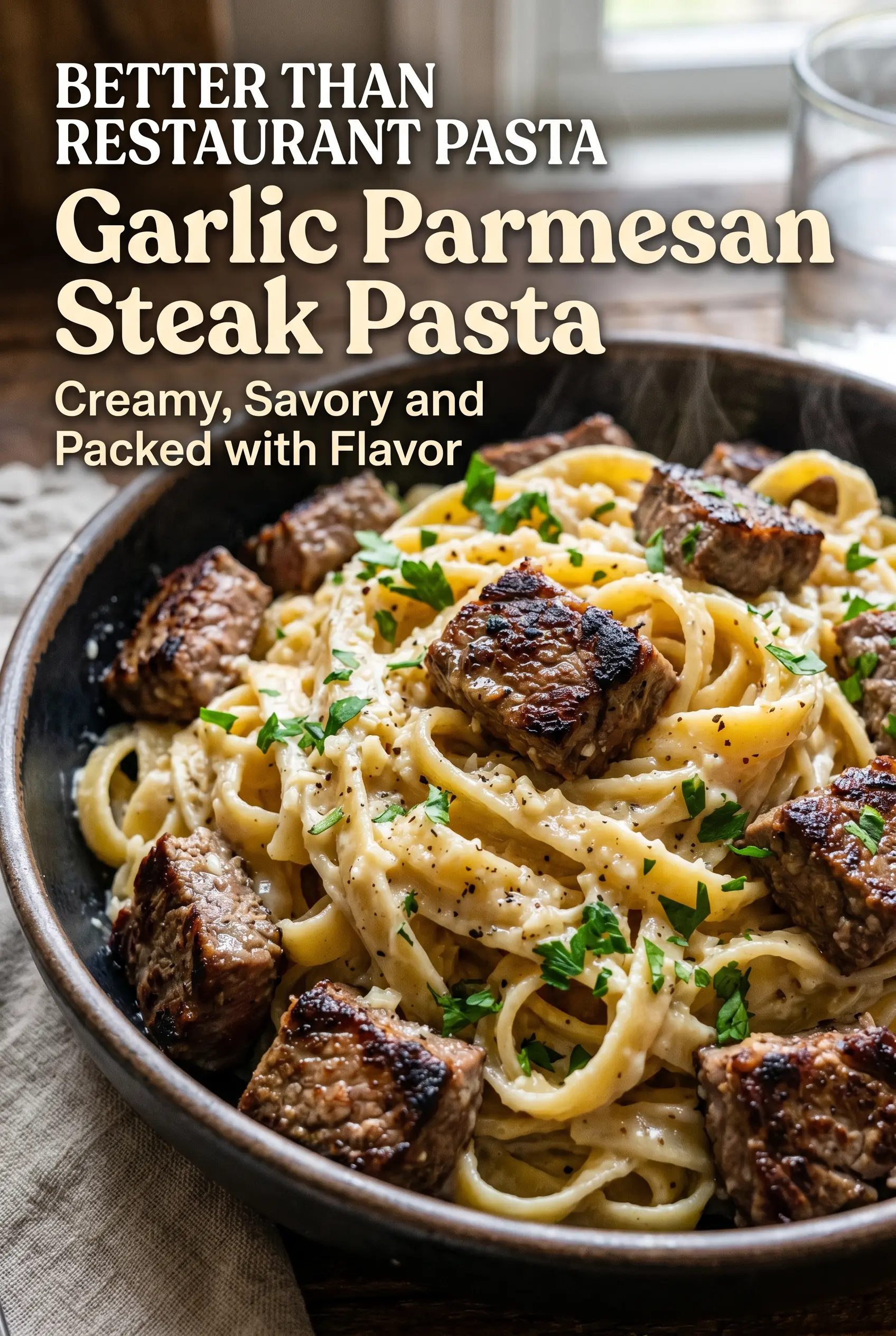
Garlic Parmesan Steak Pasta
Ingredients
Equipment
Method
- Cook penne pasta according to package directions until al dente, stirring occasionally so it doesn’t stick. Visual cue: pasta should be tender but still have a slight bite in the center.
- Reserve 1/2 cup pasta water, then drain the pasta and set aside. Visual cue: a thin stream stops dripping from the colander.
- Season sirloin steak pieces with garlic powder, salt, and black pepper until evenly coated. Visual cue: the steak looks speckled and dry with spices.
- Heat olive oil in a large skillet over high heat until shimmering. Visual cue: oil moves quickly across the pan surface.
- Sear steak pieces for 2–3 minutes per side until browned, without moving them too much. Visual cue: deep golden-brown crust forms on the edges.
- Remove the steak from the skillet and set aside. Visual cue: steak releases easily from the pan with minimal sticking.
- Reduce heat to medium and melt butter in the skillet. Visual cue: butter foams lightly and melts smoothly across the pan.
- Add garlic and cook for 30 seconds, stirring, until fragrant. Visual cue: garlic becomes aromatic but does not brown.
- Stir in heavy cream and Italian seasoning, then simmer for 2–3 minutes. Visual cue: sauce thickens slightly and bubbles gently.
- Add Parmesan cheese and whisk until smooth and glossy. Visual cue: sauce turns uniform and no cheese lumps remain.
- Toss drained penne pasta into the sauce until coated. Visual cue: pasta looks slick and creamy rather than dry.
- Add reserved pasta water if needed to loosen the sauce to a silky consistency. Visual cue: sauce clings in a light coat when you drag a spoon through it.
- Return steak to the skillet and gently combine just until warmed through. Visual cue: steak pieces are coated without breaking apart.
- Garnish with parsley and serve immediately. Visual cue: green flecks sit on top of the glossy sauce-coated pasta.
