
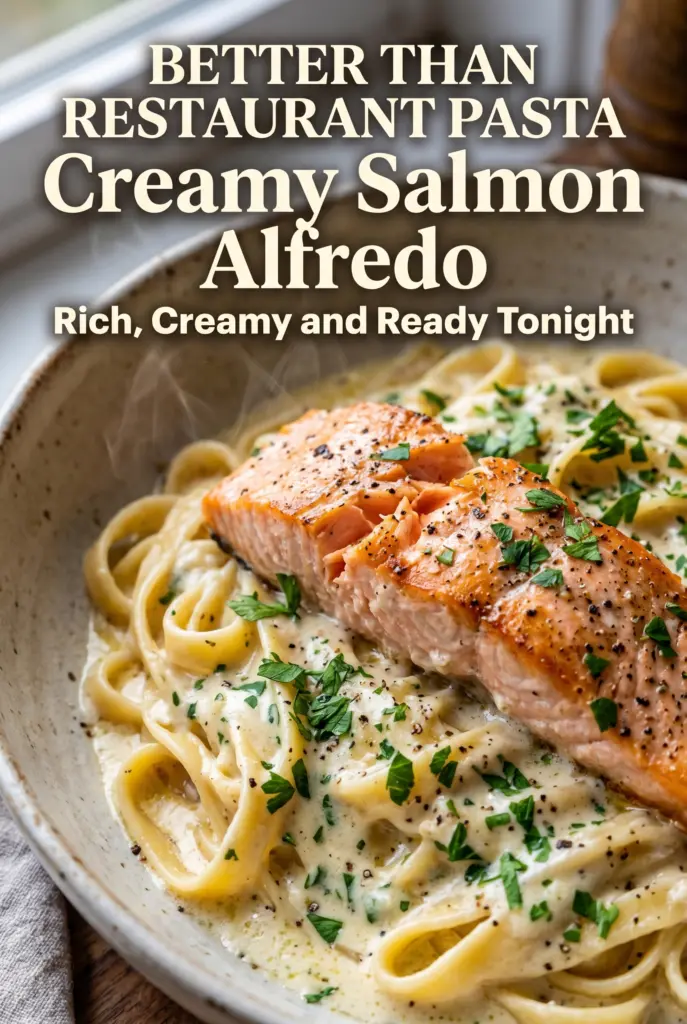
Creamy Salmon Alfredo
Flaky salmon tucked into a velvety Parmesan Alfredo sauce gives this pasta the kind of comfort that feels a little upgraded without turning into a project. The salmon stays in…
Tip: save now, cook later.Flaky salmon tucked into a velvety Parmesan Alfredo sauce gives this pasta the kind of comfort that feels a little upgraded without turning into a project. The salmon stays in big, tender pieces instead of disappearing into the sauce, and the fettuccine catches every bit of that creaminess. It eats like something you’d order out, but it comes together with familiar pantry ingredients and a short list of steps that actually matter.
The key is treating both parts with a little care. The salmon gets roasted on its own so it cooks cleanly and stays moist, while the sauce is built gently in a skillet so the cream never boils hard and the Parmesan melts in smoothly. Freshly grated cheese matters here because pre-shredded cheese is coated and tends to make the sauce grainy instead of glossy. A splash of pasta water at the end loosens the sauce just enough to cling to the noodles without turning soupy.
Below, I’ll walk through the part that keeps the sauce from splitting, the ingredient choices that matter most, and the small adjustments that make this work for a few different eating styles.
The sauce stayed silky and never got grainy, and the salmon held together in nice big flakes instead of turning mushy when I folded it in. My husband went back for seconds before I even sat down.
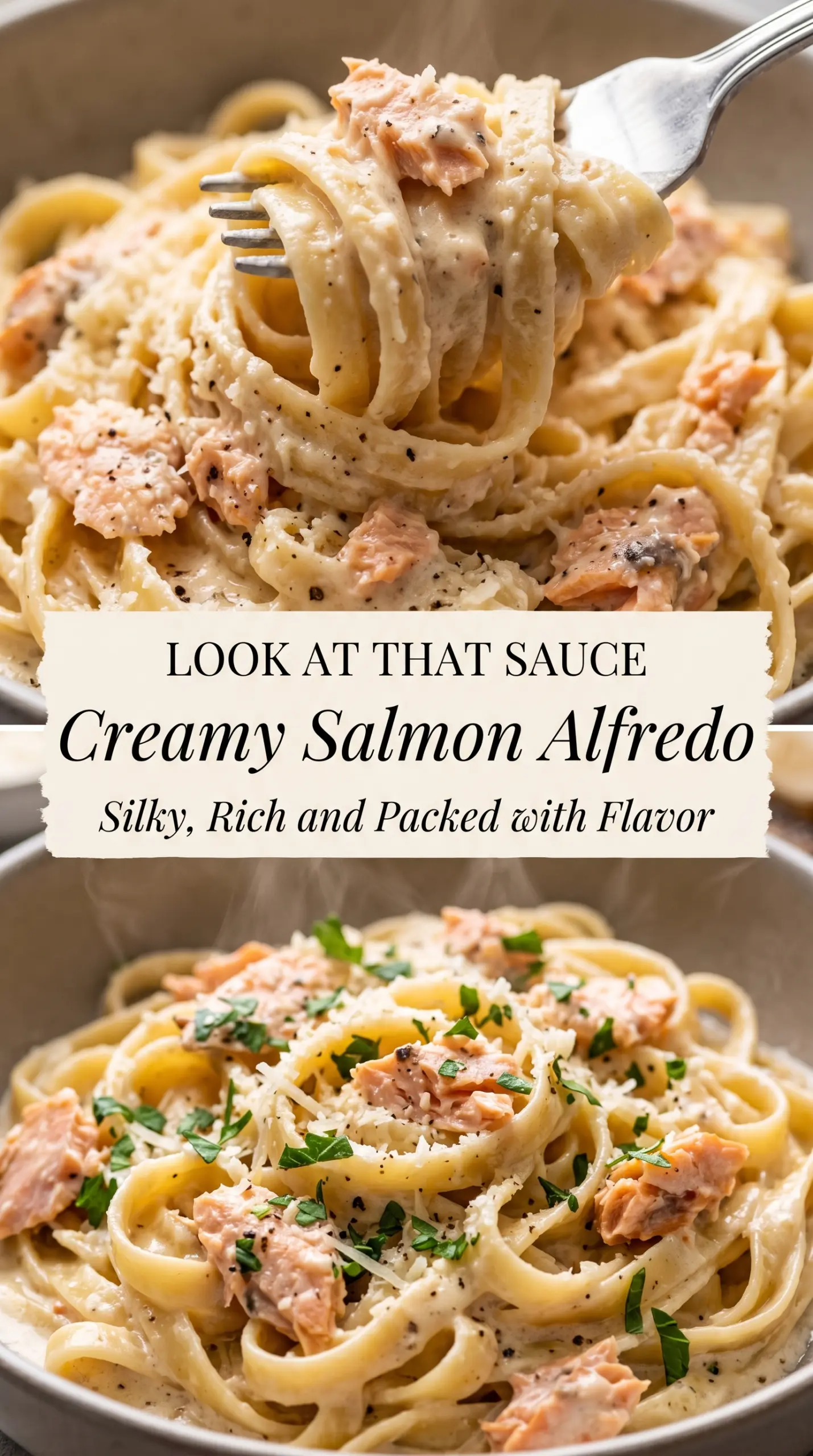
Creamy Salmon Alfredo with silky Parmesan sauce is the kind of dinner worth pinning for a fast seafood night.
The Trick to Keeping the Alfredo Sauce Smooth After the Salmon Goes In
Alfredo breaks when it gets rushed. High heat, too much boiling, or cheese added before the cream has had a chance to settle are the usual culprits. With salmon in the mix, the risk goes up because you’re handling a delicate protein and a dairy sauce at the same time. The fix is to keep the sauce at a gentle simmer, then pull the pan off the heat before the Parmesan goes in. That pause gives the cheese enough warmth to melt without tightening into a greasy, grainy mess.
The other thing that matters is the order. Cook the pasta and salmon separately, then bring them together at the end. If the salmon sits in the sauce for too long while it’s bubbling, it can go dry and lose its clean flakes. Fold it in at the very end, just long enough to warm through.
What Each Ingredient Is Actually Doing in This Dish
- Salmon — Rich salmon is the star here, so use fillets that are evenly thick if you can. Skin-on or skinless both work, but skinless is easier to break into large pieces for serving. If you only have frozen salmon, thaw it fully and pat it dry so it roasts instead of steaming.
- Fettuccine — The flat shape holds the Alfredo better than thinner pasta. Spaghetti will work in a pinch, but it won’t carry the sauce with the same weight. Cook it to al dente because it softens again once it hits the warm pan.
- Heavy cream — This is what gives the sauce its body without needing flour. Half-and-half can be used, but it won’t finish as thick or as stable. If you swap it, expect a looser sauce and keep the heat lower.
- Freshly grated Parmesan — This is not the place for the bagged stuff. Pre-grated cheese usually has starches or anti-caking agents that make the sauce sandy. Grate it finely so it melts fast and turns the cream glossy.
- Butter and garlic — Butter gives the sauce its base flavor, and the garlic perfumes the whole pan in just a few seconds. Let the garlic go fragrant, not brown, or it will taste bitter under the cream.
- Pasta water — Starchy pasta water is the easiest way to loosen the sauce without thinning it out. Add it a splash at a time until the noodles are coated and the sauce moves like cream instead of paste.
Building the Salmon Alfredo in the Right Order
Roasting the Salmon First
Season the salmon with oil, garlic powder, paprika, salt, and pepper, then roast it until it flakes at the center but still looks moist. You want the flesh to separate in large pieces, not collapse into dry crumbs. If the salmon is overbaked, it won’t recover in the sauce, so pull it the moment the thickest part turns opaque and just starts to flake.
Cooking the Pasta to Hold the Sauce
Boil the fettuccine until al dente and save a little pasta water before draining. That reserve matters later because Alfredo thickens fast once it comes off the heat. If the pasta sits too long in the colander, toss it with a tiny bit of oil or add it straight into the sauce while it’s still hot.
Making the Alfredo Without Breaking It
Melt the butter, soften the garlic briefly, then stir in the cream and Italian seasoning and let it bubble gently. The goal is a quiet simmer with small bubbles around the edge, not a rolling boil. Pull the pan off the burner before adding Parmesan, whisk until smooth, then return the pan to low heat only if it needs a touch more warmth.
Bringing Everything Together at the End
Add the pasta to the sauce first so every strand gets coated, then loosen it with pasta water if it looks tight. Fold in the salmon with a light hand and stop as soon as the pieces are warmed through. Overstirring is what turns those pretty fillets into a shredded mess.
Three Ways to Make This Recipe Fit What You Have
Dairy-Free Swap With Coconut Cream
Use full-fat coconut cream in place of the heavy cream and a dairy-free Parmesan-style cheese if you have one that melts well. The sauce will be a little sweeter and more noticeable in flavor, so balance it with extra pepper and a small squeeze of lemon if you like brightness.
Gluten-Free Version
Swap in your favorite gluten-free fettuccine and cook it just to al dente, since gluten-free pasta can soften quickly once sauced. Keep the sauce method the same; the cream and cheese don’t need flour to thicken, so you won’t lose anything in the swap.
Make It Work With Shrimp Instead
If salmon isn’t on hand, use peeled shrimp and cook them quickly in a skillet or roast them for just a few minutes until pink and curled. Shrimp gives you a lighter texture and a sweeter finish, but it needs less time in the sauce than salmon, so add it at the very end.
Leftover Pasta That Still Eats Well
This reheats best with a splash of cream or milk stirred in before warming, because Alfredo thickens hard in the fridge. Warm it slowly over low heat or in short bursts in the microwave, and stop as soon as the sauce loosens; high heat is what turns it oily and stiff.
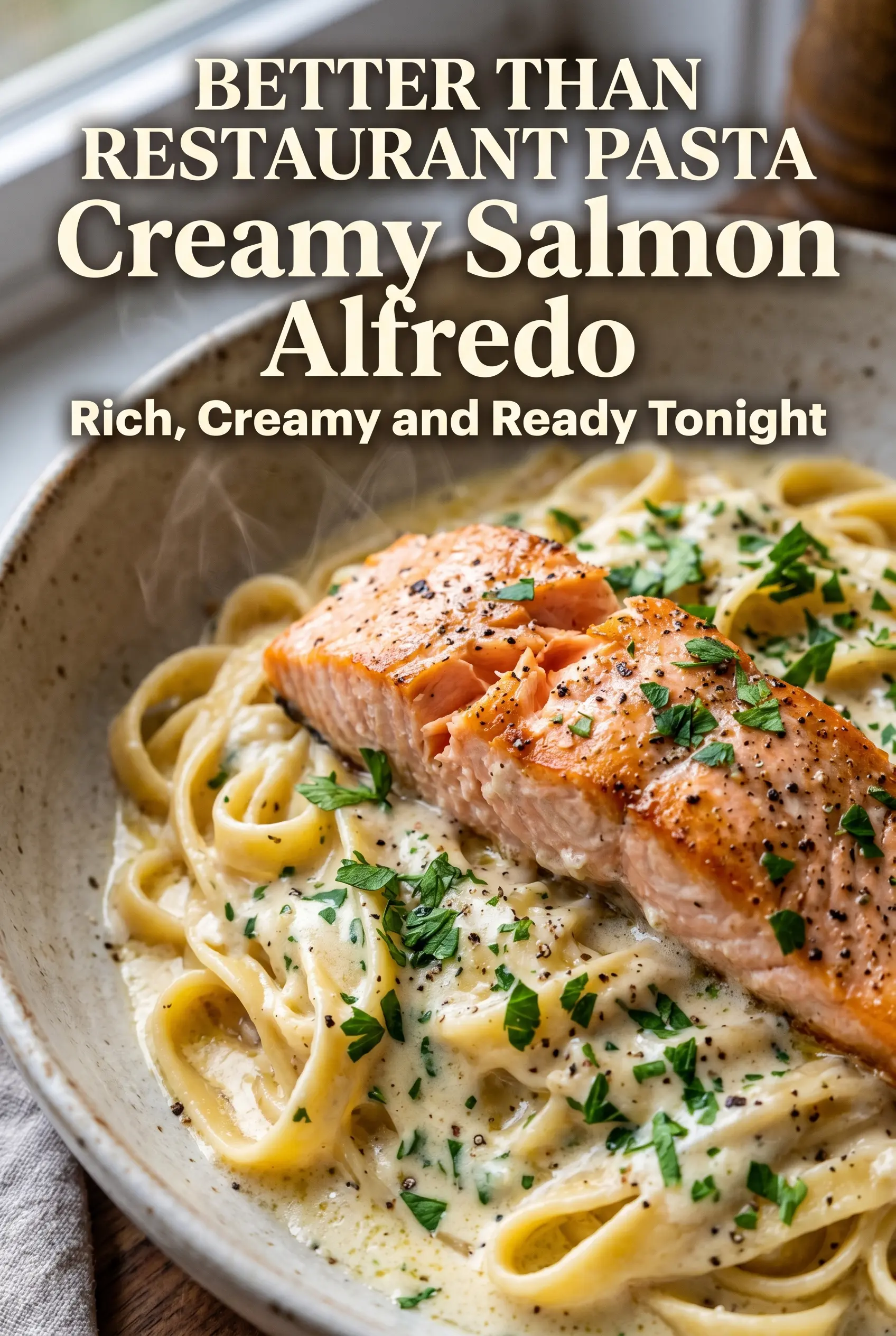
Creamy Salmon Alfredo
Ingredients
Equipment
Method
- Cook fettuccine according to package directions until al dente, stirring occasionally so it doesn’t stick. When done, reserve 1/2 cup pasta water and drain the pasta.
- Brush salmon with olive oil and season with garlic powder, paprika, salt, and black pepper until evenly coated, with no dry spots. Bake at 400°F (200°C) for 12–15 minutes until flaky.
- Remove the salmon and break it into large pieces, keeping them chunky. Set aside while you make the Alfredo sauce.
- Melt butter in a large skillet over medium heat until it foams slightly. Add minced garlic and cook for 30 seconds, stirring, until fragrant.
- Stir in heavy cream and Italian seasoning, scraping up any browned bits from the pan. Simmer gently for 2–3 minutes so the sauce thickens slightly.
- Add Parmesan cheese and whisk until smooth and glossy, with no grainy clumps. Taste and adjust with black pepper if needed.
- Toss the cooked fettuccine in the sauce until the pasta is evenly coated and creamy. Add reserved pasta water if needed to loosen the sauce to a silky consistency.
- Gently fold in the salmon so pieces stay tender and intact. Garnish with chopped fresh parsley and serve immediately while hot.
